
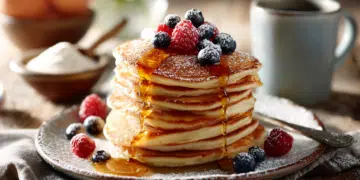

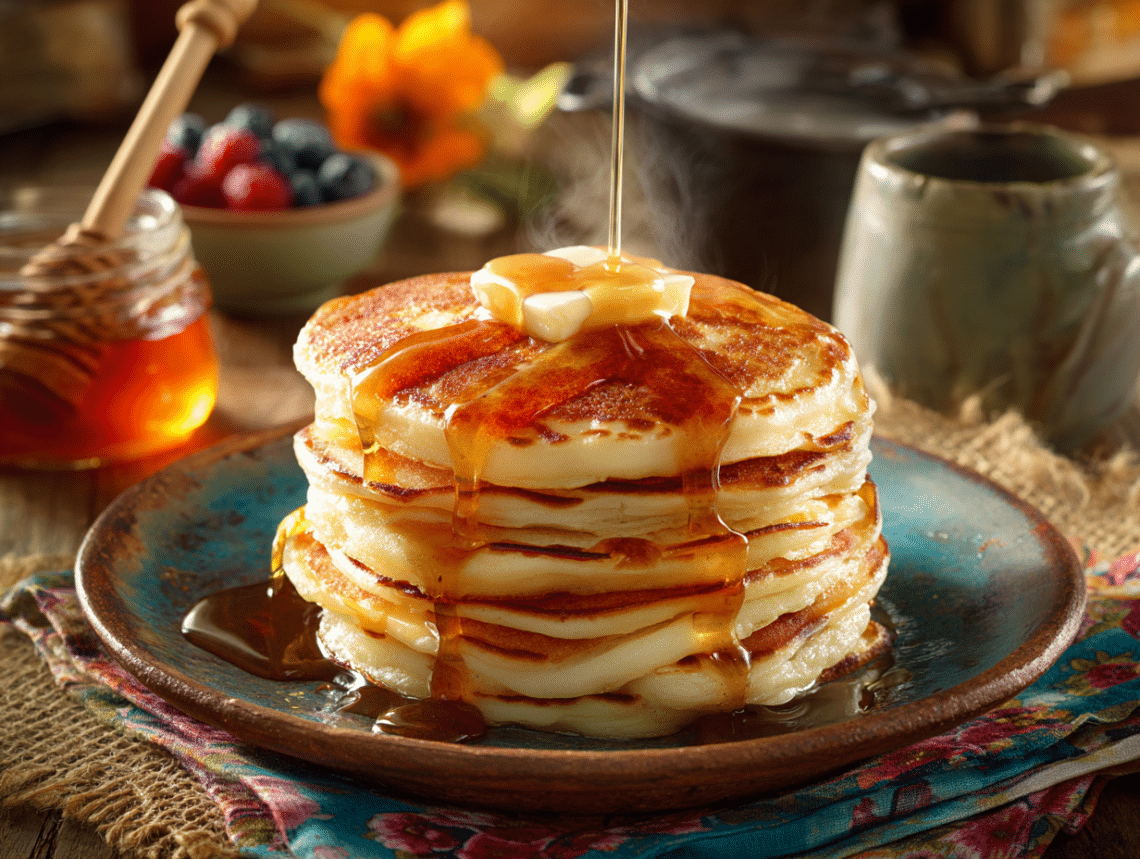
These buttermilk pancakes are a straightforward one-bowl-per-component recipe that comes together in 30 minutes with ingredients most kitchens already have. The buttermilk does real work here — it reacts with the baking soda to produce a genuinely light, tender crumb without any special equipment or technique. If you want a reliable stack that doesn’t require a weekend’s worth of dishes, this is it.
The technique that matters
Two things decide whether your pancakes are fluffy or flat. First, don’t overmix. Once the wet ingredients hit the dry, stir only until no dry flour is visible — lumps are fine and actually expected. Overworking the batter develops gluten, which makes pancakes tough and dense instead of tender. Second, get your pan temperature right before the first pour. A drop of water should skitter and evaporate in about two seconds; too cool and the pancakes spread thin and pale, too hot and the outside burns before the center sets. Let the pan heat for a full two minutes over medium before you add any butter or oil, and adjust between batches as the pan holds more heat over time.
Leftovers and make-ahead
Cooked pancakes keep well in the fridge for up to 3 days — stack them with a small square of parchment between each one so they don’t stick, then store in an airtight container or zip bag. To reheat, lay them flat in a dry skillet over low heat for about 90 seconds per side, or use a toaster on a medium setting for a slightly crisper result. They also freeze well for up to 2 months; freeze in a single layer on a baking sheet first, then transfer to a bag once solid so they don’t clump. Reheat straight from frozen in the toaster or a 325°F oven for 8–10 minutes. Skip the microwave if you can — it makes them rubbery.
Common problems and fixes
- Pancakes are spreading too thin: The batter is too warm or the pan isn’t hot enough. Make sure your melted butter has cooled before mixing, and give the pan a proper preheat. If the batter seems very loose, let it rest for 3–4 minutes — it will thicken slightly as the leaveners activate.
- Bubbles form but the edges never look set: Your heat is too low. Nudge it up slightly and wait another 30 seconds before checking again. The edges should look matte and dry, not shiny, before you flip.
- First pancake is always a mess: That’s normal — it’s a temperature test, not a failure. Use it to calibrate your heat and grease level, then discard or eat it as a cook’s snack. Skip the garnish on it too — not worth the extra dish.
- Pancakes taste flat or don’t rise: Check the age of your baking powder. It loses potency after about 6 months once opened. Test it by dropping a teaspoon into hot water — it should bubble vigorously. If it doesn’t, replace it before you bake.
- Undersides are golden but centers are still wet after flipping: Your pancakes are too thick or the heat is too high. Use a scant quarter-cup of batter per pancake rather than a full one, and lower the heat slightly so the inside has time to cook through before the outside over-browns.
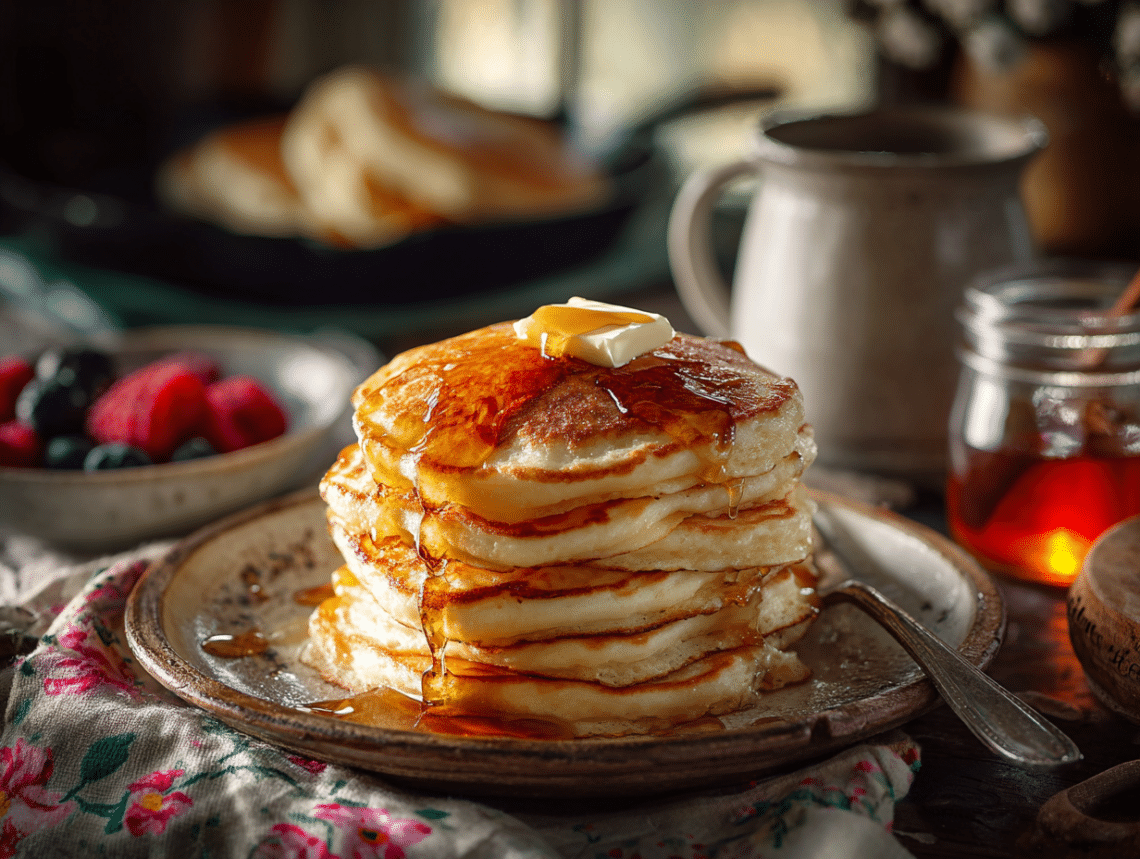
Classic Homemade Pancake Recipe
Equipment
- Mixing bowls
- Whisk
- non-stick skillet or griddle
- Ladle
- Spatula
Ingredients
For the Dry Components:
- 1 ½ cups all-purpose flour sifted for light texture
- 2 tablespoons granulated sugar
- 1 tablespoon baking powder ensure freshness for best rise
- ½ teaspoon baking soda
- ½ teaspoon fine sea salt
For the Wet Components:
- 1 ¼ cups buttermilk room temperature preferred
- 1 large egg room temperature
- 3 tablespoons unsalted butter melted and slightly cooled
- 1 teaspoon vanilla extract pure vanilla for best flavor
For Cooking:
- 2 tablespoons unsalted butter or oil for greasing the griddle
Instructions
- In a large mixing bowl, whisk together the all-purpose flour, sugar, baking powder, baking soda, and salt.
- In a separate bowl or large measuring cup, whisk the buttermilk, egg, melted butter, and vanilla until smooth and fully combined.
- Pour the wet ingredients into the dry. Use a spatula or whisk to gently mix until just combined—it's okay if some lumps remain. Overmixing can lead to dense pancakes.
- Heat a non-stick skillet or griddle over medium heat (about 350°F / 175°C). Lightly grease with butter or oil.
- Using a ladle or 1/4-cup measure, pour the batter onto the hot surface. Cook for 2–3 minutes, or until bubbles form and the edges look set. Flip gently and cook for another 1–2 minutes, or until golden brown.
- Repeat with remaining batter. Adjust heat as needed to avoid burning.
Notes
- Add a pinch of cinnamon or nutmeg to the dry mix for aromatic warmth.
- Substitute buttermilk with 1 1/4 cups whole milk plus 1 tablespoon lemon juice or vinegar; let sit 5–10 minutes before using.
- To make dairy-free, use a plant-based milk (like almond milk) and vegan butter or oil.
- For evenly round pancakes, pour batter from a spouted measuring cup or use a ring mold.
Nutrition
FAQ
Can I make the batter the night before?
It’s better to mix the dry and wet ingredients separately the night before and combine them in the morning. Once mixed together, the baking soda starts reacting with the buttermilk right away, so a fully combined batter that sits overnight will be significantly less fluffy by the time it hits the pan.
My buttermilk is cold from the fridge — does that matter?
Room-temperature buttermilk blends more evenly and helps the batter come together without streaks of cold fat from the butter seizing up. If you’re short on time, measure it out and let it sit on the counter for 15 minutes, or set the measuring cup in a bowl of warm water for 5 minutes.
Can I double the recipe without any issues?
Yes, doubling works fine — just use a large enough bowl so you have room to fold without overmixing. The one thing to watch is pan management: a doubled batch means more time between first and last pancake, so keep finished ones warm in a 200°F oven on a baking sheet rather than stacking them on a plate where they’ll steam and go soft.
Try these next
- Fluffy Homemade Pancake Mix for Perfect Weekend Mornings
- Golden Buttermilk Waffles with European Charm and American Flavor
- Slow-Cooked Spiced Apple Butter
- Sparkling Mimosa: A Classic French Brunch Cocktail

This worked exactly as written, thanks!