












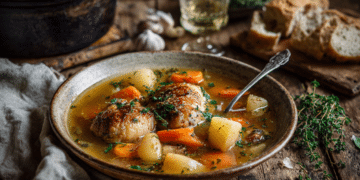























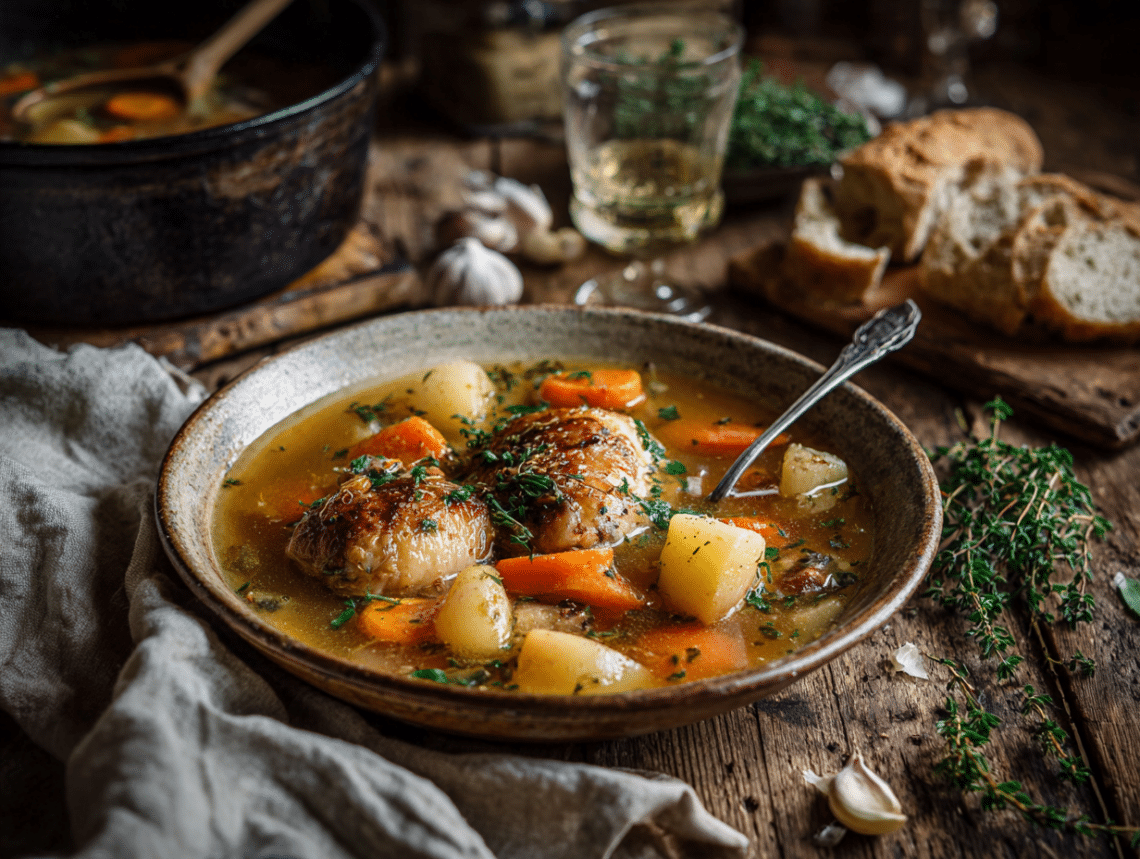
This is a bone-in chicken thigh stew built around carrots, parsnips, potatoes, and a white wine broth — the kind of one-pot dinner that takes about two hours start to finish and feeds six people without much fuss. The main reason to make it: the ingredients are cheap, the steps are straightforward, and it genuinely tastes better the next day, so it earns its time on the stove.
Why this recipe works
Two things matter most here. First, browning the chicken skin-side down before anything else goes into the pot — that 5–7 minutes of direct contact with hot oil builds a golden crust and leaves behind browned bits on the pot bottom that become the flavor base for everything else. Second, the tomato paste gets cooked in the dry pot for a full two minutes before the wine goes in. That short step caramelizes the paste and removes its raw, tinny edge, which makes a noticeable difference in the finished broth. Everything else — the long simmer, the root vegetables, the herbs — works because those two steps laid the groundwork.
Mistakes to avoid
- Crowding the pot when browning. If all the chicken goes in at once and the pieces are touching, they’ll steam instead of sear. Brown in two batches if needed — it adds five minutes and is worth it.
- Skipping the pat-dry step. Surface moisture on the chicken will cause it to steam in the pan. A few seconds with paper towels makes a real difference in how well the skin browns.
- Adding the potatoes too early. Baby potatoes go in with the broth and chicken, not with the carrots and parsnips. They cook faster and will turn mushy if they simmer the full time alongside the harder root vegetables.
- Simmering too hard. A rolling boil will make the chicken tough and the broth cloudy. You want small, lazy bubbles — just enough movement to keep things cooking.
- Not tasting before serving. Low-sodium broth and the natural sweetness of the root vegetables mean the stew can taste flat if you don’t adjust salt at the end. Taste it, then season.
Substitutions that actually work
- Parsnips are the one ingredient some stores don’t carry reliably. Swap in turnip or an extra carrot — the flavor shifts slightly but the stew holds together fine.
- Dry white wine can be replaced with an equal amount of additional chicken broth plus a teaspoon of white wine vinegar for a little acidity. Skip the garnish of fresh parsley — not worth the extra dish.
- Bone-in, skin-on thighs are important here; boneless skinless thighs will work in a pinch but the broth will be noticeably thinner and less rich. Avoid chicken breasts — they dry out over a long simmer.
Make-ahead notes
This stew keeps well in the fridge for up to four days in a sealed container — the broth thickens overnight and the flavors come together more fully, so day-two leftovers are genuinely better than day one. To reheat, warm it gently on the stovetop over medium-low heat, adding a splash of broth or water if it has thickened too much. For freezing, let it cool completely, then store in freezer-safe containers for up to three months; freeze the chicken and vegetables together with the broth. Thaw overnight in the fridge before reheating — don’t rush it on the counter.
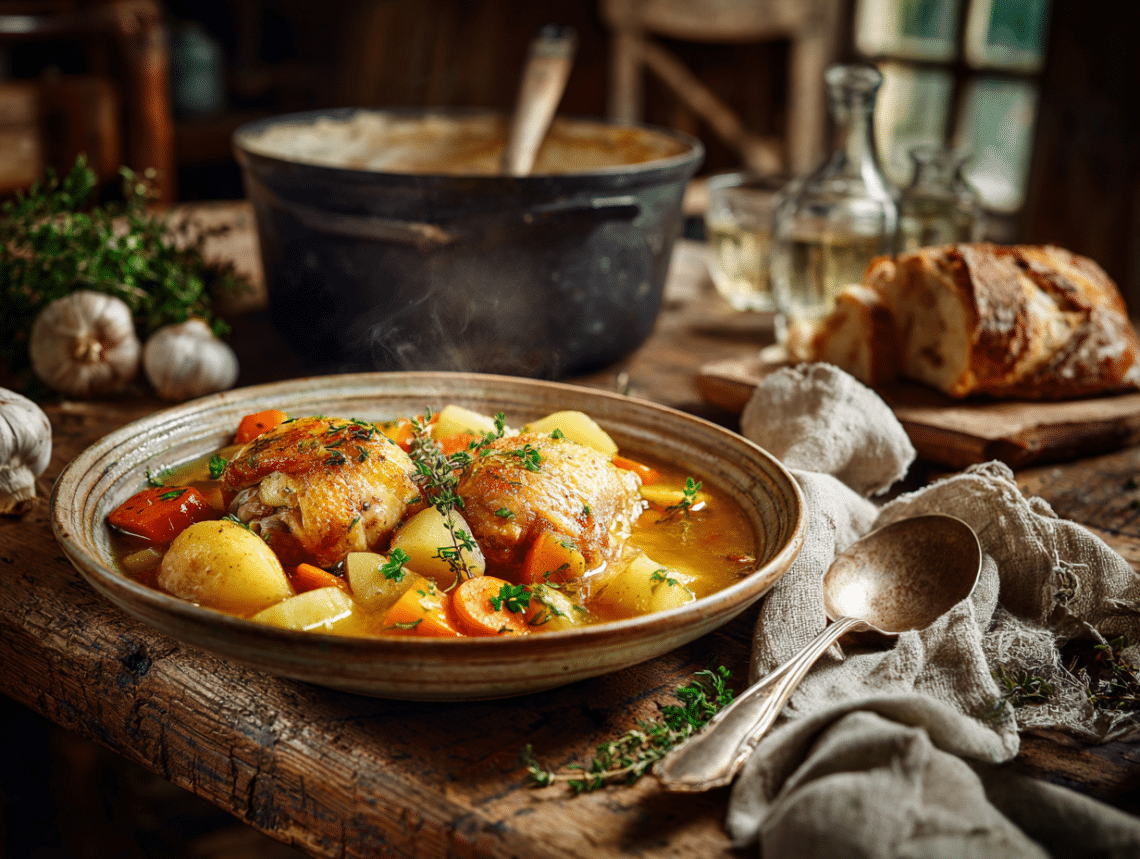
Rustic Chicken Stew with Root Vegetables

Equipment
- Dutch oven or heavy-bottomed pot
- Chef's Knife
- Cutting board
- Wooden spoon
Ingredients
- 2.5 pounds chicken thighs bone-in, skin-on ; organic or pasture-raised preferred
- 1 teaspoon kosher salt plus more to taste
- ½ teaspoon ground black pepper freshly ground
- 2 tablespoons olive oil extra virgin
- 1 large yellow onion diced
- 4 cloves garlic minced
- 3 medium carrots peeled and cut into 1-inch pieces
- 2 medium parsnips peeled and cut into 1-inch pieces
- 3 cups chicken broth low-sodium ; homemade or high-quality store-bought
- 1 cup dry white wine such as Sauvignon Blanc
- 1 tablespoon tomato paste
- 3 sprigs thyme fresh ; or 1 teaspoon dried thyme
- 2 leaves bay leaf
- 1.5 cups baby potatoes halved if large
- 2 tablespoons parsley chopped fresh ; for garnish
Instructions
- Pat chicken thighs dry and season both sides with salt and pepper.
- In a large Dutch oven over medium-high heat (350°F/175°C), heat olive oil. Brown chicken thighs skin-side down for 5–7 minutes per side until golden and crisp. Remove and set aside.
- In the same pot, lower heat to medium (325°F/165°C) and sauté onions until translucent and starting to brown, about 5 minutes. Add garlic and stir for 30 seconds until fragrant.
- Add carrots and parsnips, stirring for 2–3 minutes until slightly softened. Stir in tomato paste and cook for 2 minutes to caramelize slightly.
- Deglaze the pot with white wine, scraping the bottom with a wooden spoon to release fond. Let it simmer 3–4 minutes to reduce.
- Pour in chicken broth, return chicken thighs to the pot, and add thyme, bay leaves, and potatoes. Simmer uncovered on low heat (300°F/150°C) for 60–75 minutes until chicken is tender and vegetables are cooked through.
- Remove bay leaves and thyme stems. Taste broth and adjust seasoning. Sprinkle with fresh parsley before serving.
Notes
- For a thicker stew, mash some of the potatoes at the end of cooking.
- To make it gluten-free, ensure chicken broth is certified GF.
- You can substitute parsnips with turnips or leeks for a different tone of sweetness.
- Stew tastes even better the next day—great for leftovers.
Nutrition
Frequently asked questions
Can I use boneless chicken thighs instead of bone-in?
Yes, but the broth will be lighter and less rich. Bone-in thighs release collagen as they cook, which gives the stew its body — boneless thighs skip that. If that’s what you have, reduce the simmer time to about 40–45 minutes so they don’t dry out.
What does ‘deglaze’ mean and how do I know I’m doing it right?
Deglazing just means adding liquid to a hot pan to loosen the browned bits stuck to the bottom. Pour in the wine, then use a wooden spoon to scrape the bottom of the pot — those bits dissolve into the liquid and that’s where a lot of the flavor comes from. If the bottom of your pot is clean after scraping, you’ve done it right.
Do I need a Dutch oven, or can I use a regular pot?
Any heavy-bottomed pot with a lid that holds at least 5–6 quarts will work. A thin-bottomed pot is the real problem — it creates hot spots that can scorch the vegetables and onions before they soften properly.
How do I know when the chicken is done?
The chicken is done when it reaches an internal temperature of 165°F and the meat pulls away from the bone easily. After 60–75 minutes of simmering, bone-in thighs will typically be well past that point and very tender — if you’re unsure, use an instant-read thermometer.
Can I make this in a slow cooker?
You can, but still do the browning and sautéing steps on the stovetop first — skipping them produces a noticeably blander result. After deglazing, transfer everything to the slow cooker and cook on low for 6–7 hours or high for 3–4 hours.
My stew looks thin — how do I thicken the broth?
Remove the chicken and vegetables temporarily, then mix one tablespoon of cornstarch with two tablespoons of cold water and stir it into the simmering broth. Let it cook for a few minutes and it will thicken up. Alternatively, just simmer the broth uncovered for 10–15 minutes to reduce it naturally.
If you liked this one
- Classic American Chicken Pot Pie
- Tuscan-Inspired One-Pot Chicken and Orzo
- Rustic French Garlic-Herb Pork Chops
- Sweet and Spicy Hot Honey Roasted Chicken Thighs