


























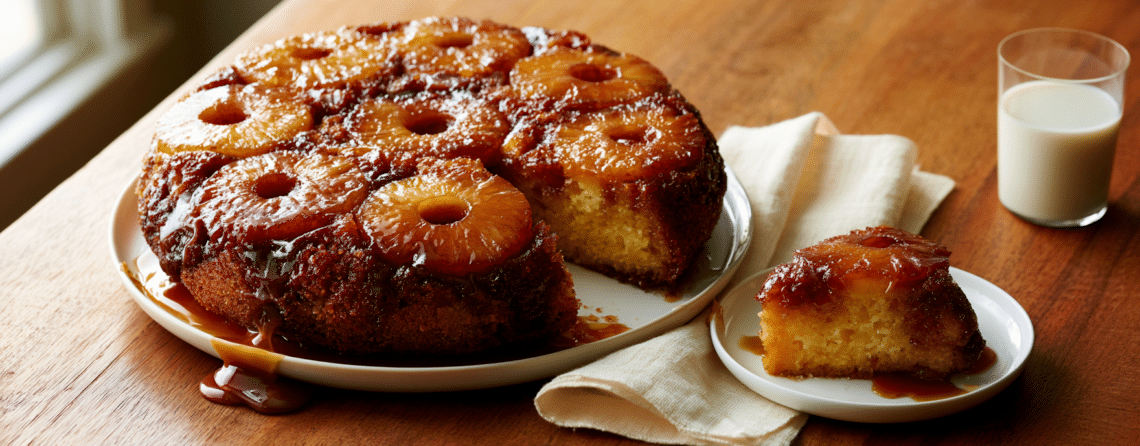
This is a straightforward pineapple upside-down cake — one pan, about an hour, no frosting required. The brown sugar and butter melt into the pineapple as it bakes, and when you flip the pan you get a glossy, caramelized top that looks far more impressive than the effort involved. It slices cleanly, keeps well, and tastes just as good the next day as it does warm from the oven.
The short version of why this works
Two things actually matter here. First, the brown sugar and butter go into the pan as a liquid, not a dry layer — that even coating is what gives you a consistent caramel across the whole surface rather than dry patches. Second, using room-temperature butter, eggs, and milk for the cake batter isn’t fussiness; cold ingredients cause the batter to curdle slightly, which makes the crumb tighter and less tender. Pull everything out of the fridge about 30 minutes before you start and the batter will come together smoothly and bake up light.
If something goes sideways
- The topping sticks to the pan when you flip it: This almost always means the cake cooled too long before inverting. Ten minutes is the window — the caramel is still fluid enough to release cleanly. Much longer and it sets against the pan.
- The center is still wet at 45 minutes: Oven temperatures vary. Cover the top loosely with foil to stop the edges over-browning, and give it another 5–8 minutes. Test with a toothpick in the very center, not the edge.
- The pineapple releases too much liquid and the topping looks watery: Canned pineapple needs to be well drained — press the slices gently between paper towels before arranging them. Skipping this step is the most common reason the caramel layer turns out thin and pale.
- The cake domes and cracks on top (which becomes the bottom): A domed base makes the finished cake sit unevenly on the plate. Next time, reduce the oven by 25°F and bake a few minutes longer. For this bake, just trim the dome flat with a serrated knife before inverting.
- The edges pull away from the pan but the center sinks: The batter was likely over-mixed after adding the flour. Mix only until the streaks of flour disappear — a few lumps are fine.
Smart swaps
- Canned vs. fresh pineapple: Canned works better here. Fresh pineapple contains an enzyme that can interfere with the cake’s structure and leave the crumb slightly gummy. If you want to use fresh, simmer the slices in a little water for five minutes first to neutralize the enzyme, then pat dry.
- Whole milk: The fat in whole milk keeps the crumb tender. You can use 2% in a pinch, but skip skim — the cake will be noticeably drier. A mix of half plain yogurt and half water also works well and adds a slight tang.
- Brown sugar in the topping: Light brown sugar is called for and gives a mild caramel flavor. Dark brown sugar works fine and gives a deeper, more molasses-forward result — skip the garnish of maraschino cherries if you go this route, not worth the extra dish.
Keeping and reheating
Store leftover slices in an airtight container in the fridge for up to four days. The caramel topping firms up when cold, so reheat individual slices in the microwave for 20–25 seconds — just enough to soften the topping without making the cake rubbery. For longer storage, wrap individual slices tightly in plastic wrap, then foil, and freeze for up to two months. Thaw overnight in the fridge and reheat the same way. The cake holds its texture well after freezing, which makes it a practical option for baking ahead of a gathering.
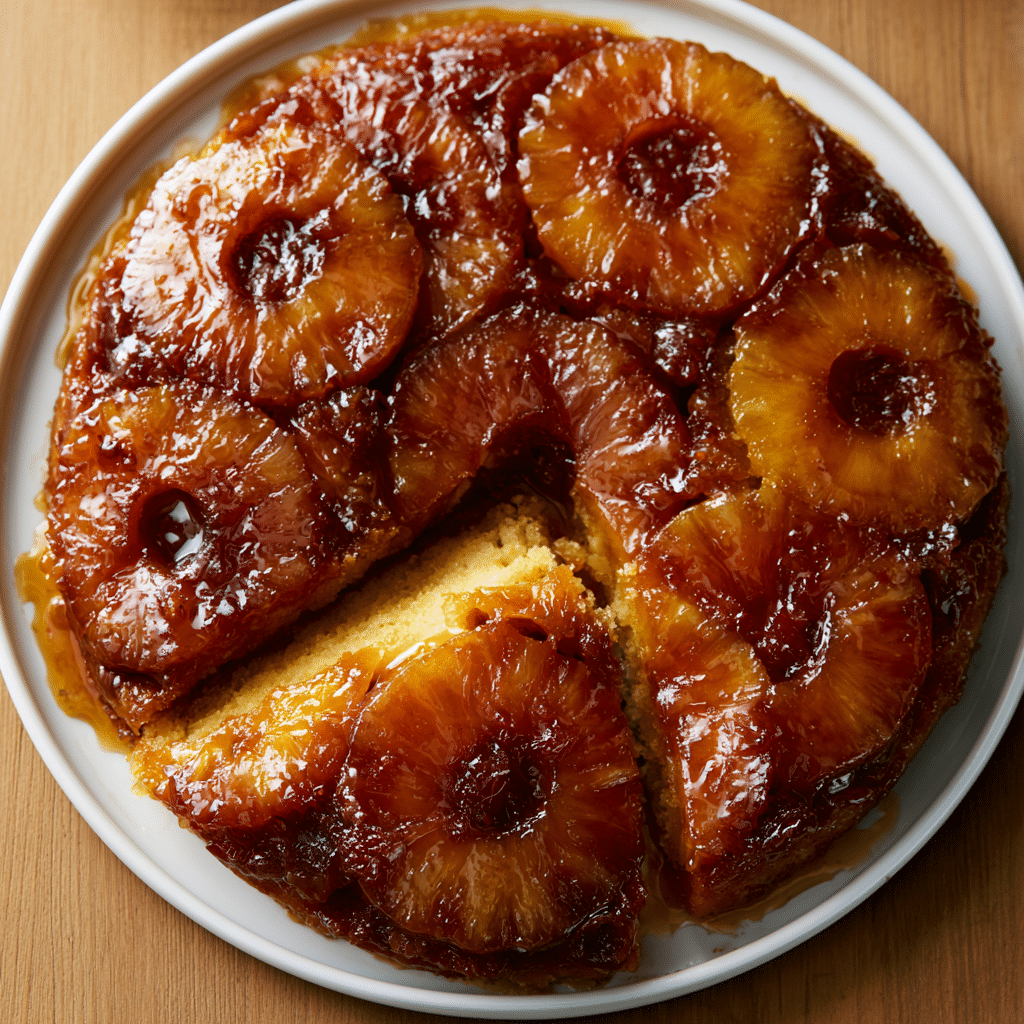
Upside-Down Pineapple Cake

Equipment
- 9-inch (23cm) round cake pan
- Small Saucepan
- Large mixing bowl
- Medium mixing bowl
- Whisk
- Electric hand mixer or stand mixer
- Wire cooling rack
Ingredients
For the topping
- ½ cup unsalted butter melted, 115g
- ¾ cup light brown sugar packed, 150g
- 7 rings pineapple from one 20 oz (567g) can, drained (reserve juice for another use)
For the cake
- 1 ½ cups all-purpose flour 190g
- 2 tsp baking powder
- ¼ tsp salt
- ½ cup unsalted butter softened, 115g
- 1 cup granulated sugar 200g
- 2 large eggs room temperature
- 1 tsp vanilla extract
- ½ cup whole milk room temperature, 120ml
Instructions
- Preheat your oven to 350°F / 175°C (180°C fan-forced). Grease a 9-inch (23cm) round cake pan generously with butter.
- In a small saucepan over low heat, melt 1/2 cup butter. Stir in 3/4 cup light brown sugar until smooth. Pour the mixture into the prepared cake pan, spreading evenly. Arrange the pineapple rings over the sugar mixture.1/2 cup unsalted butter, 3/4 cup light brown sugar, 7 rings pineapple
- In a medium bowl, whisk together 1 1/2 cups flour, 2 tsp baking powder, and 1/4 tsp salt.1 1/2 cups all-purpose flour, 2 tsp baking powder, 1/4 tsp salt
- In a large bowl, beat 1/2 cup softened butter and 1 cup sugar until light and fluffy. Add eggs one at a time, beating well after each addition. Mix in 1 tsp vanilla extract.1/2 cup unsalted butter, 1 cup granulated sugar, 2 large eggs, 1 tsp vanilla extract
- Gradually add flour mixture to the butter mixture in three additions, alternating with 1/2 cup milk, starting and ending with the flour mixture. Mix until just combined.1 1/2 cups all-purpose flour, 2 tsp baking powder, 1/4 tsp salt, 1/2 cup whole milk
- Pour the batter evenly over the arranged pineapple rings. Smooth the top and bake for 45 minutes, or until a toothpick inserted in the center comes out clean.
- Let the cake cool in the pan for 10 minutes. Run a knife around the edges, place a serving platter over the top of the pan, and carefully invert. Lift the pan away slowly. If any pineapple slices have shifted, nudge them back into place with a fork. Let the cake cool on the platter for at least 30 minutes before slicing.
Notes
Nutrition
Common questions
Can I make this cake the day before I need it?
Yes — this cake actually holds up well overnight. Bake it, let it cool completely after inverting, then cover it loosely with plastic wrap and leave it at room temperature if your kitchen isn’t too warm, or refrigerate it. Bring it back to room temperature for about 30 minutes before serving, or warm individual slices briefly in the microwave.
Can I use a different pan size or shape?
A 9-inch round pan is the right call for this recipe. A square 8×8 pan can work in a pinch, but the bake time will be slightly shorter — start checking at 38 minutes. Avoid a springform pan; the liquid butter-sugar mixture will leak through the base before it sets.
Why do my pineapple rings fall apart when I try to arrange them?
Canned pineapple slices can break if they’ve been sitting in juice for a long time or if the can was dented. Drain them gently and handle them one at a time. If a ring breaks, just press the pieces together in the pan — once the caramel sets around them during baking, the finished top will still look clean after inverting.
What to cook next
- Warm and Comforting Classic Apple Crumble
- Heavenly Strawberry Cake with Fresh Berries and Whipped Cream
- Zesty French Lemon Cake
- Classic Soft Sugar Cookies