

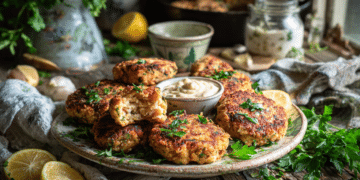

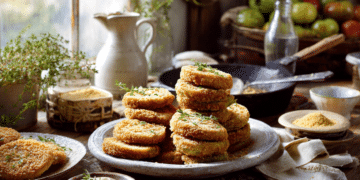










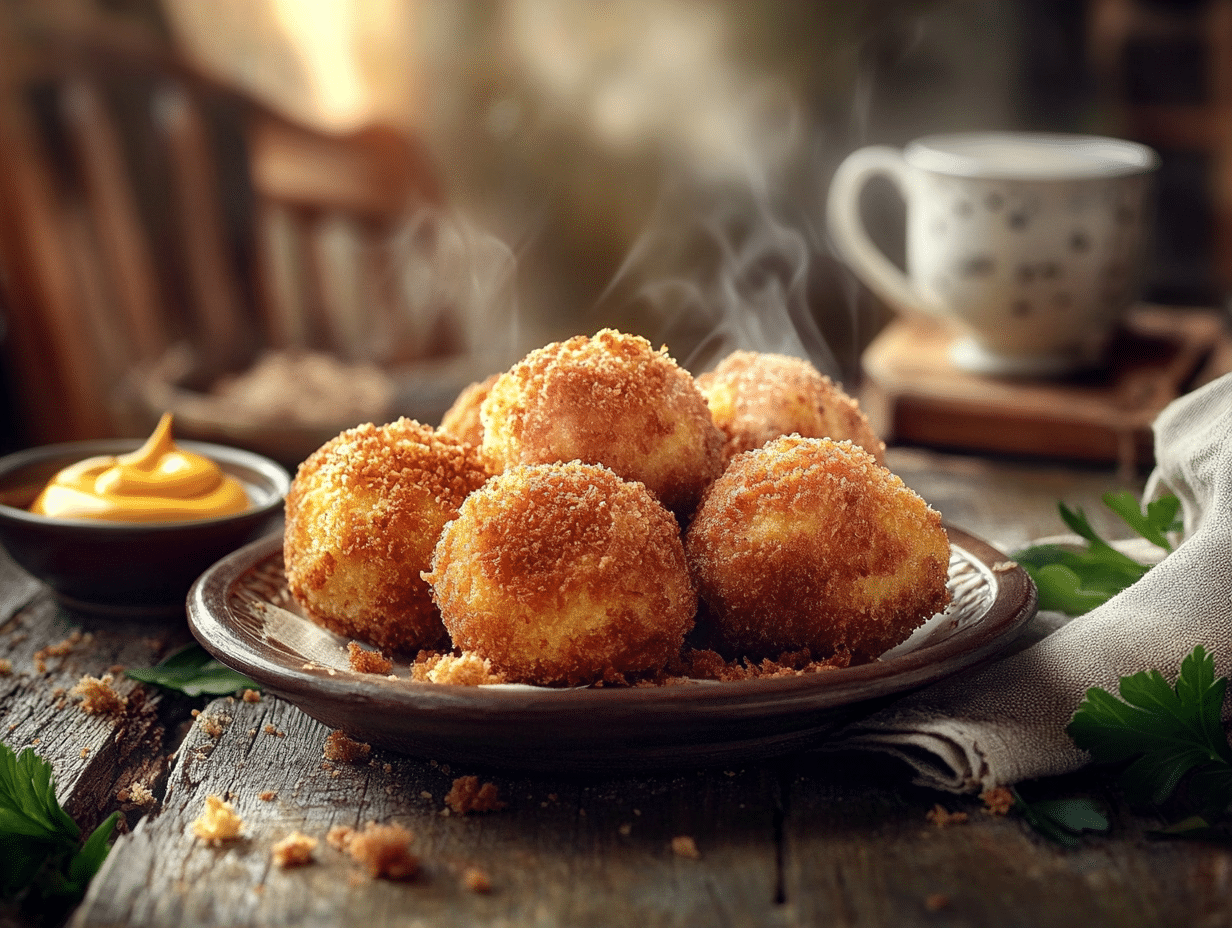
Bitterballen are small, deep-fried Dutch snacks with a crispy breadcrumb shell and a thick, savory beef filling. They take a few hours start to finish, but most of that is hands-off chilling time — and the payoff is a batch of genuinely crowd-pleasing party food that holds up well when made ahead.
What makes this version work
Two things matter most here. First, simmering the beef chuck low and slow in stock until the liquid reduces by half concentrates the flavor before it ever hits the roux — you’re not relying on seasoning alone to carry the filling. Second, the chilling step is non-negotiable: the mixture needs at least two hours in the fridge to firm up enough to shape cleanly. Rush it and the filling is too soft to hold its log shape, which means blowouts in the fryer. Give it time and the whole process becomes straightforward.
Common problems and fixes
- Filling bursts open during frying: The oil is too hot, or the breading has gaps. Make sure your oil is at a steady 350°F before adding croquettes, and press the breadcrumbs firmly so there are no bare patches.
- Breading falls off: The filling was still warm when you shaped it, or you skipped the flour dredge. Cold filling grips the flour; flour grips the egg; egg grips the breadcrumbs. Don’t skip steps.
- Filling is gluey or pasty: The roux cooked too briefly. Give it the full 2–3 minutes over medium heat until it smells slightly nutty before adding the beef mixture.
- Croquettes are greasy: The oil temperature dropped when you added too many at once. Fry in small batches — three or four at a time — so the oil recovers quickly.
- Filling is bland: Under-reduced stock is usually the culprit. The stock should be noticeably concentrated and savory before you build the roux. Taste it before you combine.
Smart swaps
- Beef chuck: This cut is the right call — it shreds well and stays moist. Brisket works as a substitute if that’s what you have.
- Fine breadcrumbs: Fine breadcrumbs give the classic smooth crust. Panko produces a rougher, crunchier shell — not traditional, but it works. Skip the coarse homemade breadcrumbs; they tend to fall off.
- Vegetable oil for frying: Any neutral high-smoke-point oil works — canola or sunflower are both fine. Avoid olive oil.
- Mustard for dipping: A sharp Dijon or whole-grain mustard is the standard pairing and genuinely the best one — skip a fancy dipping sauce, it’s not worth the extra dish.
Leftovers and make-ahead
This recipe is built for making ahead. The shaped, breaded croquettes can sit on a parchment-lined tray in the fridge for up to 24 hours before frying — ideal if you’re prepping for a party. For longer storage, freeze them on the tray until solid (about 2 hours), then transfer to a zip-lock bag; they keep well for up to 2 months. Fry straight from frozen at 350°F, adding an extra 1–2 minutes to the cook time. Already-fried leftovers reheat best in an oven or air fryer at 375°F for 8–10 minutes — they’ll crisp back up. Avoid the microwave; it turns the shell soft and the filling rubbery.
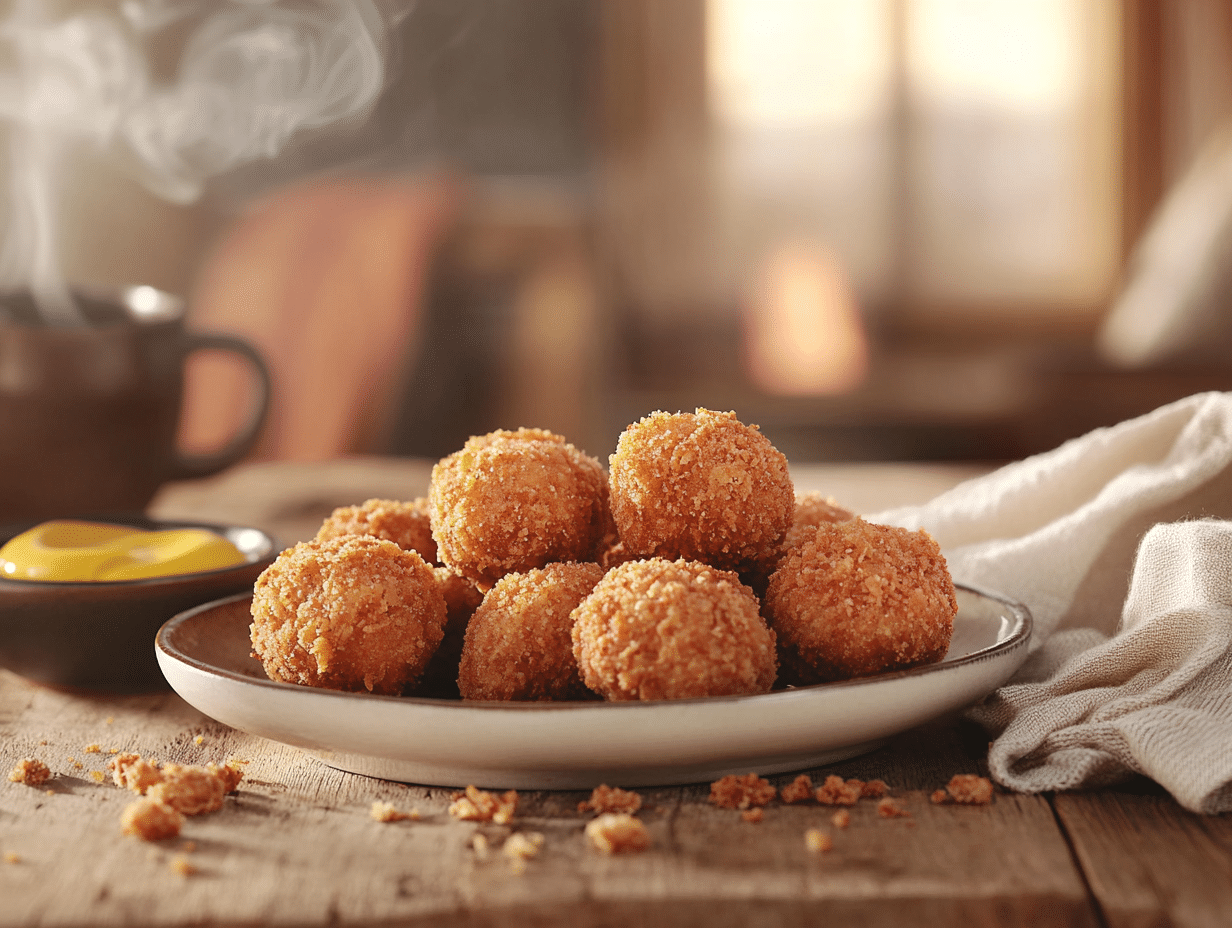
Dutch Beef Croquettes

Ingredients
Filling
- 1 pound beef chuck trimmed and diced
- 2 cups beef stock preferably homemade
- 1 handful bay leaf
- 1 medium white onion finely chopped
- 4 tablespoons butter
- ½ cup all-purpose flour
- 1 teaspoon ground nutmeg
- 1 pinch salt to taste
- 1 pinch black pepper freshly ground
Breading
- ¾ cup flour for dredging
- 2 large eggs lightly beaten
- 1 ½ cup breadcrumbs fine
- 4 cups vegetable oil for frying
Instructions
- In a large pot, combine the beef, beef stock, and bay leaf. Simmer over low heat until the beef is tender and the stock has reduced by half, about 1 hour.
- Remove the bay leaf. Shred the beef with two forks in the remaining stock.
- In a separate pan, melt the butter over medium heat. Add the chopped onion, sautéing until translucent.
- Stir in the flour to form a roux, cooking for 2-3 minutes until lightly golden.
- Gradually whisk in the beef mixture to the roux, ensuring a smooth blend. Add the nutmeg, and season with salt and pepper to taste. Cook until the mixture thickens.
- Let the mixture cool, then refrigerate until firm, approximately 2 hours.
- Shape the chilled beef mixture into small logs.
- Dredge each log in flour, dip in beaten egg, and coat with breadcrumbs.
- Heat oil in a deep fryer to 180°C (350°F). Fry each croquette until golden brown and heated through, about 3-4 minutes.
- Drain on paper towels, then serve hot.
Notes
Nutrition
Common questions
Can I make bitterballen the day before a party?
Yes — this is actually the best way to do it. Shape and bread the croquettes, then refrigerate them on a lined tray for up to 24 hours. Fry them fresh just before serving so the shell is at its crispiest.
Why does my filling stay too soft to shape even after refrigerating?
The roux likely needs more cooking time, or the beef mixture was added too quickly without enough stirring. The finished filling should be very thick — almost like a stiff mashed potato — before it goes into the fridge. If it’s still loose after two hours, give it another hour or move it to the freezer for 30 minutes.
Can I freeze bitterballen before frying?
Yes, and it works very well. Freeze the breaded croquettes on a flat tray until solid, then bag them. Fry straight from frozen at 350°F for about 5–6 minutes total, checking that the center is hot all the way through.
Do I need a deep fryer, or can I use a regular pot?
A regular heavy-bottomed pot works fine. Use enough oil to fully submerge the croquettes — about 4 cups in a medium pot — and use a thermometer to keep the temperature at 350°F, since guessing tends to lead to greasy or burst croquettes.