
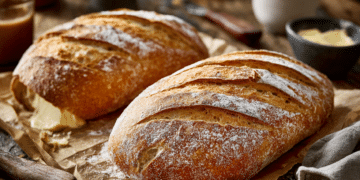












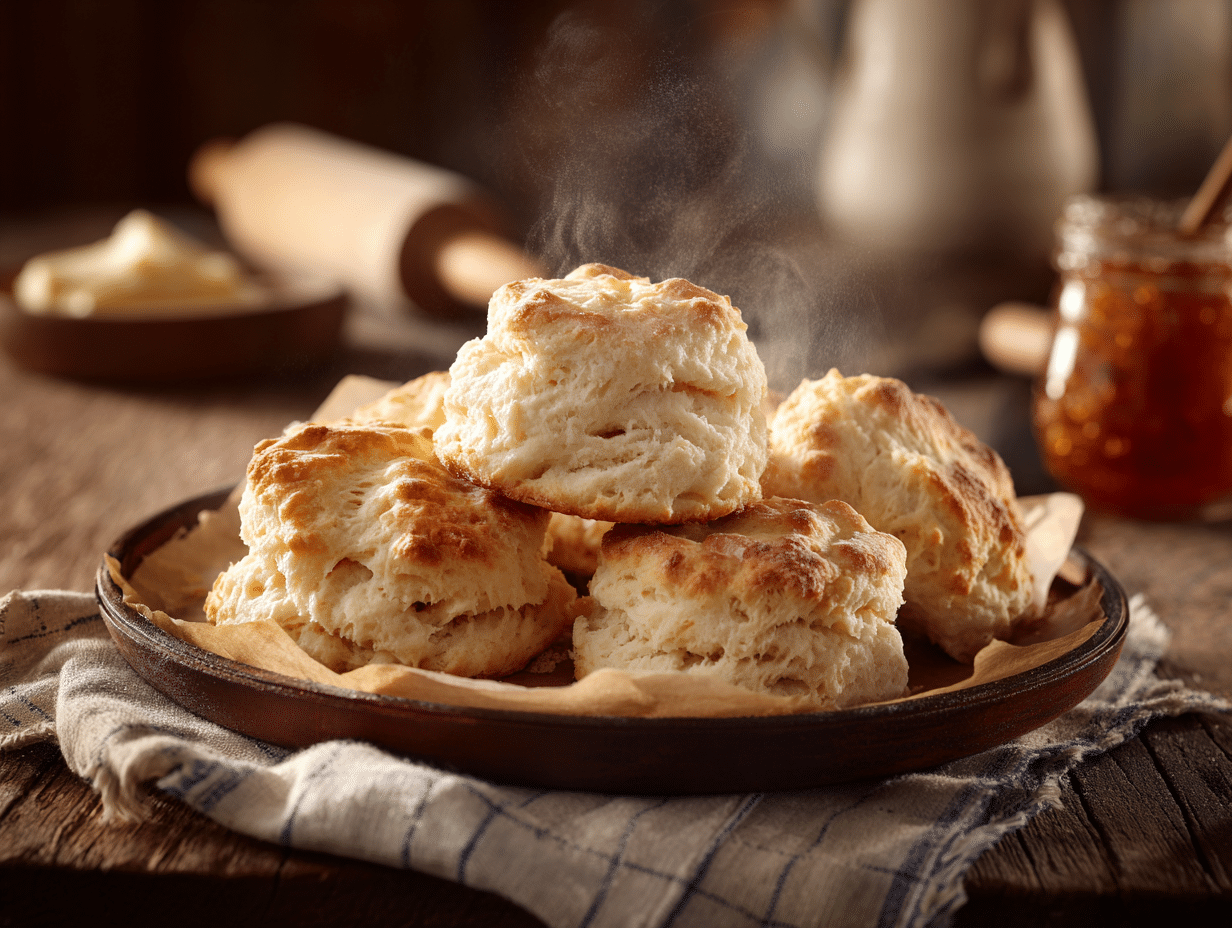
These are straight-cut, tall, pull-apart buttermilk biscuits — crisp on the outside, layered and tender inside, ready in 35 minutes from pantry staples. The recipe makes 8, but it doubles cleanly, which makes it one of the most useful things you can bake when people are coming over for breakfast or brunch.
The short version of why this works
Two things actually drive the result here. First, cold butter. If the butter softens before the biscuits hit the oven, it blends into the flour instead of staying in distinct pieces — and those pieces are what create steam pockets and separate layers as they bake. Second, the fold-and-pat sequence. Folding the dough three times before the final cut builds thin sheets of butter through the dough, the same way laminated pastry works, just rougher and faster. Skip the folding and you get a fine biscuit; do it and you get one that pulls apart in actual layers. Both of these steps cost you nothing extra — they just require keeping things cold and resisting the urge to overwork the dough.
Common problems and fixes
- Biscuits spread flat instead of rising: The oven wasn’t hot enough when they went in, or the butter warmed up during mixing. Preheat fully to 450°F and don’t rush it — an under-temperature oven is the most common reason biscuits sag. If your kitchen is warm, chill the mixed dough for 10 minutes before cutting.
- Tough, dense texture: The dough was mixed or kneaded too long after the buttermilk went in. Once liquid hits flour, gluten develops fast. Mix only until the shaggy dough just comes together, then move straight to the pat-and-fold on the counter.
- Uneven rise — some biscuits taller than others: The cutter was twisted on the way down. Twisting seals the cut edge and blocks the rise. Press straight down and lift straight up, every time. Also check that your dough is an even 3/4-inch thickness before cutting.
- Pale, soft tops even after full bake time: The melted butter brush before baking helps browning, but if your oven runs cool, the tops stay pale while the bottoms overcook. Use an oven thermometer to confirm your actual temperature, and move the rack up one position if needed.
- Too few biscuits from the scraps: When you re-gather and re-cut the scraps, handle the dough as little as possible — just press it together gently and cut. Skip the garnish of extra melted butter on the scrap biscuits if you’re short; they bake up slightly denser anyway and the butter won’t fix that.
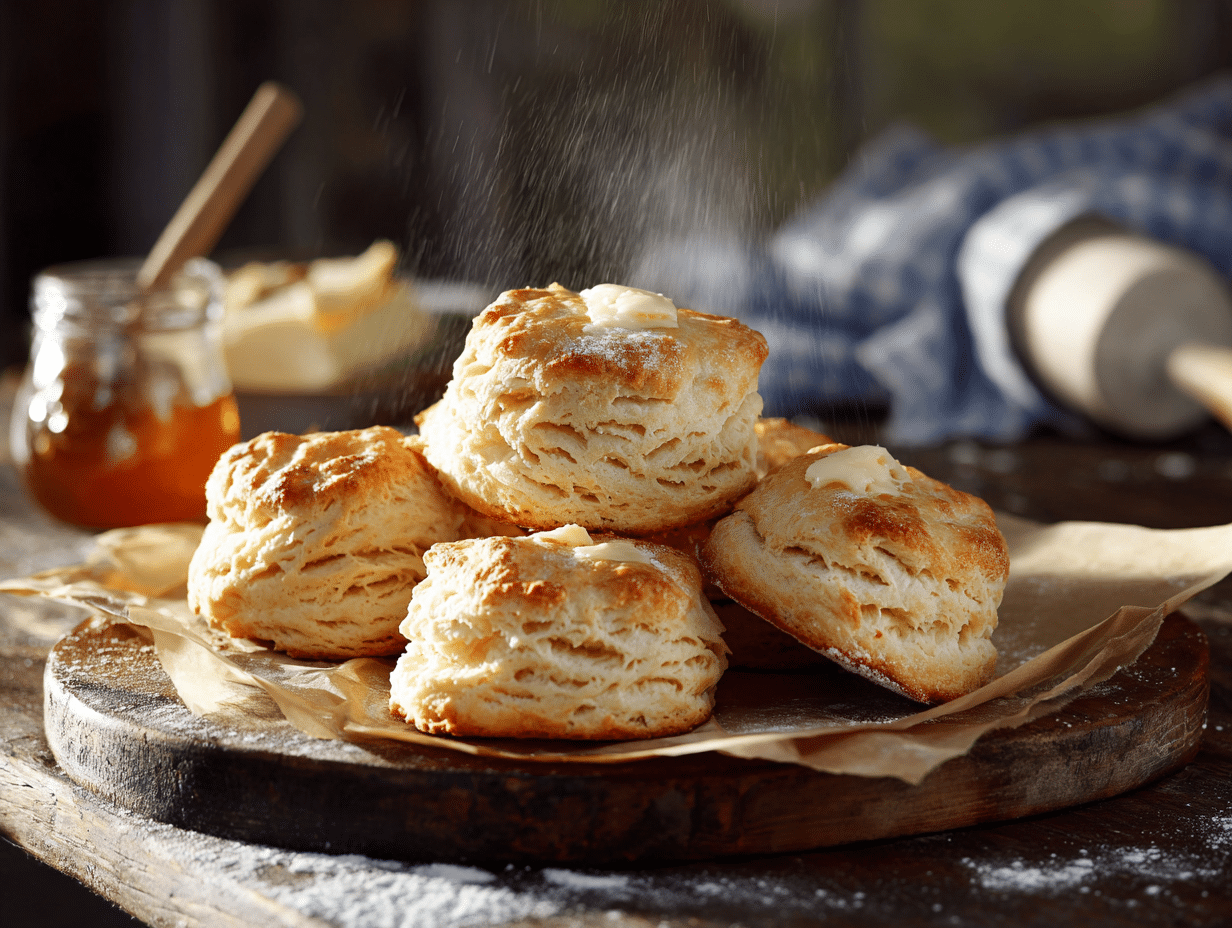
Buttermilk Southern Biscuits

Equipment
- Mixing bowl
- Pastry cutter or food processor
- Rolling Pin
- 2.5-inch biscuit cutter
- Baking sheet
- Oven
Ingredients
- 2 cups all-purpose flour preferably unbleached and sifted
- 1 tablespoon baking powder aluminum-free for best flavor
- ½ teaspoon baking soda
- ¾ teaspoon kosher salt
- 6 tablespoons unsalted butter cold, cut into small dice
- ¾ cup buttermilk well chilled; shake before using
- 2 tablespoons melted butter for brushing tops
Instructions
- Preheat your oven to 450°F (232°C). Place the oven rack in the middle to ensure even baking.
- In a large mixing bowl, whisk together the flour, baking powder, baking soda, and salt until evenly combined.
- Add the cold diced butter. Using a pastry cutter or food processor, cut in the butter until the mixture resembles coarse crumbs with some pea-sized butter bits for flakiness.
- Create a well in the center and pour in the cold buttermilk. Gently mix with a fork or spatula until just combined. Do not overmix—it's okay if the dough is slightly shaggy.
- Turn the dough out onto a lightly floured surface. Pat (do not roll) into a rectangle about 1/2 inch thick. Fold over once like a letter, pat down again, and repeat the fold two more times to build flaky layers.
- Finally, pat the dough to about 3/4 inch thick. Using a 2.5-inch biscuit cutter, cut straight down—don’t twist to preserve the rise. Gather scraps once and repeat. You should yield 8 biscuits.
- Place biscuits on a parchment-lined baking sheet, slightly touching for softer sides or spaced apart for crispy edges. Brush tops with melted butter.
- Bake for 13–15 minutes until golden brown on the tops. Rotate the tray halfway through if your oven heats unevenly.
- Remove and brush hot biscuits with additional melted butter if desired. Let cool for 5 minutes before serving.
Notes
- You can substitute buttermilk with whole milk plus 1 tablespoon of lemon juice or white vinegar. Let sit for 5 minutes before using.
- For extra-flaky biscuits, chill the cut biscuits in the refrigerator for 10 minutes before baking.
- Add 1/2 cup of shredded sharp cheddar or fresh herbs for a savory variant.
Nutrition
Frequently asked questions
Can I make these ahead for a crowd?
Yes — cut the biscuits, place them on the baking sheet, and refrigerate unbaked for up to 12 hours. Pull them straight from the fridge into the preheated oven; cold dough going into a hot oven actually helps the rise, so there’s no need to let them come to room temperature first.
What if I don’t have buttermilk?
Add 2 teaspoons of white vinegar or lemon juice to 3/4 cup of whole milk, stir, and let it sit for 5 minutes before using. It won’t be identical, but the acidity does the same job of activating the baking soda and tenderizing the dough.
Can I freeze them?
Freeze them unbaked, not after baking — the texture holds much better that way. Arrange cut biscuits on a sheet pan, freeze until solid, then transfer to a zip bag. Bake straight from frozen at 450°F, adding about 4 to 5 minutes to the bake time.
How do I scale this up without the dough getting unmanageable?
Double the recipe and work in two separate batches of dough rather than one giant one — a single oversized mass is harder to fold evenly and more likely to warm up before you finish cutting. Mix the second batch while the first is in the oven, and you’ll have 16 fresh biscuits with almost no extra stress.
More recipes to try
- Fluffy Buttermilk Pancakes
- Golden Buttermilk Waffles
- Slow-Cooked Spiced Apple Butter
- Creamy Grape Salad with Southern Charm