


















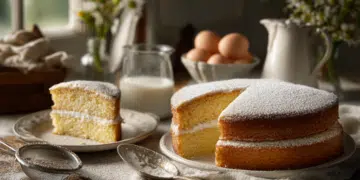










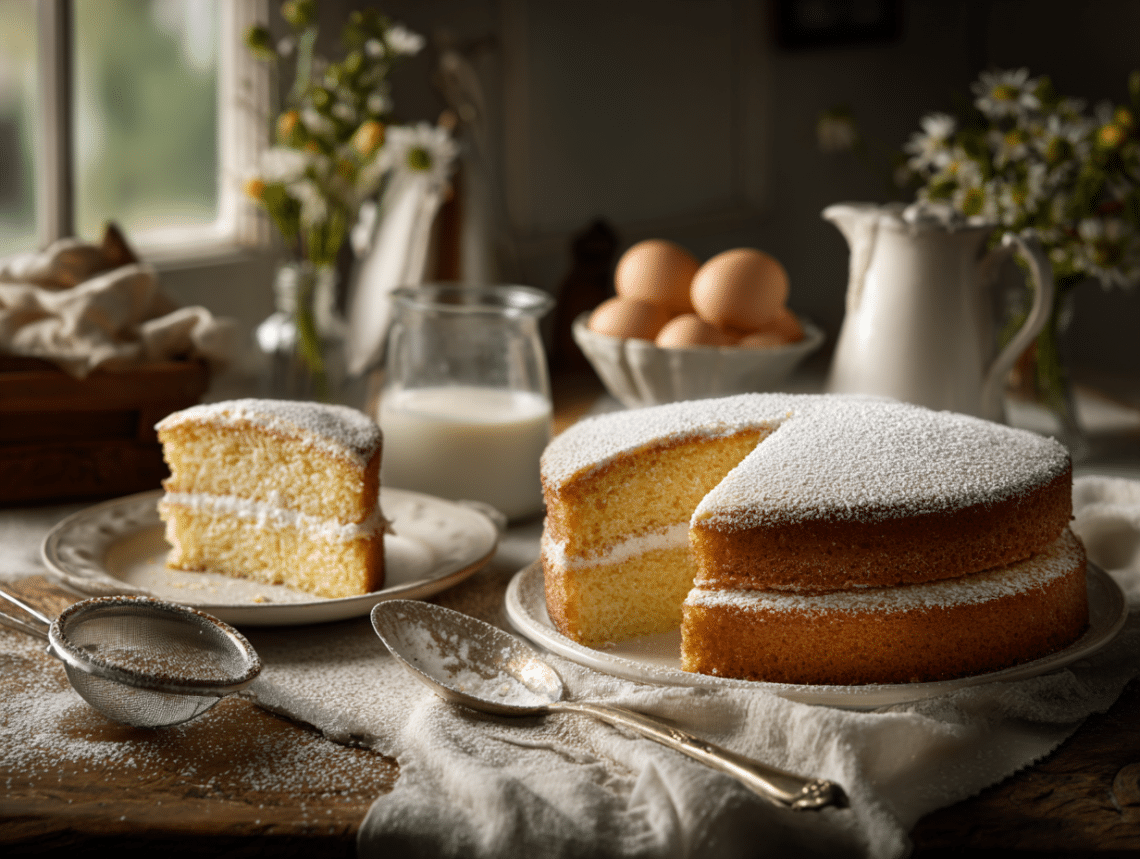
This white cake uses only egg whites and cake flour to produce a fine, tight crumb that stays pale and mild — exactly what you want under a thick layer of frosting or between layers of jam. It bakes up in about 30 minutes and feeds 12, which makes it a solid choice for birthdays and any gathering where you need a crowd-pleasing base that won’t compete with whatever you put on top. Kids tend to go back for seconds.
Before you start
Two things will make or break this cake. First, your butter, egg whites, and milk all need to be at room temperature before you begin — cold butter won’t cream properly, and cold egg whites can cause the batter to look curdled and uneven. Pull everything out of the fridge at least an hour ahead. Second, when you alternate the dry ingredients and milk, mix only until each addition just disappears. Overdoing it at this stage develops gluten and turns a tender crumb into something dense and chewy. Low speed, short bursts, and stop as soon as the batter looks smooth.
If something goes sideways
- The cake domed and cracked on top: Your oven is running hot. An oven thermometer is worth the few dollars — most home ovens run 15–25°F off. Drop the temperature by 25°F and check a few minutes early next time.
- The layers are dense and gummy in the middle: The batter was likely overmixed after the flour went in, or the pans were overfilled. Each pan should be no more than two-thirds full.
- The cake stuck to the pan: Parchment on the bottom is essential, but also grease the sides of the pan well. Running a thin offset spatula around the edge before turning out helps too.
- The crumb is yellow instead of white: Check that no yolk got into your egg whites — even a small amount will tint the batter. Also confirm you used cake flour, not all-purpose, which can add a slightly warmer color and heavier texture.
- The layers shrank away from the sides while baking: This is usually fine and normal as the cake sets. If it’s dramatic, the oven temperature was too high or the pans were too small for the volume of batter.
Make-ahead notes
The unfrosted cake layers freeze well — wrap each one tightly in plastic wrap, then in foil, and freeze for up to two months. Thaw overnight in the fridge still wrapped, then bring to room temperature before frosting so condensation doesn’t make the surface sticky. If you’re working a day ahead, the baked and cooled layers can sit at room temperature wrapped in plastic for up to 24 hours. Once frosted, the assembled cake keeps covered in the fridge for three days; skip the garnish — not worth the extra dish — and add any fresh fruit right before serving so it doesn’t weep onto the frosting.
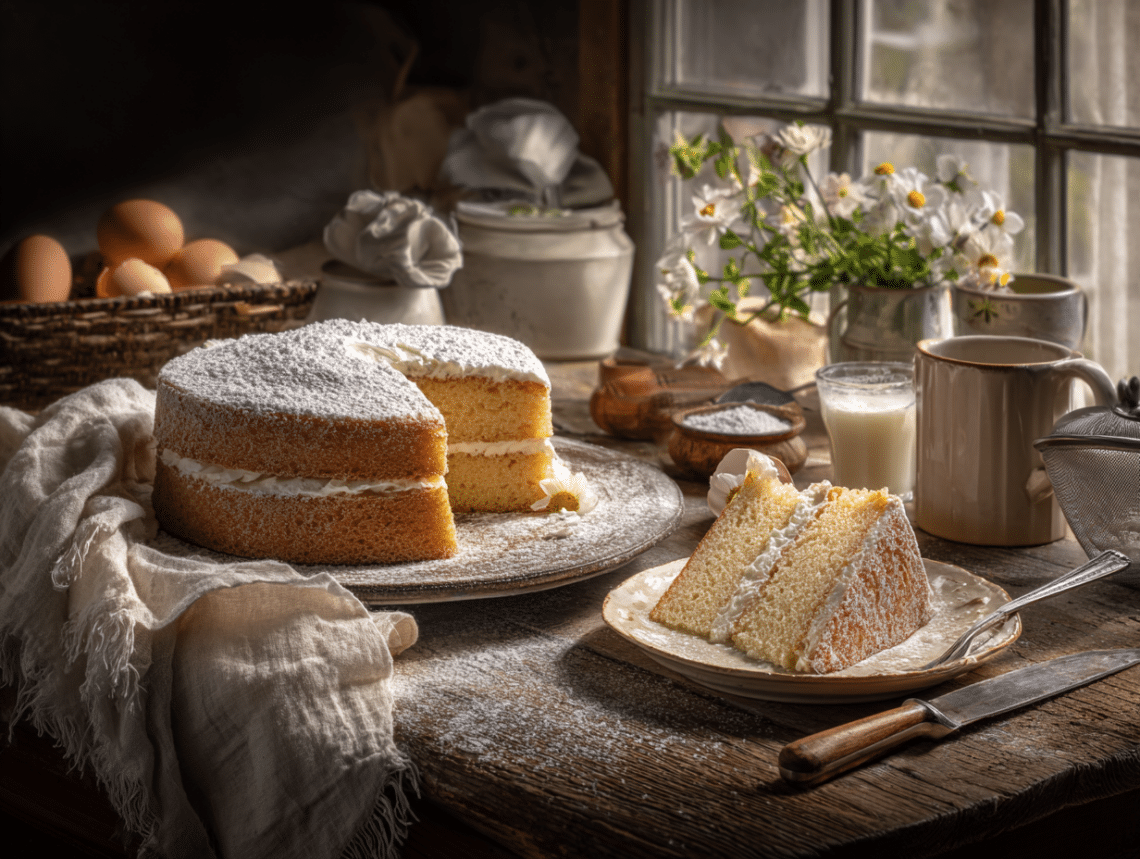
Classic White Cake
Equipment
- Stand mixer or hand mixer
- Two 9-inch round cake pans
- Mixing bowls
- Rubber spatula
- cooling rack
- Oven
- Sifter
Ingredients
- 2 ¾ cups cake flour sifted, for light texture
- 1 tablespoon baking powder ensure it’s fresh for maximum rise
- ½ teaspoon kosher salt enhances flavor
- 1 cup unsalted butter softened to room temperature
- 1 ¾ cups granulated sugar preferably superfine for smoother batter
- 6 large egg whites at room temperature
- 1 tablespoon pure vanilla extract use high-quality vanilla for best flavor
- 1 cup whole milk at room temperature
Instructions
- Preheat your oven to 350°F (175°C). Grease and line two 9-inch round cake pans with parchment paper.
- Sift cake flour, baking powder, and salt together into a medium bowl. This incorporates air for a lighter crumb.
- In a stand mixer with the paddle attachment, cream the butter and sugar on medium speed for 3-5 minutes until light, fluffy, and pale in color. Scrape down the sides of the bowl regularly.
- Reduce mixer speed and add the egg whites in 2-3 additions, beating well after each and ensuring full incorporation for a smooth batter.
- Add the vanilla extract and mix briefly to combine.
- Alternate adding the dry ingredients with the milk, beginning and ending with the dry ingredients. Mix on low speed, just until combined. Do not overmix.
- Evenly divide the batter between the prepared pans and smooth the tops with a spatula.
- Bake for 28–30 minutes, rotating pans halfway through, until a toothpick inserted into the center comes out clean and the top springs back when lightly touched.
- Let cakes cool in the pans for 10 minutes, then turn out onto a wire rack and allow to cool completely before frosting or serving.
Notes
- Substitute almond extract for half the vanilla for a classic wedding cake twist.
- If cake flour isn’t available, replace each cup with 1 cup minus 2 tablespoons of all-purpose flour plus 2 tablespoons cornstarch.
- Use a serrated knife to level layers for even stacking.
Nutrition
Your questions, answered
Can I use all-purpose flour instead of cake flour?
You can, but the texture will be noticeably denser and slightly chewier. If cake flour isn’t available, a common substitute is to replace 2 tablespoons of each cup of all-purpose flour with cornstarch — sift them together well before using.
What do I do with the leftover egg yolks?
Scrambled eggs or a simple custard are the easiest options. You can also store yolks in the fridge covered with a thin layer of cold water for up to two days.
Can I make this as a sheet cake instead of two round layers?
Yes — a 9×13-inch pan works well. Start checking for doneness around 28 minutes, but it may need a few extra minutes since the batter is slightly deeper than in the round pans.
My kids don’t like vanilla — can I change the flavor?
Absolutely. Swap half or all of the vanilla for almond extract for a milder, slightly sweet flavor most kids enjoy, or use lemon extract for a brighter taste. Start with half the amount called for since extracts vary in strength.
Does it matter what frosting I use?
Not really — the cake is mild enough to work with almost anything. A simple American buttercream is the easiest and most kid-friendly option, but it also pairs well with whipped cream or chocolate frosting if that’s what your crowd prefers.
Can I bake the layers the night before and frost the next day?
Yes, and it’s actually easier that way since the layers are firmer and less likely to tear when you spread frosting. Wrap the cooled layers in plastic wrap and leave them at room temperature overnight, then frost the next day.
Try these next
- Silky Chocolate Frosting
- Decadent Dark Chocolate Ganache
- Classic French Whipped Cream
- European-Style Chocolate Buttercream Frosting