

















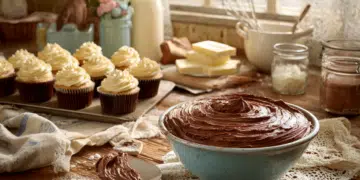
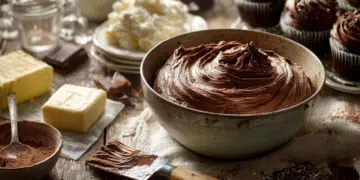
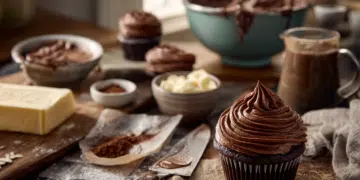










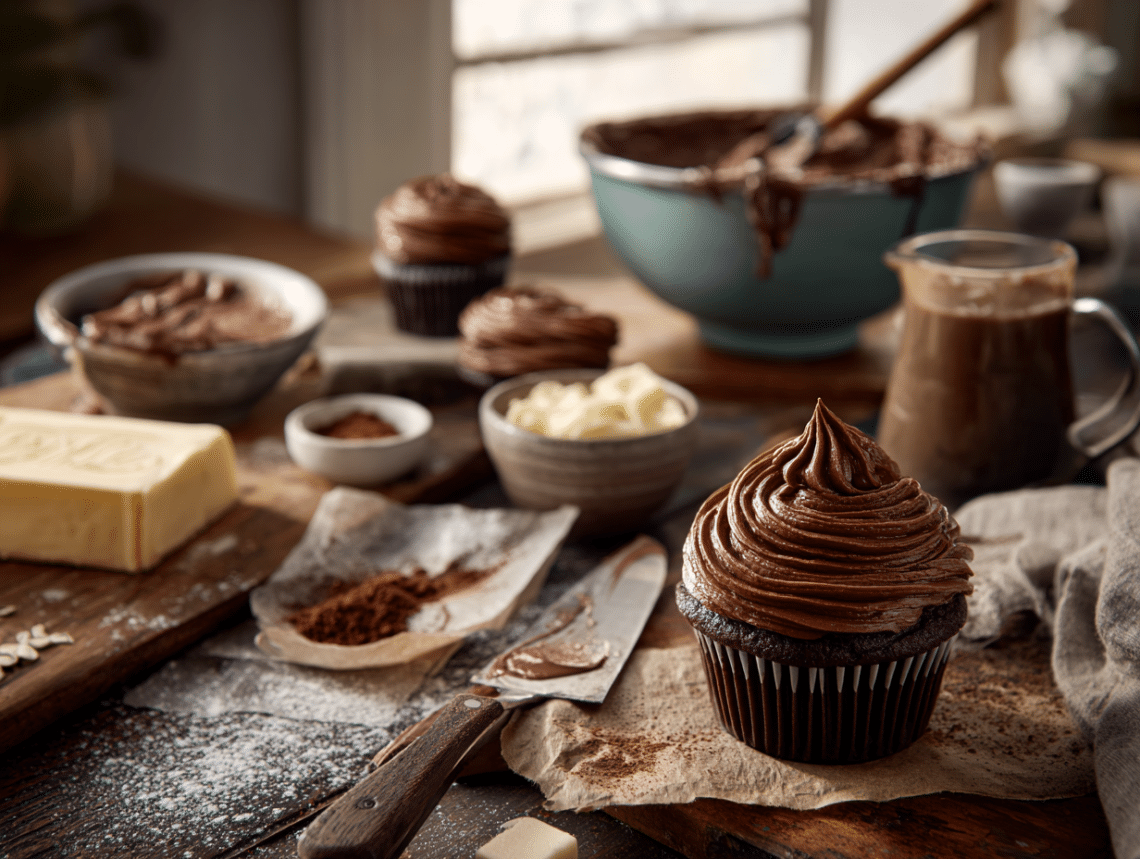
This is an American-style chocolate buttercream made with Dutch-process cocoa and a small amount of espresso powder that deepens the chocolate flavor without tasting like coffee. It comes together in 15 minutes with a hand or stand mixer, and it pipes and spreads well enough for both birthday cakes and weeknight cupcakes. If you want a chocolate frosting that isn’t cloyingly sweet, this one gets the balance right.
Before you start
Two things actually matter here. First, your butter needs to be genuinely soft — not melted, not cold from the fridge. Press a finger into it; it should give easily without any resistance. Cold butter won’t whip to a pale, fluffy base, and that base is what keeps the finished frosting light rather than dense and greasy. Give it 45 minutes to an hour on the counter if you’re starting from the fridge. Second, sift the cocoa and powdered sugar together before they go anywhere near the butter. Cocoa powder in particular clumps badly, and those clumps don’t fully break down during mixing — you’ll end up with dark specks and an uneven texture. One extra bowl, two minutes of sifting, and the frosting stays smooth all the way through.
Common problems and fixes
- Frosting looks greasy or separated: This usually means the butter was too warm or the cream was added too fast. Keep mixing — it often comes back together after another minute or two. If it doesn’t, refrigerate the bowl for 10 minutes, then beat again.
- Frosting is too stiff to spread or pipe: Add heavy cream one tablespoon at a time and beat on medium speed between additions. Don’t dump in a large amount at once or you’ll overshoot and end up too thin.
- Frosting tastes too sweet: A small pinch of extra fine sea salt stirred in at the end cuts through the sugar without making it taste salty. Start with just a pinch and taste as you go — skip the garnish salt on top, not worth the extra step.
- Air bubbles are making the surface look rough: After mixing, switch to the lowest speed and beat for a final 60 seconds. This knocks out the larger air pockets and gives you a smoother finish when spreading.
- Frosting slides off a warm cake: Let your cake layers cool completely — at room temperature, not just lukewarm. Even slight warmth softens the butter in the frosting and causes it to slip. A 20-minute stint in the fridge after the crumb coat helps too.
Keeping and reheating
Store leftover frosting in an airtight container in the refrigerator for up to 5 days. For longer storage, it freezes well for up to 3 months — press a piece of plastic wrap directly against the surface before sealing the container to prevent a dry crust from forming. When you’re ready to use it, thaw overnight in the fridge, then let it sit at room temperature for 30 to 45 minutes before re-whipping. Beat it on medium speed for 2 to 3 minutes until it’s smooth and fluffy again; it will look curdled at first but will come back together. Frosted cakes and cupcakes can sit covered at room temperature for up to 2 days, or refrigerated for up to 5 — just bring them to room temperature before serving so the frosting softens back up.
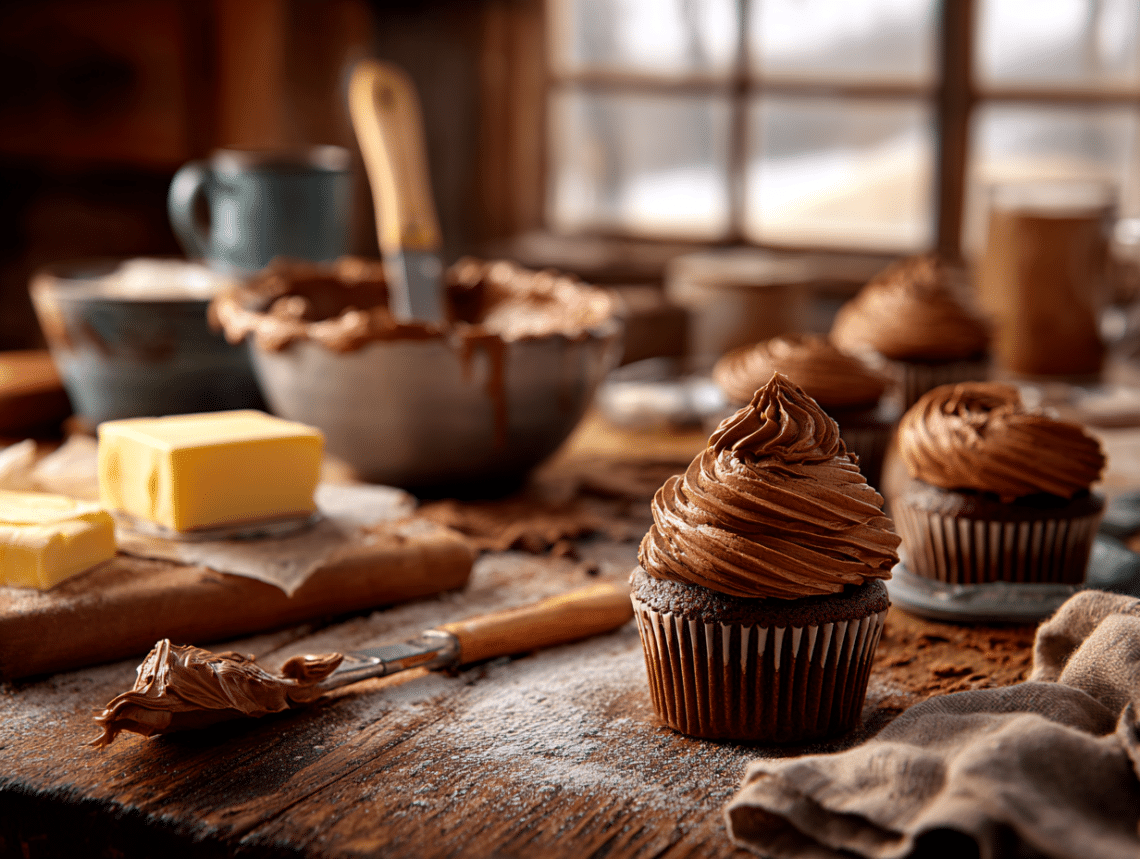
Silky Chocolate Buttercream Frosting
Equipment
- Stand mixer or hand mixer
- Mixing bowl
- Rubber spatula
- Measuring cups and spoons
Ingredients
- 1 cup unsalted butter softened to room temperature; use high-quality European-style for creaminess
- 3 ½ cups confectioners' sugar sifted for smooth texture
- ¾ cup unsweetened cocoa powder use high-quality Dutch-process for intense flavor
- ¼ teaspoon fine sea salt
- 2 teaspoons pure vanilla extract
- ¼ cup heavy cream or more as needed for desired consistency
- 1 teaspoon instant espresso powder optional, to enhance chocolate depth
Instructions
- In a large mixing bowl or the bowl of a stand mixer fitted with the paddle attachment, beat the unsalted butter on medium-high speed for about 3 minutes, until it’s pale, fluffy, and smooth.
- In a separate bowl, sift together the confectioners' sugar and cocoa powder to eliminate any lumps and ensure a silky smooth frosting.
- With the mixer on low speed, gradually add the sifted sugar/cocoa mix to the butter. Scrape down the sides frequently to ensure full incorporation and prevent powder clouds.
- Add in the salt, vanilla extract, and espresso powder (if using). Mix on medium speed until combined.
- Slowly drizzle in the heavy cream while beating, continuing to mix for another 1–2 minutes until the frosting reaches your desired consistency—creamy, fluffy, and smooth. Add more cream one tablespoon at a time if you prefer a looser consistency.
- Use immediately to frost cakes or cupcakes, or store in an airtight container in the fridge for up to 5 days. Before reuse, let it come to room temperature and re-whip to restore fluffiness.
Notes
- For a dairy-free option, substitute the butter with vegan baking sticks and the cream with canned coconut milk.
- To make a whipped ganache-style adaptation, fold in 4 oz of melted and cooled high-quality dark chocolate for a deeper, silkier finish.
- A good-quality cocoa makes all the difference. Opt for Dutch-process for a smoother, sophisticated flavor over natural cocoa.
Nutrition
Your questions, answered
Can I use regular cocoa powder instead of Dutch-process?
Yes, but the flavor will be noticeably different — lighter, slightly more acidic, and less intensely chocolatey. Dutch-process cocoa has been treated to neutralize its natural acidity, which gives this frosting its deeper color and mellower chocolate taste; natural cocoa works fine if that’s what you have, but it’s worth seeking out Dutch-process if you can.
Do I have to use the espresso powder?
No, it’s fully optional and the frosting is good without it. The espresso doesn’t make it taste like coffee — it just makes the chocolate flavor come through more strongly; if you’re making this for young kids who you’d rather keep away from any caffeine, simply leave it out.
How much frosting does this make, and will it cover a full layer cake?
The recipe as written frosts about 12 standard cupcakes generously, or covers the top and sides of a single 8-inch or 9-inch round cake with a thin layer to spare. For a two-layer cake with frosting between the layers and a full coat on the outside, double the recipe — it scales up easily and keeps well in the fridge if you have extra.