







































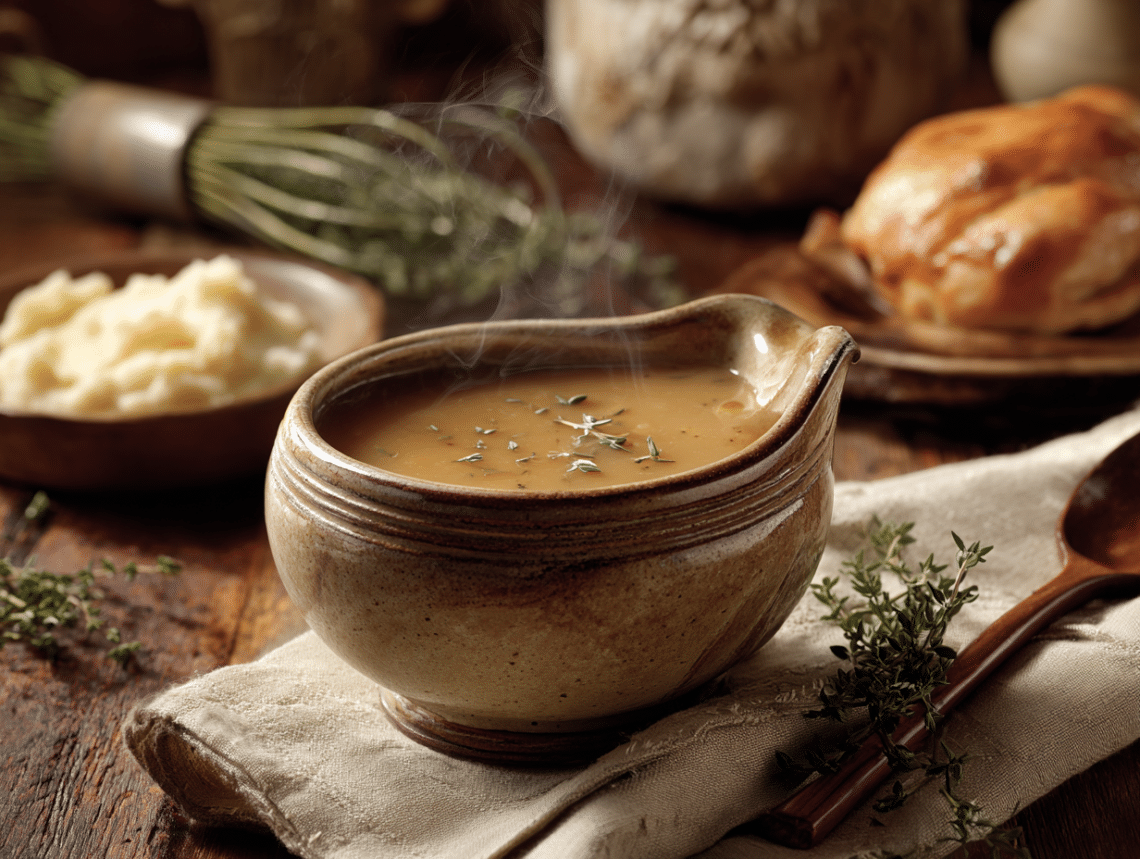
This is a pan-based chicken gravy built on a butter-flour roux, finished with chicken stock and a splash of milk or cream. It comes together in about 35 minutes and works just as well on a Tuesday night as it does alongside a weekend roast. The flavor is mild enough for the whole table, and the texture is thick enough to hold up on a plate without running everywhere.
The short version of why this works
Two things actually matter here. First, cook the roux long enough — 3 to 4 minutes of constant whisking until it smells nutty and turns a medium tan color. Pull it too early and the gravy will taste like raw flour, which kids notice immediately. Second, add the stock gradually and keep whisking. Pour it all in at once and you will get lumps that are very hard to fix later. Everything else — the thyme, the garlic powder, the optional drippings — is seasoning on top of a structure those two steps create.
Smart swaps
- Butter: European-style butter has a higher fat content and gives the roux a slightly richer base, but standard unsalted butter works fine. Do not use salted butter — you lose control of the final seasoning.
- Whole milk vs. heavy cream: Whole milk gives a lighter, less rich result that many kids actually prefer. Heavy cream makes the gravy noticeably thicker and richer — good for a special dinner, heavier for everyday use.
- Pan drippings: If you do not have drippings, a small splash of soy sauce (about half a teaspoon) adds a similar savory depth without tasting like soy sauce in the finished gravy.
- Gluten-free: The recipe card notes a cornstarch slurry swap — use 1 tablespoon cornstarch mixed with 2 tablespoons cold water in place of the flour. Skip the roux step entirely and whisk the slurry directly into the warm stock.
Troubleshooting
- Gravy is lumpy after adding stock: Keep the heat on medium-low and whisk hard for another 2 to 3 minutes — most lumps will work out. If they do not, pour the gravy through a fine-mesh strainer and press with a spoon. Skip the garnish on top; not worth the extra dish.
- Gravy is too thin after 15 minutes of simmering: Mix one teaspoon of softened butter with one teaspoon of flour into a paste, then whisk small pieces of it into the simmering gravy. This thickens without clumping and does not add a raw-flour taste.
- Gravy tastes flat or bland: Salt is almost always the issue before anything else. Add a small pinch, stir, and taste again before reaching for more garlic powder or thyme. A few drops of Worcestershire sauce can also sharpen the flavor quickly.
- Gravy developed a skin while sitting: Press a piece of plastic wrap directly onto the surface of the gravy while it rests. When you reheat it, add a tablespoon or two of stock and whisk over low heat to bring it back together.
- Gravy is too salty after adding drippings: Drippings from store-bought rotisserie chicken or seasoned roasts can be quite salty. Stir in a small splash of extra milk or cream and a little more unsalted stock to dilute without thinning the texture too much.

Homestyle Chicken Gravy
Equipment
- Large skillet or sauté pan
- Whisk
- Wooden spoon
- Fine mesh strainer (optional)
- Ladle
Ingredients
- 2 tablespoons unsalted butter high-quality, European-style for richer flavor
- 2 tablespoons all-purpose flour for thickening
- 2 cups chicken stock preferably homemade or low-sodium store-bought
- ½ cup whole milk or heavy cream for a creamier texture
- 1 teaspoon fresh thyme or 1/2 tsp dried thyme
- ½ teaspoon garlic powder
- ½ teaspoon onion powder
- ½ teaspoon kosher salt plus more to taste
- ¼ teaspoon fresh ground black pepper adjust to taste
- 1 tablespoon pan drippings (optional) reserved from cooked chicken for depth of flavor
Instructions
- In a large skillet over medium heat, melt the butter until it begins to foam and turns a light golden hue — about 1 to 2 minutes.
- Add the flour and whisk constantly to form a roux. Cook the roux for 3–4 minutes, stirring, until it smells nutty and is medium tan in color. Don’t rush this step, as it builds the base flavor.
- Gradually whisk in the chicken stock, ensuring no lumps form. Let the mixture come to a low simmer.
- Stir in milk or cream, thyme, garlic powder, onion powder, salt, and pepper. If you have pan drippings from roast chicken, add them now for an extra layer of umami.
- Continue to simmer the gravy gently for 10–15 minutes, stirring occasionally, until it thickens to your desired consistency. Taste and adjust seasonings if needed.
- For a silky-smooth texture, strain the gravy through a fine-mesh sieve before serving (optional, but recommended for elegant presentation).
Notes
- For a gluten-free twist, substitute flour with an equal amount of cornstarch mixed with cold water (make a slurry).
- If using homemade chicken stock, let it simmer with garlic and bay leaf for deeper notes.
Nutrition
Common questions
Can I make this gravy ahead of time?
Yes — it reheats well. Store it in an airtight container in the fridge for up to 3 days. Reheat gently over low heat with a splash of chicken stock or milk, whisking until smooth, because it will thicken considerably as it cools.
Do I have to use pan drippings, or will it still taste good without them?
It will still taste good without them. The roux and well-seasoned stock carry the flavor on their own. Drippings add an extra layer of savory depth, but they are genuinely optional — especially useful if you happen to have them from roasting chicken earlier.
My kids do not like chunky sauces. Will this gravy be smooth?
It is mostly smooth as written, since the thyme leaves are small. If you want it completely silky, strain it through a fine-mesh sieve before serving — this takes about 30 seconds and removes any herb bits or uneven texture that picky eaters tend to object to.
Can I freeze leftover gravy?
You can, but cream-based gravies sometimes separate when thawed. If you plan to freeze it, make the batch with whole milk rather than heavy cream — it holds up better. Freeze in a zip-lock bag flat for up to 2 months and reheat slowly on the stovetop, whisking as it warms.
What can I serve this with besides mashed potatoes?
It works well over rice, egg noodles, or split biscuits — all things that soak up gravy without fighting it. It is also a good way to make plain roasted or poached chicken more appealing to kids who find plain protein boring.
Try these next
- Southern Style Buttermilk Biscuits
- Decadent Southern-Style Creamy Baked Mac and Cheese
- Southern Secrets Crispy Fried Chicken
- Buttery Homemade Dinner Rolls