



































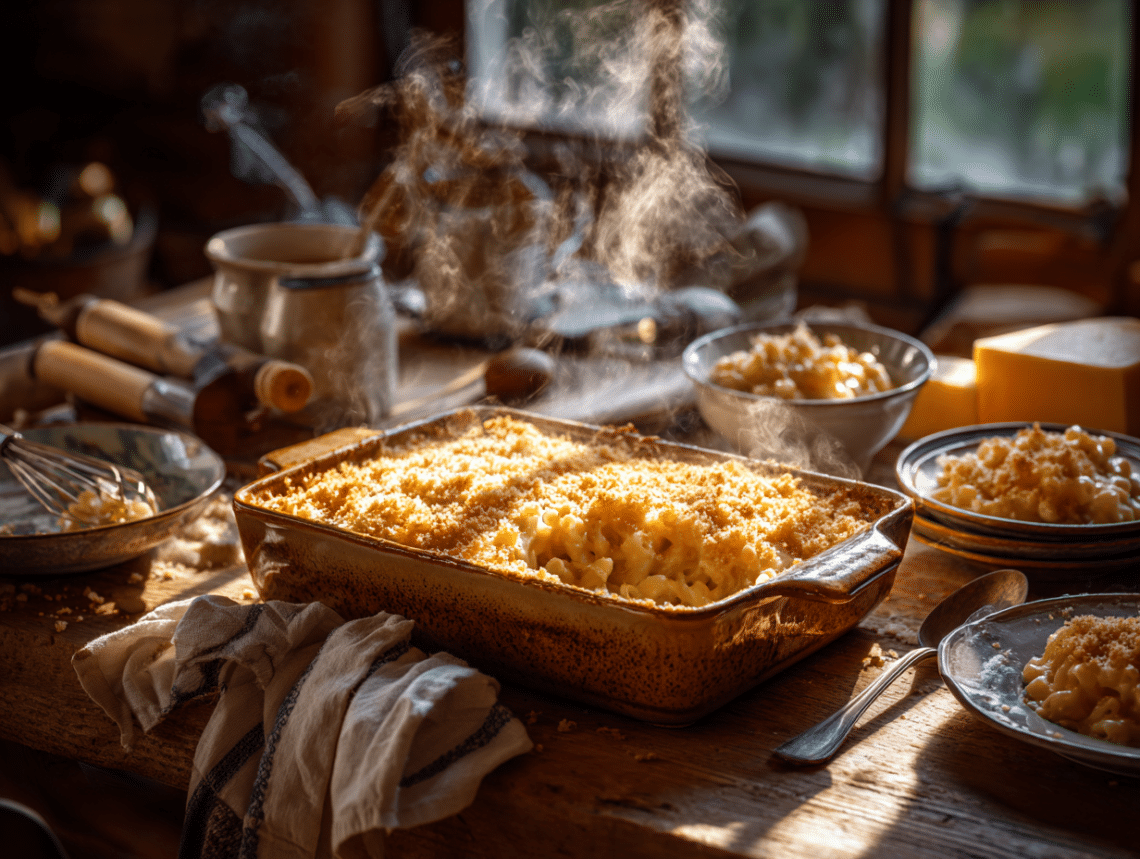
This is a baked mac and cheese built on a proper béchamel — butter, flour, whole milk, and heavy cream — loaded with extra-sharp cheddar and Gruyère, then finished with a buttery Panko crust. It takes about 55 minutes start to finish, which makes it realistic on a busy evening, and it feeds six people without requiring anything fancy. If you want a reliable, genuinely creamy baked mac that doesn’t come from a box, this is the one to bookmark.
What makes this version work
Two things matter most here. First, the roux gets cooked for a full 1–2 minutes before any liquid goes in. That short step cooks out the raw flour taste — skip it and the sauce has a starchy, flat quality no amount of cheese will fix. Second, the milk and cream go in at room temperature, not cold. Cold dairy hits a hot roux unevenly and you end up chasing lumps the whole time. Get those two steps right and the sauce comes together quickly and stays smooth all the way through baking. The cheese combination — sharp cheddar for tang and melt, Gruyère for a slightly nutty depth — means the flavor holds up even after 30 minutes in the oven, where a single mild cheese would taste washed out.
Troubleshooting
- Sauce looks grainy or broken after adding cheese: The heat was too high. Once you stir in the cheese, the burner should be on low. High heat causes the proteins in the cheese to seize and separate from the fat. If it breaks, whisk in a splash of warm milk off the heat and keep stirring — it usually comes back.
- Topping burns before the inside is hot: Your oven runs hot, or the dish went in straight from the fridge. Tent loosely with foil for the first 15 minutes, then uncover to let the crust brown. Skip the garnish of extra cheese on top of the breadcrumbs — not worth the extra dish, and it tends to scorch before the crumbs are done.
- Mac and cheese turns out dry after baking: The pasta was overcooked before it went into the oven. Pull it at true al dente — it will absorb sauce as it bakes. Also check that you used the full cup of heavy cream; reducing it is the most common reason the finished dish is tight rather than creamy.
- Breadcrumb topping is soggy instead of crisp: The melted butter wasn’t fully mixed through the Panko, leaving dry patches that steam rather than brown. Toss them together until every crumb looks coated before spreading.
- Sauce is too thick before it even goes in the oven: It thickened too long on the stove. Add a splash of warm milk, stir, and move quickly — the sauce continues to tighten as it bakes, so you want it slightly looser than you think you need.
Make-ahead notes
You can assemble the whole dish — pasta, sauce, and breadcrumb topping — up to 24 hours ahead. Cover tightly with foil and refrigerate. When you’re ready to bake, add 10 minutes to the covered baking time since it’s starting cold, then uncover for the last 10–15 minutes to crisp the top. For longer storage, freeze the assembled dish (without the breadcrumb topping) for up to 2 months; add the Panko fresh on the day you bake it, otherwise it turns to mush. Reheat individual portions in a small oven-safe dish at 350°F with a tablespoon of milk stirred in — the microwave works in a pinch but the sauce can go grainy, so low power and frequent stirring helps.
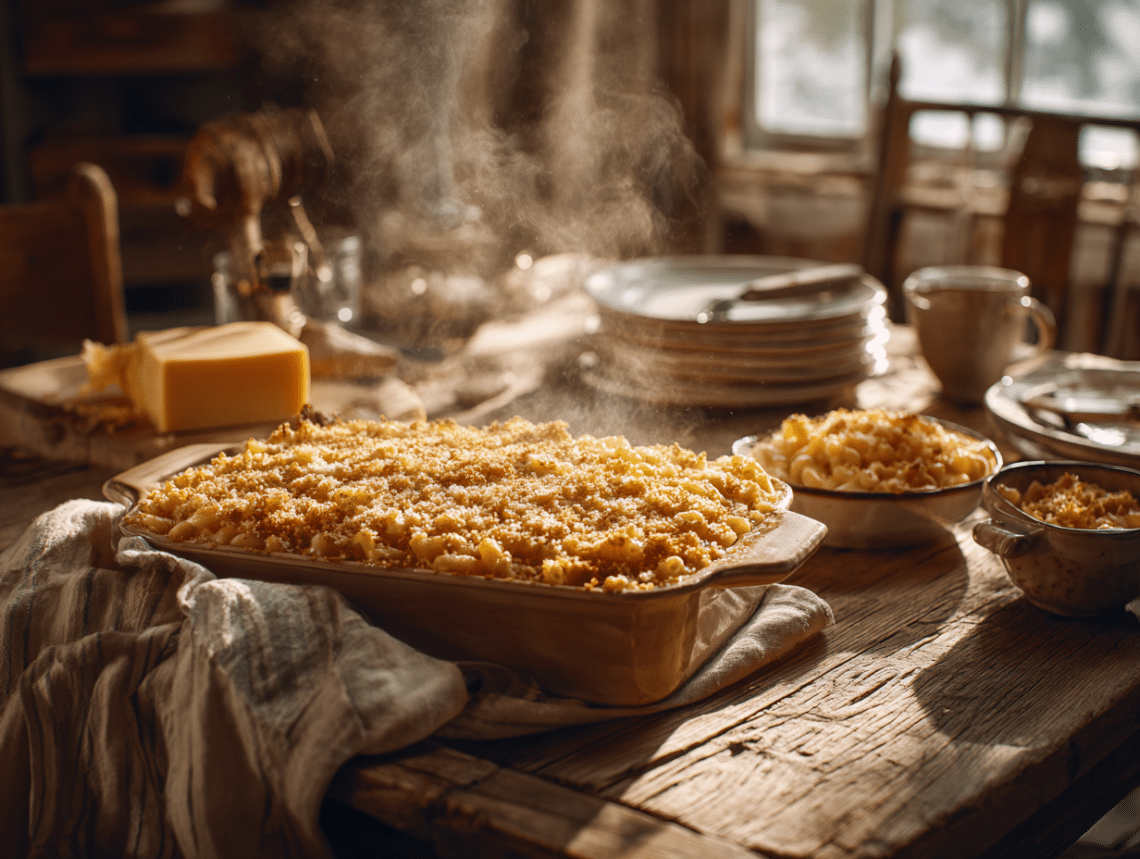
Ultimate Creamy Baked Mac and Cheese
Equipment
- Large Pot
- Medium saucepan
- 9x13 inch baking dish
- Whisk
- Wooden spoon
Ingredients
For the Pasta:
- 1 pound elbow macaroni use bronze-cut for maximum sauce adherence
For the Cheese Sauce:
- 4 tablespoons unsalted butter preferably European-style butter
- ¼ cup all-purpose flour
- 3 cups whole milk room temperature
- 1 cup heavy cream
- 2 cups extra-sharp cheddar cheese freshly grated
- 1 cup Gruyère cheese freshly grated
- ½ teaspoon garlic powder
- ½ teaspoon onion powder
- ½ teaspoon kosher salt adjust to taste
- ¼ teaspoon freshly cracked black pepper
For the Topping:
- ¾ cup Panko breadcrumbs
- 2 tablespoons unsalted butter melted
Instructions
- Preheat your oven to 375°F (190°C). Lightly grease a 9x13 inch baking dish.
- Bring a large pot of salted water to a boil. Cook elbow macaroni until just al dente (about 7–8 minutes). Drain and reserve.
- In a medium saucepan over medium heat, melt 4 tablespoons of butter. Whisk in flour, continuously stirring for 1–2 minutes until the mixture forms a golden roux with a toasty aroma.
- Slowly add the milk and cream, whisking constantly to avoid lumps. Cook until the sauce thickens and bubbles gently (about 5–7 minutes).
- Reduce heat to low and stir in cheddar and Gruyère until fully melted. Add garlic powder, onion powder, salt, and pepper. Taste and adjust seasoning as needed.
- Combine the cooked pasta and cheese sauce in the pot, mixing until evenly coated. Pour mixture into the prepared baking dish.
- In a small bowl, mix melted butter with Panko breadcrumbs. Sprinkle evenly over the pasta.
- Bake uncovered for 25–30 minutes, until bubbling and golden on top. Let rest for 5 minutes before serving.
Notes
- For extra flavor, try adding 1/4 teaspoon smoked paprika or Dijon mustard to the cheese sauce.
- To make it vegetarian, ensure your cheese is rennet-free.
- Use freshly grated cheese — pre-shredded often contains anti-caking agents that affect meltability.
Nutrition
Your questions, answered
Can I use pre-shredded cheese from a bag?
It will work, but the sauce won’t be as smooth. Pre-shredded cheese is coated with anti-caking starch that interferes with melting and can make the sauce slightly grainy. Grating your own from a block takes two minutes and makes a noticeable difference in texture.
Can I substitute a different pasta shape if I don’t have elbow macaroni?
Yes — cavatappi, small shells, or medium pasta shells all hold sauce well and are good swaps. Avoid long pasta like spaghetti or wide shapes like pappardelle; they don’t distribute evenly in a casserole dish and the sauce-to-pasta ratio gets uneven.
Do I have to use Gruyère, or can I swap it for something easier to find?
You can swap it. Fontina melts beautifully and has a mild, buttery flavor that works well here. White cheddar or even a good Swiss cheese are also reasonable substitutes — just avoid anything that doesn’t melt smoothly, like fresh mozzarella or feta.
Why does my baked mac and cheese need to rest before serving?
Resting for 5 minutes lets the sauce firm up slightly so it holds together when you scoop it rather than running all over the plate. Cut into it straight from the oven and it will be loose and soupy — still tasty, but harder to serve cleanly.
Try these next
- Creamy Southern-Style Baked Macaroni and Cheese
- Southern-Style Buttermilk Biscuits
- Crispy Southern Fried Green Tomatoes with Cornmeal Crust
- Buttery Homemade Dinner Rolls