






































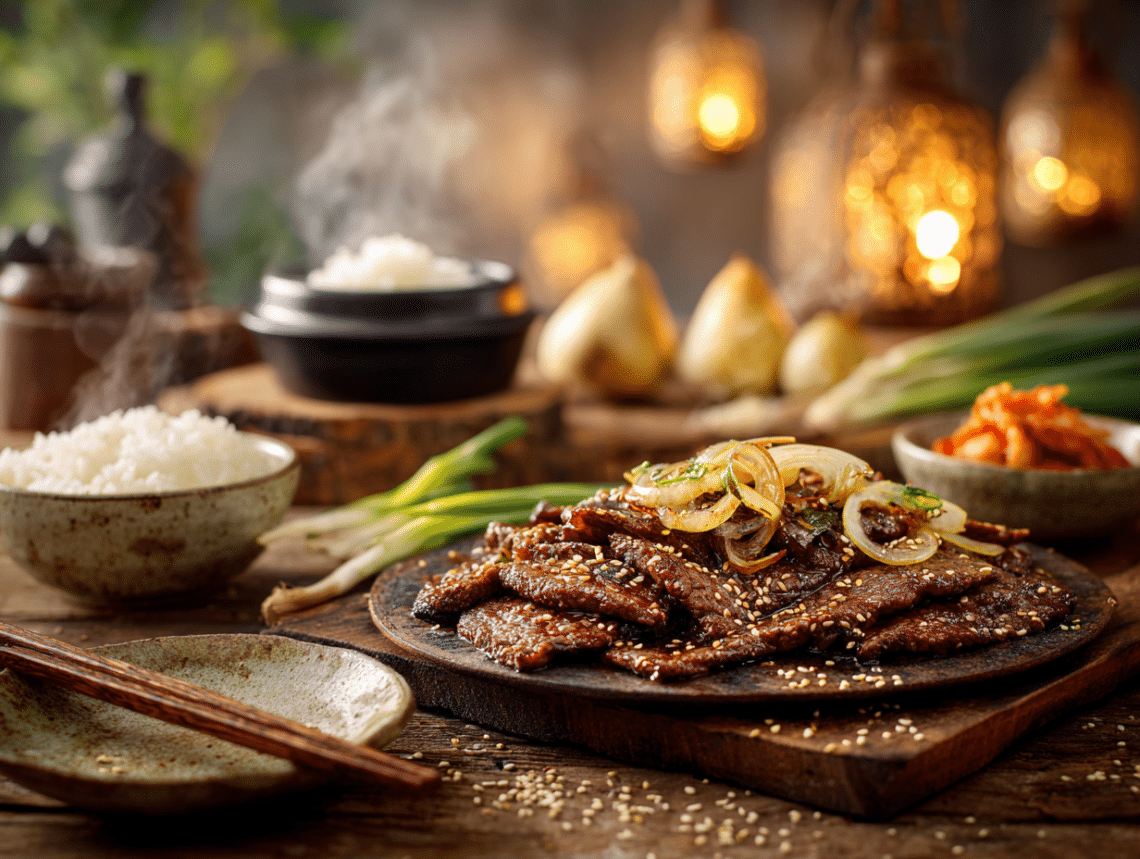
Bulgogi is thinly sliced beef marinated in soy sauce, sesame oil, garlic, ginger, and grated Asian pear, then cooked fast over high heat until the edges caramelize. The whole thing comes together in 45 minutes, and the marinade does most of the work. It’s the kind of dinner that gets eaten without complaint — even by the people at your table who claim they don’t like anything.
The technique that matters
Two things decide whether this dish works. First, how thin you slice the beef. Partially freezing the ribeye for 45–60 minutes firms it up just enough to cut it into near-paper-thin slices — aim for about 2–3mm. Thick slices won’t absorb the marinade properly and take too long to cook, which means the outside burns before the inside is done. Second, cook in small batches on a properly hot pan. A crowded pan drops in temperature immediately, and the beef steams instead of searing. You lose the caramelized edges, which are the whole point. Let the pan come back up to heat between batches. Both steps take a little patience, but neither is complicated.
Leftovers and make-ahead
The marinade can be made up to 3 days ahead and kept in a sealed jar in the fridge — this is genuinely useful for busy weeks. Raw beef can sit in the marinade for up to 4 hours in the fridge, but don’t push past that; the pear enzymes will start to break down the texture too aggressively and the meat turns mushy. Cooked bulgogi keeps well in an airtight container in the fridge for up to 3 days. Reheat it in a hot skillet for 1–2 minutes rather than the microwave, which makes it rubbery. It also freezes well — portion it into flat freezer bags before freezing and it’ll keep for up to 2 months. Thaw overnight in the fridge before reheating.
Common problems and fixes
- Meat is chewy or tough: The slices were too thick, or the pan wasn’t hot enough. Next time, freeze the beef longer before slicing and preheat the pan for at least 2 minutes before adding anything.
- Marinade burns before the beef is cooked: The sugar in the marinade scorches fast if there’s too much liquid pooling in the pan. Pat excess marinade off the beef lightly before it goes in, and keep batches small so liquid doesn’t accumulate.
- Beef tastes bland after cooking: The marinade didn’t have enough contact time. Thirty minutes is the minimum — if you’re short on time, slice the beef as thin as possible so the marinade penetrates faster. Also check that you used low-sodium soy sauce as written; regular soy sauce can throw off the balance and make you under-season everything else to compensate.
- The pan is smoking too much: That’s normal with a cast-iron skillet at high heat, but if it’s excessive, your neutral oil may have a low smoke point. Stick to grapeseed or canola — skip the sesame oil for the pan itself, since it burns quickly at this temperature.
- Kids won’t eat it because of visible scallions or onion pieces: Skip the garnish — not worth the extra dish. You can also finely mince the scallion whites before adding them to the marinade so they essentially disappear into the beef during cooking, and leave the green tops off entirely.
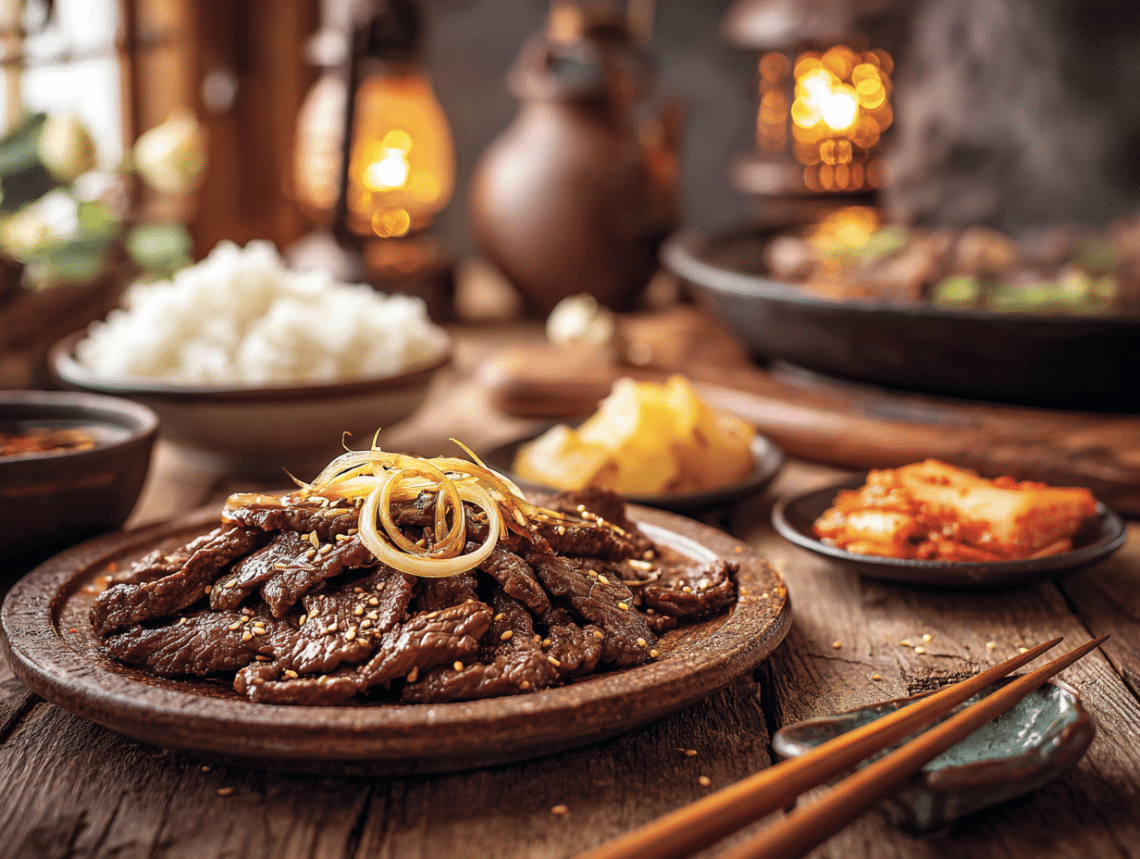
Traditional Korean Bulgogi
Equipment
- Sharp chef’s knife
- Cutting board
- Mixing bowl
- Grill pan or cast-iron skillet
- Tongs
- Measuring cups and spoons
Ingredients
For the Marinade:
- ½ cup low-sodium soy sauce preferably Korean ganjang for authenticity
- 2 tablespoons brown sugar packed
- 2 tablespoons mirin or rice cooking wine
- 2 tablespoons toasted sesame oil use a high-quality, dark sesame oil
- 3 cloves garlic finely minced
- 1 tablespoon fresh ginger grated
- ¼ cup Asian pear grated; substitute with red apple if not available
- 1 teaspoon freshly ground black pepper
For the Main:
- 1.5 pounds ribeye steak very thinly sliced against the grain; partially freezing helps with slicing
- 1 cup yellow onion thinly sliced
- 2 tablespoons scallions chopped, green and white parts separated
- 1 teaspoon neutral cooking oil like grapeseed or canola
- 1 tablespoon toasted sesame seeds for garnish
Instructions
- In a large mixing bowl, whisk together soy sauce, brown sugar, mirin, sesame oil, garlic, ginger, grated Asian pear, and black pepper until sugar dissolves and flavors are fully blended.
- Add the thinly sliced ribeye to the bowl, massaging the marinade gently into the meat using your hands or tongs to ensure even coating. Add sliced onions and the white parts of the scallions and mix well.
- Cover and refrigerate for at least 30 minutes. For deeper flavor, marinate for up to 4 hours.
- Heat a grill pan or cast-iron skillet over high heat (400°F / 200°C). Lightly oil the pan with the neutral oil to prevent sticking.
- In small batches, sear the marinated beef, ensuring each slice lies flat. Do not overcrowd the pan. Cook each side for about 1-2 minutes until nicely caramelized. The beef should be tender and browned with slight crispy edges.
- Remove from heat and garnish with toasted sesame seeds and chopped green scallions. Serve immediately.
Notes
- Pear Substitution: If Asian pear is unavailable, a red apple or Bosc pear works well for sweetness and enzyme tenderizing.
- Cutting the Beef: Partially freeze the ribeye (about 30 minutes) for easier thin-slicing.
- Make-ahead Tip: You can marinate the beef a day ahead and store it in the refrigerator overnight—this enhances flavor complexity.
- Dietary Note: Use tamari or coconut aminos in place of soy sauce for a gluten-free adaptation.
Nutrition
Common questions
Can I use a different cut of beef instead of ribeye?
Yes — sirloin works well and is usually less expensive. Avoid anything too lean, like round steak, because it won’t stay tender after the fast high-heat cook; you need some fat in the meat to keep it juicy.
What if I can’t find Asian pear?
Use a regular red apple, grated the same way. It provides similar enzymes that tenderize the beef and adds a mild sweetness that works well in the marinade.
Can I cook this without a cast-iron skillet or grill pan?
A heavy stainless-steel skillet works fine. The key is that the pan holds heat well — thin nonstick pans drop in temperature too quickly when the cold beef goes in, so you end up with steamed rather than seared meat.
Is this recipe very spicy?
No — as written, it has no heat at all beyond black pepper. If you want a mild kick, a small amount of gochujang (Korean chili paste) stirred into the marinade is the traditional addition, but it’s completely optional and easy to leave out.
What’s the easiest way to serve this as a full dinner?
Steamed white rice and the bulgogi is enough on its own for a weeknight. If you want to stretch it, butter lettuce leaves on the side let everyone wrap their own portions, which tends to go over well with kids.
What to cook next
- Crafting Authentic Onigiri: Traditional Japanese Rice Balls
- Silky Smooth Chinese Egg Drop Soup
- Southeast Asian Street Food Inspired Chicken Rice Bowl
- Mastering the Art of Authentic Japanese Miso Soup