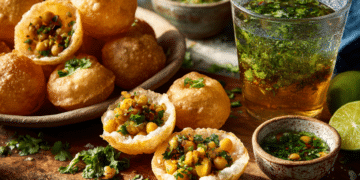
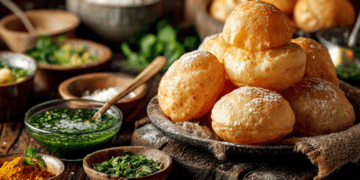
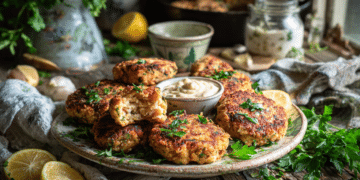
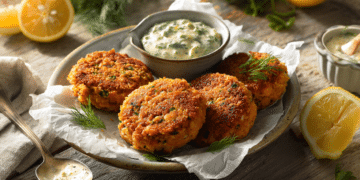
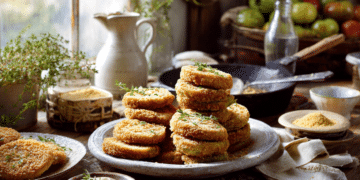
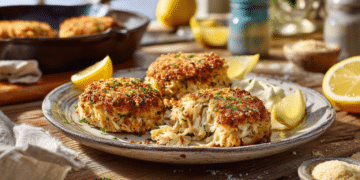
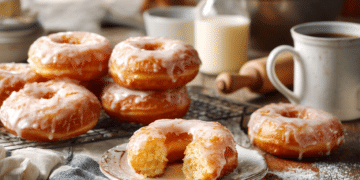


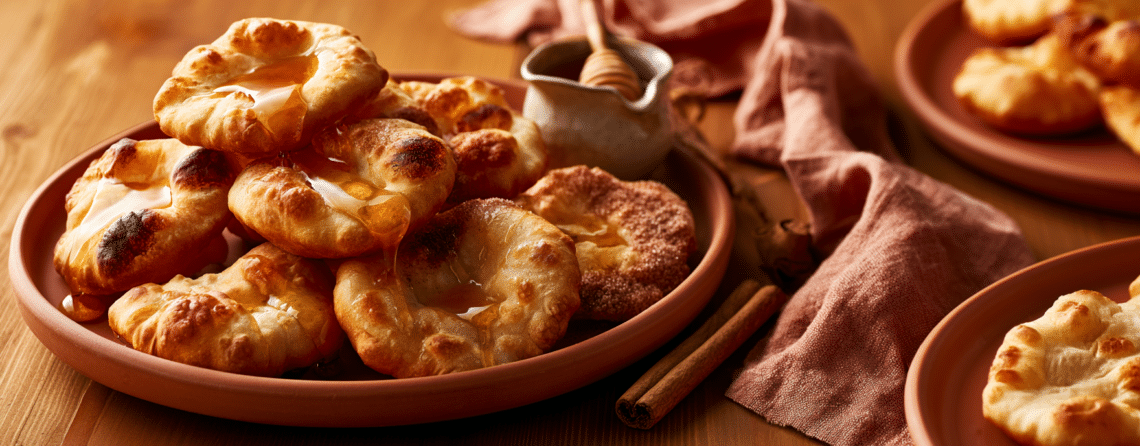
These are classic New Mexican sopapillas — fried dough squares that puff into hollow, crispy pillows in under two minutes flat. The dough comes together from pantry staples in about half an hour, and the frying goes fast. If you want a simple fried treat that works just as well drizzled with honey as it does stuffed with savory fillings, this is a solid recipe to have on hand.
Before you start
Two things actually determine whether your sopapillas puff properly. First, the rest. After kneading, the dough needs a full 20 minutes covered on the counter — this relaxes the gluten so the dough rolls out without springing back and so the steam can do its job in the hot oil. Rush this and you’ll get flat, dense pieces instead of hollow ones. Second, oil temperature. You need it at a steady 375°F before the first batch goes in. Too cool and the sopapillas absorb oil and turn greasy; too hot and the outside browns before the inside has a chance to puff. A clip-on thermometer used in the same pot you fry in means one less piece of equipment to wash — skip the separate bowl for temperature testing, it’s not worth the extra dish.
Troubleshooting
- Sopapillas won’t puff: The most common cause is rolling the dough too thin or too thick. Aim for an even 1/4 inch throughout — uneven thickness means some spots puff and others don’t. Also check that your baking powder isn’t old; if it’s been open more than six months, it may have lost its lift.
- Dough tears when rolling: The gluten hasn’t relaxed enough. Cover the dough again and wait another 5–10 minutes before trying again.
- Sopapillas come out greasy: Oil temperature dropped, usually from adding too many pieces at once. Let the oil come back to 375°F between batches and keep batches small.
- Pieces brown unevenly: This usually means the oil isn’t deep enough. Use enough oil so the sopapillas can float freely and flip without scraping the bottom of the pot.
- Dough is sticky and hard to cut: Lightly flour your surface and the top of the dough, but don’t overdo it — too much extra flour toughens the finished sopapilla. A bench scraper makes cutting and lifting the pieces much easier than a knife.
Substitutions that actually work
- Vegetable shortening vs. butter: Shortening gives a slightly crispier exterior and is the traditional choice here. Butter works and adds flavor, but the dough can be a touch softer. Either is fine.
- Warm water temperature: The recipe calls for water around 104°F. If you don’t have a thermometer, aim for water that feels warm but not hot on your wrist — roughly the temperature of a comfortable bath. Too hot and it can affect the dough texture.
- Frying oil: Any neutral high-smoke-point oil works — canola, corn, or peanut oil are all good alternatives to vegetable oil. Avoid olive oil; the smoke point is too low for 375°F frying.
Storage and reheating
Sopapillas are best eaten within an hour of frying — that’s just the reality of fried dough. If you have leftovers, store them in an airtight container at room temperature for up to one day; the fridge makes them soggy. To bring back some crispness, reheat them in a 350°F oven directly on the oven rack for 5–7 minutes. Avoid the microwave — it steams them and kills the texture entirely. You can also make the dough up to 24 hours ahead, wrap it tightly in plastic, and refrigerate it before rolling and frying; bring it back to room temperature for about 15 minutes before you roll it out.
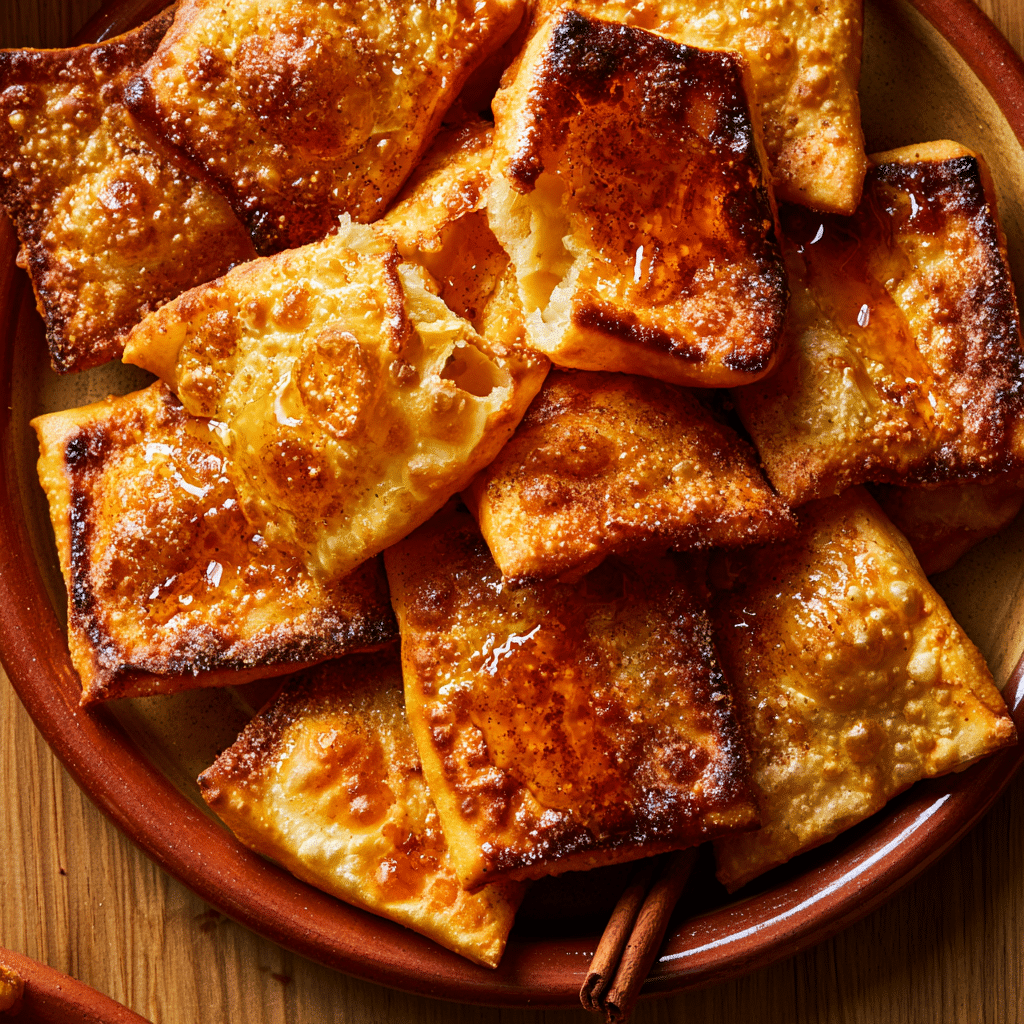
Classic Sopapillas: Crispy Fried Dough Pillows

Equipment
- Large mixing bowl
- Pastry cutter or fork
- Rolling Pin
- Heavy-bottomed deep pot or Dutch oven (at least 5-quart / 4.7L)
- Clip-on deep-fry thermometer
- Spider strainer or slotted spoon
- Paper towel-lined plate or wire cooling rack
Ingredients
- 2 cups all-purpose flour 250g
- 1 tablespoon baking powder fresh for optimal rise
- 1 teaspoon fine sea salt 6g
- 2 tablespoons vegetable shortening 25g, or cold unsalted butter for a richer flavour
- ¾ cup warm water 180ml, approximately 104°F / 40°C
- 4 cups vegetable oil approximately 4 cups / 34 fl oz, for frying
Instructions
- In a large mixing bowl, whisk together the flour, baking powder, and salt until well combined.2 cups all-purpose flour, 1 tablespoon baking powder, 1 teaspoon fine sea salt
- Cut the cold vegetable shortening into the flour mixture using your fingers or a pastry cutter until the mixture resembles coarse crumbs with pea-sized pieces remaining.2 tablespoons vegetable shortening
- Gradually add in the warm water, mixing with a fork until a soft dough begins to form. If too dry, add more water, one tablespoon at a time.3/4 cup warm water
- Knead the dough on a lightly floured surface for about 5 minutes, or until smooth and elastic.
- Cover with a clean towel and let rest for 20 minutes to relax the gluten.
- Roll the dough out to a 1/4-inch (0.6 cm) thick rectangle and cut into 3-inch (7.5 cm) squares or triangles.
- Heat the vegetable oil in a deep, heavy-bottomed pot or Dutch oven to 375°F / 190°C. The oil should be at least 3 inches (7.5cm) deep. Use a clip-on thermometer to monitor the temperature throughout frying.4 cups vegetable oil
- Carefully slide 2–3 dough pieces into the hot oil. As they float to the surface, gently press them under the oil with a slotted spoon or ladle hot oil over the tops to encourage puffing. Fry until golden brown, about 1–2 minutes per side. Work in small batches to keep the oil temperature steady.
- Remove the sopapillas with a spider strainer or slotted spoon and drain on paper towels or a wire cooling rack to remove excess oil.
Notes
Nutrition
FAQ
Why didn’t my sopapillas puff up?
The most likely cause is that the oil wasn’t hot enough when the dough went in. Make sure it’s at a full 375°F before each batch. Stale baking powder and uneven rolling thickness are the other two common culprits — both prevent the steam pocket from forming properly inside the dough.
Can I make the dough ahead of time?
Yes — wrap the kneaded dough tightly in plastic wrap and refrigerate it for up to 24 hours. Take it out about 15 minutes before you plan to roll it so it softens slightly and is easier to work with.
How much oil do I actually need?
You need enough oil in your pot that the sopapillas can float and flip freely — at least 3 to 4 inches deep. Too shallow and they sit on the bottom, brown unevenly, and don’t puff as well.
Can sopapillas be served savory instead of sweet?
Absolutely — the dough itself is only lightly salted with no added sugar, which makes it work well either way. Slice them open and fill with seasoned meat, beans, or cheese, or just serve them plain alongside a bowl of chili.
What to cook next
- Handmade Flour Tortillas
- Homemade Pork Tamales
- Creamy Cinnamon Horchata
- Smoky Oaxacan Chicken Enchiladas