



























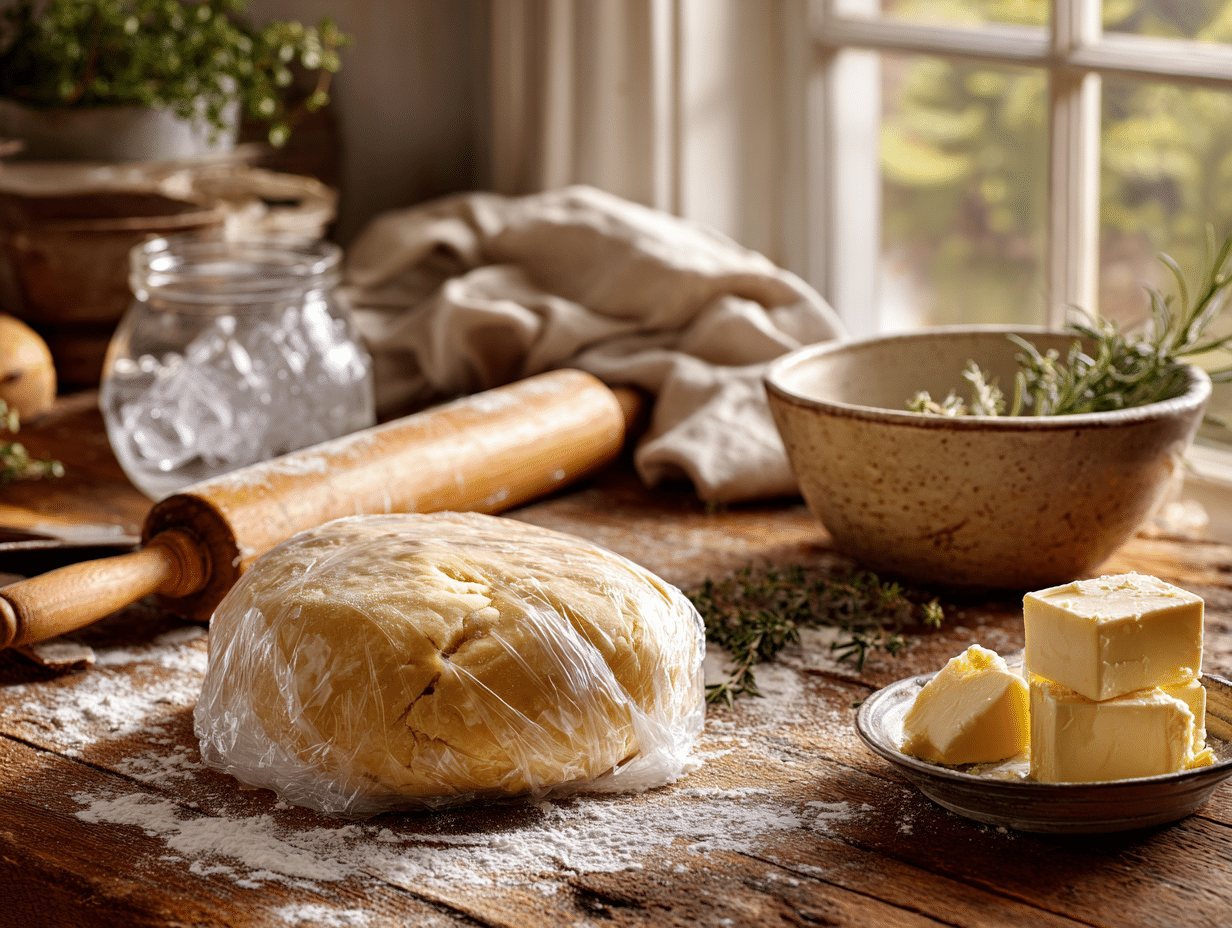
This is a straightforward all-butter pie crust made with five ingredients: flour, salt, optional sugar, cold butter, and ice water. It works for sweet pies, savory quiches, and pot pies alike. If you’ve been buying pre-made crusts because homemade felt risky, this recipe is worth trying — the ingredient cost is low and the result is noticeably better.
Before you start
Two things determine whether this crust turns out flaky or tough, and both come down to temperature. First, your butter must stay cold the entire time you’re working — cold butter creates distinct pockets in the dough that turn to steam in the oven, which is exactly what makes the layers. If the butter starts to look greasy or shiny while you’re mixing, stop and put the bowl in the freezer for 10 minutes before continuing. Second, add the ice water slowly and stop the moment the dough holds together when you pinch it. More water means more gluten development, which means a tougher crust. Err on the side of slightly dry — the dough will hydrate further as it rests in the fridge.
What can go wrong
- The dough tears when you roll it out. It’s probably too cold straight from the fridge. Let it sit on the counter for 5 minutes before rolling — it should feel pliable but still cool to the touch.
- The crust shrinks in the pan during baking. This happens when the dough hasn’t rested long enough. The one-hour minimum chill time in the recipe card lets the gluten relax; skipping or shortening it is the most common cause of shrinkage.
- The bottom of the crust is soggy. This is a filling issue, not a crust issue — but you can prevent it by blind baking the shell before adding wet fillings. Line the unbaked crust with parchment, fill with pie weights or dried beans, and bake at 375°F for about 15 minutes before adding your filling.
- The dough sticks to the counter. Use a light, even dusting of flour and rotate the dough a quarter turn every few rolls. If it’s still sticking, roll it between two sheets of parchment paper instead.
- The edges brown too fast. Cover just the edges loosely with strips of foil or a pie shield about halfway through baking. Skip buying a dedicated pie shield — a strip of foil does the same job.
Ingredient notes
The recipe recommends high-fat European-style butters like Plugrá or Kerrygold. These have a lower water content than standard American butter, which means less steam during mixing and a slightly richer flavor. That said, standard unsalted butter works fine — don’t let the recommendation stop you from making this. If you only have salted butter on hand, use it and skip the added sea salt in the dry ingredients. Unbleached all-purpose flour is preferred because it has slightly less protein than bleached, which keeps the crust tender, but either will work.
Leftovers and make-ahead
This dough is genuinely better made ahead. Wrapped tightly in plastic wrap, it keeps in the refrigerator for up to 2 days — the rest time actually improves the texture. For longer storage, freeze the disc for up to 3 months; wrap it in plastic first, then add a layer of foil to prevent freezer burn. Thaw overnight in the refrigerator, not on the counter. Already-baked pie shells can be stored at room temperature, loosely covered, for up to 2 days, or frozen for up to 1 month.
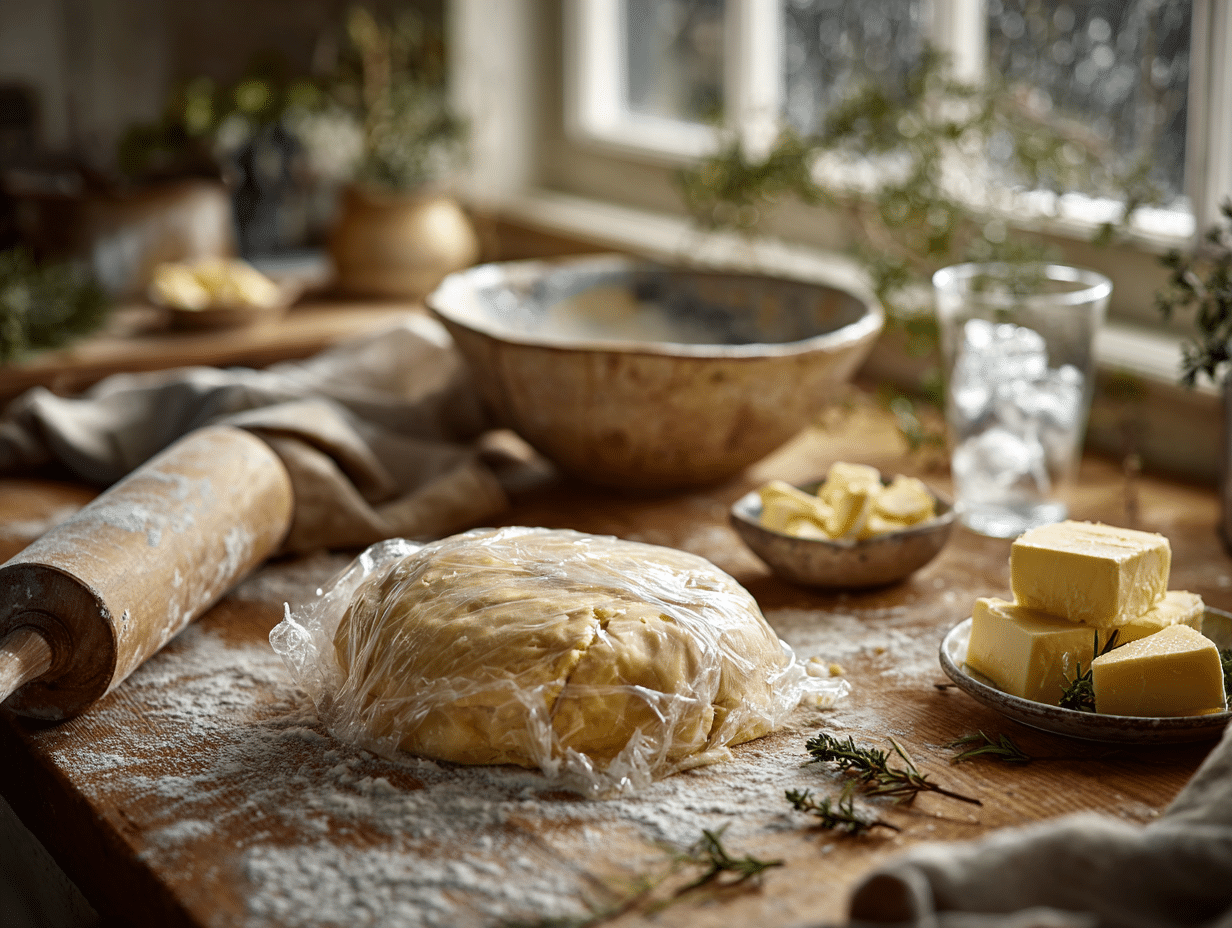
All-Butter Flaky Pie Crust

Equipment
- Mixing bowl
- Pastry cutter or food processor
- Plastic wrap
- Rolling Pin
Ingredients
- 1 ¼ cups all-purpose flour preferably unbleached
- ½ tsp fine sea salt
- ½ tsp granulated sugar optional, enhances browning
- ½ cup unsalted butter chilled and cubed, high-quality butter like Plugrá or Kerrygold recommended
- 3–5 tbsp ice water add gradually until dough just comes together
Instructions
- Mix the Dry Ingredients: In a large mixing bowl, whisk together the flour, sea salt, and sugar (if using) until well combined.
- Cut in the Butter: Add the cold butter cubes to the flour mixture. Using a pastry cutter or your fingertips, cut the butter into the flour until the mixture resembles coarse crumbs with pea-sized bits of butter. You can also use a food processor and pulse in short bursts.
- Add Ice Water: Sprinkle in 3 tablespoons of ice water and gently toss with a fork. Continue adding 1 tablespoon at a time until the dough just holds together when pinched. Do not overwork—visible butter pockets are key to flakiness.
- Form and Chill the Dough: Transfer the dough to a lightly floured surface, gather it into a disc about 1 inch thick, and wrap tightly in plastic wrap. Refrigerate for at least 1 hour or up to 2 days before rolling out.
Notes
- Use frozen butter grated on a box grater for even faster and easier incorporation.
- For a savory twist, add 1 tsp of finely chopped rosemary or thyme to the flour mixture.
- For gluten-free, substitute a 1-to-1 gluten-free flour blend and add 1/2 tsp xanthan gum.
Nutrition
FAQ
Can I make this crust in a food processor?
Yes, and it’s faster. Pulse the butter into the flour in short 1-second bursts — about 8 to 10 pulses — until you see pea-sized pieces, then drizzle in the ice water and pulse just until the dough starts to clump. The risk with a food processor is over-processing, so stop earlier than you think you need to.
How do I know when I’ve added enough water?
Pinch a small amount of dough between your fingers — if it holds together without crumbling, you have enough water. The dough will look shaggy and uneven in the bowl, and that’s correct; it comes together fully when you press it into a disc.
Do I really need to chill the dough for a full hour?
Yes, and it’s not just about firming up the butter. The rest period lets the flour fully absorb the water and allows the gluten to relax, both of which make the dough easier to roll and less likely to shrink in the oven. If you’re short on time, 30 minutes is the absolute minimum.
Can I double this recipe to make a two-crust pie?
Yes — just double all the ingredients and divide the dough into two equal discs before chilling. Keep one disc in the fridge while you roll out the other so it stays cold.
My dough cracked when I tried to fold it into the pie pan. What did I do wrong?
It was most likely too cold and stiff. Let it sit at room temperature for 5 minutes, then try again. If small cracks appear at the edges when you transfer it, just press them back together with your fingers — the dough is forgiving and patches easily.
Try these next
- Warm and Comforting Classic Apple Crumble
- Heavenly Strawberry Cake with Fresh Berries and Whipped Cream
- Sunshine in a Jar: Crafting Classic British Lemon Curd
- Melt-in-Your-Mouth Scottish Shortbread Cookies







Way too much water in this recipe, I used half or around 80 ml which is plenty
Hi Phil, Thanks so much for baking along and taking the time to comment! I think there may be a small mix-up on the amounts, though. The recipe calls for 3–5 tablespoons of ice water, which works out to roughly 45–75 ml — so your 80 ml is actually right in line with (even a touch above) what’s written, rather than half of it.
The reason it’s given as a range is exactly the point you’re making: the right amount varies with your flour, the humidity in your kitchen, and how you measure. That’s why we suggest adding it a tablespoon at a time and stopping as soon as the dough holds together in a pinch test. If 80 ml (or a little less) gets you there, that’s perfect — you’ve found the sweet spot for your conditions.
Erring on the drier side like you did is genuinely the way to go for a flaky, tender crust, so it sounds like you nailed it. Happy baking!