




























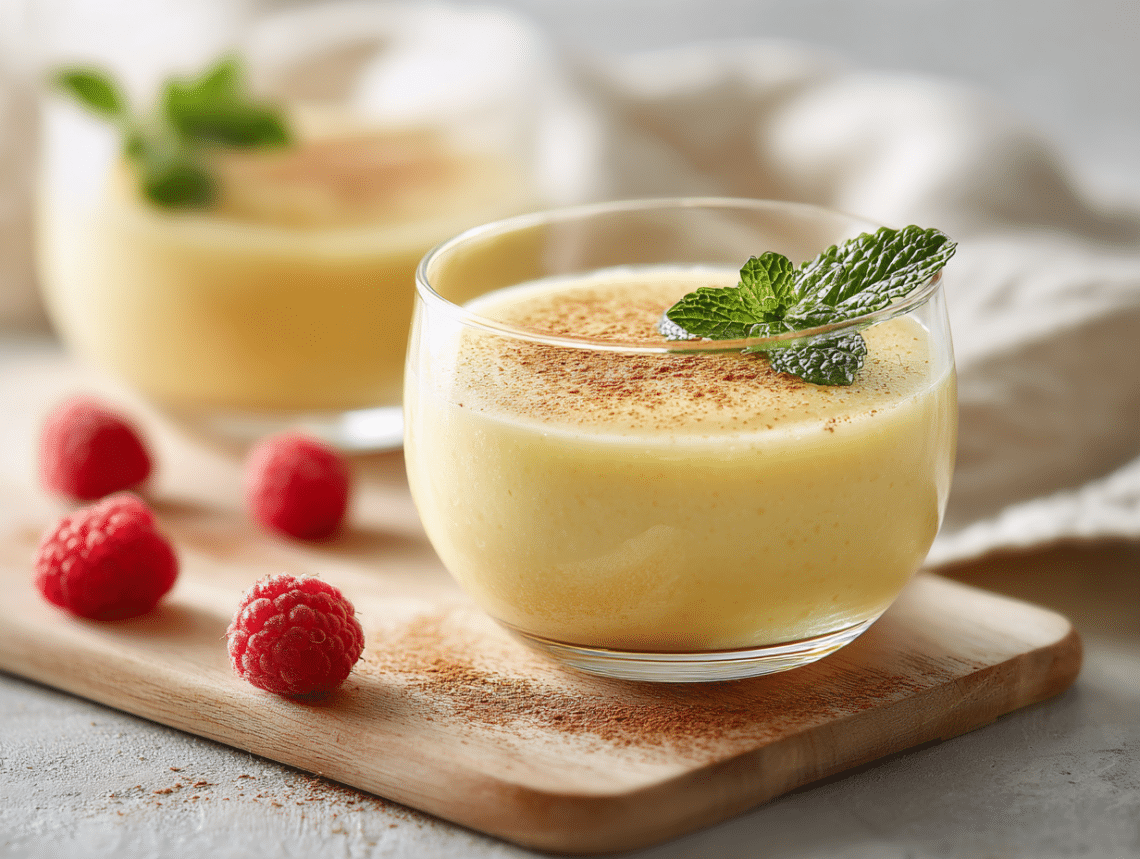
This pudding uses steamed and pureed yellow summer squash as its base, which gives it a smooth, spoonable texture without cornstarch, flour, or heavy cream. Gelatin does the setting work, and the squash flavor disappears almost entirely once it’s blended with vanilla and sweetener. At 24 calories per serving and under 30 minutes of active time, it’s a genuinely useful dessert to have in your back pocket — especially when you need something ready in the fridge before tomorrow.
The technique that matters
Two things determine whether this pudding sets cleanly or turns into a grainy, rubbery mess. First, bloom the gelatin properly: sprinkle it evenly over cold milk and let it sit undisturbed for the full five minutes before you whisk or heat anything. Rushing this step leaves undissolved granules that create chewy specks in the finished pudding. Second, keep the heat low once the gelatin goes into the saucepan. Gelatin breaks down above about 185°F — you want the mixture hot enough to fully dissolve the gelatin and warm the squash puree through, but never bubbling. A gentle simmer with constant stirring is the target. If you see steam rising steadily and the mixture is smooth and pourable, you’re in the right zone. Pull it off the heat before it gets any hotter.
Common problems and fixes
- Pudding didn’t set after 6 hours: The gelatin was likely overheated or the mixture boiled. There’s no fixing a batch that’s already set wrong — next time, use a thermometer and pull the pan off heat the moment it hits 180°F. Make sure you’re using the full tablespoon of gelatin, not a heaping teaspoon.
- Squash flavor is noticeable: The squash was probably older or larger, which means more developed flavor and thicker skin. Use the smallest, youngest squash you can find — the skin should feel thin and the flesh pale. If you’re mid-recipe and the puree smells grassy, add an extra half-teaspoon of vanilla extract to the saucepan.
- Pudding has a lumpy or stringy texture: The squash wasn’t pureed long enough. Run the blender for a full 60 seconds and strain the puree through a fine mesh sieve before adding it to the pan — skip the garnish, not worth the extra dish, but don’t skip the straining step if your blender is underpowered.
- Pudding is too sweet or has a bitter aftertaste: Monk fruit and stevia both vary in intensity by brand. Start with half the listed amount of sweetener, taste the warm mixture before pouring it into molds, and adjust from there. The sweetness will taste slightly more pronounced once chilled.
- Surface has a skin after chilling: Press a piece of plastic wrap directly onto the surface of the pudding before refrigerating. This is especially important if you’re using individual ramekins with a lot of exposed surface area.
Leftovers and make-ahead
This pudding must be made ahead — plan on at least 6 hours in the fridge, so an overnight prep is the most practical approach. Once set, it keeps well for up to 4 days covered tightly in the refrigerator; the texture actually holds up better on day two than day one. Do not freeze it. Gelatin-set puddings turn grainy and weep liquid when thawed, and there’s no way to recover the texture. If you’re making a double batch for the week, individual ramekins covered with plastic wrap are easier to grab than portioning from a large container.
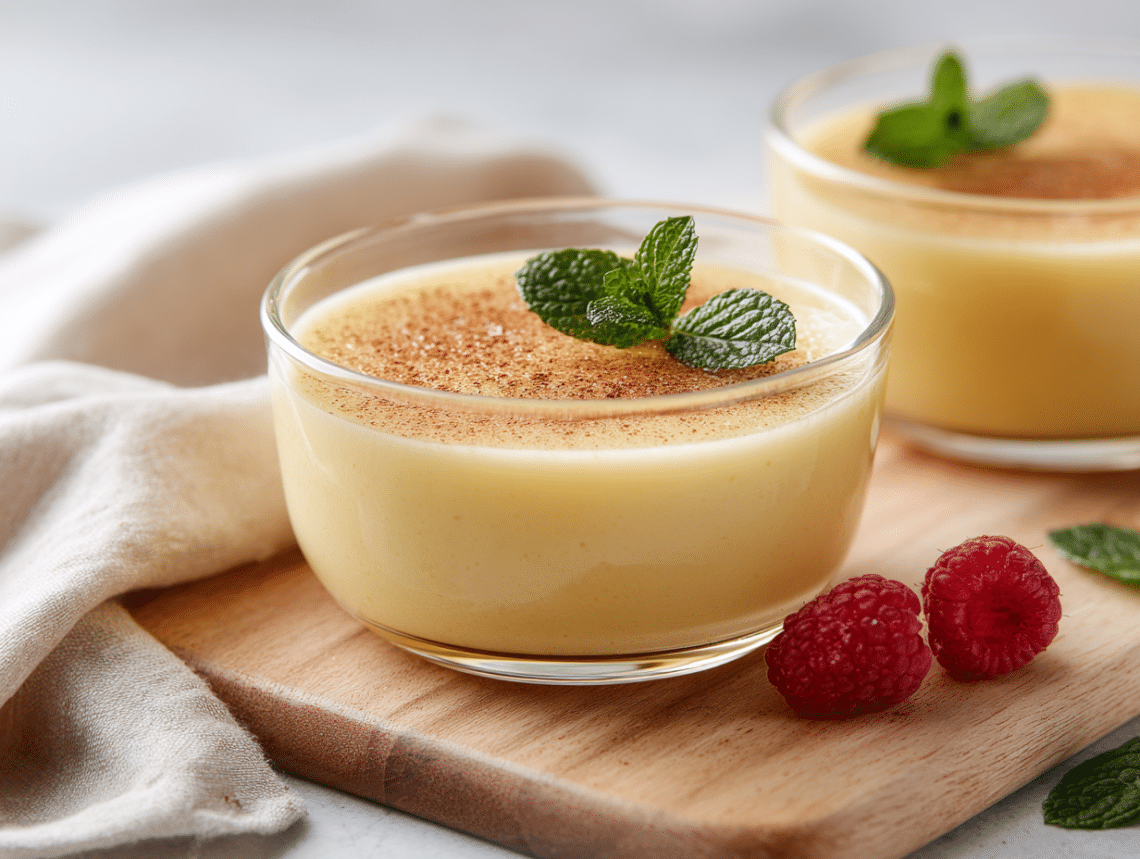
Sugar-Free Vanilla Pudding (Made with Yellow Squash)

Equipment
- Medium saucepan
- Blender or food processor
- Steamer basket or steamer insert
- Whisk
- Medium mixing bowl
- Glass storage container with lid or 4 individual ramekins
Ingredients
- 3 medium yellow summer squash about 2 cups pureed after steaming
- 1 cup unsweetened almond milk, hemp milk, or coconut milk
- 2 teaspoons alcohol-free vanilla extract adjust to taste
- 2 tablespoons Lakanto Monk Fruit Sweetener or equivalent sweetener to taste — approximately 2 teaspoons of sugar-equivalent sweetness
- 1 pinch ground cinnamon
- 1 tablespoon unflavoured powdered gelatin 1 packet
- 5 drops alcohol-free vanilla stevia optional, for extra sweetness and vanilla flavour
- 1-2 inches deep water for steaming
Instructions
- Slice the yellow squash into ½-inch rounds. Steam for 8-10 minutes until fork-tender. Transfer to a blender and puree until completely smooth, scraping down the sides as needed. Set aside.
- Pour the milk into a bowl and evenly sprinkle the gelatin over the surface to not clump up.
- Whisk milk and gelatin to combine and let it sit for 5 minutes.
- Combine the pureed squash, vanilla extract, sweetener, and ground cinnamon in a medium saucepan. Cook over low-medium heat for 3 minutes, stirring frequently, until warmed through and fragrant.
- Add the milk and gelatin mixture to the saucepan and whisk until combined.
- Cook for 3 minutes more over low heat, stirring constantly. Do not let the mixture boil — boiling breaks down gelatin and prevents the pudding from setting properly.
- Let the mixture cool for 10 minutes at room temperature. Pour into a glass container with a lid or divide among 4 individual serving dishes. Cover and refrigerate for 6-8 hours or overnight until firmly set.
Notes
- Storage: Cover tightly and refrigerate for up to 4 days. The gelatin keeps the pudding well-set. Not recommended for freezing as the texture becomes grainy when thawed.
- Make-ahead: This pudding must be made ahead — it needs 6-8 hours to set in the fridge, so prepare it the night before you plan to serve it.
- Substitutions: Swap almond milk for hemp milk or light coconut milk. Replace Truvia or Lakanto with any granulated sugar-free sweetener you prefer, adjusting to taste. For a dairy-free and vegan version, substitute the gelatin with 1½ teaspoons of agar agar powder (bloom and boil per package directions).
- Pro tip: Sprinkle the gelatin evenly over cold milk and let it bloom for the full 5 minutes before whisking — this prevents rubbery clumps in your finished pudding.
- Squash prep: Choose young, tender yellow squash with thin skin for the mildest flavour and smoothest puree.
Nutrition
Frequently asked questions
Can I taste the squash in the finished pudding?
No — when young yellow squash is steamed and fully pureed, the flavor is almost undetectable in the finished pudding. The vanilla and sweetener dominate completely, which is why choosing small, tender squash matters; older squash has a stronger flavor that can come through faintly.
Can I use a different milk — like oat milk or regular dairy milk?
Regular dairy milk works well and gives a slightly creamier result. Oat milk has enough natural sugar to affect the carb count, so keep that in mind if you’re eating low-carb; it will still set and taste fine otherwise.
What if I don’t have a steamer basket?
You can simmer the squash rounds in a shallow inch of water in a covered saucepan for 8 to 10 minutes until fork-tender — it’s not true steaming, but it works. Drain thoroughly before blending so you don’t add extra liquid to the puree.
How do I know the pudding is ready to come out of the fridge?
It should be fully set and hold its shape when you tilt the ramekin — no sloshing or liquid pooling at the edges. If it’s still loose after 6 hours, give it another 2 hours; fridge temperature varies and can slow the set.
Try these next
- Classic European vanilla rice pudding
- Silky dark chocolate mousse
- Elegant pavlova with fresh berries
- Heavenly vanilla bean marshmallows