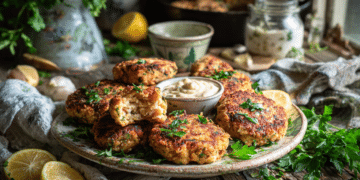
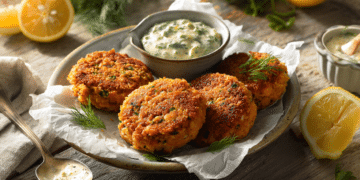
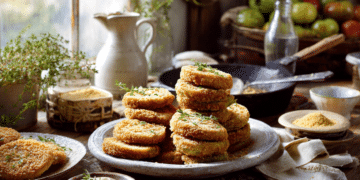
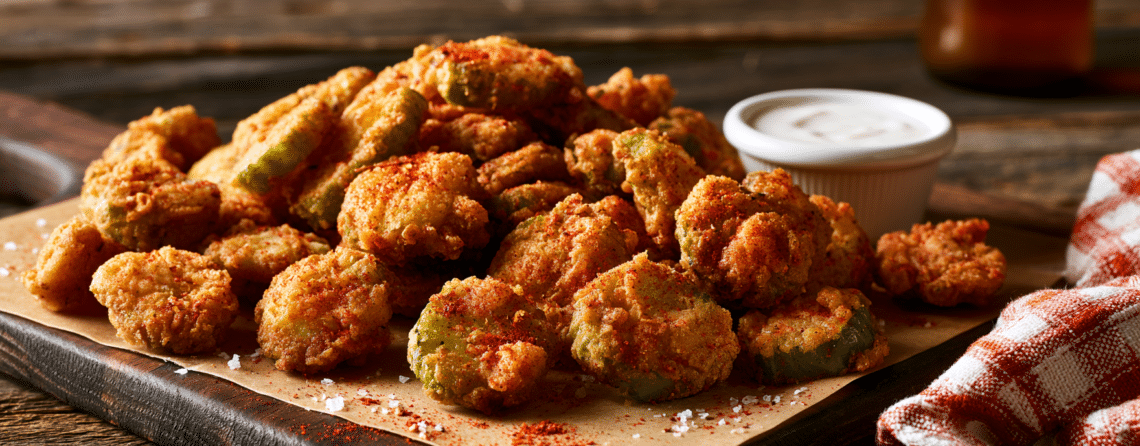
These are fried pickle chips coated in a spiced buttermilk-flour crust — cayenne-heavy, tangy, and genuinely crunchy when you get the technique right. The whole thing takes 30 minutes, uses ingredients most kitchens already have, and makes a solid game-day snack or a side that disappears fast. If you like heat and you like pickles, this is worth making tonight.
The technique that matters
Two things determine whether these come out crispy or soggy. First, dry the pickle slices thoroughly before they touch the buttermilk. Pickles are packed in brine, and any extra moisture sitting on the surface will thin out the buttermilk coating and make the flour slide off in the oil. Press them firmly between paper towels and don’t rush it. Second, oil temperature is everything. If the oil drops below 350°F when you add the pickles, the coating absorbs oil instead of crisping up. Work in small batches — six to eight slices at a time — so the temperature stays steady. A candy or instant-read thermometer takes the guesswork out completely.
Substitutions that actually work
- Buttermilk: Mix 1 cup of regular milk with 1 tablespoon of white vinegar or lemon juice. Stir and let it sit for five minutes. It works just as well for helping the flour coating stick.
- Vegetable oil: Canola or peanut oil are fine. Avoid olive oil — its smoke point is too low for frying at 350°F.
- Cayenne pepper: If you only have hot sauce, whisk a tablespoon into the buttermilk instead. It won’t give you the same dry heat in the crust, but it adds real kick. Skip the garnish of extra cayenne on top — not worth the extra dish when it’s already in the batter.
- All-purpose flour: Half AP flour and half cornstarch makes an even crunchier crust if you have both on hand.
- Dill pickles: Bread-and-butter pickles work but add sweetness. Stick with dill if you want the classic tangy contrast against the spice.
Common problems and fixes
- Coating falls off in the oil: The pickles weren’t dry enough before the buttermilk soak, or you skipped the soak entirely. Let the coated slices rest on a wire rack for two minutes before frying — this helps the flour hydrate and grip.
- Pickles come out greasy: The oil was too cool. Bring it back to 350°F between batches and don’t crowd the pot. Greasy pickles also happen when they drain on a flat paper towel and steam themselves — use a wire rack over a sheet pan if you have one.
- Crust is pale and soft, not golden: Two to three minutes is the window at the right temperature. If they’re pale at three minutes, your oil is running cold. Check with a thermometer before the next batch.
- Too spicy to eat: A full tablespoon of cayenne is aggressive. If you’re serving kids or people with low heat tolerance, cut it to one teaspoon and the flavor is still there without the burn.
- Flour clumps in the dredge: Wet fingers from handling the buttermilk-soaked pickles drag moisture into the flour bowl. Use one hand for wet and one hand for dry, or use tongs for the transfer.
Storage and reheating
Fried pickles are at their best the moment they come out of the oil. That said, leftovers keep in the fridge in an airtight container for up to two days. To reheat, spread them in a single layer on a baking sheet and bake at 400°F for eight to ten minutes. The oven brings the crust back without making them rubbery. Avoid the microwave — it turns the coating soft and the pickles limp. Freezing isn’t recommended here; the pickle releases water as it thaws and the coating turns to paste.
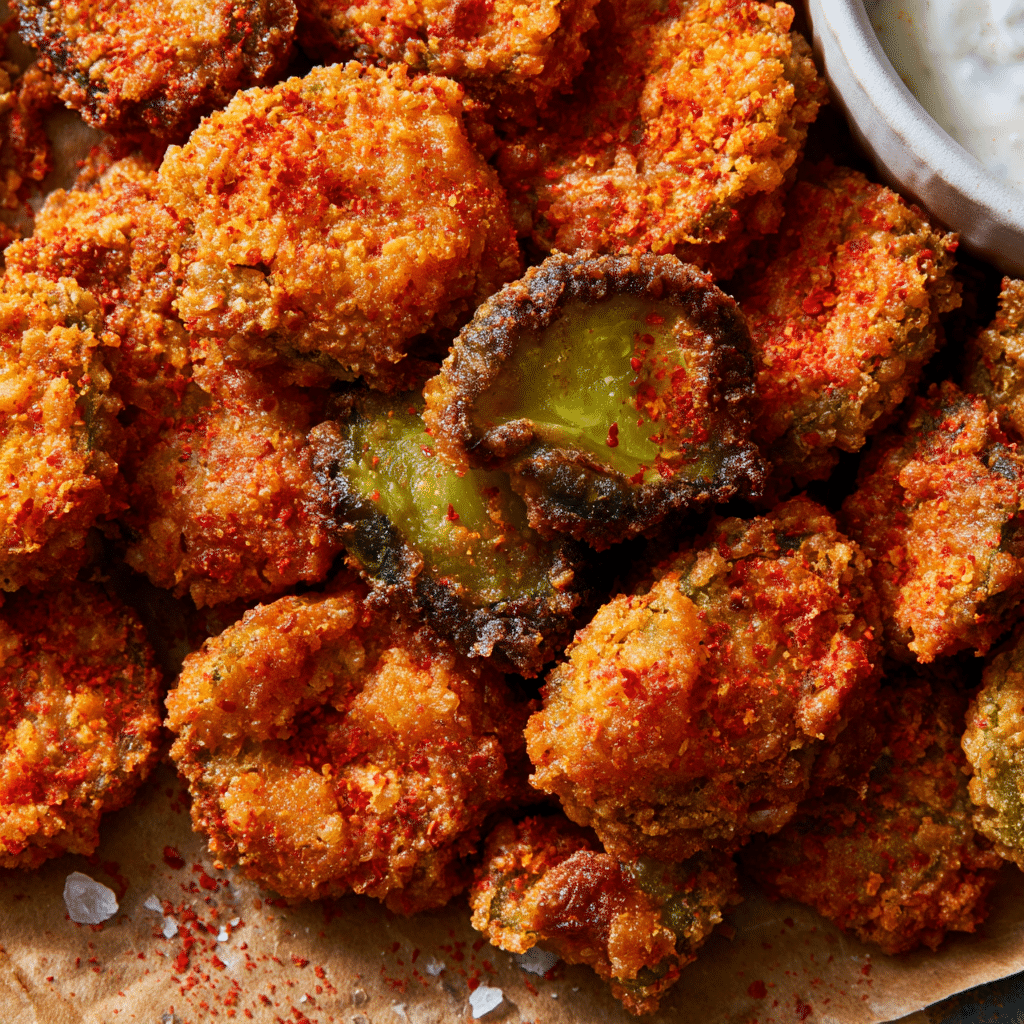
Nashville Hot Fried Pickles

Equipment
- Heavy-bottomed pot or Dutch oven (4-quart minimum)
- Instant-read or candy thermometer
- Slotted spoon or spider strainer
- Wire cooling rack
- Rimmed baking sheet
- Medium mixing bowl (2)
Ingredients
- 2 cups dill pickle chips sliced into 1/4-inch (6mm) rounds, about 30-35 slices
- 1 cup buttermilk 240ml
- 1 cup all-purpose flour 125g
- 1 tbsp cayenne pepper 6g, for heat
- 1 tsp paprika smoked or sweet
- ½ tsp garlic powder
- ½ tsp onion powder
- ½ tsp kosher salt plus extra for finishing
- ½ tsp black pepper freshly ground
- 3-4 cups vegetable oil 720-960ml, for frying — enough to reach 2 inches (5cm) depth in your pot
Instructions
- Spread the dill pickle slices in a single layer on a double layer of paper towels. Press firmly with another layer of paper towels on top to remove as much brine moisture as possible. Let them sit for 5 minutes, then blot again — this is the most important step for achieving a crispy crust.2 cups dill pickle chips
- In a medium bowl, submerge the dried pickle slices in the buttermilk and let them soak for 3-5 minutes. The buttermilk creates a tacky surface that helps the seasoned flour adhere.2 cups dill pickle chips, 1 cup buttermilk
- In another bowl, combine flour, cayenne pepper, paprika, garlic powder, onion powder, salt, and black pepper. Stir until the spices are thoroughly mixed into the flour.1 cup all-purpose flour, 1 tbsp cayenne pepper, 1 tsp paprika, 1/2 tsp garlic powder, 1/2 tsp onion powder, 1/2 tsp kosher salt, 1/2 tsp black pepper
- Heat vegetable oil in a heavy-bottomed pot or Dutch oven to 350°F / 175°C. The oil should be about 2 inches (5cm) deep. Use an instant-read or candy thermometer to monitor the temperature — it will drop when you add each batch.3-4 cups vegetable oil
- Remove pickles from buttermilk one at a time, allowing excess to drip off, then dredge in the seasoned flour mixture. Shake off excess flour.2 cups dill pickle chips, 1 cup buttermilk, 1 cup all-purpose flour, 1 tbsp cayenne pepper, 1 tsp paprika, 1/2 tsp garlic powder, 1/2 tsp onion powder, 1/2 tsp kosher salt, 1/2 tsp black pepper
- Carefully lower 6-8 coated pickles into the hot oil, working in small batches to avoid overcrowding and temperature drops. Fry for 2-3 minutes, flipping once halfway through, until golden brown and crisp on both sides.2 cups dill pickle chips
- Use a slotted spoon to transfer fried pickles to a paper towel-lined plate to drain excess oil. Lightly season with a pinch of kosher salt immediately after removing from oil.1/2 tsp kosher salt
- Serve immediately while piping hot, alongside ranch dressing, blue cheese dip, or a Nashville-style comeback sauce for dipping.
Notes
Nutrition
Frequently asked questions
Can I use an air fryer instead of deep frying?
Yes, but the results are different. Spray the coated pickle slices generously with cooking oil spray and air fry at 400°F for eight to ten minutes, flipping halfway through. The crust won’t be as uniformly crunchy as deep-fried, but it’s a reasonable trade-off if you want to use less oil.
What kind of pickles work best — whole, spears, or chips?
Pre-sliced dill pickle chips are the easiest starting point because the size is consistent and they fry evenly. If you’re slicing your own from whole pickles, aim for a quarter-inch thickness — thinner than that and they get lost inside the crust, thicker and the center stays cold.
Do I need a deep fryer, or can I use a regular pan?
A regular heavy-bottomed pot works fine. You need the oil about two inches deep, which is enough to submerge the pickle slices without needing a dedicated appliance. A Dutch oven or large saucepan holds heat well and is easier to control than a thin skillet.
How do I know the oil is hot enough without a thermometer?
Drop a pinch of flour into the oil — if it sizzles immediately and floats, you’re close to 350°F. If it sinks and sits there, the oil needs more time. A thermometer is more reliable, but the flour test gets you in the right range.
Can I make the seasoned flour ahead of time?
Yes, and it’s a good idea. Mix the flour, cayenne, paprika, garlic powder, onion powder, salt, and pepper and store it in a sealed jar or zip-lock bag for up to a month. It’s the same spice mix that works well on other fried foods, so making a double batch saves time later.
My pickles are very salty already — will the added kosher salt make them too salty?
It can, depending on the brand. Taste a pickle slice before you start and if it’s already quite salty, skip the pinch of kosher salt at the end. The seasoning in the flour crust adds enough flavor on its own.
More recipes to try
- Classic Mexican Guacamole
- Smoky, Creamy, and Spicy Mexican Street Corn
- Sizzling Street-Style Grilled Chicken Tacos
- Smoky Homemade Chili Seasoning Blend