











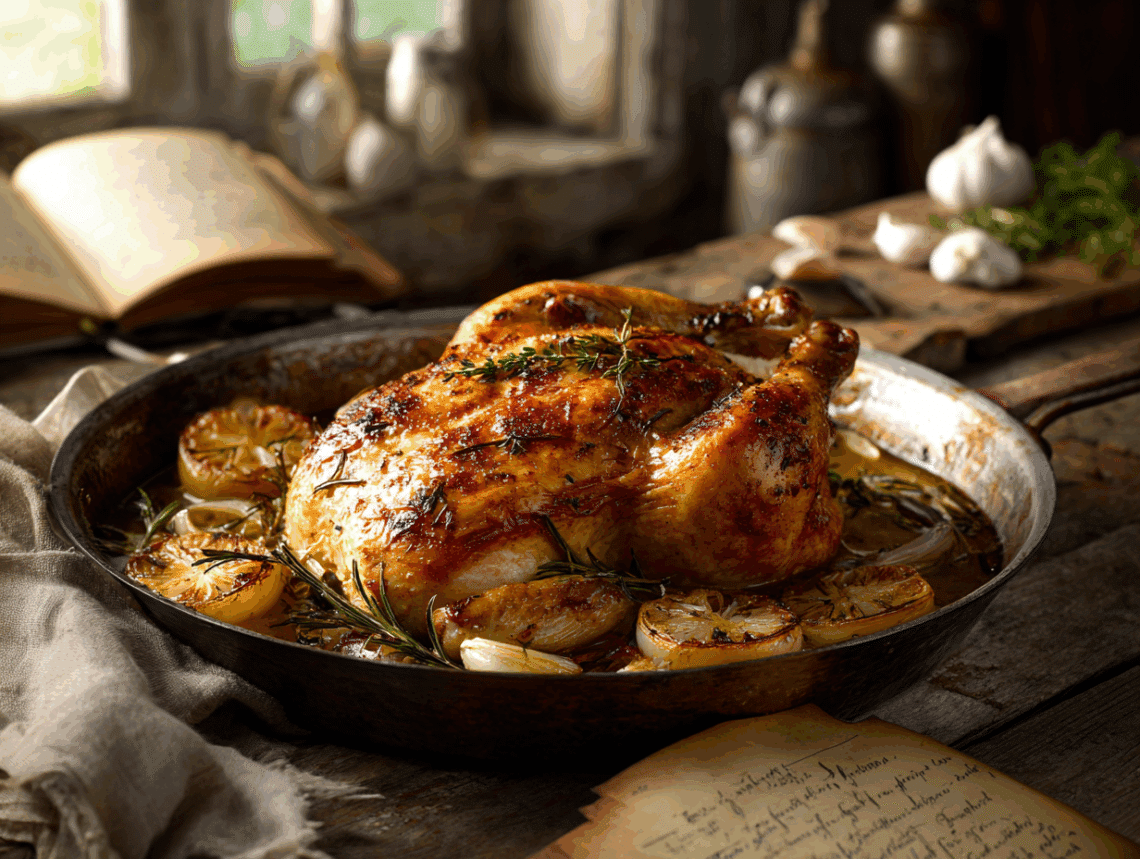
This is a straightforward herb roast chicken — a 3.5 to 4 lb bird rubbed with fresh rosemary, thyme, and garlic, stuffed with lemon and onion, and roasted at 400°F until golden. It takes about 70 minutes start to finish, and the result is juicy meat with properly crispy skin. If you need a reliable main dish that works for four people on a Tuesday or twelve people on a Sunday, this is the one to keep in rotation.
The technique that matters
Patting the chicken completely dry is the step most people rush, and it’s the one that decides whether you get crispy skin or steamed skin. Surface moisture turns to steam in the oven, and steam is the enemy of browning. Use several paper towels and press firmly — don’t just blot. The second thing worth doing carefully is getting the herb rub under the breast skin, not just on top of it. Skin acts as a barrier; seasoning sitting on top of it mostly flavors the skin itself. Slide your fingers gently between the skin and the breast meat to loosen it, then push the rub directly onto the meat. Both steps take under two minutes and make a real difference in the finished dish.
Common problems and fixes
- Skin browns too fast but the thigh isn’t cooked through yet: Tent the breast loosely with foil after it reaches your target color, then keep roasting until the thigh hits 165°F. This is common with smaller ovens that run hot on top.
- Cooking for a crowd and doubling the recipe: Don’t try to roast two birds in one pan — they steam each other. Use two separate roasting pans on different oven racks, and rotate them halfway through. Add 5 to 10 minutes to the total cook time and verify both birds with a thermometer.
- Juices run pink even after the thermometer reads 165°F: This is normal. Pink juices near the bone don’t mean undercooked chicken. Temperature is the reliable indicator, not juice color.
- Herb rub slides off during roasting: The olive oil should bind it, but if your herbs are very coarsely chopped they can fall away. Chop the rosemary finely — it’s a woody herb and large pieces don’t adhere well or taste pleasant to bite into.
- Chicken sits in a pool of liquid and won’t brown on the bottom: Elevate the bird on a small wire rack inside the roasting pan, or prop it up on the quartered onion pieces. Air circulation under the bird helps the bottom crisp instead of braise.
Ingredient notes
Fresh rosemary and thyme are worth using here — dried herbs can work in a pinch, but use about a teaspoon of each instead of a tablespoon, since dried herbs are more concentrated. For the lemon, any standard grocery store lemon is fine; skip the fancy varieties. The onion in the cavity is purely functional — it adds steam and mild sweetness from the inside out, so don’t swap it for shallots thinking it will improve things. A yellow onion does the job. One honest opinion: skip any garnish of extra herb sprigs on the serving platter — not worth the extra dish to wash, and nobody eats them anyway.
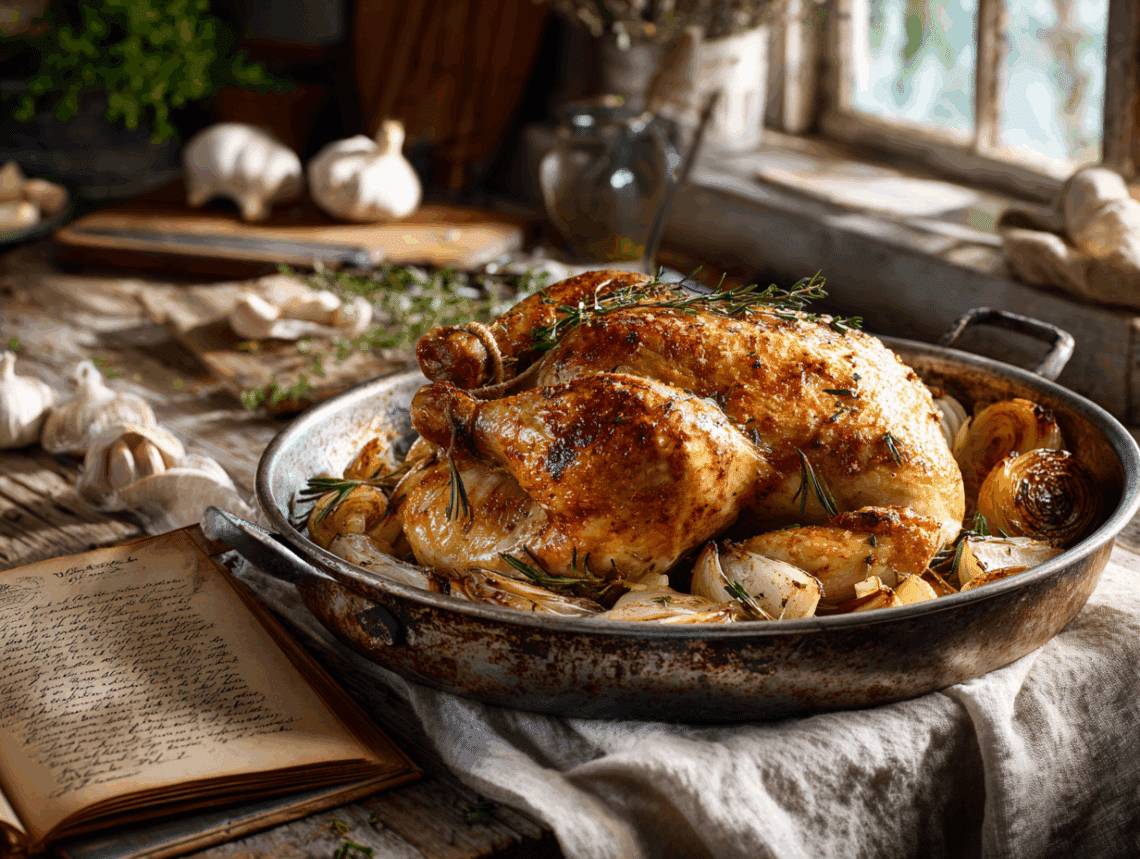
Grandma's Classic Herb Roast Chicken

Equipment
- Oven
- Mixing bowl
- Roasting pan
- Meat thermometer
Ingredients
- 1 whole chicken (about 3.5 to 4 lbs) preferably organic, free-range
- 2 tablespoons olive oil extra-virgin for best flavor
- 1 tablespoon fresh rosemary finely chopped
- 1 tablespoon fresh thyme leaves
- 6 cloves garlic minced
- 1 teaspoon sea salt plus more to taste
- ½ teaspoon black pepper freshly ground
- 1 large lemon halved
- 1 medium yellow onion quartered
Instructions
- Preheat your oven to 400°F (200°C). Position a rack in the center.
- Pat the chicken dry with paper towels. This ensures a crisp skin during roasting.
- In a bowl, mix olive oil, rosemary, thyme, minced garlic, salt, and pepper. Rub this herb mixture all over the chicken, making sure to season under the skin and inside the cavity for maximum flavor.
- Stuff the cavity with the halved lemon and quartered onion to enhance moisture and aroma.
- Place the chicken breast-side up in a roasting pan. Roast in preheated oven for 45–50 minutes, or until the internal temperature reaches 165°F (74°C) at the thickest part of the thigh.
- Remove the chicken and let it rest uncovered for 10–15 minutes before carving to allow juices to redistribute.
Notes
- Try rubbing the herb mixture under the skin for more direct seasoning on the meat.
- Add fingerling potatoes or carrots to the roasting pan to soak up the juices.
Nutrition
Frequently asked questions
Can I prep this chicken the night before?
Yes, and it actually helps. Apply the herb rub, stuff the cavity, and leave the chicken uncovered in the fridge overnight. The surface dries out further in the fridge, which means even crispier skin when it roasts.
How do I know when the chicken is actually done without a thermometer?
Get a thermometer — it’s the only reliable method for a whole bird. A basic instant-read probe costs around $10 and removes all guesswork, which matters especially when you’re cooking for guests and can’t afford a mistake.
Can I use a larger chicken, say 5 to 6 lbs, for a bigger group?
Yes. Increase the herb rub by about half to make sure you have enough to coat the larger bird. Plan on roughly 18 to 20 minutes per pound at 400°F, and always confirm with a thermometer at the thigh.
What should I do with the pan drippings after the chicken comes out?
Pour them into a small saucepan, skim off most of the fat, and heat with a splash of water or chicken broth for a quick pan sauce. It takes five minutes and is far better than anything from a jar.
What to cook next
- Elegant Chicken Marsala with Mushrooms and Marsala Wine
- Fiery Jamaican Jerk Chicken
- Caramelized Brussels Sprouts with Balsamic Glaze and Crispy Shallots
- Hearty Shepherd’s Pie