









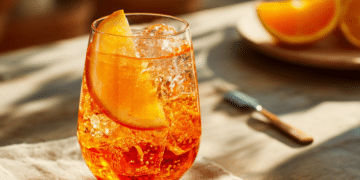

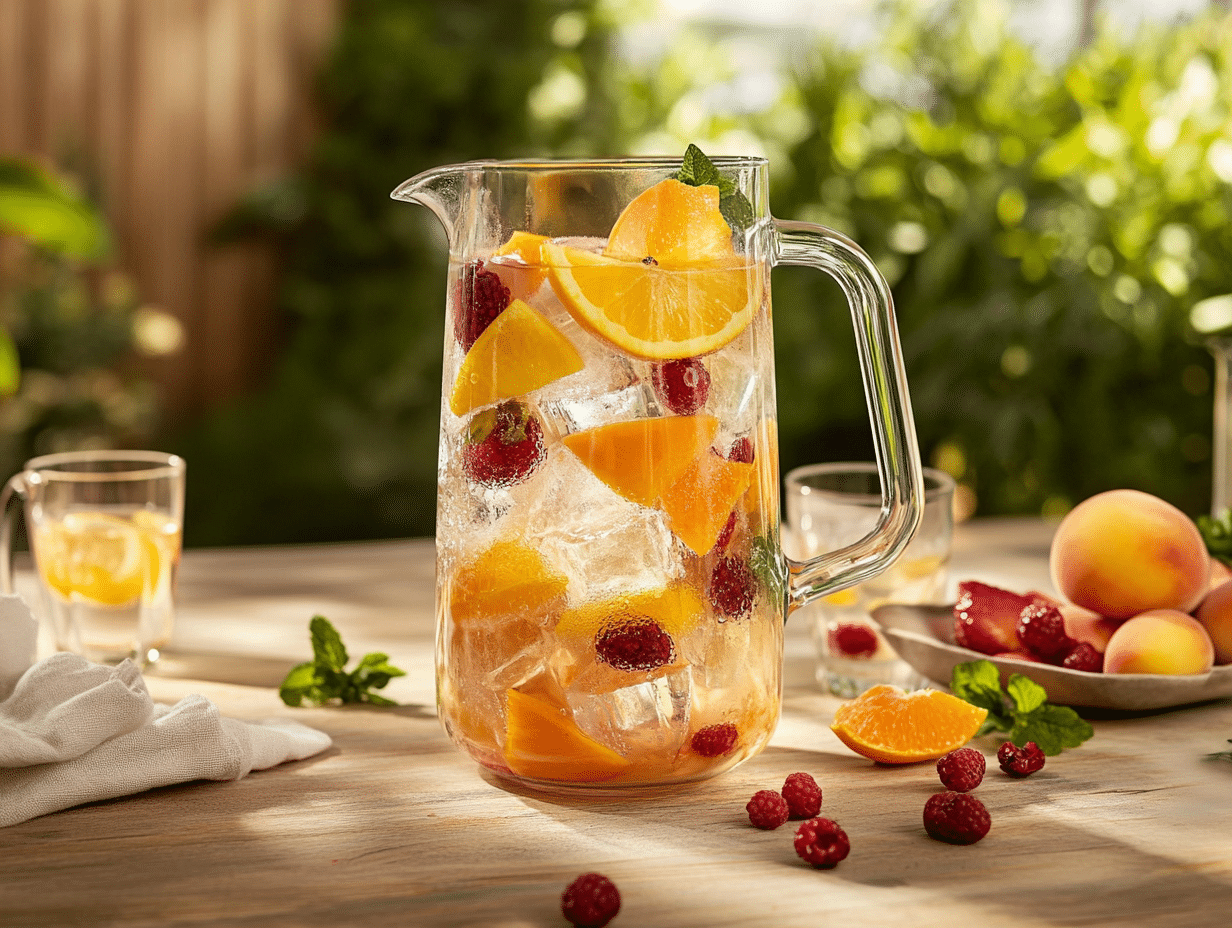
White wine sangria is a pitcher drink you mix in about 15 minutes, then let the fridge do the rest of the work. It uses a bottle of dry white wine, a little brandy and triple sec, fresh citrus, and whatever fruit looks good right now. The real reason to make it: you can put it together the night before a gathering and it’s better for it.
The technique that matters
The only technique worth thinking about here is timing the club soda. Everything else — the wine, brandy, triple sec, fruit, sugar — goes in the pitcher together and chills. But the soda goes in right before you pour, not before refrigerating. If you add it early, all the fizz is gone by the time you serve. Stir it in gently once, then pour immediately. That’s it. The second thing worth noting: dissolve the sugar directly in the wine mixture before adding the fruit, not after. Sugar dissolves faster in liquid without fruit blocking it, and you’ll get a more even sweetness throughout the pitcher.
About the ingredients
- White wine: Sauvignon Blanc and Albariño both work well because they’re dry and have natural citrus notes that hold up to the fruit and liqueur. Avoid anything oaked — a buttery Chardonnay will taste muddy here.
- Triple sec: A standard bottle of Cointreau or a store-brand triple sec both work fine. Skip the premium stuff; it gets lost in the mix.
- Brandy: Any mid-range brandy works. You’re using a quarter cup across six glasses, so this is not the place to agonize over the bottle.
- Seasonal fruit: Peaches and berries are the most reliable choices — they hold their shape after hours in the fridge and release flavor without turning to mush. Mango works but can get slippery. Skip garnish on the glass rim — not worth the extra dish.
Leftovers and make-ahead
This sangria is genuinely better made the night before. After 8 hours in the fridge, the fruit has had time to soak into the wine and the flavors settle into something more cohesive than a freshly mixed batch. Keep it covered in the pitcher — plastic wrap pressed down or a tight lid — for up to 48 hours. After that the fruit starts to break down and the wine loses its brightness. Don’t freeze it; the fruit texture suffers badly and wine doesn’t freeze cleanly. If you’re making it for a crowd, mix a double batch in a large lidded container the evening before, then transfer to a serving pitcher and add the club soda just before guests arrive. Pour off any excess liquid into a second pitcher and keep it in the fridge as a refill, adding fresh soda to that portion when needed.
If something goes sideways
- It tastes too sharp or boozy: The brandy is probably overwhelming the wine. Add a splash more wine and let it sit for another 20 minutes before tasting again. A small amount of extra fruit also helps absorb the edge.
- It’s not sweet enough even after adding the sugar: Sugar dissolves slowly in cold liquid. If the pitcher went straight into the fridge before the sugar fully dissolved, you’ll taste it unevenly. Pull it out, stir firmly for 30 seconds, and give it another 10 minutes at room temperature before chilling again.
- The fruit has gone soft and unappetizing: This usually means it sat longer than 48 hours, or the fruit was overripe to begin with. Strain it out and serve the liquid over ice with a fresh slice of orange — it still tastes fine.
- It tastes flat even with the soda: The soda was added too early or stirred too aggressively. There’s no fixing lost carbonation in the pitcher, but you can top each individual glass with a small splash of fresh soda as you pour.
- The color looks murky: Dark berries like blackberries will tint the wine purple-grey after a long chill. It’s harmless and tastes the same, but if appearance matters, stick to lighter fruits like peaches, green grapes, or strawberries for a cleaner look.
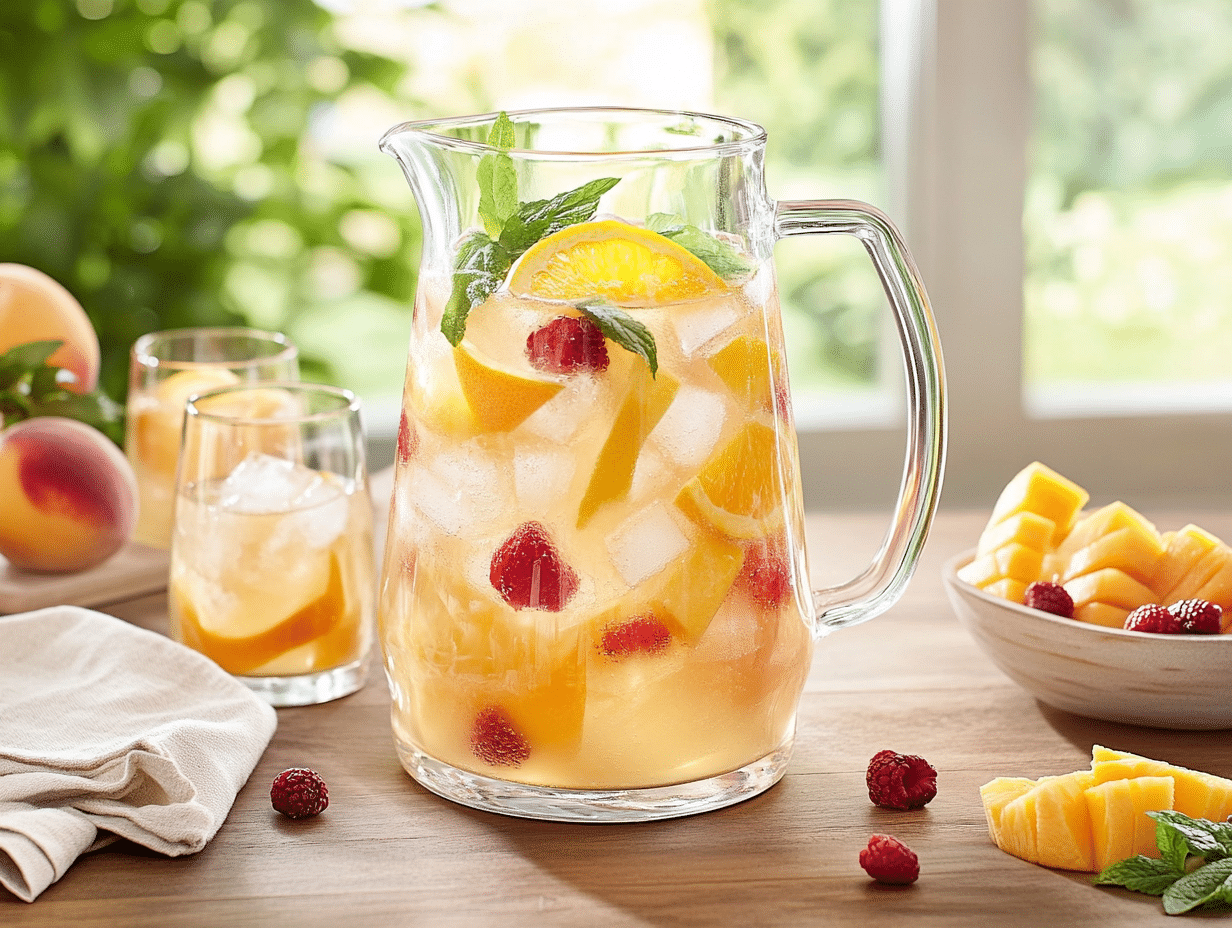
Sangria Blanca

Ingredients
- 1 bottle white wine Preferably a crisp, dry variety like Sauvignon Blanc or Albariño
- ¼ cup brandy Quality brand matters; choose a smooth, fruity brand
- ¼ cup triple sec Or any citrus-flavored liqueur
- 1 medium orange Thinly sliced
- 1 medium lemon Thinly sliced
- 1 cup seasonal fruits Chopped; suggestions include peaches, berries, or mangoes
- ½ cup club soda Chilled, for a hint of effervescence
- 1 tablespoon sugar Adjust to taste
Instructions
- In a large pitcher, combine the white wine, brandy, and triple sec. Stir until well mixed.
- Add the sliced orange, lemon, and mixed chopped fruits. Gently stir to incorporate the flavors.
- Add sugar and stir until dissolved. Taste and adjust sweetness if necessary.
- Refrigerate the sangria for at least 1-2 hours to allow the flavors to meld. For best results, chill overnight.
- Just before serving, pour in chilled club soda and gently stir.
- Pour sangria into glasses filled with ice cubes. Ensure each glass has a mix of fruits and pour a little of the liquid over.
Notes
Nutrition
Your questions, answered
Can I make this without brandy?
Yes — just leave it out and the sangria still works. The brandy adds a little warmth and depth, but the drink is perfectly good without it. If you want to replace the volume, add an extra splash of wine or a small amount of peach juice.
What’s the best white wine to use?
A dry, unoaked white is what you want — Sauvignon Blanc, Albariño, or Pinot Grigio all work well. Avoid anything described as buttery or oaked, because those flavors clash with the citrus and fruit rather than complementing them.
How far in advance can I make this for a party?
Up to 24 hours ahead is the sweet spot — the flavors are well developed and the fruit still has good texture. You can push to 48 hours, but don’t add the club soda until right before serving regardless of when you mixed the rest.
Can I make a non-alcoholic version?
White grape juice or a non-alcoholic sparkling white wine works as the base. Replace the brandy and triple sec with a splash of orange juice and a little extra sugar, then taste and adjust before chilling.
Do I have to use club soda, or can I use something else?
Club soda is the most neutral choice and lets the fruit and wine flavors come through clearly. Lemon-lime sparkling water adds a little extra citrus, which works fine. Avoid tonic water — the bitterness fights with the fruit.