







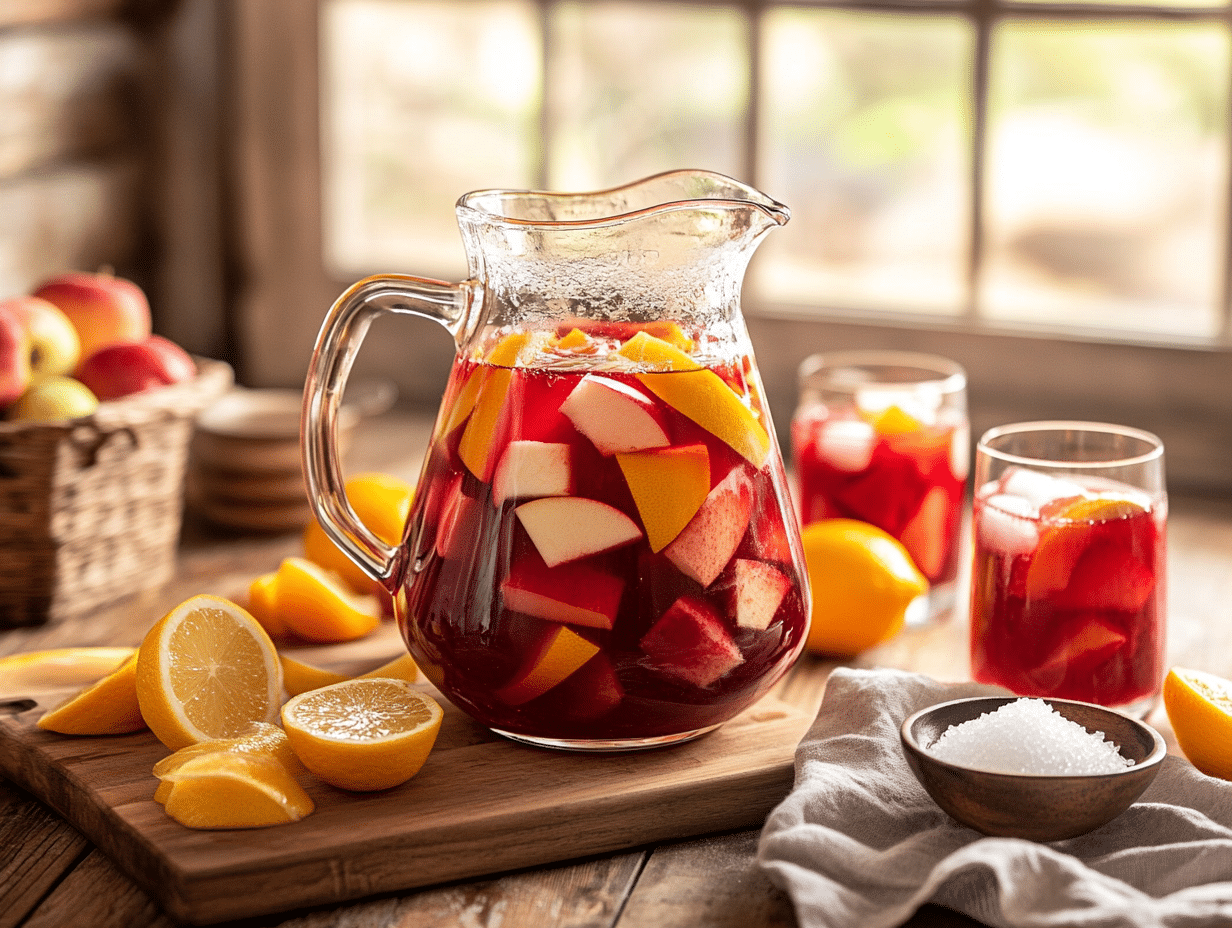
This is a straightforward red sangria built on a bottle of dry Spanish red, brandy, orange liqueur, and fresh citrus — nothing fussy, nothing hard to find. The main reason to make it is simple: you mix it the night before, and it’s ready when your guests arrive. That makes it one of the most low-effort drinks you can serve a crowd.
Before you start
The one thing that actually matters here is time in the fridge. Stirring everything together and serving it straight away gives you wine with fruit floating in it — fine, but flat. Give it at least two hours, and ideally overnight, and the sugar dissolves fully, the brandy mellows into the wine, and the citrus oils work their way through the whole pitcher. The second thing worth knowing: add the sparkling water only right before you pour. It goes in last so you keep the fizz — stir it in earlier and it’s flat before anyone sits down.
Substitutions that actually work
- Spanish brandy: If you can’t find it, any decent VS Cognac or even a domestic brandy works fine. Avoid flavored brandies — they throw the balance off.
- Orange liqueur: Cointreau and Grand Marnier both work. In a pinch, a tablespoon of thawed frozen orange juice concentrate plus a splash of plain brandy gets you close enough.
- Red wine: Tempranillo and Garnacha are the classic choices, but any dry, fruit-forward red under $15 does the job. Avoid anything oaky or heavily tannic — it fights the fruit instead of working with it.
- Sparkling water: Club soda is identical here. Skip flavored sparkling water — citrus or berry versions compete with the fresh fruit already in the pitcher.
What can go wrong
- It tastes too sharp or boozy: The brandy hasn’t had time to integrate. This almost always means it didn’t chill long enough. Put it back in the fridge for another hour before serving.
- The sugar didn’t dissolve: Cold liquid slows dissolving. Stir the sugar in with just the wine and liqueur first, before adding the fruit, and give it a full minute of stirring. If it’s still grainy, dissolve the sugar in a tablespoon of warm water before adding it.
- The fruit turned mushy: This happens when sangria sits for more than 24 hours. After that point, the citrus breaks down and goes soft. Make it the evening before you need it, not two days ahead.
- It’s too sweet: Different wines have very different residual sugar levels. Taste before you add all the sugar — a sweeter wine may need none at all. You can always add more; you can’t take it out.
- It tastes flat even with sparkling water: The water was warm, or it sat in the pitcher too long after being added. Use it straight from the fridge and serve within 20 minutes of adding it.
Storage and reheating
Sangria keeps well in the fridge for up to 24 hours after mixing — that’s your window for best flavor and texture. After that, the fruit softens and the wine starts to taste dull. Store it covered in the pitcher without the sparkling water, and add that only when you’re ready to pour. There’s no freezing option worth considering here; wine-based drinks don’t freeze usefully at home. Leftover sangria with fruit already in it should be strained and used within the day — skip the garnish of extra fresh fruit slices on individual glasses, not worth the extra prep when the fruit already in the pitcher does the same job.
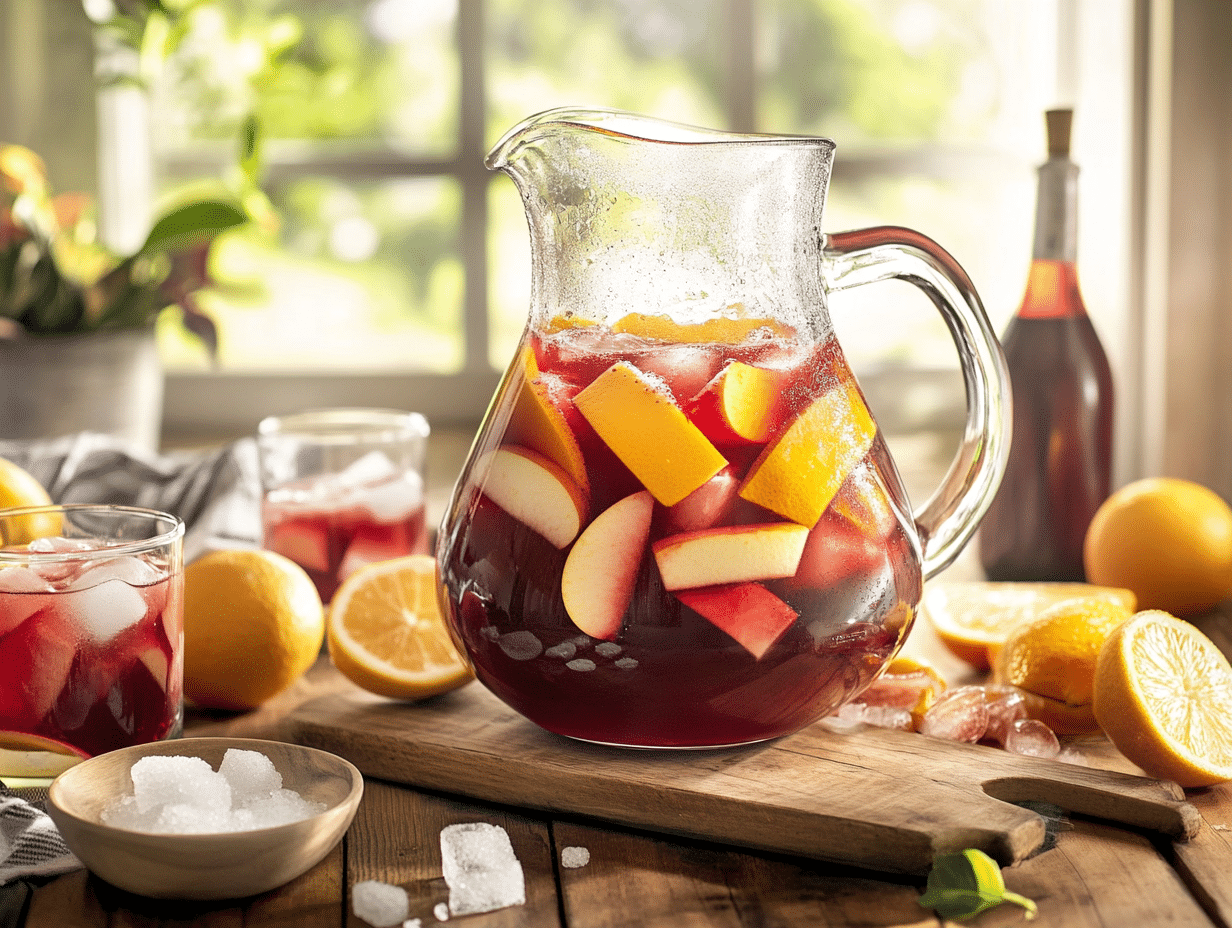
Classic Red Sangria

Equipment
- Large Pitcher
- Mixing Spoon
- Sharp Knife
- Cutting board
Ingredients
For the Base Components:
- 1 bottle dry red wine choose a Spanish wine like Tempranillo or Garnacha
- ¼ cup Brandy a good-quality Spanish brandy enhances the flavor
- ¼ cup orange liqueur such as Cointreau or Grand Marnier
For the Fruit & Sweeteners:
- 1 medium orange thinly sliced
- 1 medium lemon thinly sliced
- 1 medium apple cored and diced
- 2 tablespoons sugar adjust to taste based on wine's sweetness
- 1 cup chilled sparkling water for a refreshing finish
Instructions
- In a large pitcher, combine the red wine, brandy, and orange liqueur. Stir well to blend the flavors.
- Add the sliced orange, lemon, and diced apple to the mixture. Sprinkle in the sugar and stir until dissolved.
- Cover the pitcher and refrigerate for at least 2 hours, or preferably overnight, to allow the flavors to meld.
- Before serving, stir in the chilled sparkling water to add a light effervescence.
- Serve over ice in large wine glasses, ensuring each glass gets a mix of fruit. Enjoy immediately!
Notes
- For a sweeter sangria, add honey or simple syrup in place of sugar.
- For an extra citrusy kick, consider muddling some of the fruit before adding the wine.
Nutrition
Frequently asked questions
Can I make sangria the morning of the party instead of the night before?
Yes, morning-of works as long as you get at least two hours of fridge time before serving. The overnight rest gives slightly better flavor, but a four- to six-hour chill is genuinely good.
What’s the best cheap red wine to use for sangria?
Any dry, fruit-forward red in the $8–$14 range is fine — Tempranillo, Garnacha, or a basic Côtes du Rhône all work well. The wine doesn’t need to be impressive on its own, but avoid anything that tastes harsh or very tannic straight from the bottle, because chilling and fruit won’t fix that.
How do I scale this up for a big group?
Double or triple every ingredient proportionally — it scales cleanly. One bottle of wine makes about six glasses, so plan one bottle per five to six guests if sangria is the main drink of the evening.
Can I make a non-alcoholic version for kids or non-drinkers?
Replace the wine with unsweetened grape juice or a dark cranberry juice, and swap the brandy and orange liqueur for a splash of orange juice. It won’t taste the same, but it’s a reasonable pitcher drink that works alongside the real version at a party.
Do I need to peel the fruit before adding it?
No — leave the peel on the orange and lemon slices. The peel adds flavor as it steeps, and it looks better in the glass. Just wash the fruit well before slicing.
More recipes to try
- Creamy Cinnamon Horchata
- The Perfect Aperol Spritz
- Authentic Spanish Seafood Paella
- How to make simple syrup