

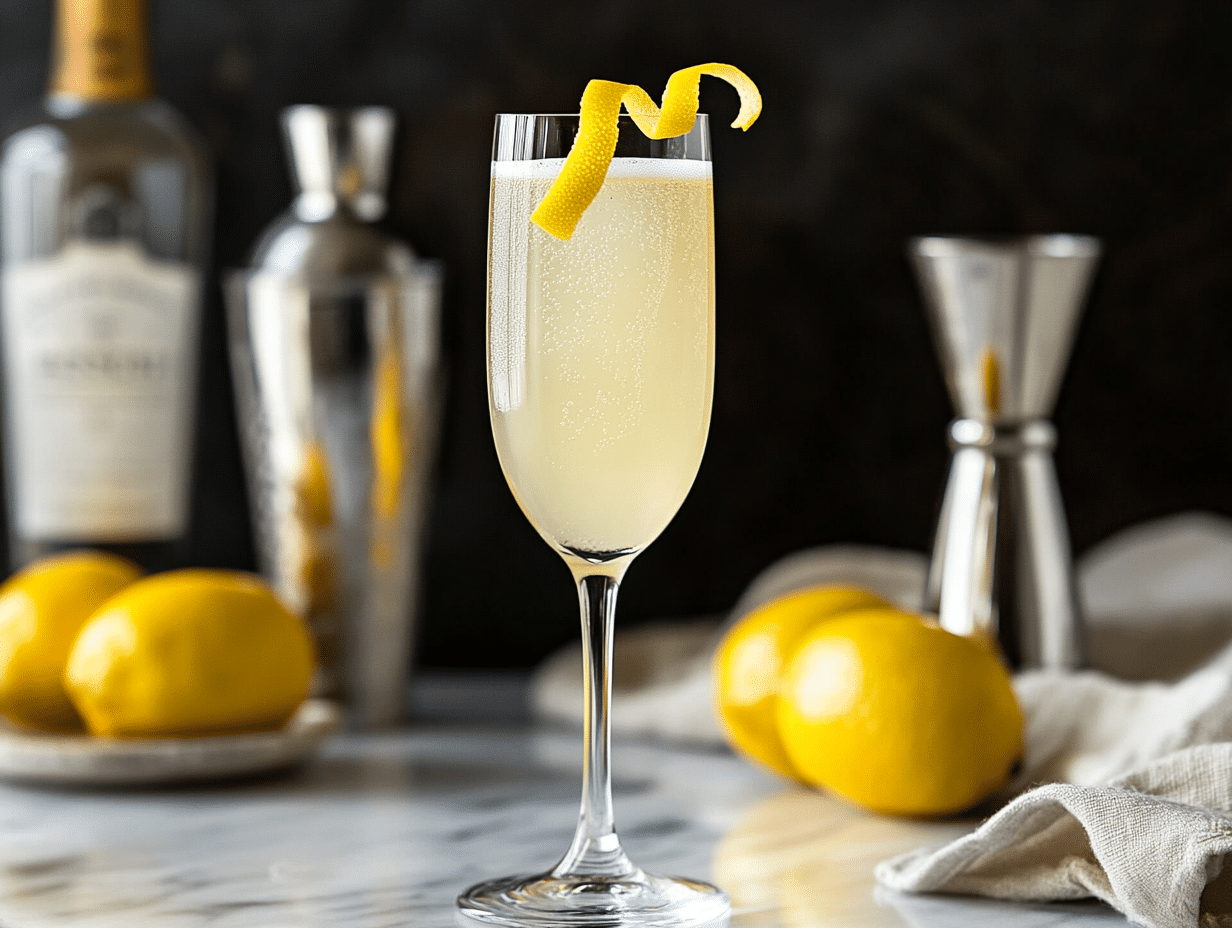
The French 75 is four ingredients shaken together in about five minutes: gin, fresh lemon juice, simple syrup, and champagne. It’s the kind of drink that works equally well at a New Year’s Eve party or a quiet Saturday brunch, and it’s genuinely easy to pull off at home without any special skills.
Before you start
Two things actually matter here. First, use fresh lemon juice — not the stuff from a bottle. The difference is obvious in a drink this simple, where lemon is doing real work. Squeeze it right before you shake. Second, chill your champagne flute ahead of time. A warm glass kills the carbonation fast; the bubbles go flat before the drink is halfway done. Pop the flute in the freezer for five minutes or fill it with ice water while you prep everything else, then dump it out just before you pour. That’s it — everything else in this recipe is straightforward.
What can go wrong
- Over-shaking after you add the champagne: The champagne goes in after straining — never in the shaker. Shaking a carbonated drink will foam it up and flatten it. Pour it gently over the back of a spoon if you want to slow it down.
- Too much simple syrup: The recipe calls for 0.5 oz, which is the right amount for most dry gins. If your gin is already on the sweeter or more floral side, start with a little less and taste as you go — a cloying French 75 is hard to fix once it’s poured.
- Warm champagne: Room-temperature sparkling wine will foam over the glass and go flat almost immediately. Keep it in the fridge right up until you pour, and if you’ve opened the bottle earlier, re-seal it with a champagne stopper.
- Using the wrong gin: A heavily juniper-forward gin can overpower the lemon. A dry gin with some floral or citrus notes — think London Dry or something lighter — keeps the drink balanced. Skip the garnish if you’re making a round for a group — not worth the extra fuss for something most people set aside anyway.
- Straining too slowly: If you dawdle with the double strain, the ice starts to melt into the strained liquid and dilutes the drink before the champagne even goes in. Have your flute ready and strain straight into it without stopping.
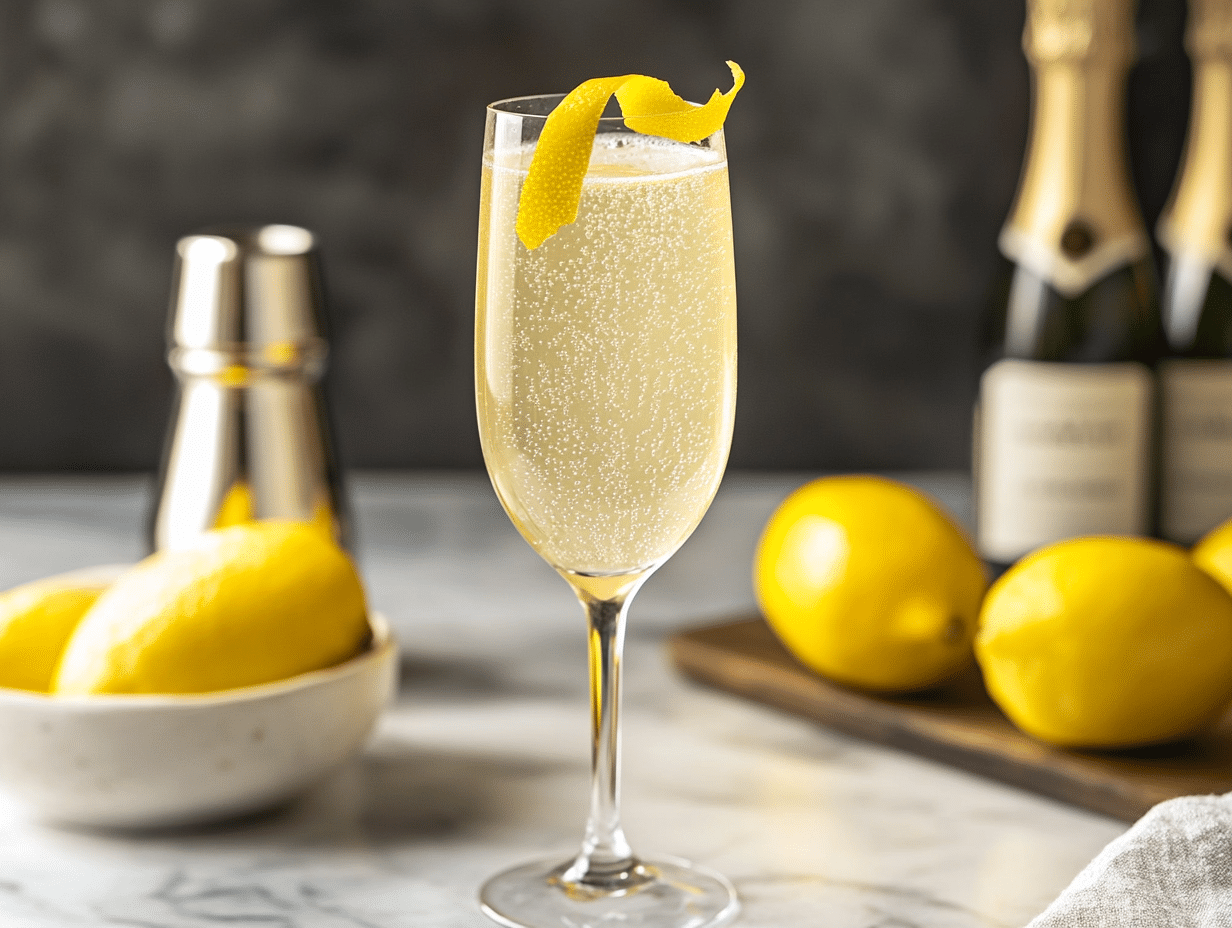
French 75 Cocktail

Equipment
- Cocktail shaker
- Jigger
- Fine strainer
Ingredients
- 2 oz gin preferably a dry gin with floral notes
- 0.5 oz fresh lemon juice freshly squeezed for best flavor
- 0.5 oz simple syrup 1:1 sugar to water ratio
- 2 oz champagne chilled
- 1 twist lemon peel for garnish
Instructions
- Begin by chilling a champagne flute in the freezer or by filling it with ice water. This ensures your cocktail stays refreshingly cold.
- In a cocktail shaker, combine 2 oz of gin, 0.5 oz of fresh lemon juice, and 0.5 oz of simple syrup.
- Fill the shaker with ice and shake vigorously until the exterior frosts over, around 15 seconds.
- Double strain the mixture into the chilled champagne flute using a fine strainer to ensure a silky finish.
- Top with 2 oz of chilled champagne, letting the bubbles do the work of blending.
- Garnish with a twist of lemon peel, expressing the oils over the surface for a fragrant finish before placing it decoratively in the glass.
Notes
- If you don't have champagne on hand, a dry sparkling wine will do in a pinch.
Nutrition
FAQ
Can I use Prosecco or Cava instead of champagne?
Yes, either works fine. A dry Prosecco or Brut Cava will give you the same fizz and won’t make the drink noticeably sweeter, as long as you pick a dry style rather than an extra-dry or sweet one.
How do I make simple syrup if I don’t have any?
Combine equal parts sugar and water in a small saucepan, heat over medium until the sugar dissolves completely, then let it cool before using. It takes about five minutes and keeps in the fridge for up to a month — our simple syrup guide has the full details.
Can I make a batch of French 75s ahead of time for a party?
You can pre-mix the gin, lemon juice, and simple syrup in a pitcher and refrigerate it. Add the champagne per glass right before serving — adding it to the whole batch ahead of time will make it go flat.
What’s a non-alcoholic version for people who don’t drink?
Swap the gin for a non-alcoholic spirit like Seedlip Spice or Garden, and use sparkling water or a non-alcoholic sparkling wine in place of champagne. The lemon and simple syrup stay the same, and the result is still a bright, refreshing drink.
Does the type of gin really make a difference?
It does, more than in most mixed drinks. Because the recipe is so short, the gin flavor comes through clearly. A dry, lightly floral gin works best — something very heavy on juniper or spice can throw off the balance with the lemon.