


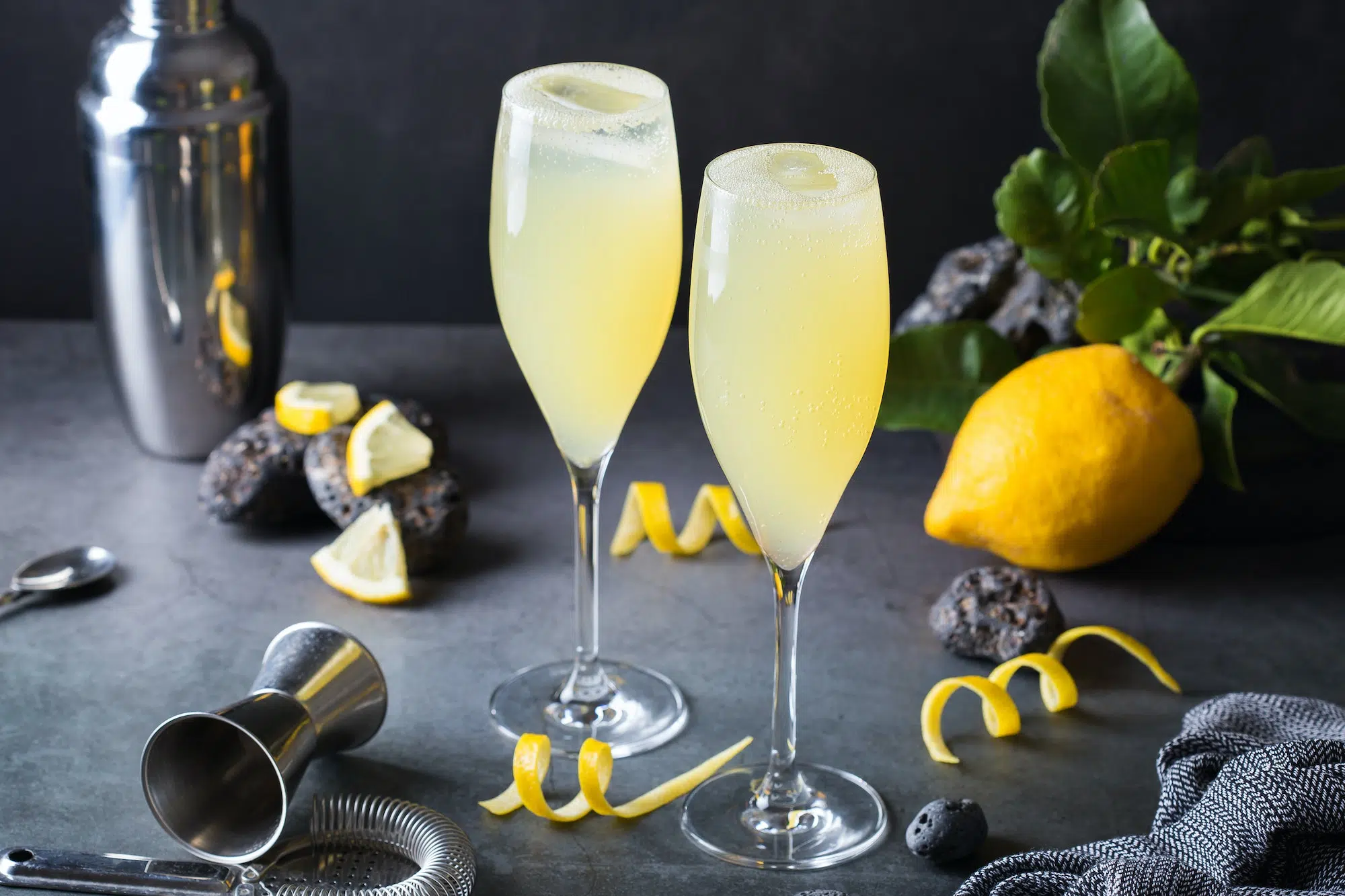
The French 75 cocktail is hands down my favourite way to start an evening. It’s bright, bubbly, and impossibly elegant — yet it takes all of five minutes to pull together. If you’ve never tried one, imagine the botanical complexity of a good gin, sharpened with fresh lemon juice, sweetened just enough with simple syrup, then lifted skyward by cold champagne.
What I love most about this drink is how it punches well above its weight in terms of impressiveness versus effort. You’re essentially building a gin sour in the bottom of a champagne flute and topping it with bubbles. That’s it. No shaker required, no fancy bar tools — just good ingredients and a steady pour.
Whether you’re hosting a dinner party or winding down on a Friday evening, a French 75 sets the tone perfectly. The champagne keeps it light, the gin gives it backbone, and the lemon keeps everything crisp. Let me show you exactly how I make mine.
French 75 Cocktail: Classic Gin & Champagne Recipe
Equipment
- Champagne Flute
- Jigger (dual-sided 1.5 oz / 0.75 oz)
- Citrus juicer or reamer
- Sharp paring knife
- Cutting board
Ingredients
- 1 medium Lemon for ¾ fl oz juice plus peel garnish
- ¾ fl oz Simple syrup or ½ tsp sugar or 1 sugar cube
- 1 ½ fl oz London dry gin use your favourite gin
- 3 fl oz Champagne dry champagne or sparkling wine, chilled
Instructions
- Using a sharp paring knife, cut a long strip of lemon peel (about 3 inches / 7 cm) from the lemon. A longer strip will curl elegantly inside the flute. Set aside for garnish.
- Cut the lemon in half and juice it. Measure out ¾ fl oz (22 ml) of fresh lemon juice.
- Take a champagne flute and pour in ¾ fl oz (22 ml) of simple syrup. If using a dual-sided jigger, this is the smaller measuring cup.
- Add ¾ fl oz (22 ml) of fresh lemon juice to the flute.
- Pour in 1½ fl oz (45 ml) of London dry gin.
- Slowly pour 3 fl oz (90 ml) of chilled champagne down the inside of the flute to preserve the bubbles. Leave about 1 cm of space at the top for the garnish.
- Twist the lemon peel strip over the glass to release its oils, then drop it into the flute. Serve immediately.
Notes
- Storage: A French 75 cannot be stored once assembled — the champagne goes flat within minutes. However, you can pre-mix the gin, lemon juice, and simple syrup in a bottle and refrigerate for up to 24 hours, then top with champagne when ready to serve.
- Make-ahead: Pre-measure gin, lemon juice, and simple syrup into a pitcher and chill for parties.
- Substitutions: Swap champagne for any dry sparkling wine (Crémant, Cava, or Prosecco). Vodka can replace gin for a French 76 variation. Honey syrup (1:1 honey to water) can replace simple syrup.
- Pro tip: Always add champagne last and pour slowly down the side of the flute to preserve carbonation.
Nutrition
What Makes This French 75 Special
The French 75 earns its place among the all-time great cocktails because of the tension between its ingredients. You have gin — juniper-forward, botanical, strong — meeting champagne, which is delicate, acidic, and effervescent. The lemon juice bridges the two, and the simple syrup rounds off the edges. Every sip has layers: bright citrus up front, the gin’s botanicals in the middle, and the champagne’s yeasty, biscuity finish.
What sets a great French 75 apart from a mediocre one comes down to three things:
- Fresh lemon juice — bottled lemon juice has a flat, preservative taste that ruins the cocktail’s brightness. Always squeeze fresh.
- Chilled champagne — warm sparkling wine foams over and loses its fizz before you take the first sip.
- Proper proportions — the ¾ : ¾ : 1½ : 3 ratio keeps the gin from overpowering the champagne while ensuring the drink has backbone.
Equipment You’ll Need
- Champagne flute — the narrow shape preserves carbonation far longer than a coupe or wine glass. The tall bowl also shows off the rising bubbles and your lemon peel garnish beautifully.
- Dual-sided jigger (1.5 oz / 0.75 oz) — exact measurements matter in a four-ingredient cocktail. Eyeballing the pour will throw off the balance between sweet, sour, and strong.
- Citrus juicer or reamer — you only need ¾ fl oz of lemon juice, but getting it out efficiently without seeds matters. A simple handheld reamer works perfectly.
- Sharp paring knife — essential for cutting a clean lemon peel strip. A dull knife tears the peel and pulls bitter white pith with it.
- Cutting board — for prepping your lemon safely.
Nice to have: a cocktail shaker if you prefer building the gin, lemon, and syrup over ice first and straining into the flute. This gives you a colder, slightly more diluted drink that some people prefer.
Tips for Best Results
- Build it in the glass, not a shaker — the classic French 75 method is to combine all ingredients directly in the flute. This keeps maximum carbonation. If you prefer a shaker method, shake only the gin, lemon, and syrup with ice, strain into the flute, then top with champagne.
- Use a London dry gin — its juniper-forward profile cuts through the sweetness of the syrup and champagne. Avoid heavily botanical or flavoured gins, which can clash with the wine.
- Pour the champagne slowly — tilt the flute slightly and pour down the inside wall. This preserves the bubbles just as you would when pouring a glass of champagne on its own.
- Serve immediately — a French 75 waits for no one. The champagne loses its fizz within minutes of pouring. Have your ingredients measured and ready before you open the bottle.
- Twist the lemon peel over the glass — this releases the essential oils from the skin, creating a fragrant mist that enhances your first sip with bright citrus aroma.
Substitutions and Variations
- Sparkling wine instead of champagne — Crémant de Loire, Cava, or a dry Prosecco all work and cost significantly less. Avoid sweet or demi-sec sparkling wines, which will make the drink cloying.
- Vodka instead of gin — this creates a French 76, which is lighter and lets the champagne and lemon shine more.
- Cognac instead of gin — some early recipes called for cognac, making a richer, warmer drink. This variation is sometimes called the original French 75.
- Honey syrup instead of simple syrup — mix equal parts honey and warm water, stir until dissolved, and cool. It adds a floral depth that pairs beautifully with the gin botanicals.
- Elderflower liqueur — replace the simple syrup with ¾ fl oz of St-Germain for a fragrant, floral twist.
Storage and Reheating
A finished French 75 cannot be stored — the champagne goes flat within minutes. However, you can absolutely prepare ahead:
- Pre-batch the base: combine the gin, lemon juice, and simple syrup in a sealed bottle or jar and refrigerate for up to 24 hours. When ready to serve, pour the pre-measured base into each flute and top with champagne.
- For parties: multiply the gin, lemon juice, and simple syrup quantities by the number of guests and store in a pitcher in the fridge. Top each glass individually — never add champagne to the pitcher, as it will go flat instantly.
- Lemon peels: pre-cut your garnish strips and store them in a damp paper towel inside a sealed container in the fridge for up to 4 hours before serving.
What to Serve With This
The French 75 is a classic apéritif — it’s designed to be served before dinner to stimulate the appetite. Pair it with:
- Smoked salmon blinis — the rich, salty fish plays off the cocktail’s acidity and bubbles.
- Oysters on the half shell — a timeless champagne pairing that works even better with the gin’s botanical edge.
- Charcuterie board — cured meats, cornichons, and aged cheese complement the cocktail’s complexity.
- Light canapés — cucumber rounds with cream cheese and dill, or prawn cocktail bites.
- Salted almonds or marcona almonds — simple, elegant, and the salt makes you reach for another sip.
Frequently Asked Questions
Why is it called a French 75?
The cocktail is named after the French 75mm field gun used in World War I, which was renowned for its speed and power. The drink earned the comparison because of its deceptively smooth taste that delivers a surprisingly strong kick — the champagne bubbles accelerate alcohol absorption, and with gin underneath, it hits harder than it seems.
Do I have to use real champagne?
No. While true champagne from the Champagne region of France gives the most refined result, any dry sparkling wine works well. Crémant (French sparkling wine from outside Champagne), Spanish Cava, and dry Italian Prosecco are all excellent and more affordable choices. The key is choosing a brut (dry) sparkler — anything sweeter will throw off the cocktail’s balance.
Can I make a French 75 in a coupe glass instead of a flute?
You can, and many modern cocktail bars do. The wider bowl of a coupe releases more aroma, which some people prefer. However, the champagne will lose its fizz faster in a coupe due to the larger surface area. If you use a coupe, drink it quickly.
What’s the difference between a French 75 and a Tom Collins?
They share DNA — both are gin, lemon juice, and sugar — but the French 75 tops with champagne while the Tom Collins uses soda water. The champagne makes the French 75 richer, more complex, and significantly more alcoholic. A Tom Collins is a long, refreshing drink; a French 75 is a short, celebratory one.
Can I make a non-alcoholic French 75?
Yes. Replace the gin with a non-alcoholic gin alternative (such as Seedlip or Lyre’s) and use a non-alcoholic sparkling wine. The lemon juice and simple syrup remain the same. The result won’t be identical, but it captures the bright, effervescent character of the original.
How strong is a French 75?
Stronger than it tastes. With 1.5 fl oz of gin (typically 40% ABV) and 3 fl oz of champagne (typically 12% ABV), a single French 75 contains roughly 1.5 standard drinks. The bubbles from the champagne can accelerate how quickly you feel the effects, so sip slowly.
The History Behind the French 75
The French 75’s origins are debated, but the most widely accepted account credits Harry MacElhone at Harry’s New York Bar in Paris around 1926. The drink appeared in print in The Savoy Cocktail Book by Harry Craddock in 1930, which cemented its place in the cocktail canon. The original recipe called for cognac, not gin — the gin version became dominant in American bars during the mid-20th century and is now considered the standard.
The cocktail’s namesake — the Canon de 75 modèle 1897 — was a revolutionary rapid-fire field gun used by the French Army in World War I. Soldiers and bartenders alike noted that the drink’s smooth entry and powerful aftereffect mirrored the gun’s reputation. The name stuck, and the French 75 has remained a symbol of celebration and sophistication for nearly a century.
If you give this French 75 a try, I’d love to hear how it turned out — drop a star rating and leave a comment below to let me know your thoughts.