
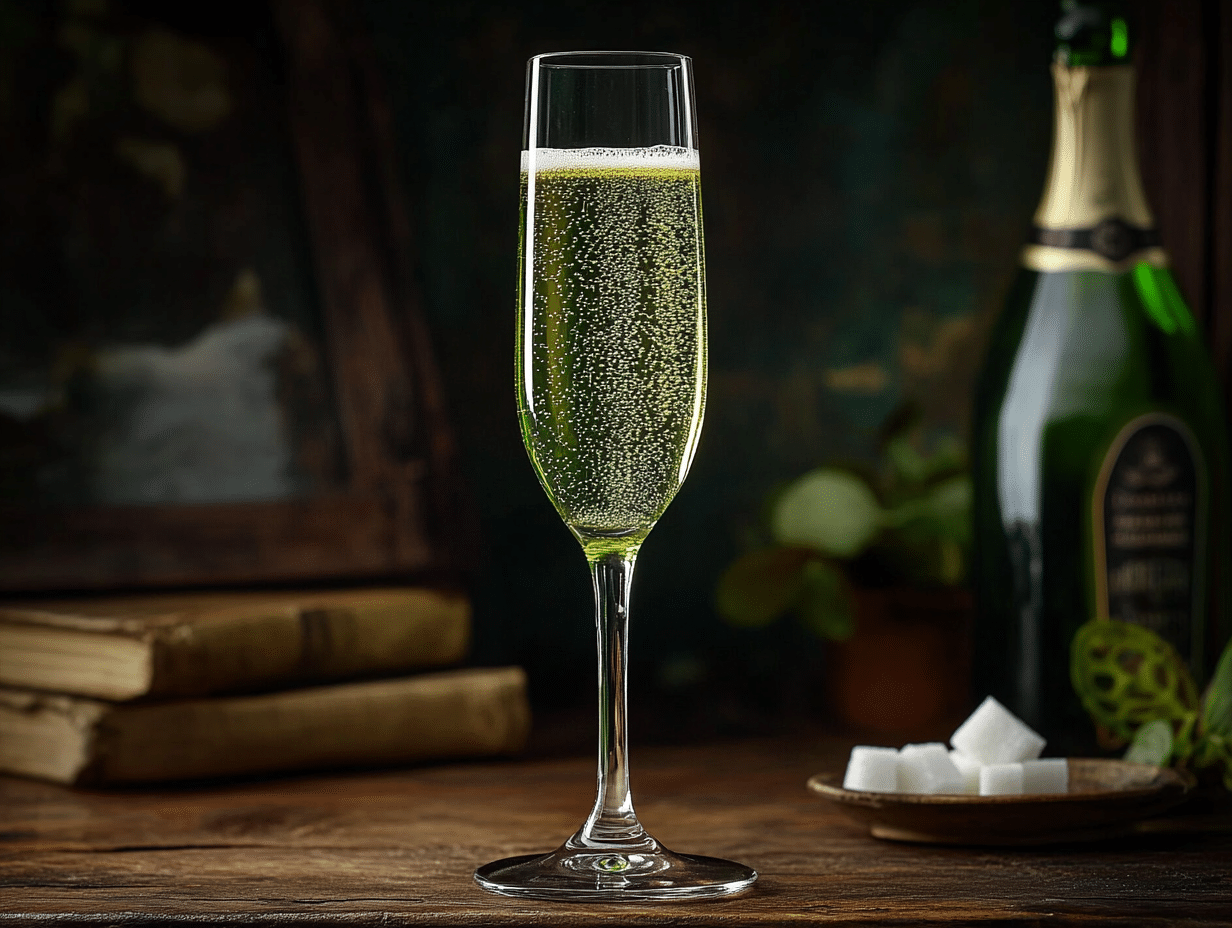
Death in the Afternoon is a two-ingredient cocktail — absinthe and cold Champagne — that takes about five minutes and produces a genuinely striking cloudy drink. It’s strong, anise-forward, and not for everyone, but if you like the flavor of absinthe, this is one of the most effortless ways to serve it. Make a bottle of Champagne go further by mixing a round for guests instead of pouring glasses straight.
What makes this version work
Two things matter here. First, the pour order: absinthe goes in the flute before the Champagne, not after. Adding the sparkling wine on top triggers the louche — the cloudiness caused by absinthe’s anise compounds hitting liquid — evenly and immediately. Reversing the order gives you a patchy, uneven result. Second, the ratio. One ounce of absinthe to four ounces of Champagne keeps the drink drinkable without burying the herbal character. Absinthe typically runs 45–74% ABV, so this cocktail is genuinely potent even at that ratio — skip the temptation to free-pour and measure it.
Make-ahead notes
You can pre-measure individual one-ounce portions of absinthe into a small sealed container or shot glasses covered with plastic wrap and keep them at room temperature for up to 24 hours — absinthe is shelf-stable and doesn’t need refrigerating. If you’re serving a group, line up the flutes, add the absinthe to each, and then top with Champagne to order so the bubbles stay lively. An open bottle of Champagne or sparkling wine holds reasonably well in the fridge with a wine stopper for up to two days, though it will lose some carbonation; use it for the second or third round rather than the first. Don’t pre-mix the full cocktail — once combined, the carbonation drops off fast and the drink goes flat within minutes.
If something goes sideways
- No louche effect, drink stays clear: The Champagne wasn’t cold enough. The louche depends on temperature — warm sparkling wine won’t trigger it reliably. Chill your bottle for at least two hours before mixing.
- Drink tastes overwhelmingly of anise with no balance: Your absinthe-to-Champagne ratio is off. Measure carefully — even a quarter-ounce extra absinthe is noticeable at this scale. If a bottle of absinthe varies in ABV from what you’ve used before, start with three-quarters of an ounce and adjust.
- Champagne goes flat almost immediately after pouring: You poured too aggressively. Tilt the flute slightly and pour the Champagne slowly down the inside of the glass, the same way you’d pour a beer. A hard pour kills the bubbles before the drink reaches the glass.
- Drink tastes harsh or medicinal: Low-quality absinthe is usually the culprit. Look for a bottle that lists wormwood, fennel, and anise as botanicals on the label — avoid anything labeled “absinthe-style” or artificially colored green. A brut (dry) Champagne also helps cut through the sharpness; avoid anything labeled demi-sec or sweet.
- Serving a crowd and the later rounds taste flat: Open Champagne bottles in batches rather than all at once. One 750ml bottle yields roughly six cocktails at four ounces each — plan accordingly and keep backup bottles cold.
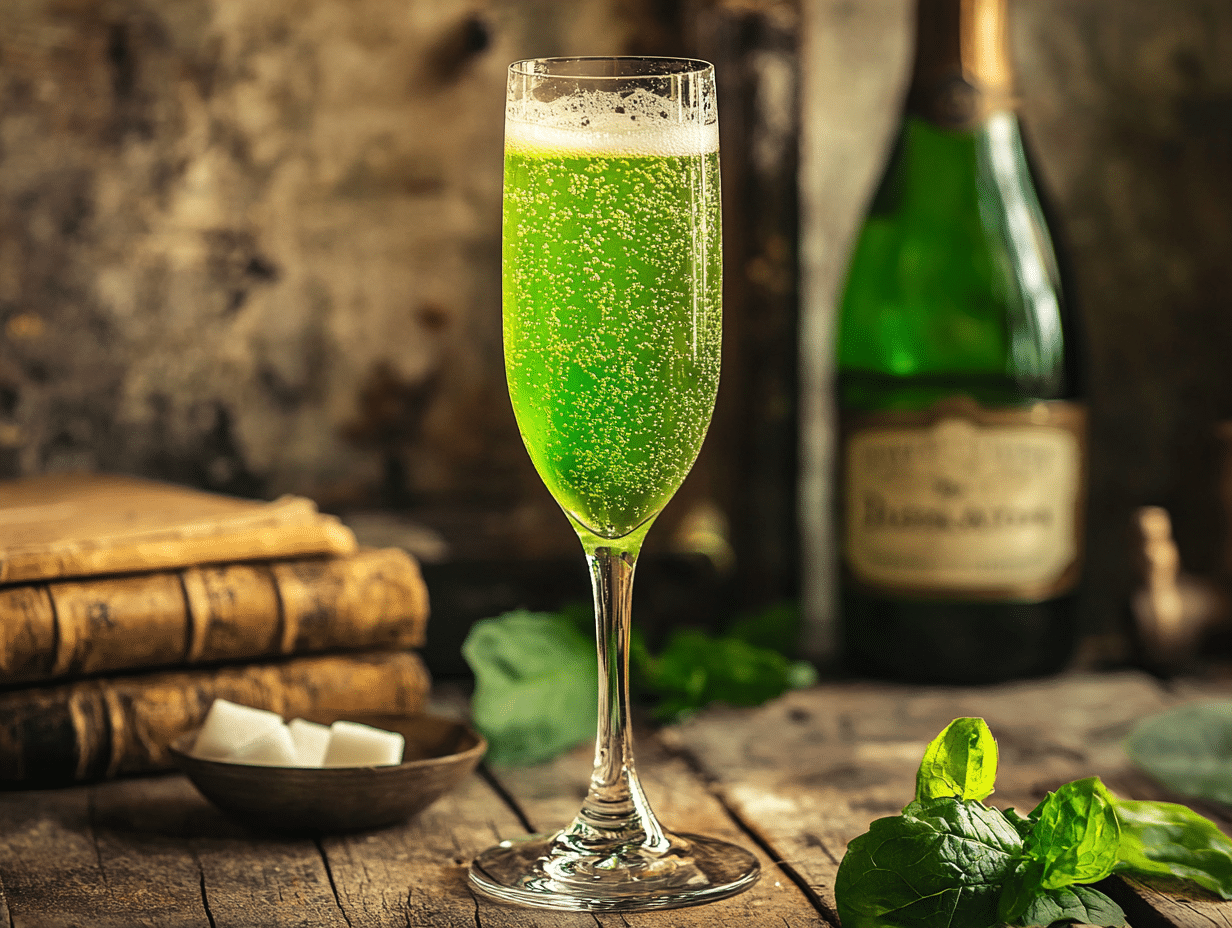
Death in the Afternoon

Equipment
- Champagne Flute
- Jigger
Ingredients
- 1 oz absinthe use a high-quality, authentic absinthe
- 4 oz champagne chilled; dry Champagne or sparkling wine
Instructions
- Pour 1 oz of absinthe into a chilled Champagne flute.
- Slowly top with 4 oz of chilled Champagne or sparkling wine, allowing the drink to form a cloudy opalescence.
- Optionally, stir gently to combine, but many prefer to let the effervescence naturally blend the flavors.
Notes
- For a slightly less intense version, use a half-ounce of absinthe.
- Be sure the Champagne is well chilled, as this helps balance the potency of the absinthe.
Nutrition
FAQ
Can I use prosecco or cava instead of Champagne?
Yes — any dry sparkling wine works fine here. Prosecco tends to be slightly sweeter and softer, which can actually round out the bitterness of the absinthe; cava is drier and closer to Champagne in character. The louche effect happens regardless of which sparkling wine you use, as long as it’s cold and carbonated.
Does absinthe actually cause hallucinations?
No — that’s a myth. The hallucinogenic reputation came from 19th-century moral panic, not pharmacology. Modern research has shown that thujone, the compound in wormwood that was blamed, is present in such small amounts in properly made absinthe that it has no psychoactive effect. What absinthe will do is get you drunk quickly, because of its high alcohol content.
What’s a good absinthe brand for someone buying it for the first time?
Look for a bottle that’s made with real botanicals and lists wormwood, green anise, and fennel on the label — Pernod Absinthe and St. George Absinthe Verte are widely available and reliable starting points. Avoid anything in a novelty bottle or labeled “absinthe liqueur,” which is usually a sweetened imitation and won’t behave the same way in this drink.
Is there a lower-alcohol version I can make?
The recipe card already suggests dropping to half an ounce of absinthe, which is the most practical adjustment. Beyond that, substituting a pastis (like Ricard or Pernod) for absinthe gives you a similar anise flavor at a lower ABV — around 40–45% versus 60–70% — and it still louches when mixed with sparkling wine.
Can I make a non-alcoholic version?
Not really — the flavor of this drink is almost entirely defined by the absinthe. Non-alcoholic sparkling wines exist and work fine as the Champagne substitute, but there’s no widely available non-alcoholic absinthe that replicates the botanical profile. If you want the anise flavor without alcohol, a small splash of anise extract in sparkling water is a completely different drink, but it’s the closest approximation.