


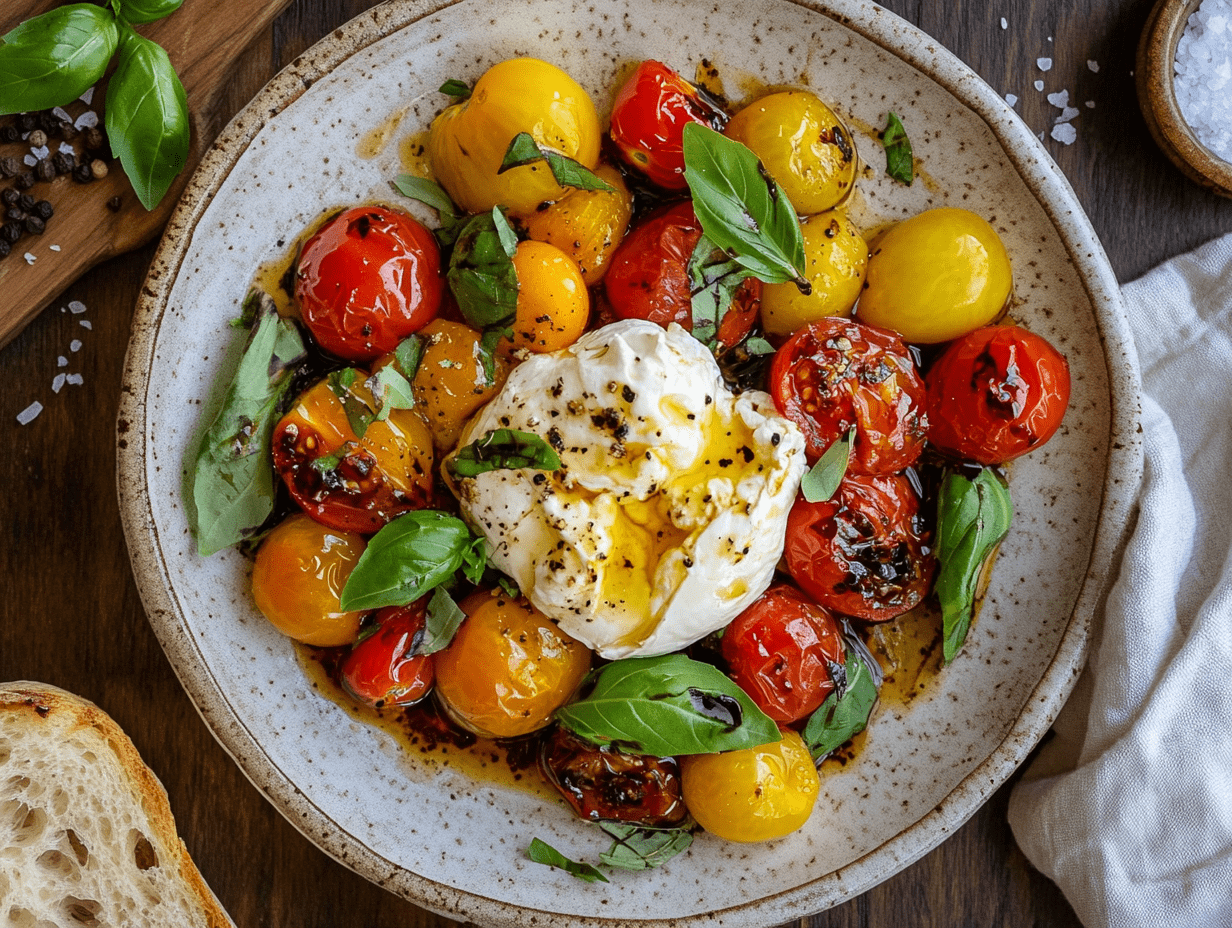
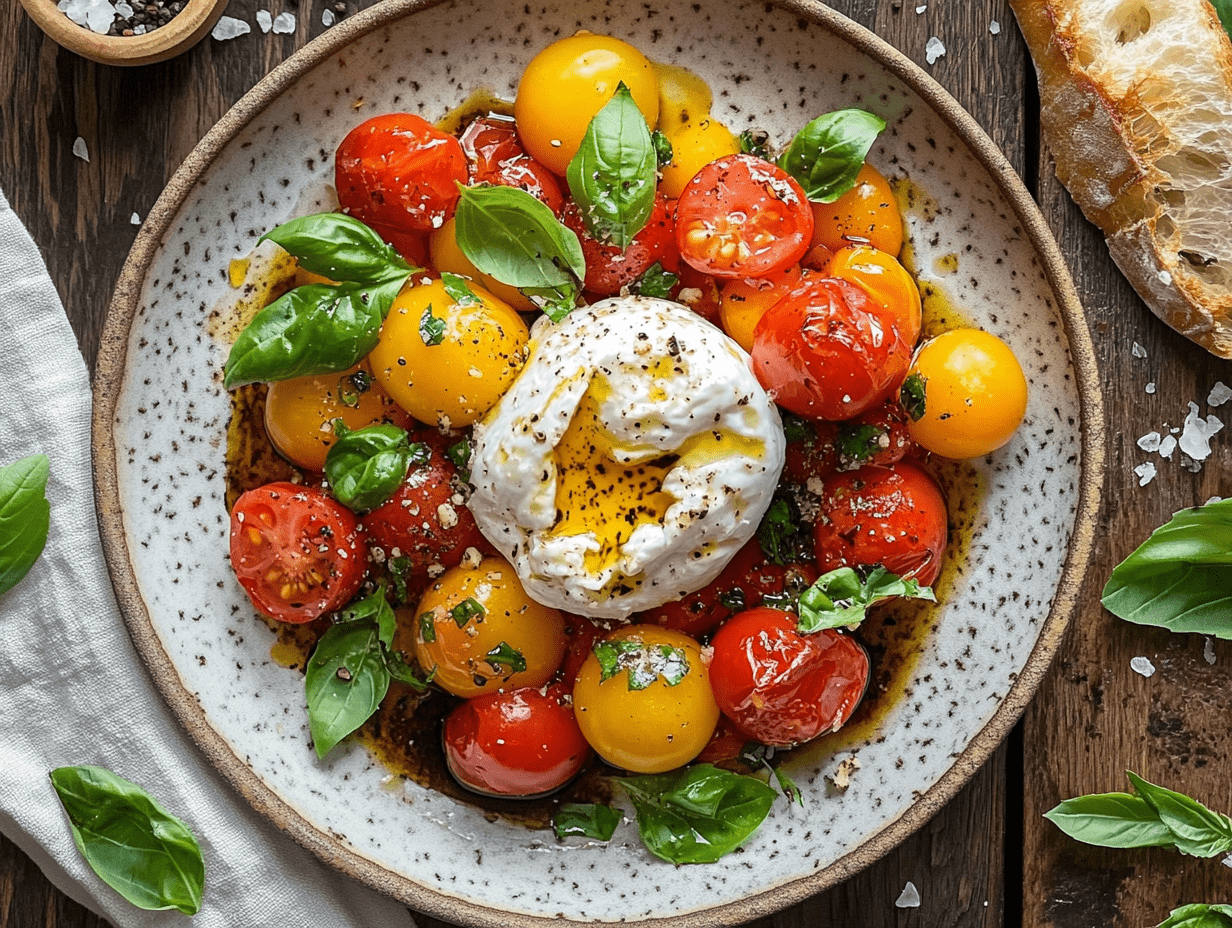
This is a charred tomato and burrata salad — cherry tomatoes blistered in a cast iron skillet, then arranged around a ball of fresh burrata with olive oil, balsamic glaze, and basil. It takes 25 minutes start to finish and uses one pan. That’s the honest reason to make it: impressive-looking, genuinely fast, and almost no cleanup.
Before you start
Two things make or break this recipe. First, get your skillet properly hot before the tomatoes go in — medium-high heat, and wait until the oil shimmers. A lukewarm pan steams the tomatoes instead of charring them, and you lose the caramelized flavor that makes this worth making. Second, don’t crowd the pan. Two cups of cherry tomatoes should fit in a single layer in a standard 10- or 12-inch cast iron skillet; if they’re piled on top of each other, they’ll stew. Work in two batches if you need to — it adds only a few minutes and the result is noticeably better.
Common problems and fixes
- Tomatoes are soft and watery, not charred: The pan wasn’t hot enough, or you stirred too often. Let them sit undisturbed for at least 90 seconds before tossing — contact time with the hot surface is what creates the char.
- Burrata is cold and rubbery in the middle: Take it out of the fridge 20 minutes before serving. Cold burrata doesn’t break open the way it should, and the creamy center stays stiff instead of pooling onto the plate.
- The balsamic glaze is too thick to drizzle: Warm it in a small bowl set in hot water for a minute, or thin it with a few drops of warm water and stir. Pre-made glazes vary a lot in consistency by brand.
- Dish tastes flat: Season the tomatoes while they’re still warm — salt sticks better and absorbs faster than it does once everything cools. A small pinch of flaky salt directly on the burrata just before serving also helps.
- Basil turns black quickly: Tear the leaves and add them at the very last second, right before the plate hits the table. Heat from the tomatoes wilts and darkens basil fast.
Ingredient notes
- Burrata: Fresh burrata is sold in most grocery stores near the specialty cheese or deli section, usually packed in water. Check the date — it has a short shelf life, so buy it the day you plan to cook. One standard 8 oz ball serves four as a starter.
- Balsamic glaze vs. balsamic vinegar: These are not interchangeable here. Regular balsamic vinegar is too thin and sharp; the glaze is reduced and sweet, which is what balances the acidity of the charred tomatoes. Bottled glaze works fine — skip making your own, it’s not worth the extra dish.
- Heirloom cherry tomatoes: Regular cherry or grape tomatoes work perfectly well. The heirloom varieties add color variety, but they don’t char differently or taste dramatically better, so use whatever looks good at the store.
Keeping and reheating
This salad is best eaten immediately — burrata does not store well once it’s been broken open and dressed. If you need to prep ahead, char the tomatoes up to 4 hours in advance and keep them at room temperature; don’t refrigerate them or they turn mealy. Store the whole burrata ball in its original liquid in the fridge until you’re ready to plate. Once assembled and dressed, leftovers can be refrigerated for up to 24 hours, but the burrata will firm up and the basil will darken. Don’t try to reheat the assembled salad; if you want to use leftover charred tomatoes the next day, they’re good cold on toast or stirred into scrambled eggs.
Charred Tomato and Burrata Salad

Equipment
- Cast iron skillet
- Chef's Knife
- Cutting board
Ingredients
- 2 cups cherry tomatoes preferably heirloom for color variation
- 2 tablespoons extra virgin olive oil high-quality, cold-pressed
- 1 teaspoon sea salt to taste
- ½ teaspoon freshly ground black pepper
- 1 ball burrata cheese fresh, about 8 oz
- 1 cup fresh basil leaves lightly packed
- 2 tablespoons balsamic glaze for drizzling
Instructions
- Heat a cast iron skillet over medium-high heat. Add 1 tablespoon of olive oil and swirl to coat the pan.
- Add the cherry tomatoes to the hot skillet and let them char, tossing occasionally, for about 5-7 minutes. They should blister and slightly burst.
- Remove the tomatoes from the skillet and season with sea salt and freshly ground black pepper.
- Place the burrata ball in the center of a serving plate. Arrange the charred tomatoes around it, making sure to distribute them evenly.
- Drizzle the remaining olive oil and balsamic glaze over the burrata and tomatoes.
- Scatter fresh basil leaves over the salad.
- Serve immediately with crusty bread or as a standalone appetizer.
Notes
- For added depth, you can roast the tomatoes in a 400°F (200°C) oven for about 15 minutes instead of pan-charring.
- Add a pinch of red pepper flakes for a gentle heat balance.
- If burrata is unavailable, fresh mozzarella or ricotta can be substituted.
Nutrition
Common questions
Can I use a regular stainless steel or nonstick pan instead of cast iron?
Yes, stainless steel works well and will give you good char. Nonstick pans can handle it too, but they don’t retain heat as evenly, so the blistering is less consistent — use the highest heat your nonstick pan allows and expect slightly softer results.
Where do I find burrata, and what should I look for?
Most well-stocked grocery stores carry it in the specialty cheese section, often near fresh mozzarella. Look for a ball packed in water or whey with a use-by date that’s at least a day or two out — burrata that’s past its prime smells sour and the outer shell gets slimy.
Can I make this ahead for a dinner party?
You can char the tomatoes a few hours ahead and leave them at room temperature. Everything else — slicing the burrata, drizzling, adding basil — should happen right before serving, ideally within five minutes of guests sitting down.
Is there a good substitute if I can’t find balsamic glaze?
A drizzle of honey mixed with a small splash of red wine vinegar gets you close in a pinch. It won’t have the same depth, but it gives you that sweet-tart contrast without a special trip to the store.
How do I know when the tomatoes are done?
Look for dark spots on the skin and at least a few that have started to split and release juice — that’s the sweet spot. If none have burst after 7 minutes, your heat is too low; crank it up and give them another minute or two.
Try these next
- Gourmet Avocado Toast with Poached Egg and Mediterranean Flair
- Authentic Roman Carbonara
- Rustic Sourdough Focaccia with Rosemary and Sea Salt
- Caramelized Brussels Sprouts with Balsamic Glaze and Crispy Shallots