

















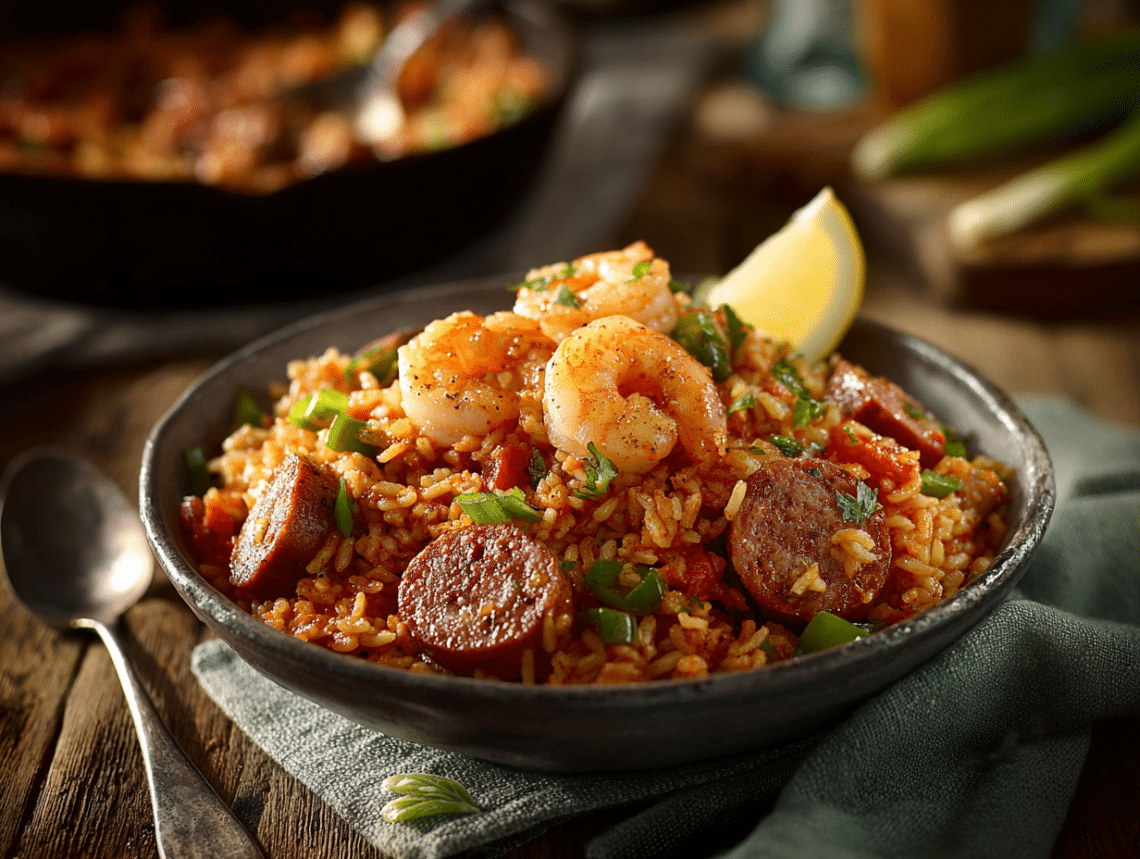
This jambalaya uses andouille sausage, ham, chicken, and shrimp cooked together in a Dutch oven — stovetop browning first, then finished in the oven so the rice steams evenly without scorching. It takes about 1 hour 15 minutes start to finish, which is worth knowing before you begin. The payoff is a deeply seasoned, one-pot dinner that feeds eight people without much cleanup.
Before you start
The most important thing to understand about this recipe is the stove-to-oven method. You build all the flavour on the stovetop — browning the proteins in stages, sweating the vegetables, toasting the rice briefly in the fat — and then the Dutch oven goes into the oven with the lid on. That covered oven heat is what cooks the rice through without turning it to mush and without you standing over the pot stirring. Make sure your Dutch oven lid fits tightly; a loose lid lets steam escape and the rice will come out undercooked. Also worth doing before you turn on the burner: get everything chopped, measured, and ready to go. Once the sausage hits the hot pan, this recipe moves quickly and you won’t have time to hunt for the celery.
Troubleshooting
- Rice is still crunchy after the oven time is up: Put the lid back on and return the Dutch oven to the oven for another 8–10 minutes before checking again. Don’t stir — lifting the lid repeatedly bleeds off the steam that’s finishing the rice.
- The bottom is catching and smelling scorched: Your oven runs hot, or the Dutch oven was too dry going in. Next time add an extra quarter cup of stock. For now, pull it immediately, transfer to a fresh pot if you can, and don’t scrape the burnt layer into the rest of the dish.
- Shrimp are rubbery: Shrimp only need 3–5 minutes and carry-over heat does the rest. If they went in too early or stayed in the oven the full time, they’re overcooked — skip the garnish and serve immediately to stop them cooking further. For picky eaters, pull the shrimp out and add them back per bowl so kids who don’t want seafood can still eat the rest.
- The dish tastes flat or one-dimensional: Seasoning was likely added all at once rather than in layers. Taste before the rice goes in and again before serving — a small pinch of salt or a squeeze of lemon at the end can fix a lot.
- Garlic is in the ingredient list but you’re not sure when to add it: Add the minced garlic with the onion, bell pepper, and celery. It needs a couple of minutes in the fat before the liquid goes in, or it’ll taste raw.
Storage and reheating
Leftovers keep well in an airtight container in the fridge for up to 4 days. The rice continues to absorb liquid as it sits, so the texture will be denser the next day — that’s normal. To reheat, add a splash of chicken stock or water (about 2 tablespoons per serving) and warm it in a covered pan over medium-low heat, stirring occasionally, until hot through. The microwave works too; cover the bowl loosely and use 50% power to avoid turning the shrimp tough. For freezing, portion it out before the shrimp go in if you’re planning ahead — shrimp don’t freeze and reheat well. Freeze the sausage-and-rice base for up to 2 months, then add fresh shrimp when you reheat it.
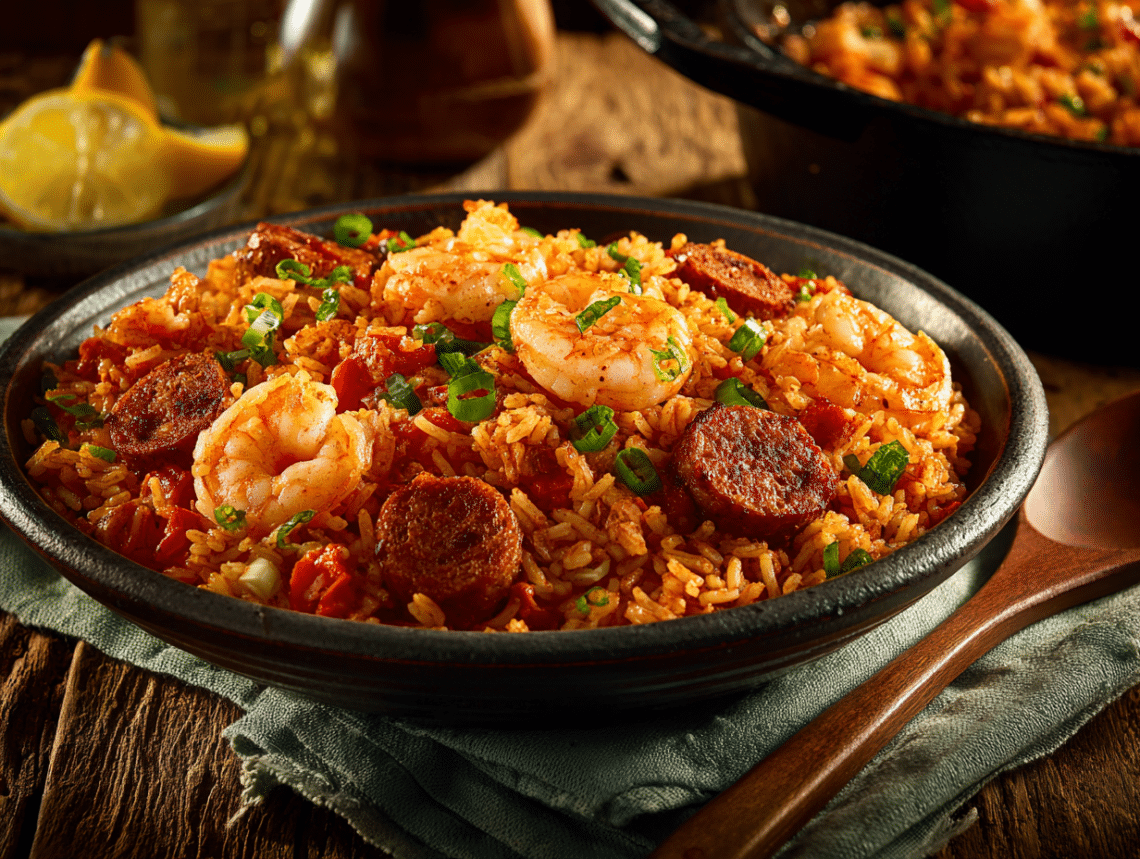
Easy Jambalaya with Sausage, Chicken & Shrimp

Ingredients
- 1 pound andouille sausage sliced into 1/4-inch rounds
- 3 tablespoons bacon grease or neutral oil
- ½ pound ham diced into 1/2-inch cubes
- 1 large yellow onion diced
- 1 large green bell pepper diced
- 3 cloves garlic minced
- 1 piece bay leaf
- 2 teaspoons dried thyme or 2 tablespoons fresh thyme leaves
- 2 cups long-grain white rice
- 2 tablespoons tomato paste
- 3 small-to-medium tomatoes diced, juice reserved
- 2 stalks celery diced
- 3 stalks green onions thinly sliced
- 1 teaspoon salt to taste
- ½ teaspoon black pepper freshly ground
- ½ teaspoon cayenne pepper adjust to taste
- 1 teaspoon chilli powder
- ¼ teaspoon crushed red pepper flakes
- 3 cups chicken stock plus reserved tomato juice
- 1 pound large shrimp (21–25 count) peeled and deveined
- 1 pound boneless, skinless chicken thighs cut into 1-inch pieces
- fresh parsley chopped ; to taste
- lemon juice optional, for shrimp ; to taste
Instructions
- Preheat your oven to 350°F / 175°C (180°C fan-forced).
- Start by dicing up all produce. It’s a great time saver to pick up pre-diced onions, peppers and celery from the store.
- When dicing the tomatoes, reserve the juice in a small container for later. This juice can be used as part of your liquid to cook the rice.
- Heat your Dutch oven over medium-high heat. Add the sliced sausage and brown on both sides until slightly crisp, about 4–5 minutes.
- Once browned and slightly crisp, remove the sausage with a slotted spoon and place it on a paper towel to drip. Add the ham and repeat the process.
- Remove the ham and set aside with the sausage. Add the bacon grease to the pot along with the bay leaf, thyme, cayenne, chilli powder, crushed red pepper, and black pepper. Sauté the spices in the fat for 30–60 seconds until fragrant.
- Add the diced onion, bell pepper, and celery (the Cajun holy trinity). Cook for 5–7 minutes, stirring occasionally, until softened. Add the minced garlic and cook for 30 seconds until fragrant.
- If using chicken, add the seasoned chicken pieces once the vegetables have softened. Cook for 3–4 minutes, stirring occasionally, until the outside is white but the centre is still slightly pink (it will finish cooking with the rice). Return the browned sausage and ham to the pot.
- Add the rice and stir to coat in the pot juices, about 1–2 minutes. Stir in the diced tomatoes with their reserved juice, the tomato paste, sliced green onions, and chopped parsley.
- Pour in the chicken stock, stir well, and bring to a boil. Reduce heat to low, cover with a tight-fitting lid, and simmer for 18–20 minutes until the rice is tender and the liquid is absorbed. Check after 12 minutes — if the pot looks dry, add 1/2 cup more stock.
- While the rice simmers, preheat your oven to 350°F / 175°C (180°C fan-forced). Season the shrimp with a squeeze of lemon juice and a pinch of Cajun seasoning. Once the rice is tender, nestle the shrimp into the top of the jambalaya, cover, and transfer the Dutch oven to the oven. Bake for 10–12 minutes until the shrimp are pink and opaque (internal temperature of 145°F / 63°C). Remove the bay leaf before serving.
Nutrition
Common questions
Can I make this less spicy for kids?
Yes — cut the cayenne and crushed red pepper in half and leave out the chilli powder entirely. The andouille sausage still brings smokiness and mild heat on its own, so the dish won’t taste bland, just gentler. You can always serve hot sauce on the side for adults.
Do I have to use all three proteins, or can I leave one out?
You can leave out any one of them without breaking the recipe. Chicken and sausage together is the most forgiving combination if you want to skip the shrimp — that’s the version that works best for households with seafood skeptics. Just keep the total protein weight roughly the same so the rice-to-meat ratio stays balanced.
What kind of rice works best, and can I use instant rice?
Long-grain white rice is the right choice here — it holds its texture through the oven time without going gluey. Don’t use instant or parboiled rice; the timing in this recipe is built around regular long-grain and instant rice will turn to mush well before the other ingredients are done.
I don’t have a Dutch oven — can I use something else?
A heavy oven-safe pot with a tight-fitting lid will work. A large cast iron skillet with a lid or a covered braising pan are both fine. What you want to avoid is a thin-bottomed pot, which will scorch on the stovetop browning steps and won’t hold heat evenly in the oven.
What to cook next
- Fiery Jamaican Jerk Chicken
- Authentic Spanish Seafood Paella
- Creamy New England Clam Chowder
- Smoky Homemade Chili Seasoning Blend