





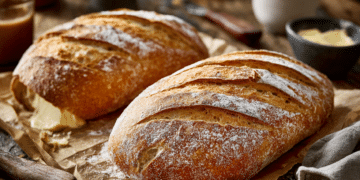






























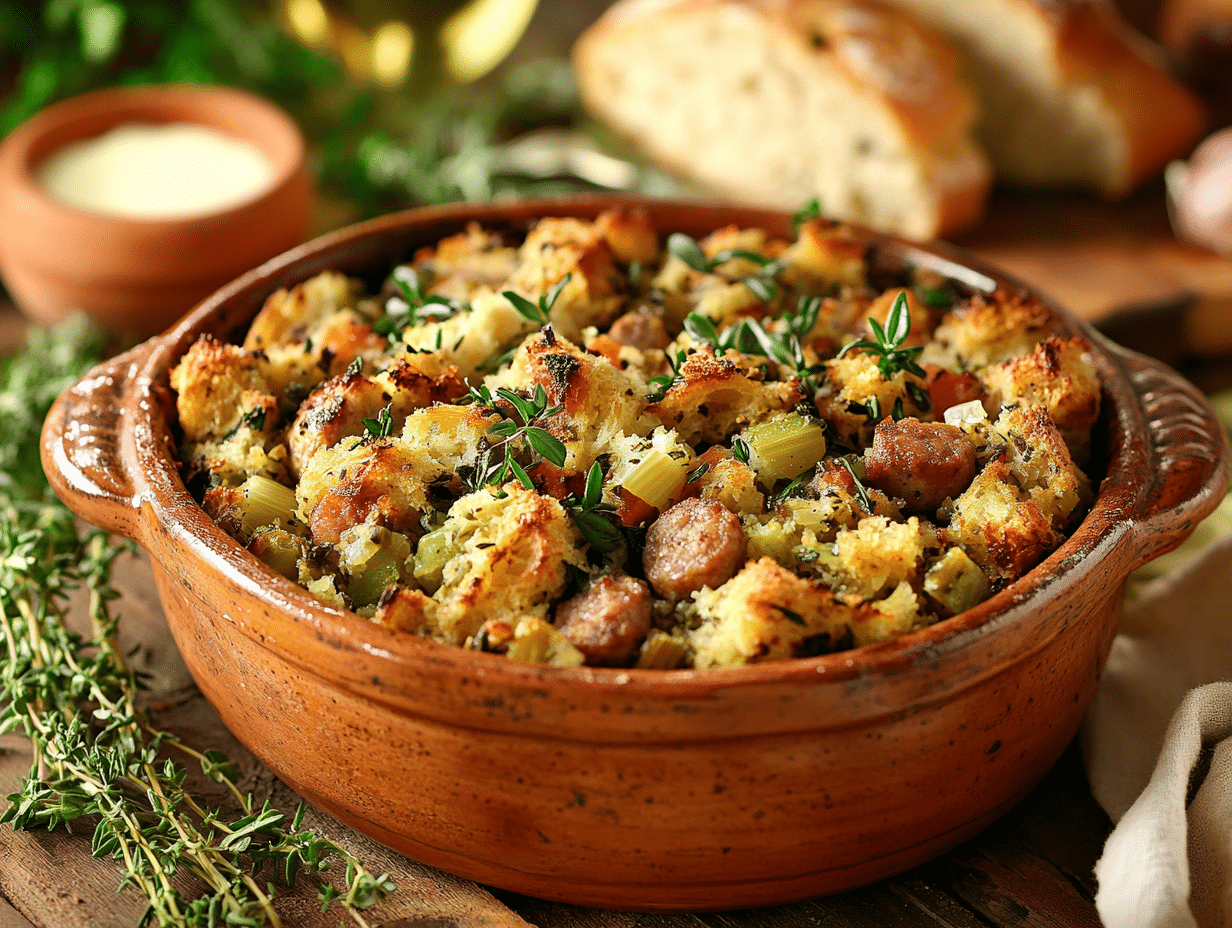
This stuffing is built around Italian sausage, fresh sage and thyme, and toasted rustic bread — straightforward ingredients that produce a pan full of savory, well-seasoned stuffing that works at Thanksgiving or alongside a weeknight roast chicken. The sausage does most of the flavor heavy lifting, so you don’t need a long ingredient list or specialty items. It serves 8 and takes about 90 minutes start to finish, most of which is hands-off oven time.
Before you start
The single most important step is getting your bread dry enough before it goes into the bowl. Bread that still has moisture in it will turn to mush once the broth hits it — you want cubes that are genuinely stale or fully toasted through, not just lightly golden on the outside. If your bread is fresh, cube it the night before and leave it uncovered on the counter, or toast it a little longer than the recipe suggests and let it cool completely before mixing. The second thing worth knowing: add the broth slowly and stop when the bread is evenly moistened but not sitting in liquid. Every bread absorbs differently, so you may not need the full two cups.
Common problems and fixes
- Stuffing comes out dense and heavy: This usually means the bread was packed too tightly into the baking dish. Press it in gently — you want it snug but not compressed. A little air in the mix helps the top crisp up properly.
- Top is browning too fast before the center is done: Put the foil back on for the last few minutes. The covered portion of the bake is what heats the center through; the uncovered time is just for crust.
- Sausage is greasy and the stuffing feels oily: After browning the sausage, tip it into a colander or blot it on paper towels before adding it to the bread mixture. Skipping this step is the most common reason stuffing ends up greasy.
- Not enough flavor even though you followed the recipe: Low-sodium broth is called for, which is the right call for salt control, but it can taste flat on its own. Taste the mixture before it goes into the dish and adjust salt and pepper then — it’s much harder to fix after baking.
- Vegetables are still a bit crunchy after baking: They need a full 5–7 minutes in the skillet, not just a quick stir. The carrots in particular take longer than the onion and celery, so keep the heat at medium and don’t rush it.
Keeping and reheating
Leftover stuffing keeps well in an airtight container in the fridge for up to 4 days. To reheat, spread it in a baking dish, splash a few tablespoons of broth or water over the top, cover with foil, and warm at 325°F for about 20 minutes — skip the garnish of extra fresh herbs before serving, not worth the extra dish. For longer storage, freeze it in portions for up to 2 months; thaw overnight in the fridge before reheating the same way. Microwaving works in a pinch but softens the top, so use the oven if you care about keeping any crunch.
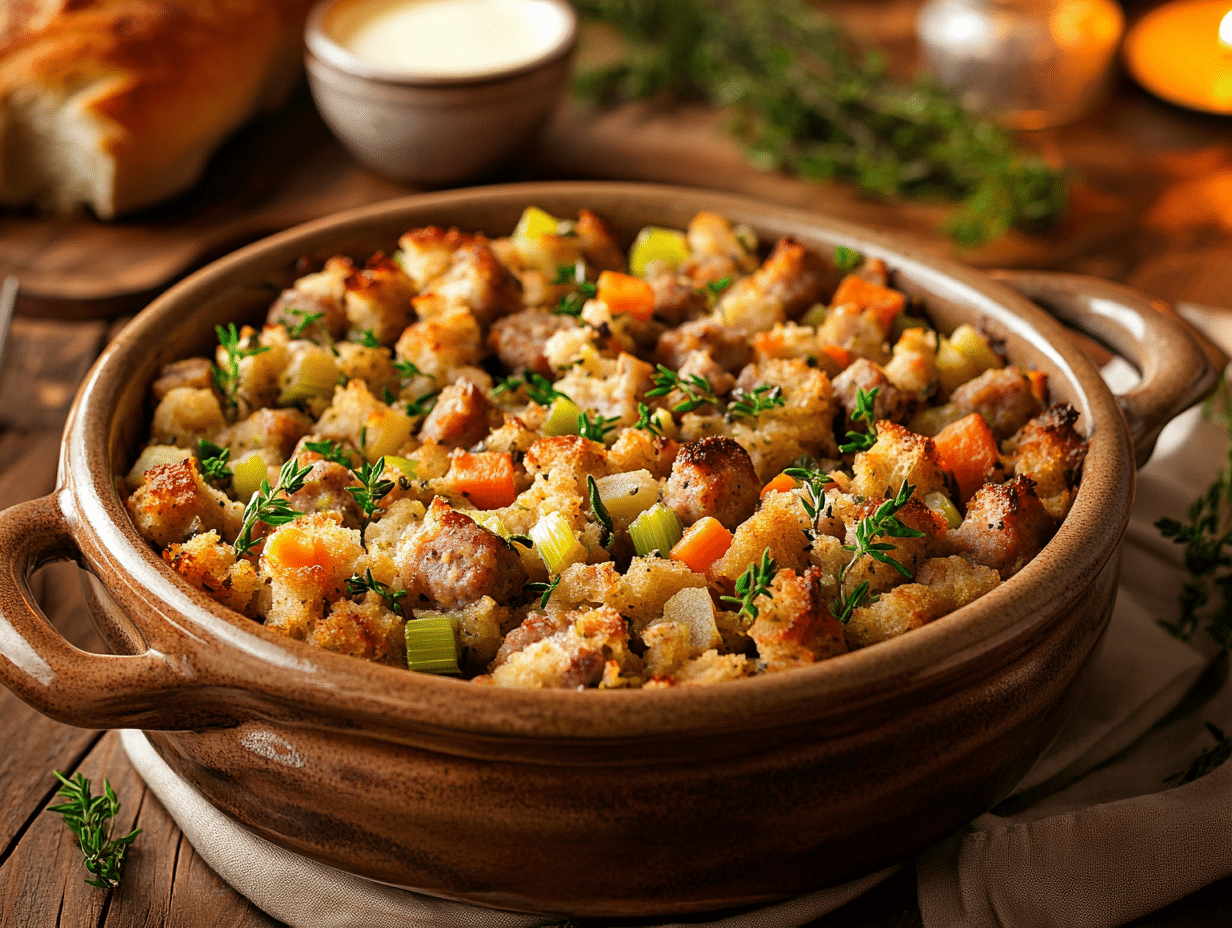
Savory Sausage Herb Stuffing

Ingredients
- 1 lb Italian sausage mild or spicy, casings removed
- 1 cup celery diced
- 1 cup onion finely chopped
- 1 cup carrots shredded
- 1 tbsp garlic minced
- 10 cups rustic bread cubed and slightly stale
- 2 tbsp fresh sage chopped
- 2 tbsp fresh thyme chopped
- 2 cups chicken broth low sodium
- 2 tbsp butter melted
- 1 tsp salt to taste
- 1 tsp black pepper freshly ground
Instructions
- Preheat your oven to 180°C (350°F). Spread the cubed bread on a baking tray and toast for about 10 minutes until golden to ensure a crispy texture.
- In a large skillet over medium heat, cook the sausage until browned and crumbled. Remove the sausage and set aside.
- In the same skillet, add celery, onion, carrots, and garlic. Sauté until the vegetables are tender and the onions are translucent, about 5-7 minutes.
- In a large mixing bowl, combine the toasted bread cubes, cooked sausage, sautéed vegetables, chopped sage, and thyme. Stir to integrate the flavors evenly.
- Slowly add chicken broth and melted butter to the mixture, stirring gently. The goal is to moisten the bread without making it soggy. Season with salt and pepper to taste.
- Transfer the stuffing mixture into a greased baking dish, cover with foil, and bake for 30 minutes. Remove the foil and bake for an additional 15 minutes, or until the top is crispy and golden brown.
Notes
Nutrition
Your questions, answered
Can I use regular sandwich bread instead of rustic bread?
Yes, it works, but the texture will be softer and less chewy. Sandwich bread breaks down faster when it absorbs broth, so use slightly less liquid and make sure the cubes are very dry before you start.
Can I make this stuffing a day ahead?
You can assemble the whole thing the night before, cover it tightly, and refrigerate it unbaked. Add about 10 extra minutes to the covered baking time since it’s going in cold.
What can I use instead of Italian sausage?
Breakfast sausage is the easiest swap and gives a slightly sweeter, less fennel-forward flavor. Ground pork seasoned with a pinch of fennel seed and red pepper flakes also works well and is often cheaper.
Can I use dried sage and thyme instead of fresh?
Yes — use about 2 teaspoons of each dried herb in place of the 2 tablespoons fresh. Dried herbs are more concentrated, so start with a little less and taste as you go.
How do I keep the stuffing from drying out while it bakes?
The foil cover for the first 30 minutes traps steam and keeps the inside moist — don’t skip it. If your oven runs hot or your dish is shallow, check it a few minutes early before removing the foil.
Try these next
- Homemade Classic Cranberry Sauce
- Traditional Homemade Eggnog
- Caramelized Brussels Sprouts with Balsamic Glaze
- Hearty Shepherd’s Pie