


































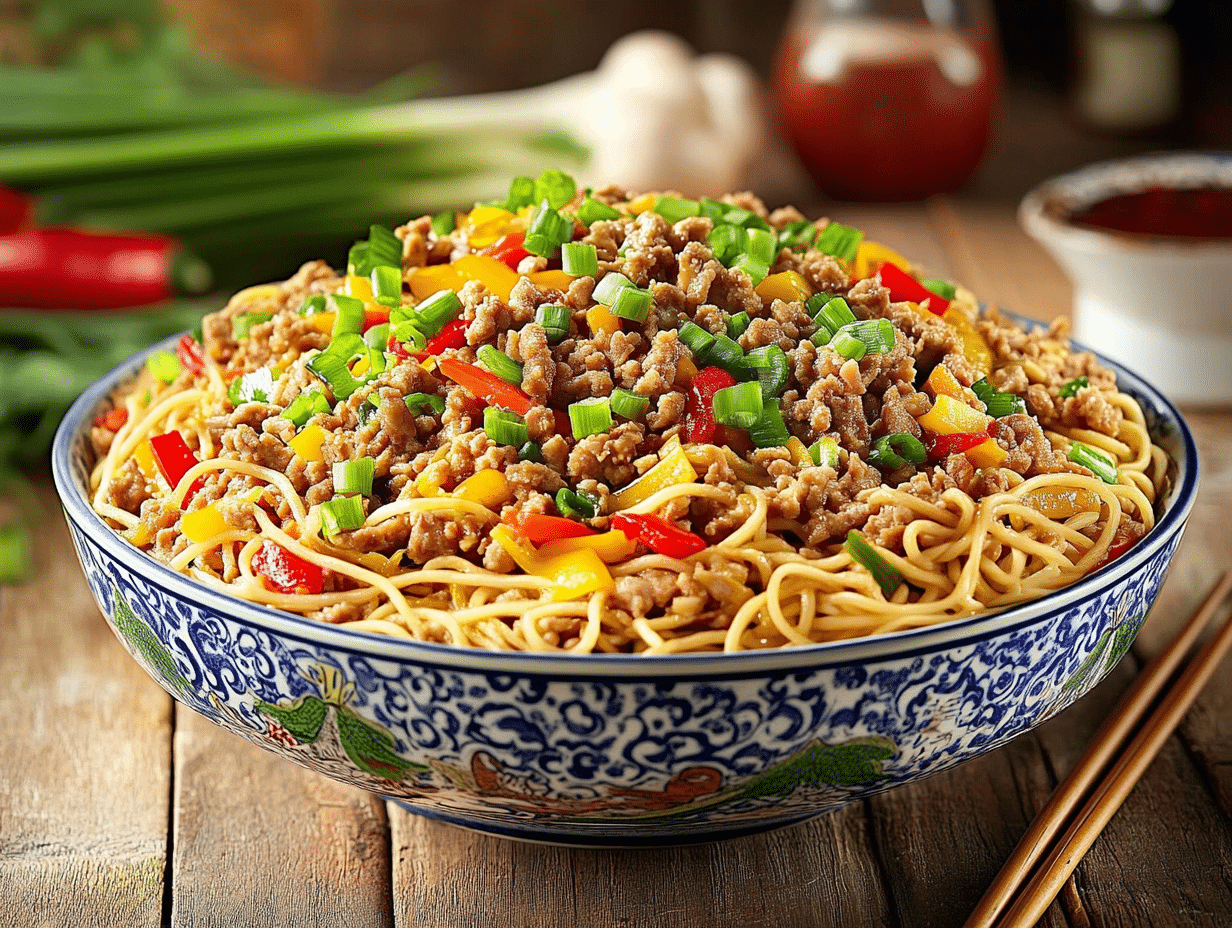
This pork mince chow mein comes together in 35 minutes using ingredients most Asian-pantry households already have on hand. The pork stays juicy, the noodles pick up the sauce without going soggy, and the whole thing reheats well — which is the real reason to make a full batch on a weeknight.
Why this recipe works
Two things make this recipe reliable. First, browning the pork over slightly higher heat before adding anything else lets the meat develop some color instead of steaming in its own liquid — that color means flavor in every bite. Second, pre-cooked chow mein noodles go into the pan last and only need two minutes of tossing, so they absorb the soy and oyster sauce without turning soft. Get those two steps right and the rest is just assembly.
What can go wrong
- Pan is too crowded: A small pan traps steam and the pork braises instead of browns. Use the largest pan you have, or cook the pork in two batches before combining everything.
- Noodles clump before they hit the pan: Pre-cooked noodles stick together as they sit. Loosen them with your fingers or run briefly under warm water and shake dry before adding to the stir-fry.
- Vegetables go limp: Bell peppers and carrots only need 3-4 minutes — pull them while they still have a little bite. They carry over cooking once the noodles and sauce go in.
- Sauce burns on the bottom: Soy and oyster sauce both have sugar and will scorch quickly on high heat. Pour them over the noodles, not directly onto the hot pan surface, and keep everything moving.
- Dish tastes flat: Sesame oil loses its punch if it goes in too early. Add it only after the heat is off — that’s when the nutty aroma is strongest.
Ingredient notes
- Chow mein noodles: Look for fresh or vacuum-packed pre-cooked noodles in the refrigerated section of Asian grocery stores. Dried chow mein noodles work but need to be boiled and drained first — cook them slightly under so they finish in the pan.
- Oyster sauce: This is worth buying rather than skipping. It adds a depth that soy sauce alone doesn’t replicate. Vegetarian oyster sauce (made from mushrooms) is a direct swap if needed.
- Sesame oil: Use toasted sesame oil, not plain. The bottles look similar — check the label. Plain sesame oil has almost no flavor by comparison.
- Protein swaps: Ground chicken or turkey works well in the same quantities. Firm tofu, crumbled and pressed dry, is a solid vegetarian option — brown it the same way as the pork.
Leftovers and make-ahead
Leftovers keep in an airtight container in the fridge for up to 3 days. Reheat in a pan over medium heat with a splash of water — about a tablespoon — to loosen the noodles; a microwave works but the noodles go a bit soft. For make-ahead, you can cook and season the pork up to 2 days ahead and refrigerate it separately, then stir-fry the vegetables and noodles fresh when you’re ready to eat. Skip the garnish of extra spring onions on the reheated portion — not worth the extra dish — but a drizzle of fresh sesame oil right before serving does bring it back to life. This recipe does not freeze well; the noodles turn mushy once thawed.
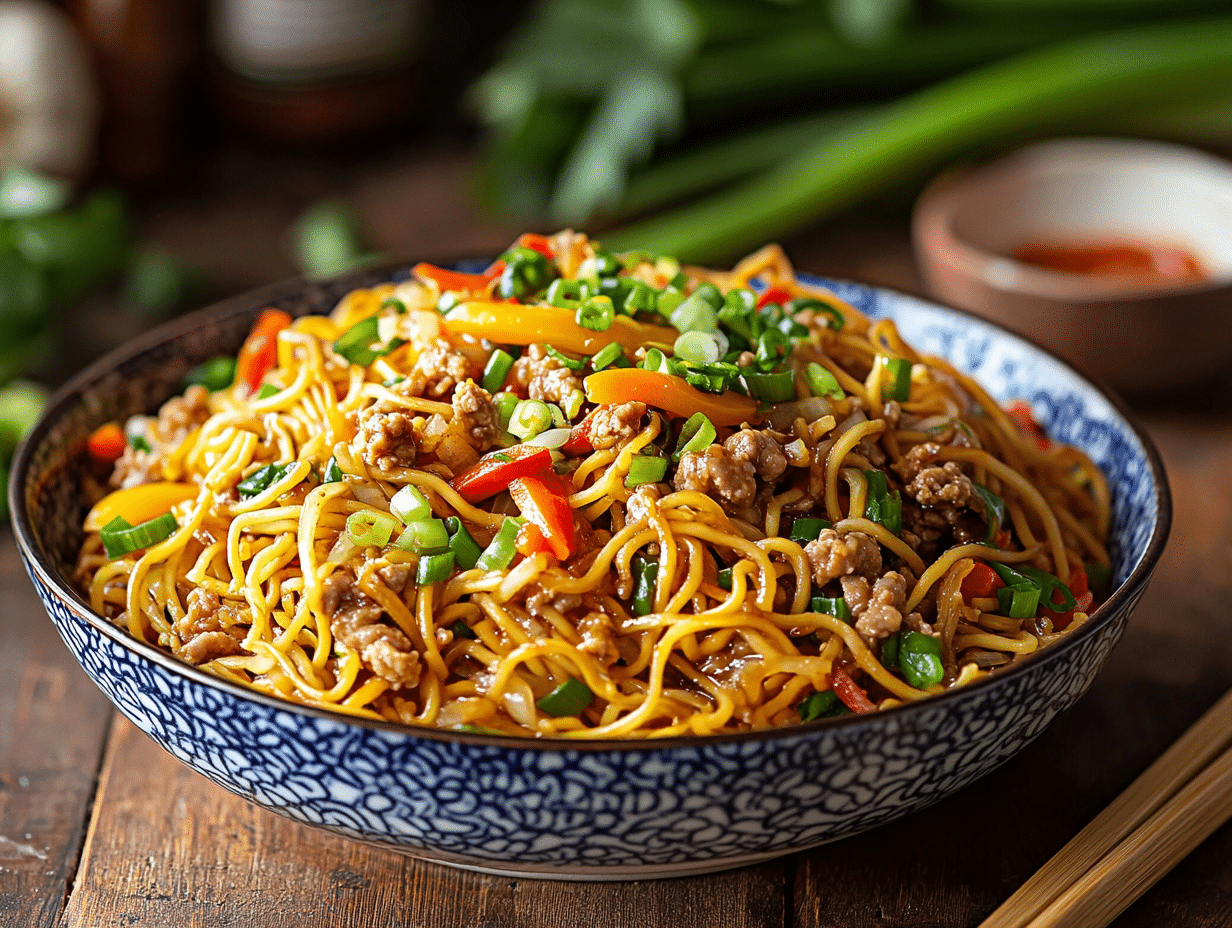
Pork Mince Chow Mein

Ingredients
- ½ pound pork mince Opt for free-range or organic if available
- 7 ounces chow mein noodles Pre-cooked preferred for ease
- 2 tablespoons soy sauce Low sodium if preferred
- 1 tablespoon oyster sauce for a deep savory note
- 1 tablespoon vegetable oil For stir-frying
- 1 medium onion Sliced thinly
- 2 cloves garlic Minced finely
- 1 cup mixed bell peppers Sliced; red, yellow, green for color variety
- 1 cup shredded carrots Fresh or store-bought, finely cut
- 2 tablespoons sesame oil To finish
- 1 bunch spring onions Chopped roughly for garnish
Instructions
- Begin by heating the vegetable oil in a large, heavy-bottomed pan over medium-high heat.
- Add the thinly sliced onion and sauté until soft and translucent, about 3-4 minutes.
- Stir in the minced garlic and cook for another 30 seconds until fragrant.
- Increase the heat slightly, add the pork mince, and cook, breaking apart with a wooden spoon until browned and cooked through, about 5-7 minutes.
- Toss in the mixed bell peppers and shredded carrots, continuing to stir-fry for 3-4 minutes until the vegetables are just tender.
- Add the noodles to the pan, pouring in the soy sauce and oyster sauce. Stir-fry everything together for another 2 minutes, ensuring the sauce coats every ingredient evenly.
- Off the heat, drizzle with sesame oil and toss in half of the chopped spring onions, saving the rest for garnish.
Notes
Nutrition
Your questions, answered
Can I use regular spaghetti instead of chow mein noodles?
Yes, it works in a pinch. Cook the spaghetti to just under al dente, drain it well, and toss with a tiny bit of oil so it doesn’t clump — then treat it exactly like the pre-cooked chow mein noodles in the recipe.
How do I know when the pork mince is fully cooked?
The pork is done when there’s no pink left and the pieces have some light browning on them, which takes about 5-7 minutes over medium-high heat. If it’s releasing a lot of liquid and looks grey rather than browned, turn the heat up slightly and keep stirring until the moisture evaporates.
Can I make this less salty without losing flavor?
Use low-sodium soy sauce and reduce it to 1½ tablespoons instead of 2. The oyster sauce already carries a lot of savory depth, so you won’t miss much — taste before serving and adjust from there.
What to cook next
- Quick and Delicious Homemade Chinese Fried Rice
- Authentic Japanese Chicken Teriyaki
- Fresh Vegetable Spring Rolls
- Street Food Magic: Crispy Potato Samosas from India