















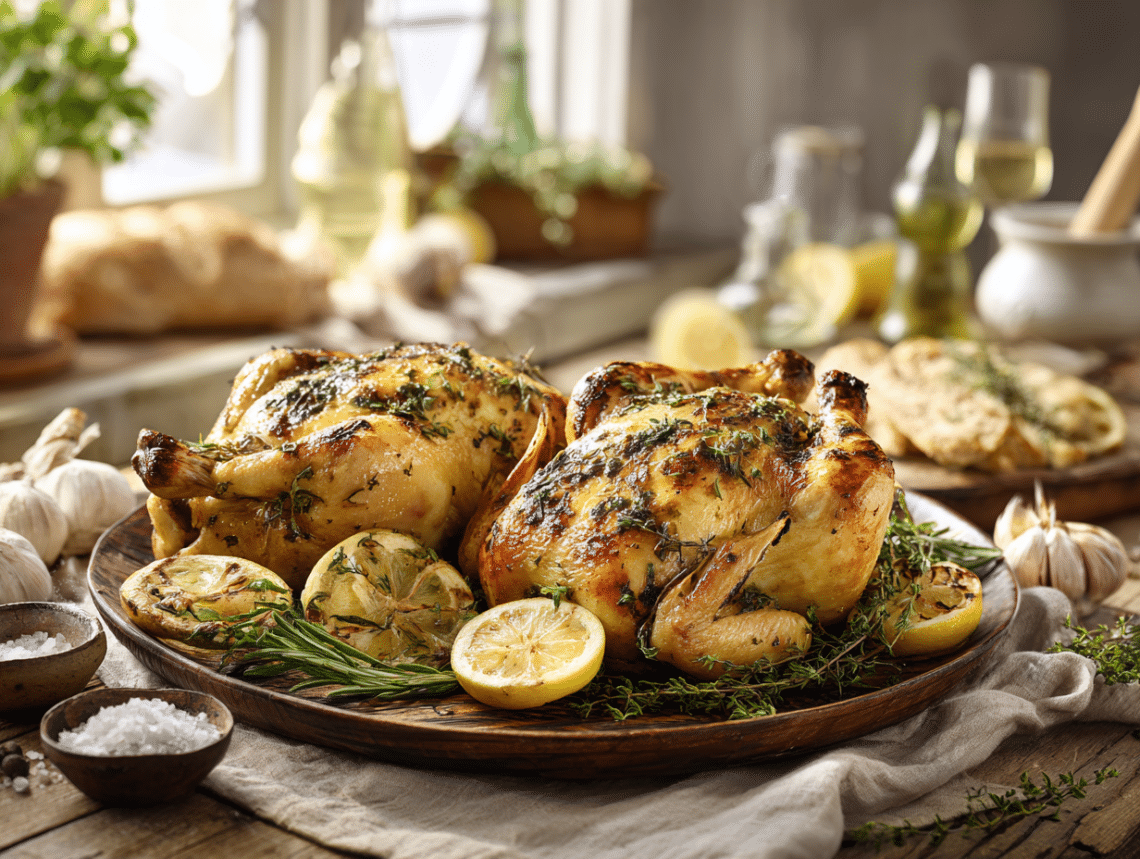
Two Cornish hens, one pan, about an hour in the oven — this is a roast dinner that looks like you tried harder than you did. Each bird is rubbed inside and out with a mix of butter, olive oil, garlic, fresh thyme, rosemary, and lemon zest, then roasted at 400°F until the skin is genuinely crisp and the meat stays juicy. It serves two people as a full meal, and the hands-on time is under 30 minutes.
Why this recipe works
Two things actually move the needle here. First, the herb-butter rub goes under the skin directly onto the breast meat, not just on the surface. Fat applied there bastes the meat as it melts and can’t drip away before it does its job — that’s why the breast stays moist even at 400°F. Second, patting the birds completely dry before any rub goes on is what makes the skin crisp rather than steamed. Moisture on the surface turns to steam in the oven and softens skin; a dry surface browns. Both steps take about two extra minutes and make a real difference in the finished bird.
Troubleshooting
- Skin is browning too fast before the inside is done: Tent the hens loosely with foil after the 30-minute baste and continue roasting. Remove the foil for the last 5–10 minutes to re-crisp the surface.
- Pan drippings are burning: Add a splash of water or chicken broth (about ¼ cup) to the bottom of the roasting pan. This keeps the drippings from scorching and gives you more to baste with.
- Herb butter won’t spread smoothly under the skin: Your butter isn’t soft enough. It should be room temperature — if it tears the skin when you try to push it, give it another 10 minutes on the counter.
- One hen reads 165°F but the other doesn’t: Cornish hens vary slightly in size even in the same package. Pull the done bird, tent it with foil to rest, and give the other one 5 more minutes before checking again.
- Meat near the cavity is still pink after the thigh reads 165°F: The lemon wedges stuffed inside slow heat penetration slightly. Remove the wedges and return the bird to the oven for a few more minutes — skip the garnish of fresh lemon slices at serving, not worth the extra dish.
Storage and reheating
Leftover hens keep in the fridge for up to 3 days in an airtight container. For best results, pull the meat off the bones before storing — it reheats more evenly than a whole bird and takes up less space. To reheat, place the meat in a covered baking dish with a tablespoon of water or broth and warm at 325°F for about 15 minutes, or until heated through; the lower temperature keeps it from drying out. You can also freeze cooked meat for up to 2 months — wrap tightly and thaw overnight in the fridge before reheating. The skin won’t be crisp after storage no matter what you do, so don’t bother trying to revive it; just focus on keeping the meat moist.
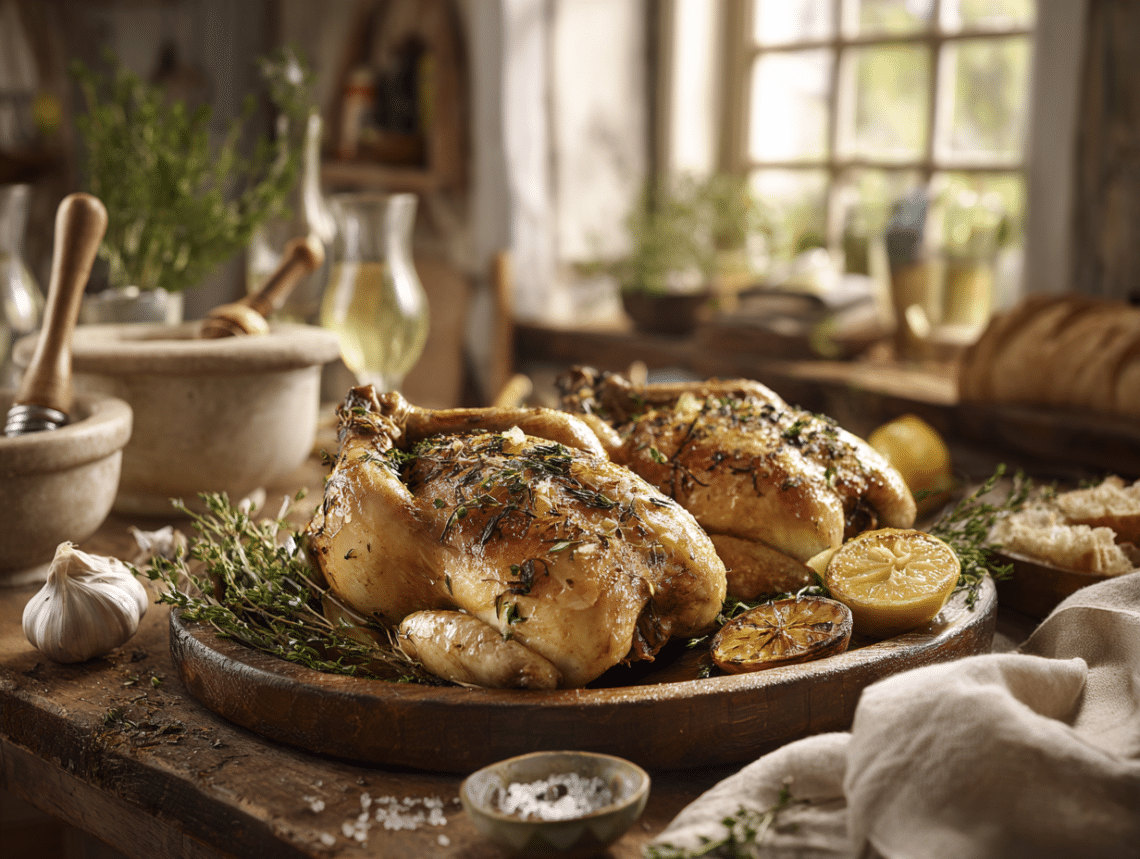
Herb-Roasted Cornish Hen with Garlic and Lemon

Equipment
- Roasting pan
- Meat thermometer
- Basting brush
- Mortar and pestle (or food processor)
Ingredients
- 2 whole Cornish hens (about 1.25–1.5 lbs each) fresh, organic if possible
- 2 tablespoons olive oil extra virgin
- 2 tablespoons unsalted butter softened
- 6 cloves garlic minced
- 1 tablespoon thyme leaves fresh ; stemmed and finely chopped
- 1 teaspoon rosemary fresh ; finely chopped
- 1 teaspoon kosher salt
- 0.5 teaspoon black pepper freshly ground
- 1 whole lemon zested and quartered
Instructions
- Preheat the oven to 400°F (205°C). Line a roasting pan with a wire rack if available.
- In a small bowl, combine olive oil, softened butter, minced garlic, thyme, rosemary, lemon zest, kosher salt, and black pepper to form an aromatic rub.
- Pat the Cornish hens dry with paper towels. This helps the skin become crispy during roasting.
- Using your fingers, gently loosen the skin over the breast meat and rub a portion of the herb mixture directly under the skin. Then rub the remaining blend all over the hens.
- Stuff each hen’s cavity with a lemon wedge or two for aromatic richness.
- Place the hens breast-side up on the rack in the pan. Roast for 55–60 minutes or until a meat thermometer inserted into the thickest part of the thigh reads 165°F (74°C), and the skin is golden and crisp.
- Baste the hens with pan drippings at the 30-minute mark for a richer glaze and juicier meat.
- Let rest for 10 minutes before serving to allow juices to redistribute.
Notes
- You can substitute thyme and rosemary with sage or marjoram for a different herbal profile.
- Add a splash of white wine or chicken stock to the roasting pan during cooking for extra pan sauce.
- For crispy skin, ensure hens are well dried before applying the butter rub.
Nutrition
FAQ
Can I use dried herbs instead of fresh?
Yes, but use about one-third the amount — dried herbs are more concentrated. So swap 1 tablespoon fresh thyme for 1 teaspoon dried, and 1 teaspoon fresh rosemary for roughly ⅓ teaspoon dried.
Do I need a wire rack, or can I just set the hens in the pan?
You can roast directly in the pan, but the underside of the birds will steam rather than brown. If you don’t have a rack, prop the hens up on a few halved onions or a loose bundle of herb stems — it gets the same airflow.
Can I prep the hens ahead of time?
Yes, and it actually helps. Apply the herb-butter rub, cover loosely, and refrigerate the hens for up to 24 hours before roasting. The salt in the rub has time to season the meat more deeply, and the surface dries out further in the fridge, which means even crisper skin.
My oven runs hot — should I adjust the temperature?
Drop it to 375°F and start checking the internal temperature at the 50-minute mark. The goal is 165°F in the thickest part of the thigh; the exact oven temp matters less than hitting that number without burning the skin.
Try these next
- Hearty French Countryside Chicken Stew with Root Vegetables
- Rustic French Garlic-Herb Pork Chops
- Elegant Herb-Crusted Lamb
- Sweet and Spicy Hot Honey Roasted Chicken Thighs