



























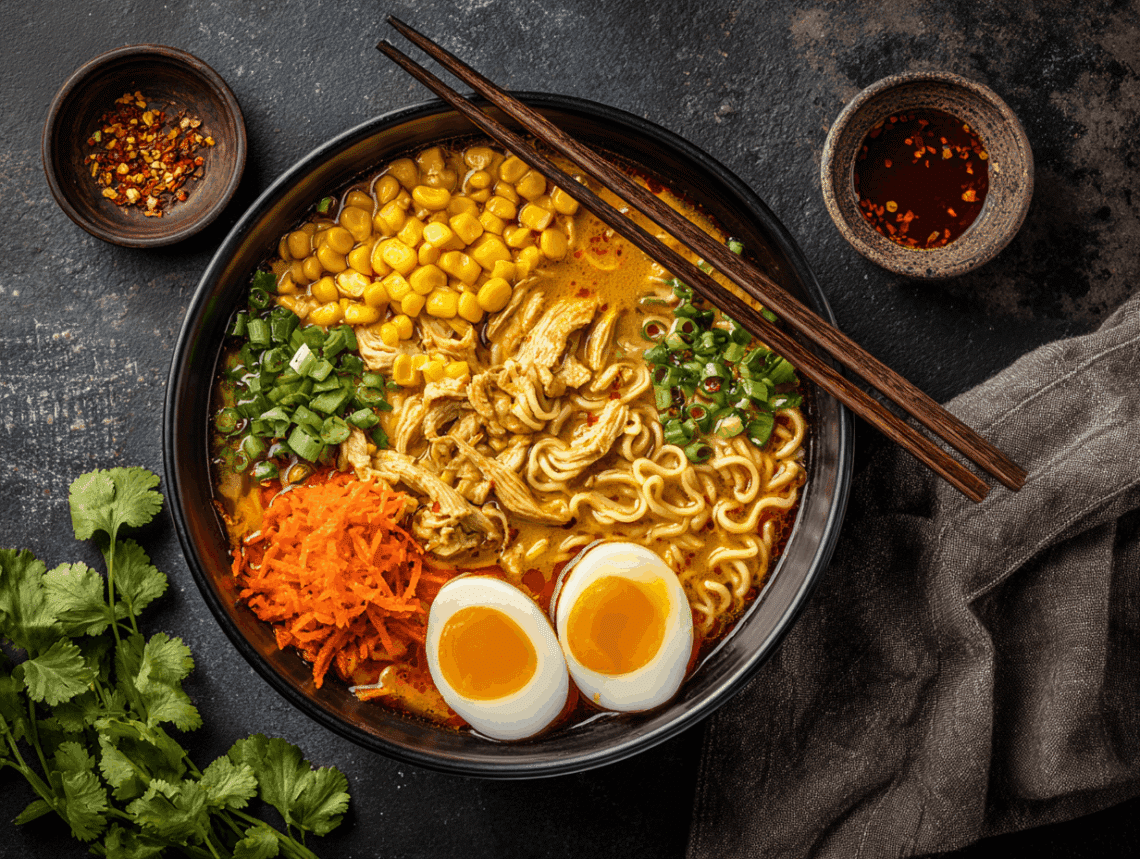
This is a curry-spiced chicken ramen built around rotisserie chicken and store-bought broth — two shortcuts that genuinely work here. The curry powder, soy sauce, and sesame oil do enough heavy lifting that the broth tastes like it took longer than it did. Five servings, under 20 minutes, and the leftovers actually hold up.
The technique that matters
Cook the noodles in a separate pot of boiling water, then drain them before adding to each bowl. Ramen noodles absorb liquid fast — left in the broth, they’ll swell, go soft, and drink up most of what you made. Keeping them separate means your broth stays at full volume and the noodles stay firm. The second thing worth doing: stir in the curry powder, soy sauce, and sesame oil after the broth comes to a boil, then give it two to three minutes at a low simmer before you taste. The spices need a little heat to open up. A tablespoon of curry powder across 10 cups of broth is the right starting point — taste it there and add more if you want more warmth.
If something goes sideways
- Broth tastes flat or thin: Add another teaspoon of soy sauce and let it simmer two more minutes. A splash of fish sauce also works if you have it — just a teaspoon rounds out the savory depth without tasting fishy.
- Curry flavor is barely there: Toast a little extra curry powder in a dry skillet for 30 seconds, then stir it into the broth. This works even after the broth is already done.
- Noodles clumped together after draining: Toss them with a few drops of sesame oil right after draining. They’ll separate and won’t stick while you portion out the bowls.
- Egg yolk is fully set when you wanted it jammy: Pull eggs at exactly 7 minutes in boiling water, then transfer immediately to an ice bath for 2 minutes. Timing is the only variable that matters here — skip the ice bath and carryover heat finishes the job for you.
- Pot not big enough: Ten cups of broth plus chicken needs at least a 5-quart pot. A smaller pot will boil unevenly and you’ll lose liquid to splatter. If that’s what you have, halve the batch.
Shopping notes
- Rotisserie chicken: A standard store bird gives you roughly 3 cups of shredded meat once you pull the breast and thigh meat. Buy it the day you’re cooking — or up to two days ahead if it’s going straight into the fridge.
- Ramen noodles: The dried bricks sold near instant noodles work fine. Discard the seasoning packets — you won’t need them. Fresh ramen noodles from the refrigerated section cook faster (usually 2 minutes), so check the package.
- Curry powder: Any standard grocery store curry powder works. Madras-style runs hotter; standard mild is more versatile for a family table. Skip the garnish of cilantro if half your table won’t eat it — not worth the extra dish.
- Corn kernels: Frozen and thawed is fine. Canned works too; just drain and rinse it first.
Leftovers and make-ahead
Store the broth and chicken together in one airtight container and the cooked noodles in a separate container — both keep for up to 4 days in the fridge. Reheat the broth on the stovetop over medium heat until it’s steaming, about 4 minutes, then ladle it over freshly portioned noodles. If you combine them before storing, the noodles will absorb most of the broth overnight and the texture suffers. The broth alone freezes well for up to 3 months; freeze it before adding the noodles and toppings. Thaw overnight in the fridge, reheat, then cook fresh noodles when you’re ready to serve. Toppings like corn and shredded carrot are best added fresh each time — they take 30 seconds and make a real difference.
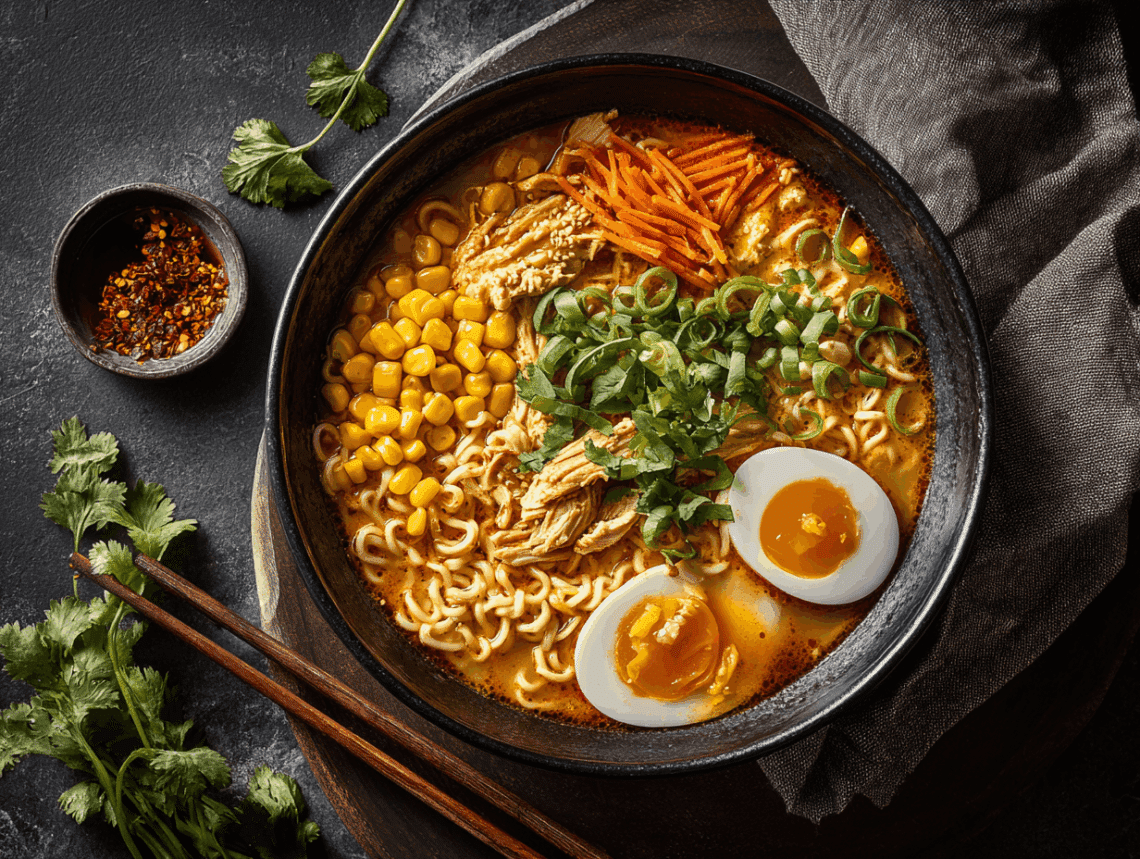
Spiced Curry Chicken Ramen (Ready in 25 Minutes)

Ingredients
- 10 cups chicken broth
- 3 cups rotisserie chicken sliced or shredded
- 1 tablespoon curry powder or more to taste
- ¼ cup soy sauce
- 1 teaspoon sesame oil
- 16 ounces ramen noodles
- 1 cup corn kernels thawed
- ½ cup carrot shredded
- ½ cup green onion tops chopped (about 4–5 scallions)
- ¼ cup cilantro leaves
- 5 medium eggs soft or hard-boiled
- as needed water for boiling noodles separately
Instructions
- Add the chicken broth and shredded rotisserie chicken to a large stockpot or Dutch oven. Bring to a gentle boil over medium-high heat, about 5–6 minutes.
- Stir in the curry powder, soy sauce, and sesame oil. Reduce heat to medium-low and simmer for 2–3 minutes to allow the spices to bloom and the flavours to meld.
- For best results, cook the ramen noodles separately according to package directions in a medium saucepan of boiling water. Drain and rinse briefly under warm water to remove excess starch. This prevents the noodles from absorbing all the broth and turning mushy — especially important if you plan to have leftovers.
- Divide the cooked noodles among 5 serving bowls. Ladle the hot broth and chicken over the noodles. Top each bowl with corn kernels, shredded carrot, chopped green onions, fresh cilantro leaves, and a halved soft-boiled or hard-boiled egg. Serve immediately with chilli oil or extra soy sauce on the side if desired.
Nutrition
Common questions
Can I use raw chicken instead of rotisserie?
Yes, but it adds time. Slice two boneless chicken breasts or thighs thin, add them to the cold broth, and bring everything up to a boil together — the chicken will cook through in about 8 to 10 minutes. You won’t get the same depth of flavor that a pre-roasted bird brings, so taste the broth and adjust the soy sauce and curry powder up slightly.
What can I use instead of ramen noodles?
Udon, soba, rice noodles, or even thin spaghetti all work. Cook them according to their package directions in a separate pot, then drain before serving. Rice noodles are a good gluten-free option and hold up well in leftovers without getting as sticky as ramen.
Is this recipe spicy?
Not as written — curry powder at this quantity adds warmth and flavor, not heat. If you want spice, add chili oil or a pinch of cayenne to the broth during the simmer, or set out chili oil at the table so everyone can adjust their own bowl.
Can I make the broth ahead of time?
Yes, and it actually tastes better the next day. Make the broth and chicken up to 3 days ahead and refrigerate. When you’re ready to eat, reheat the broth, cook fresh noodles, and assemble. This is the fastest path to a weeknight dinner with almost no active cooking time.
My broth is very salty — what do I do?
Add a cup of water and let it simmer for a couple of minutes, then taste again. The sodium in this recipe comes from both the chicken broth and the soy sauce, and different brands vary a lot. If you’re salt-sensitive, start with low-sodium broth and add the soy sauce gradually rather than all at once.
More recipes to try
- Quick and Delicious Homemade Chinese Fried Rice
- Authentic Japanese Chicken Teriyaki
- Spicy North Indian Soya Chunks Curry with Bold Flavors
- Sweet and Tangy Grape Chicken Salad