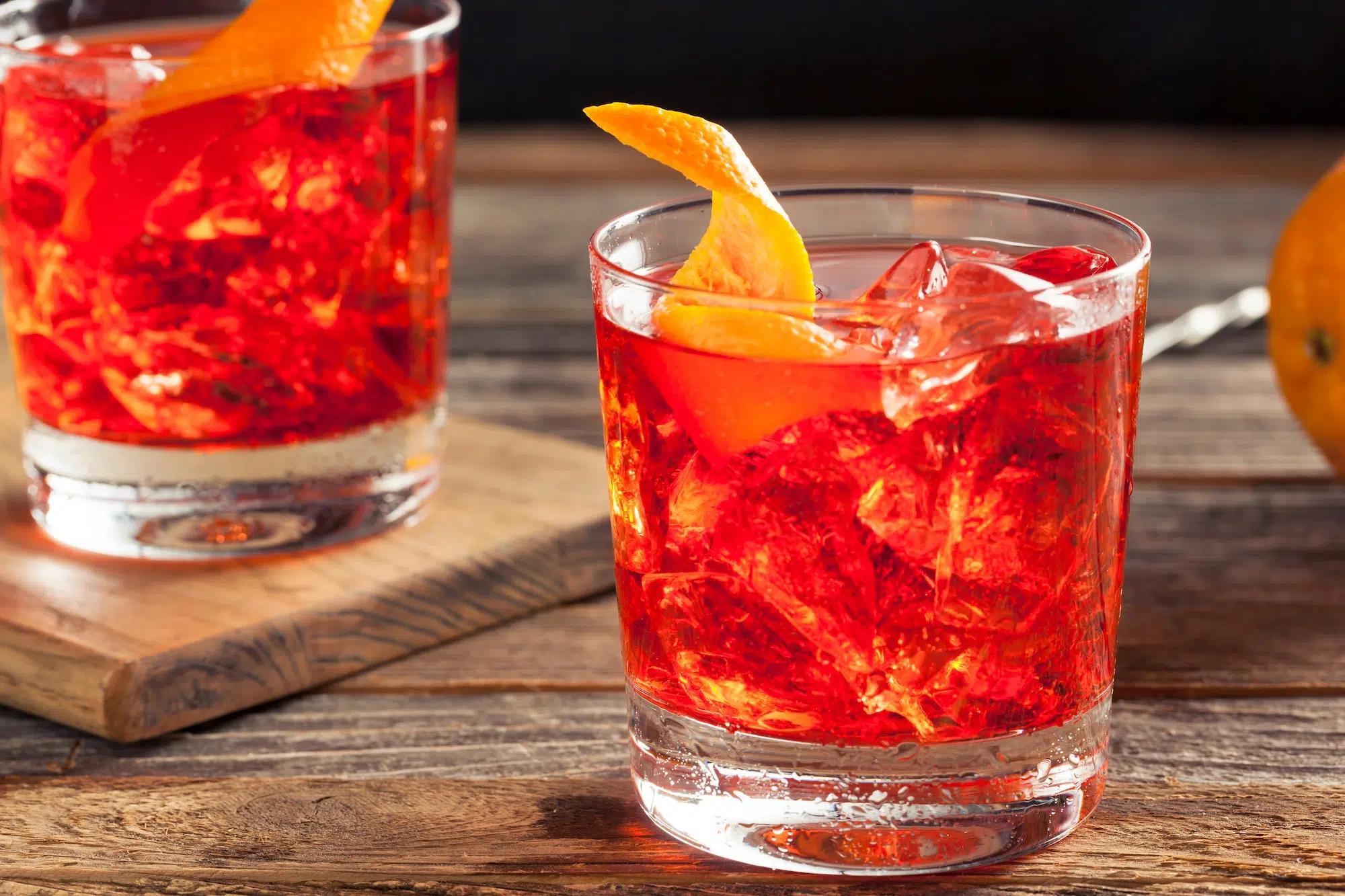



The Negroni is one of those cocktails that proves simplicity is the highest form of sophistication. Three ingredients in equal parts, stirred over ice, finished with a strip of orange peel — and somehow the result is greater than the sum of its parts.
I love this drink because it rewards you for using good ingredients. A quality London Dry gin, real Italian Campari, and a decent sweet vermouth make a Negroni that tastes like you’re sitting at a bar in Florence at golden hour. Swap in a cheap vermouth and you’ll notice immediately.
What makes this version reliable:
- The classic 1:1:1 ratio — perfectly balanced every time
- Stirred, not shaken, so the drink stays silky and clear
- Ready in under 5 minutes with zero special equipment
Whether you’re mixing a quick aperitivo before dinner or introducing a friend to their new favourite cocktail, this classic Negroni delivers every single time.
Classic Negroni Recipe
Equipment
- Rocks glass (old fashioned glass)
- Jigger (1.5 fl oz / 0.75 fl oz dual-sided)
- Bar spoon or long-handled teaspoon
- Y-peeler or sharp paring knife (for orange peel)
Ingredients
- 1.5 fl oz Gin preferably a white gin but use your favourite
- 1.5 fl oz Campari
- 1.5 fl oz Sweet vermouth such as Carpano Antica Formula or Cocchi di Torino
- 1 strip Orange peel about 2 inches / 5cm long or 1 orange wheel for garnish
- 1 cup Ice cubes to fill a rocks glass
Instructions
- Fill a rocks glass (old fashioned glass) with ice cubes.
- Pour 1.5 fl oz (45ml) of gin over the ice.
- Pour 1.5 fl oz (45ml) of Campari over the ice.
- Pour 1.5 fl oz (45ml) of sweet vermouth over the ice.
- Stir gently with a bar spoon for 20–30 seconds until well chilled. Express a strip of orange peel over the glass by holding it skin-side down and giving it a firm twist to release the citrus oils. Drop the peel into the drink, or perch an orange wheel on the rim.
Nutrition
What Makes This Classic Negroni Special
The Negroni is one of the most iconic cocktails in the world, and its magic lies in its perfect balance. The botanical complexity of gin meets the bold bitterness of Campari and the rich, herbal sweetness of Italian vermouth — all in equal measure. No single ingredient dominates.
Unlike many cocktails that rely on citrus juice or simple syrup to mask the alcohol, the Negroni lets every spirit shine. That’s why ingredient quality matters here more than almost any other drink. A well-made Negroni with good vermouth and a solid gin is a completely different experience from one made with bottom-shelf bottles.
The simplicity of the 1:1:1 ratio also makes this the perfect cocktail to learn the art of balancing flavours. Once you understand how a Negroni works, you understand the foundation of dozens of other classic cocktails.
Equipment You’ll Need
- Rocks glass (old fashioned glass) — the short, wide shape is essential for a Negroni. It allows you to fit large ice cubes that melt slowly and keeps the drink cold without over-diluting.
- Jigger (1.5 fl oz / 0.75 fl oz dual-sided) — accurate measurement is everything in a 1:1:1 cocktail. Even a small imbalance will tip the drink toward too bitter or too sweet.
- Bar spoon or long-handled teaspoon — you stir a Negroni, never shake it. A bar spoon lets you stir gently to combine and chill without introducing air bubbles that cloud the drink.
- Y-peeler or sharp paring knife — for cutting a clean strip of orange peel. A good peel gives you a wide surface to express oils over the glass, which adds a burst of fresh citrus aroma to every sip.
Nice to have: A large-format ice cube mould (2-inch / 5cm cubes) dramatically improves the experience. One large cube melts far more slowly than several small ones, keeping your Negroni cold and strong from first sip to last.
Tips for Best Results
- Stir for 20-30 seconds: This is the step most home bartenders skip. Proper stirring chills the drink to the right temperature and adds just enough water to soften Campari’s bitterness without making the drink watery.
- Use fresh vermouth: Sweet vermouth is a wine-based product and it oxidises quickly. Once opened, store it in the refrigerator and use within 4-6 weeks. Old vermouth is the number one reason home Negronis taste flat.
- Express the orange peel properly: Hold the peel skin-side down over the glass and twist firmly. You should see a fine mist of citrus oil spray across the surface of the drink. This aromatic layer is what makes the garnish more than decoration.
- Taste your gin before mixing: A juniper-forward London Dry gin creates a classic, assertive Negroni. A softer, contemporary-style gin will let the Campari and vermouth take the lead. Neither is wrong — just know what you’re aiming for.
Substitutions and Variations
- Boulevardier: Swap the gin for bourbon or rye whiskey. The barrel-aged warmth of whiskey pairs beautifully with Campari and creates a richer, more autumnal drink.
- Negroni Sbagliato: Replace the gin with prosecco or dry sparkling wine. This lighter version became an internet sensation and is perfect for when you want something more refreshing.
- White Negroni: Use Suze (a French gentian liqueur) in place of Campari and Lillet Blanc in place of sweet vermouth. Completely different flavour profile — floral, delicate, and pale gold.
- Mezcal Negroni: Swap gin for mezcal for a smoky, complex variation that works especially well in cooler months.
- Lower-ABV option: Reduce the gin to 1 fl oz (30ml) and increase the sweet vermouth to 2 fl oz (60ml). Still recognisably a Negroni but gentler on the palate.
Storage and Reheating
A Negroni should be served immediately after stirring — once ice begins to melt the drink dilutes and loses its punch. However, you can easily pre-batch the three spirits together in a sealed bottle or jar without ice. Store the batch in the refrigerator for up to 2 weeks. When ready to serve, simply pour 4.5 fl oz (130ml) of the pre-mixed batch over fresh ice in a rocks glass and stir briefly.
Do not freeze a pre-batched Negroni. While it won’t fully freeze due to the alcohol content, it will become overly viscous and lose the bright aromatic quality that makes the drink special.
What to Serve With This
The Negroni is traditionally served as an aperitivo — a pre-dinner drink meant to stimulate the appetite. Pair it with small, salty bites that complement its bitterness:
- Marinated olives — the brininess plays off Campari’s bitterness perfectly
- Aged cheese and cured meats — a small charcuterie board with Parmigiano-Reggiano, prosciutto, and breadsticks is the classic Italian pairing
- Salted almonds or marcona almonds — simple, crunchy, and ideal for sipping alongside
- Bruschetta with fresh tomato — the acidity of the tomato echoes the citrus in the cocktail
- Focaccia with olive oil and sea salt — carby, salty, and exactly what you want before a big Italian dinner
Frequently Asked Questions
What type of gin is best for a Negroni?
A classic London Dry gin with strong juniper character works best because it stands up to Campari’s bold bitterness. Tanqueray, Beefeater, and Plymouth are all excellent choices. Avoid heavily flavoured or floral gins — they tend to get lost in the mix rather than contribute structure.
Can I make a Negroni without Campari?
Campari is what makes a Negroni a Negroni. However, if you find it too bitter, you can try Aperol for a lighter, sweeter version (sometimes called a Negroni Dolce). It will be a different drink, but a delicious one. Other Italian bitter liqueurs like Select or Contratto Bitter work as closer substitutes.
Why do you stir a Negroni instead of shaking it?
Stirring keeps the drink clear, silky, and spirit-forward. Shaking introduces tiny air bubbles that make the drink cloudy and frothy, which changes both the appearance and the mouthfeel. The Negroni is an all-spirit cocktail with no juice or dairy, so there’s nothing that needs the aggressive mixing a shaker provides.
Is a Negroni a strong cocktail?
Yes. A classic Negroni with 1.5 fl oz each of gin (40% ABV), Campari (25% ABV), and sweet vermouth (16% ABV) comes in at roughly 27% ABV before dilution from stirring. After proper stirution with ice, it settles around 20-22% ABV — still considerably stronger than wine or beer. One is usually enough as an aperitivo.
How do I make a Negroni less bitter?
The easiest way is to increase the sweet vermouth by half an ounce (15ml) while keeping the gin and Campari the same. The added sweetness rounds out Campari’s edge. You can also try using a slightly sweeter vermouth like Carpano Antica Formula, or add a tiny barspoon of simple syrup — though purists may object.
What is the origin of the Negroni?
The Negroni was reportedly invented in 1919 at Caffè Casoni in Florence, Italy. Count Camillo Negroni asked his bartender to strengthen his favourite Americano cocktail by replacing the soda water with gin. The bartender also swapped the lemon garnish for orange to signal the different drink. Over a century later, the recipe hasn’t changed — a testament to how perfectly balanced it was from the start.
A Brief History of the Negroni
The story of the Negroni begins in Florence in 1919, when Count Camillo Negroni walked into Caffè Casoni on Via de’ Tornabuoni and asked bartender Fosco Scarselli to make his usual Americano a bit stronger. Scarselli replaced the soda water with gin, added an orange garnish instead of lemon, and inadvertently created one of the most enduring cocktails in history.
The drink stayed a Florentine favourite for decades before spreading across Italy and eventually the world. The Negroni family even capitalised on its fame by founding the Negroni distillery in Treviso, which produced a ready-made bottled version.
Today the Negroni consistently ranks among the top five most ordered cocktails globally. Its influence has spawned an entire family of variations — the Boulevardier, the Sbagliato, the White Negroni — and it has its own annual celebration, Negroni Week, which raises money for charitable causes worldwide. For a drink with just three ingredients, its cultural impact is extraordinary.
If you’ve enjoyed making this classic Negroni, I’d love to hear how it turned out — drop a star rating and a comment below to let me know your thoughts or share your favourite variation!