











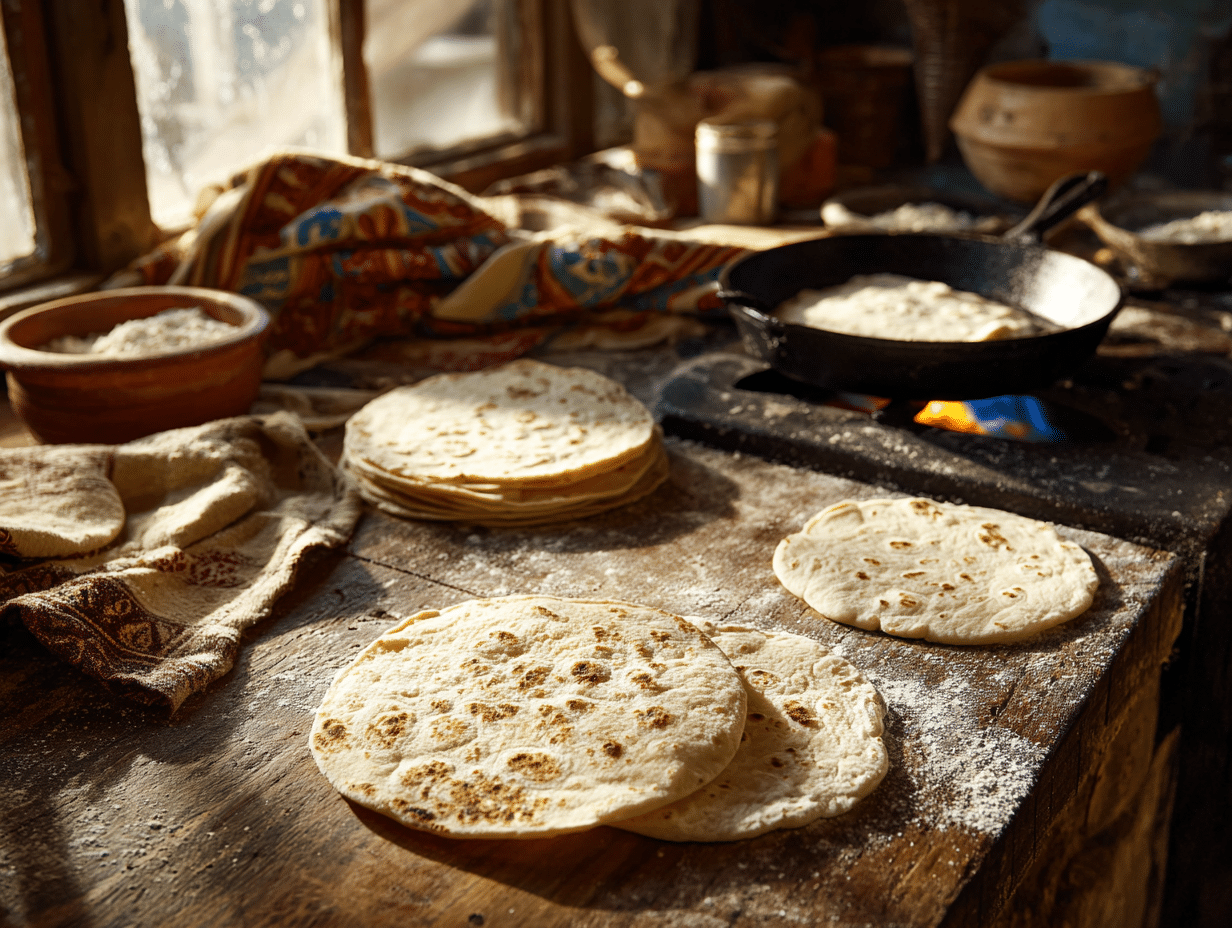
Five ingredients, one skillet, and about 45 minutes — that’s all it takes to have a stack of warm, soft flour tortillas ready for dinner. These are the kind you can actually fold around fillings without cracking, and kids tend to eat them plain straight off the pan. Store-bought tortillas are fine in a pinch, but once you’ve made these, the difference is hard to ignore.
The short version of why this works
Two things matter most here. First, rubbing the lard (or shortening) into the flour until it looks like coarse sand — this coats the flour proteins before any water touches them, which is what gives the finished tortilla its tender, pliable texture instead of a tough, chewy one. Second, the 20-minute rest after kneading. Skipping it isn’t fatal, but the dough will fight you when you roll it, snapping back and ending up thicker than you want. Let it rest and it rolls out easily and stays thin. Everything else in this recipe is forgiving; these two steps are not.
About the ingredients
- Lard vs. vegetable shortening: Lard produces a slightly richer flavor and a more traditional result. Shortening works well and makes the recipe vegetarian — the texture difference is minor enough that most people won’t notice. Butter is not a straight swap; it has too much water content and changes the dough.
- Aluminum-free baking powder: The recipe calls for it, and it’s worth using. Regular baking powder can leave a faint metallic aftertaste in simple doughs like this where there’s nothing to mask it.
- Water temperature: Aim for 110°F — warm to the touch but not hot. Too cool and the fat won’t incorporate as smoothly; too hot and it can affect the dough’s texture. A kitchen thermometer takes the guesswork out.
Mistakes to avoid
- Rolling them too thick: Thick tortillas cook up bready and stiff rather than soft and foldable. Aim for an even 1/8-inch thickness — thinner than you probably think. If they’re not puffing at all in the pan, they’re likely still too thick.
- Pan not hot enough before the first tortilla goes in: A properly preheated cast iron skillet should show the first signs of browning within 30 seconds. If it takes longer, turn up the heat and wait another minute before continuing. Pale, slow-cooking tortillas dry out before they cook through.
- Cooking them too long: The window is short — 30 to 45 seconds on side one, then 20 to 30 seconds on side two. Pull them when you see light brown spots and a little puff. Leaving them even 30 seconds too long makes them brittle. Skip the urge to check by pressing them down — just watch the edges.
- Not keeping cooked tortillas covered: Steam is what keeps them pliable. Stack them immediately and wrap in a clean kitchen towel as you go. A plate left uncovered for even a few minutes will give you stiff, dry tortillas.
- Uneven dough balls: If the pieces aren’t roughly the same size, you’ll end up with a mix of small thick ones and large thin ones that cook at different rates. Weigh the dough if you have a kitchen scale — each ball should be around 50–55 grams.
Keeping and reheating
Cooled tortillas keep well in an airtight zip-top bag or container in the fridge for up to 4 days. For longer storage, freeze them in a single stack with a small square of parchment between each one so they don’t weld together — they’ll keep for up to 2 months. To reheat from the fridge, 20–30 seconds in a dry skillet over medium heat is the best method and takes almost no time. A microwave works too — wrap a few in a damp paper towel and heat for 30 seconds — though the skillet gives a slightly better result. Frozen tortillas can go straight from the freezer into a covered skillet on low heat for about 2 minutes per side, or thaw overnight in the fridge first.
Homemade Flour Tortillas

Equipment
- Mixing bowl
- Rolling Pin
- Cast Iron Skillet or Heavy Frying Pan
- Measuring cups and spoons
- Kitchen Towel
Ingredients
- 2 cups all-purpose flour unbleached, for best flavor and elasticity
- ½ teaspoon salt fine sea salt recommended
- ¾ teaspoon baking powder aluminum-free for clean taste
- 3 tablespoons lard or vegetable shortening lard gives traditional flavor; shortening for vegetarian version
- ¾ cup warm water 110°F / 43°C
Instructions
- In a large mixing bowl, combine the all-purpose flour, salt, and baking powder. Whisk until evenly distributed.
- Add the lard (or shortening) to the bowl. Using your fingers, rub the fat into the flour mixture until it has a crumbly texture, resembling coarse sand.
- Gradually add warm water to the mixture while stirring with your hand or a wooden spoon. Mix until a shaggy dough forms.
- Transfer the dough to a lightly floured surface and knead for 8-10 minutes until smooth and elastic. The dough should be soft but not sticky.
- Cover the dough with a clean kitchen towel and let rest for 20 minutes at room temperature. This allows the gluten to relax for easier rolling.
- Divide the dough into 8 equal pieces. Roll each piece into a smooth ball and keep them covered under a towel to prevent drying.
- On a lightly floured surface, roll out each ball into a thin 6- to 8-inch circle. Try to maintain even thickness across the surface.
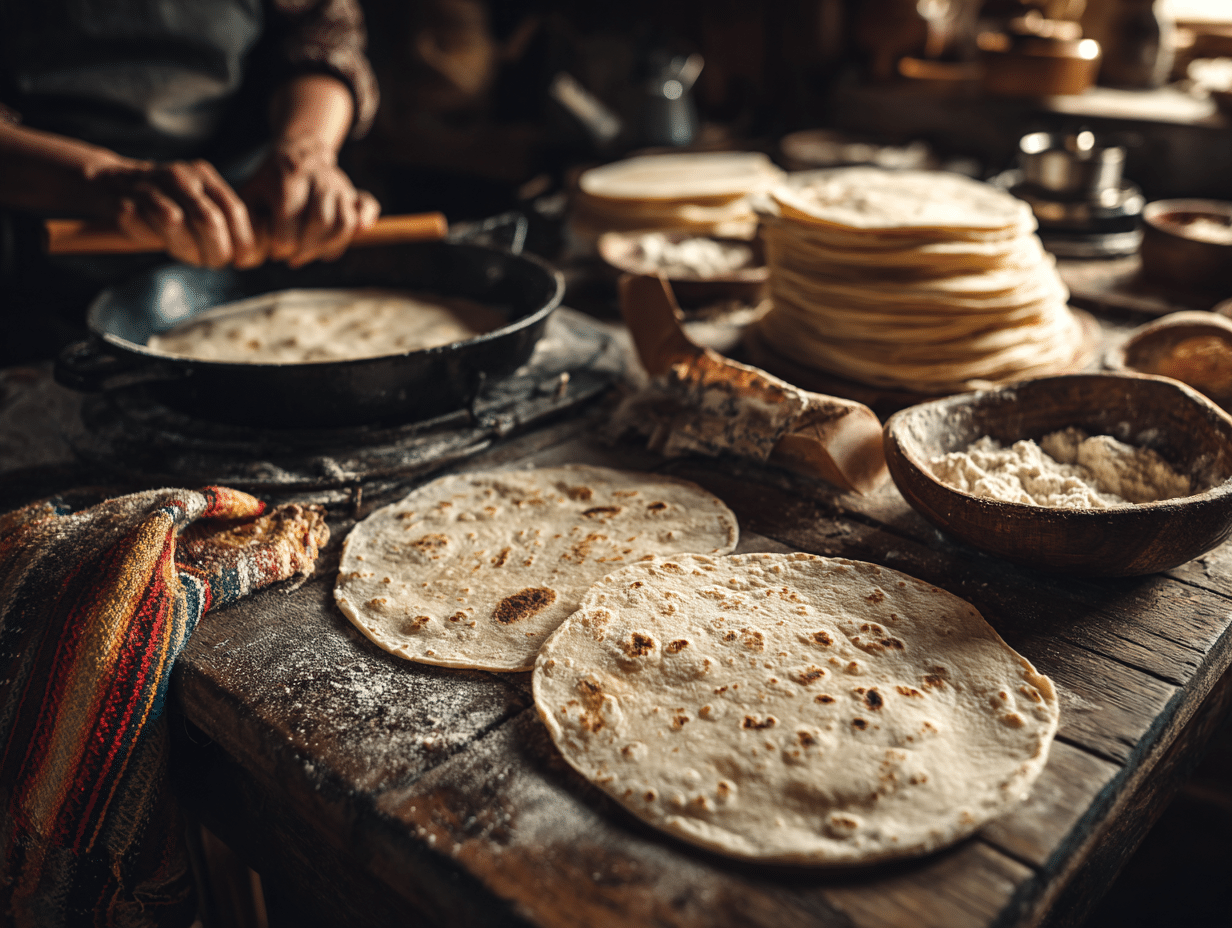
- Heat a cast iron skillet or heavy frying pan over medium-high heat. When hot, place a rolled tortilla onto the skillet and cook for 30–45 seconds on one side, or until slightly puffed and lightly browned in spots.
- Flip and cook for another 20–30 seconds. Avoid overcooking or they will become dry and brittle. Stack cooked tortillas and wrap them in a clean towel to stay warm and pliable.
Notes
- If your dough feels too sticky while kneading, lightly dust with additional flour. If too dry, add a splash of warm water.
- For a richer flavor, replace water with warm milk.
- To keep tortillas soft longer, store them wrapped in a towel inside a sealed container to retain steam.
- Tortillas can be frozen; place parchment between each and store sealed for up to 1 month.
Nutrition
FAQ
Can I use butter instead of lard or shortening?
Butter isn’t a reliable substitute here. It contains around 15–18% water, which throws off the dough’s hydration and makes it harder to roll thin. Stick with lard or vegetable shortening for the right texture.
My tortillas keep shrinking back when I roll them — what’s wrong?
The dough needs more rest time. Cover it and let it sit for the full 20 minutes — or even up to 30 — before rolling. The gluten needs time to relax, and if it hasn’t, it will keep pulling the dough back toward the center no matter how hard you press.
Do I need a cast iron skillet, or will a regular pan work?
A regular heavy-bottomed frying pan works fine. What matters is that the pan holds steady, even heat — cast iron does this well, but a thick stainless or nonstick pan will also do the job. Avoid thin pans that create hot spots, which will burn patches before the rest of the tortilla is cooked.
Can I make the dough ahead of time?
Yes — wrap the dough tightly in plastic wrap and refrigerate it for up to 24 hours. Let it sit at room temperature for 15–20 minutes before rolling so it softens up enough to work with easily.
How do I get them into a round shape? Mine always come out uneven.
Start rolling from the center outward and rotate the dough a quarter turn every few rolls rather than just pushing back and forth. A perfectly round tortilla takes practice, but an irregular shape doesn’t affect the taste at all — kids especially don’t care.
Can I make these without baking powder?
You can, but they’ll be noticeably flatter and slightly denser. The baking powder gives a small, even puff that helps the tortilla cook through without drying out. It’s a small amount, but it does make a difference in the final texture.
What to cook next
- Sizzling Street-Style Grilled Chicken Tacos
- Sizzling Chicken Quesadillas
- Classic Mexican Guacamole
- Authentic Birria Tacos