





































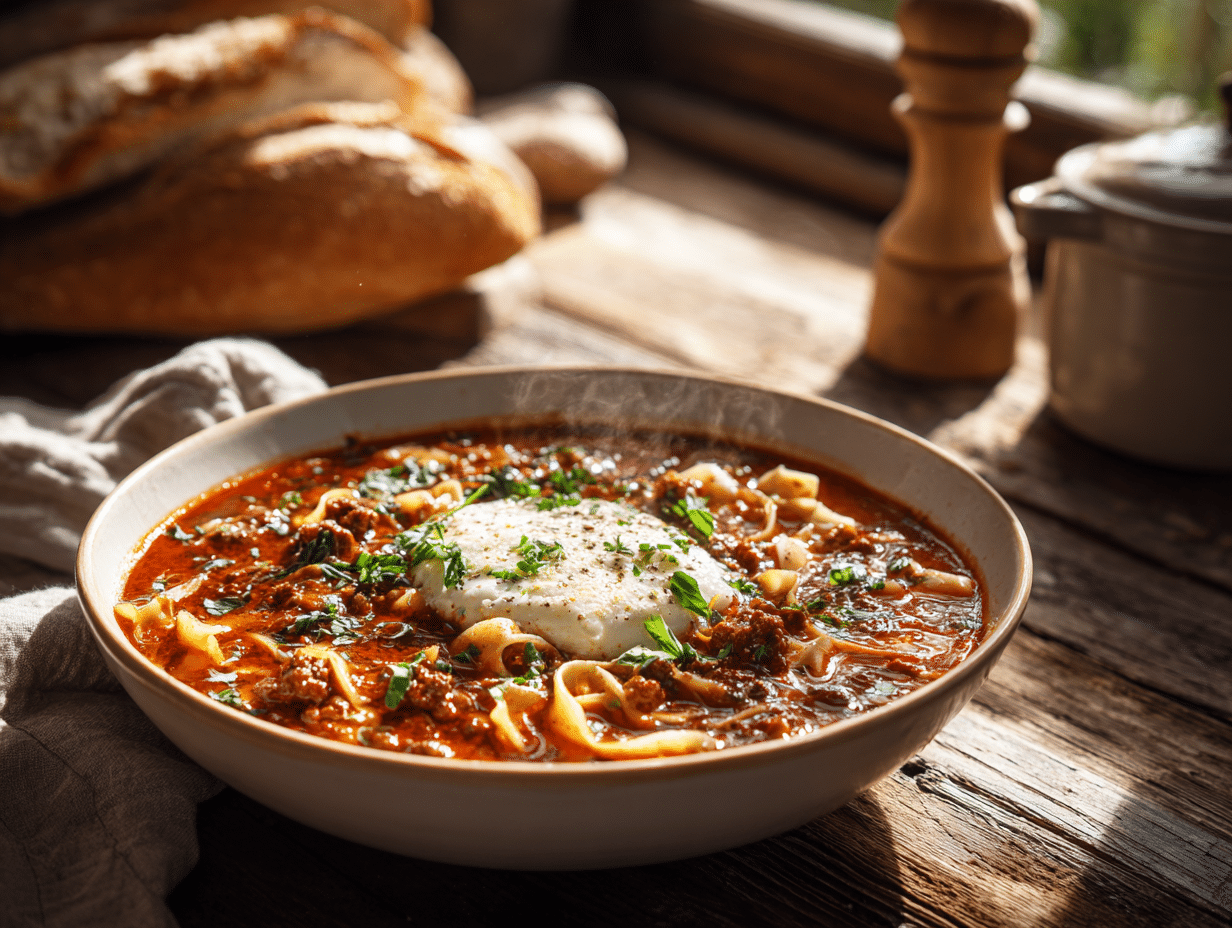
This is lasagna — the meat, the pasta, the three cheeses — cooked in one pot in just over an hour. You skip the layering, the baking dish, and the hour of cleanup, and you still get a bowl that tastes like the real thing. If you keep canned tomatoes and a pound of ground beef in the house, you probably have most of what you need right now.
Why this recipe works
Two things make this soup work. First, cooking the broken lasagna noodles directly in the broth — not in a separate pot — lets them release a little starch as they cook, which naturally thickens the soup without any added flour or cornstarch. Second, the tomato paste gets cooked in the fat with the meat for a full two minutes before any liquid goes in. That step drives off the raw, tinny edge and builds a deeper, slightly caramelized flavor that you’d normally only get from a long-simmered meat sauce. Both moves are simple, but skipping either one will cost you flavor or texture.
Smart swaps
- Italian sausage: If you only have ground pork, mix in half a teaspoon of fennel seed and a pinch of garlic powder — it gets you most of the way there. Ground turkey works too; the soup will be lighter but still solid.
- San Marzano tomatoes: Any good-quality canned crushed tomatoes are fine. San Marzanos are sweeter and less acidic, but a pinch of sugar stirred in at the end fixes a sharp tomato base just as well.
- Beef broth: Chicken broth or even water with a teaspoon of Worcestershire sauce works. The soup won’t be quite as rich, but it won’t be thin either.
- Ricotta: Cottage cheese (drained for a few minutes in a fine mesh strainer) is a legitimate swap — same creamy dollop, slightly less rich. Cream cheese thinned with a splash of milk also works in a pinch.
- Lasagna noodles: Any wide, sturdy pasta holds up well — pappardelle, broken fettuccine, or even rigatoni. Avoid thin pasta like angel hair; it turns to mush before the soup is done.
Troubleshooting
- Soup is too thick after the noodles cook: The pasta keeps absorbing liquid even off the heat. Stir in a splash of warm broth or water before serving and it loosens right up.
- Noodles are gummy or stuck together: This usually means the heat dropped too low after you added the pasta. Keep the soup at a steady, visible simmer — not a full boil, but not just steaming — and stir every few minutes.
- Broth tastes flat: Salt is the most likely fix, but also check whether you cooked the tomato paste long enough. If the soup is already done, a small splash of Worcestershire sauce or a parmesan rind dropped in and simmered for five minutes adds depth without tasting like a shortcut.
- Meat is greasy: 80/20 beef and pork sausage together release a lot of fat. If you see a visible orange-red slick on top after browning, tilt the pot and spoon it off before adding the onion — the soup will be noticeably less heavy.
- Ricotta sinks and disappears: Add it at the very end, directly into each bowl rather than stirring it into the pot. Cold ricotta straight from the fridge holds its shape better than room-temperature ricotta does — skip the garnish step of warming it first, it’s not worth the extra dish.
Leftovers and make-ahead
Store leftovers in an airtight container in the fridge for up to 4 days. The noodles will absorb most of the remaining broth overnight, so plan to add a half cup or so of broth or water when you reheat — warm it on the stovetop over medium-low heat, stirring occasionally, until hot through. For the freezer, the soup base (without the noodles) freezes well for up to 3 months; cook fresh pasta when you’re ready to serve. If you’ve already added the noodles before freezing, the texture will be softer after thawing but still perfectly edible. To get ahead on a weeknight, you can brown the meat and build the broth up to two days in advance — refrigerate it, then bring it back to a simmer and add the noodles fresh when you’re ready to eat.
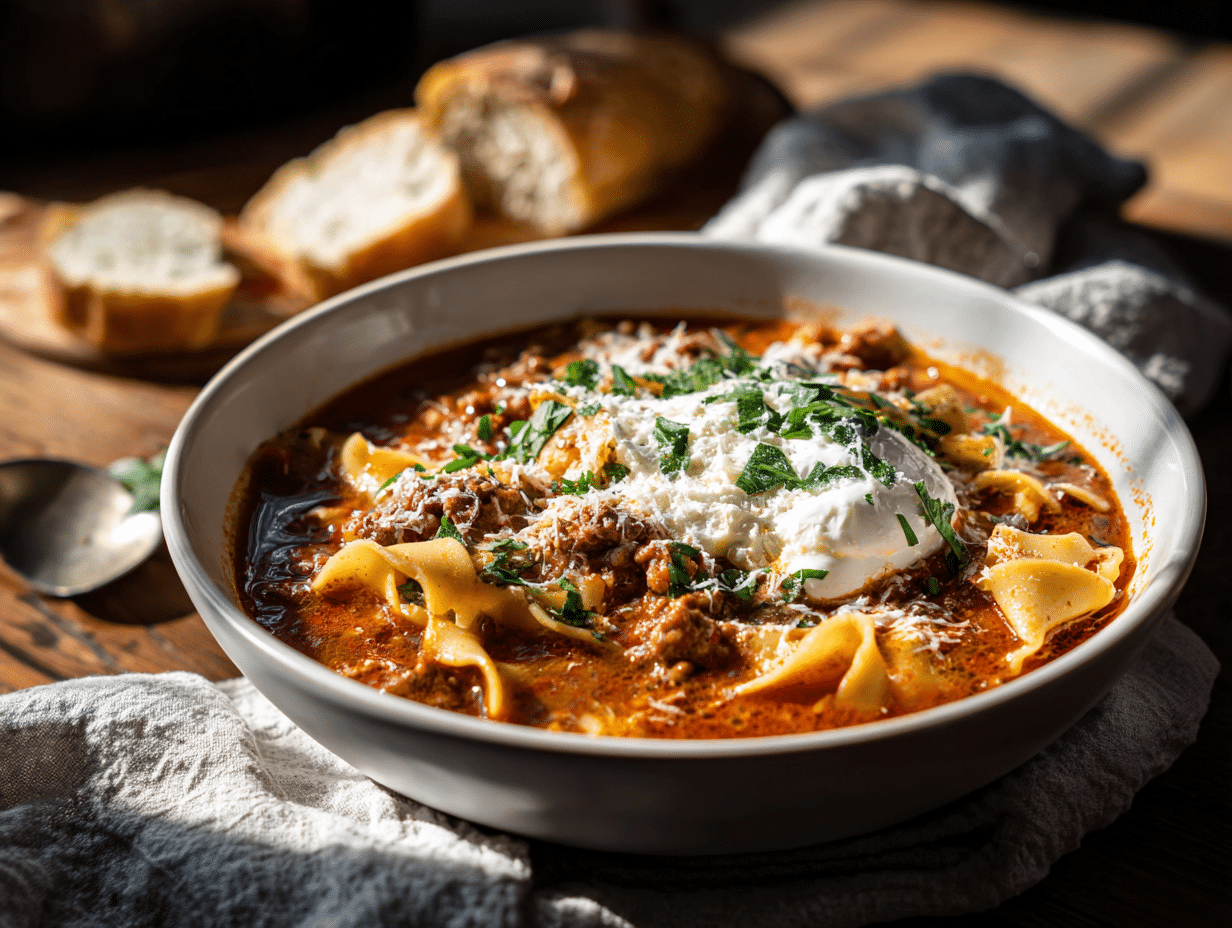
Rustic Lasagna Soup

Equipment
- Large Dutch oven or soup pot
- Wooden spoon
- Chef's Knife
- Ladle
Ingredients
- 1 tablespoon olive oil extra virgin, for best flavor
- 1 pound ground beef 80/20 for richer flavor
- 1 pound Italian sausage casings removed, hot or mild per preference
- 1 medium yellow onion finely chopped
- 4 cloves garlic minced
- 2 tablespoons tomato paste
- 1 teaspoon dried oregano
- ½ teaspoon red pepper flakes optional, for heat
- 1 piece bay leaf
- 1 can crushed tomatoes 28 oz, preferably San Marzano
- 4 cups beef broth low sodium for control
- 8 sheets lasagna noodles broken into 2-inch pieces
- 1 cup whole milk ricotta cheese
- 1.5 cups shredded mozzarella cheese low moisture, whole milk preferred
- ¼ cup fresh basil chopped for garnish
Instructions
- Heat olive oil in a large Dutch oven over medium-high heat (375°F/190°C). Add ground beef and sausage, breaking them up with a wooden spoon. Cook until browned and no longer pink, about 7-8 minutes. Drain excess fat if needed.
- Add chopped onion and cook for 4-5 minutes until translucent. Stir in minced garlic and cook for an additional 1 minute until fragrant.
- Stir in tomato paste and cook for 2 minutes to develop depth of flavor. Add oregano, red pepper flakes, and the bay leaf. Mix to coat the meat.
- Pour in crushed tomatoes and beef broth. Stir well, bring to a simmer, then reduce to medium-low heat (300°F/150°C). Simmer uncovered for 20 minutes to meld the flavors.
- Add broken lasagna noodles and cook uncovered, stirring occasionally, until noodles are al dente—about 12-14 minutes.
- Remove the bay leaf. Taste and adjust seasoning with salt and pepper if necessary.
- To Serve: Ladle soup into bowls, top with a generous spoonful of ricotta, sprinkle with mozzarella, and scatter fresh basil over the top. Serve immediately.
Notes
- For added richness, stir a splash of heavy cream in during the final simmer.
- For a vegetarian version, omit meat and use vegetable stock and sautéed mushrooms.
Nutrition
Common questions
Can I make this in a slow cooker?
Yes, but add the noodles at the end, not at the start. Brown the meat and build the broth on the stovetop first, then transfer to the slow cooker and cook on low for 4–6 hours or high for 2–3 hours. About 20 minutes before serving, switch to high, stir in the broken noodles, and cook until just tender.
Can I use no-boil lasagna noodles instead of regular ones?
You can, but they cook faster and tend to get softer. Start checking them at the 8-minute mark instead of 12, and pull the pot off the heat as soon as they’re just tender — they’ll continue to soften in the hot broth.
Is this recipe spicy? My kids don’t like heat.
Not as written if you leave out the red pepper flakes, which are listed as optional. The hot Italian sausage does add a mild background warmth, so swap in mild sausage if your family is sensitive to spice — the soup will still have plenty of flavor.
If you liked this one
- Authentic Roman Carbonara
- Creamy Fettuccine Alfredo
- Elegant Chicken Marsala with Mushrooms
- Hearty Shepherd’s Pie