




















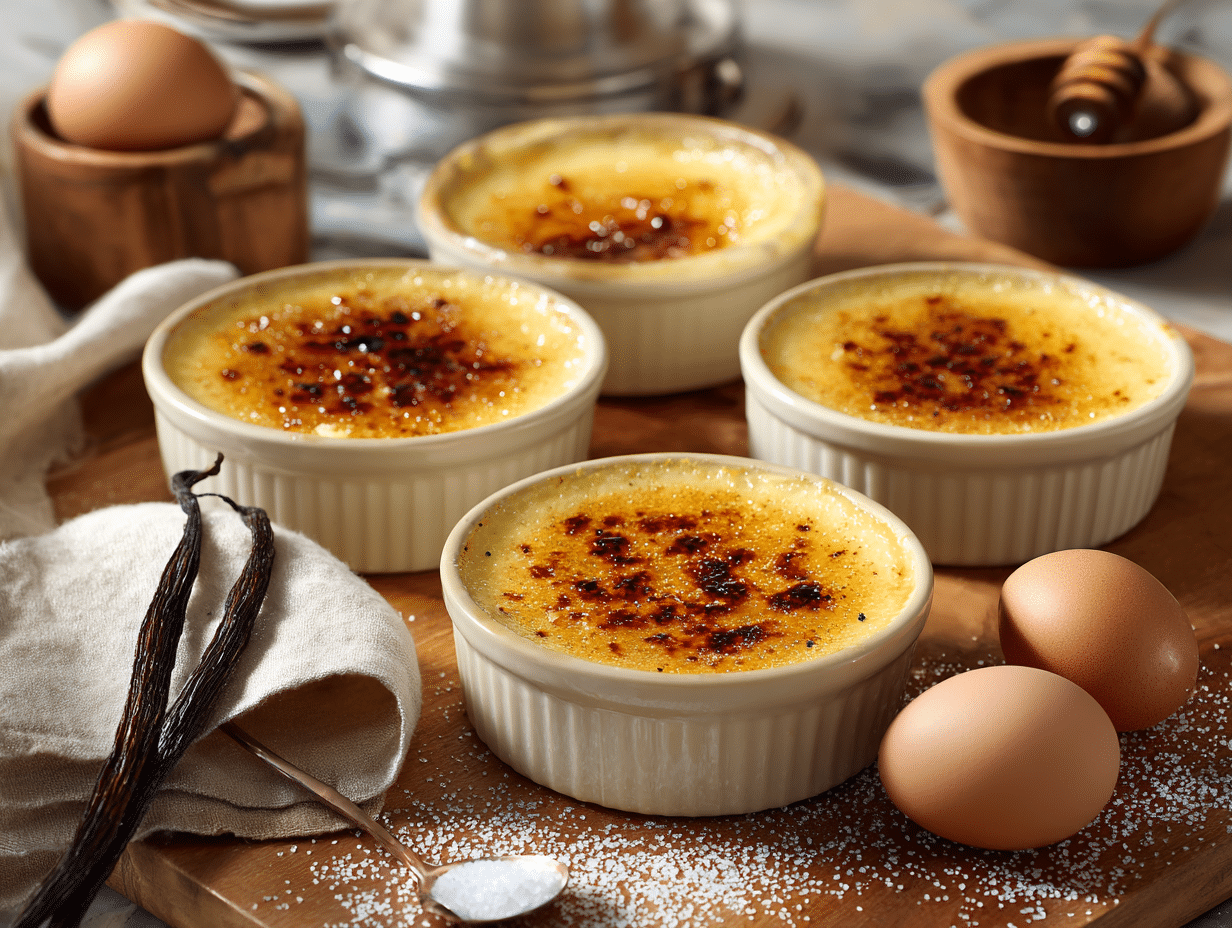
Crème brûlée is four ingredients, one pan, and a kitchen torch — and the result looks far more impressive than the effort involved. This classic vanilla version uses a real vanilla bean and heavy cream to build a rich, set custard, finished with a thin layer of caramelized sugar that cracks when you tap it. If you’ve been putting it off because it sounds fussy, this is the recipe that will change your mind.
What makes this version work
Two things matter most here. First, the water bath: setting the ramekins in a pan of hot water insulates the custard from the oven’s direct heat, so it cooks gently and evenly all the way through. Skip it and you risk rubbery edges with a raw center. Second, tempering — pouring the warm cream into the yolks slowly while whisking — is what keeps the eggs from turning into scrambled bits. Do it gradually, keep whisking, and the mixture comes together smoothly every time. Neither step is difficult; they just require a little patience.
Troubleshooting
- The custard is still liquid after 50 minutes: Oven temperatures vary. Check that your water bath water was hot (not cold) when you added it — cold water significantly extends bake time. Give the ramekins another 5–10 minutes and check again for that slight jiggle in the center only.
- The sugar won’t caramelize evenly: Make sure the custard surface is completely dry before adding sugar. Pat it lightly with a paper towel if condensation has formed. Move the torch in slow, steady circles rather than holding it in one spot.
- The top layer of sugar is pooling or burning in patches: You’re holding the torch too close. Keep the flame about 2–3 inches from the surface and keep it moving constantly until the sugar turns amber.
- The custard has small white streaks or lumps: Some of the egg cooked before you finished tempering. Straining through a fine-mesh sieve (as the recipe directs) catches most of this — but next time, pour the cream more slowly and whisk faster at the start.
- The surface cracked during baking: The oven was too hot or the water bath ran dry. Check the water level halfway through baking and top it up with hot tap water if needed.
About the ingredients
- Vanilla bean: Split the pod lengthwise and use the back of a knife to scrape out the seeds — both seeds and pod go into the cream while it heats. Skip the garnish of extra seeds on top; not worth the extra cost.
- Heavy cream: Use heavy whipping cream (at least 36% fat). Half-and-half or light cream won’t set the same way and will give you a thinner, softer result.
- Egg yolks: You need only the yolks here, not whole eggs. Save the whites for meringue, an omelette, or freeze them in an ice cube tray for later use.
- Granulated sugar for the top: Plain white granulated sugar works best for brûléeing — it melts and caramelizes predictably. Raw or brown sugar can clump and burn unevenly.
Leftovers and make-ahead
Crème brûlée is genuinely better made ahead. Bake the custards, let them cool to room temperature, then cover each ramekin tightly with plastic wrap and refrigerate for up to 3 days. Do not add the sugar topping until right before you serve — once brûléed, the caramel softens within an hour or two in the fridge and loses its crunch. The custards do not freeze well; the texture turns grainy after thawing, so stick to the fridge. When you’re ready to serve, pull the ramekins out 10–15 minutes early so they’re not ice-cold, then torch the sugar topping fresh.
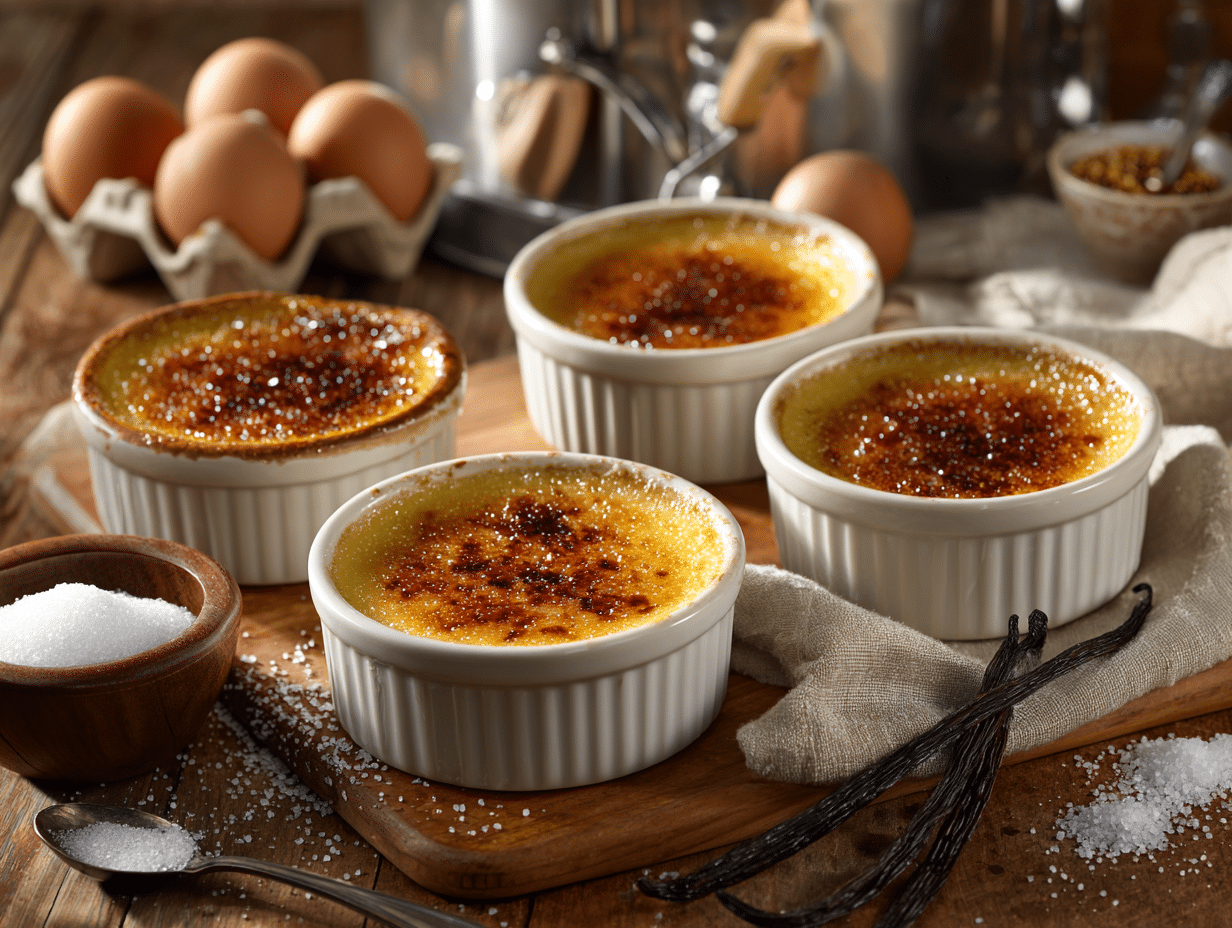
Classic Vanilla Crème Brûlée

Equipment
- Mixing bowl
- Saucepan
- Fine mesh strainer
- Whisk
- Oven-safe ramekins
- Baking dish or roasting pan
- Kitchen torch
Ingredients
For the Custard Base:
- 2 cups heavy cream use high-quality cream for a rich texture
- 1 piece vanilla bean split lengthwise and seeds scraped. Substitute with 2 tsp vanilla extract if needed
- 5 large egg yolks room temperature for easier emulsification
- ½ cup granulated sugar divided use; 1/4 cup for custard, remainder for topping
For Caramelized Top:
- ¼ cup granulated sugar for brûlée topping after baking
Instructions
- Preheat your oven to 325°F (160°C). Place 4 ramekins in a deep baking dish or roasting pan large enough to hold them comfortably.
- In a medium saucepan, combine the heavy cream and the vanilla bean (both seeds and pod). Heat over medium heat until it begins to steam—not boil—then remove from heat and allow it to steep for 10 minutes. If using vanilla extract, add it after the steeping.
- Meanwhile, whisk the egg yolks and 1/4 cup granulated sugar in a mixing bowl until the mixture becomes pale and slightly thickened. This creates a light structure for the custard.
- Slowly pour the warm cream into the yolk mixture while whisking continuously. This tempering step prevents the yolks from scrambling.
- Strain the mixture through a fine-mesh sieve into a clean bowl to remove the vanilla pod and any curdled bits. Skim off any foam from the top to ensure an even baked surface.
- Pour the custard evenly into the ramekins. Fill the roasting pan with hot water until it comes halfway up the sides of the ramekins to create a gentle bain-marie (water bath).
- Bake for 45–50 minutes or until the edges are set but the center still slightly jiggles. Remove ramekins from the water bath and cool to room temperature. Chill in the refrigerator for at least 2 hours or up to 2 days.
- When ready to serve, sprinkle 1 tablespoon of granulated sugar over the top of each custard. Use a kitchen torch to caramelize until golden and crisp. Let sit for 1–2 minutes before serving.
Notes
- For a citrus twist, incorporate finely grated orange or lemon zest into the cream before the steeping step.
- If you don’t have a kitchen torch, place ramekins under a preheated broiler for 2-3 minutes, watching carefully.
- Use a thermometer to check for doneness: the custard should reach about 170°F (77°C) at the center.
Nutrition
Frequently asked questions
Do I need a kitchen torch, or can I use the broiler?
A kitchen torch gives you much better control, but a broiler can work in a pinch. Set your oven to broil on high, place the sugar-topped ramekins on a baking sheet as close to the element as possible, and watch them constantly — it takes only 2–4 minutes and can go from perfect to burnt very quickly.
How do I know when the custard is done baking?
The edges should be fully set and the center should wobble like Jell-O when you gently shake the pan — not slosh like liquid. It will firm up further as it cools in the fridge, so don’t wait for it to look completely solid in the oven.
Can I make this without a vanilla bean?
Yes — use 2 teaspoons of pure vanilla extract instead, stirring it into the cream after you remove it from the heat (not while it’s hot, or some of the flavor cooks off). The flavor will be slightly less complex but still very good.
Try these next
- French Chocolate Mousse
- Classic Vanilla Rice Pudding
- Elegant Pavlova with Fresh Berries
- Zesty French Lemon Cake