
































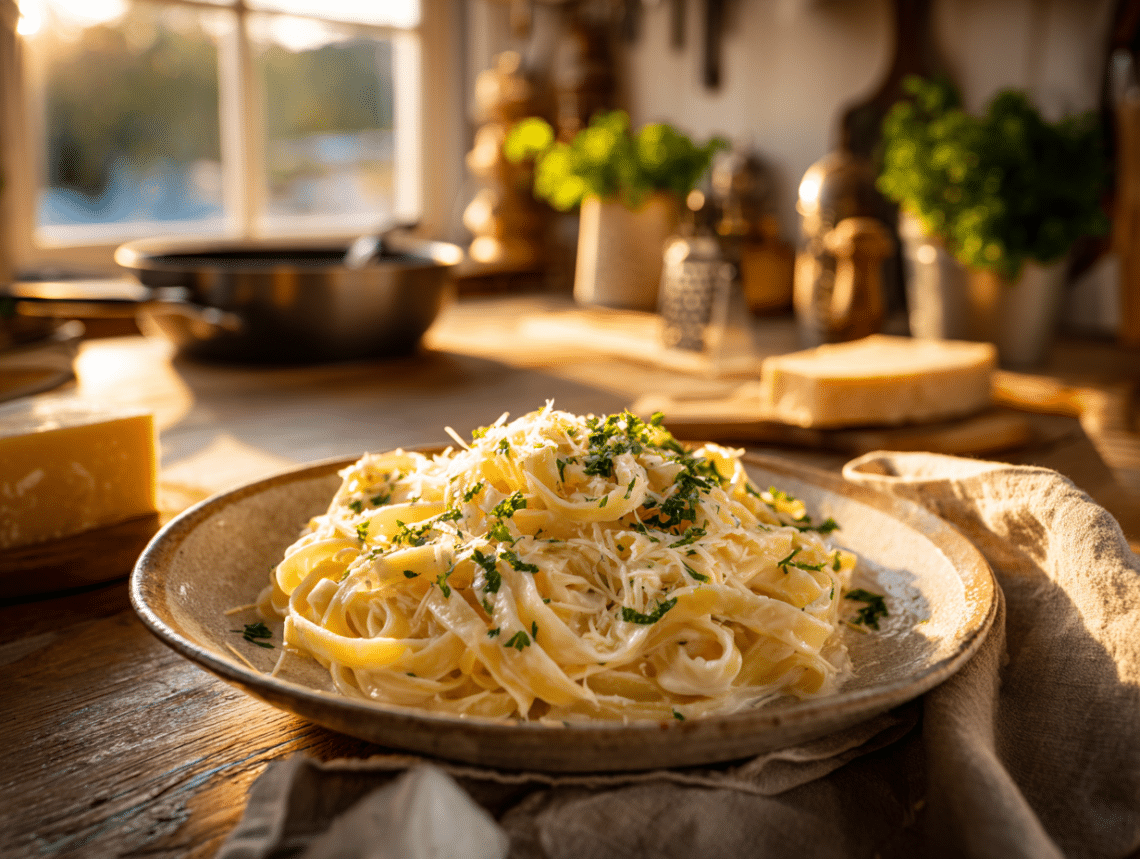
This is the American-style Fettuccine Alfredo — butter, heavy cream, and Parmesan, cooked together into a sauce that coats every strand of pasta. It comes together in about 35 minutes using one pot and one pan. If you want a rich, no-fuss weeknight dinner that the whole table will actually eat, this is a reliable one.
The short version of why this works
Two things determine whether this dish turns out silky or broken. First, the heat: once the Parmesan goes in, the pan needs to be on medium-low. Too hot and the cheese seizes into clumps instead of melting smoothly into the cream. Second, the pasta water. That starchy water is what lets you loosen a thick sauce without watering it down — it binds rather than dilutes. Add it one tablespoon at a time right before serving, and you can dial the consistency exactly where you want it. Everything else in this recipe is forgiving; those two steps are not.
About the ingredients
- Parmesan: Pre-grated cheese from a tub almost always contains anti-caking agents that prevent it from melting cleanly. Buy a block and grate it yourself — a box grater works fine. The finer the grate, the faster and smoother it melts.
- European-style butter: Higher butterfat than standard American butter, which makes the sauce a little richer. Worth using if you have it, but regular unsalted butter will still produce a good result.
- Heavy cream vs. half-and-half: Half-and-half will give you a thinner, lighter sauce. It works, but it takes longer to reduce and is more likely to separate if the heat spikes. Stick with heavy cream if this is your first time making it.
- Fresh vs. dried fettuccine: Fresh pasta cooks in 3–4 minutes and has a softer texture. Dried takes 8–10 minutes and holds up slightly better when tossed in the sauce. Either works here.
Keeping and reheating
Store leftovers in an airtight container in the fridge for up to 3 days. The sauce will thicken considerably as it cools — that’s normal. To reheat, put the pasta in a skillet over low heat with a splash of water or milk (about 1–2 tablespoons per serving) and stir gently until the sauce loosens and everything is warmed through. Avoid the microwave if you can; the uneven heat tends to make the sauce greasy. Freezing is not recommended — cream-based sauces separate when thawed and don’t recover well.
If something goes sideways
- The sauce looks grainy or curdled: The heat was too high when the cheese went in. Pull the pan off the burner entirely, add a tablespoon of reserved pasta water, and stir vigorously. It will often come back together.
- The sauce is too thick before the pasta even goes in: It reduced too long. Add pasta water a tablespoon at a time and stir over low heat until it loosens — skip the garnish and get it plated while it’s still fluid, because it tightens fast.
- The pasta is clumping after draining: You drained it and let it sit too long. Move the pasta directly from the colander into the sauce without rinsing it — rinsing washes off the starch that helps the sauce cling.
- The sauce tastes flat: Parmesan varies a lot in saltiness. Taste before adding any extra salt, then adjust. A few extra cracks of black pepper often do more than additional salt to sharpen the flavor.
- Everything is sticking to the pan: The pan was too dry or the heat crept up. Add a small splash of pasta water and reduce the heat immediately — the sauce should always look glossy and fluid while the pasta is being tossed.
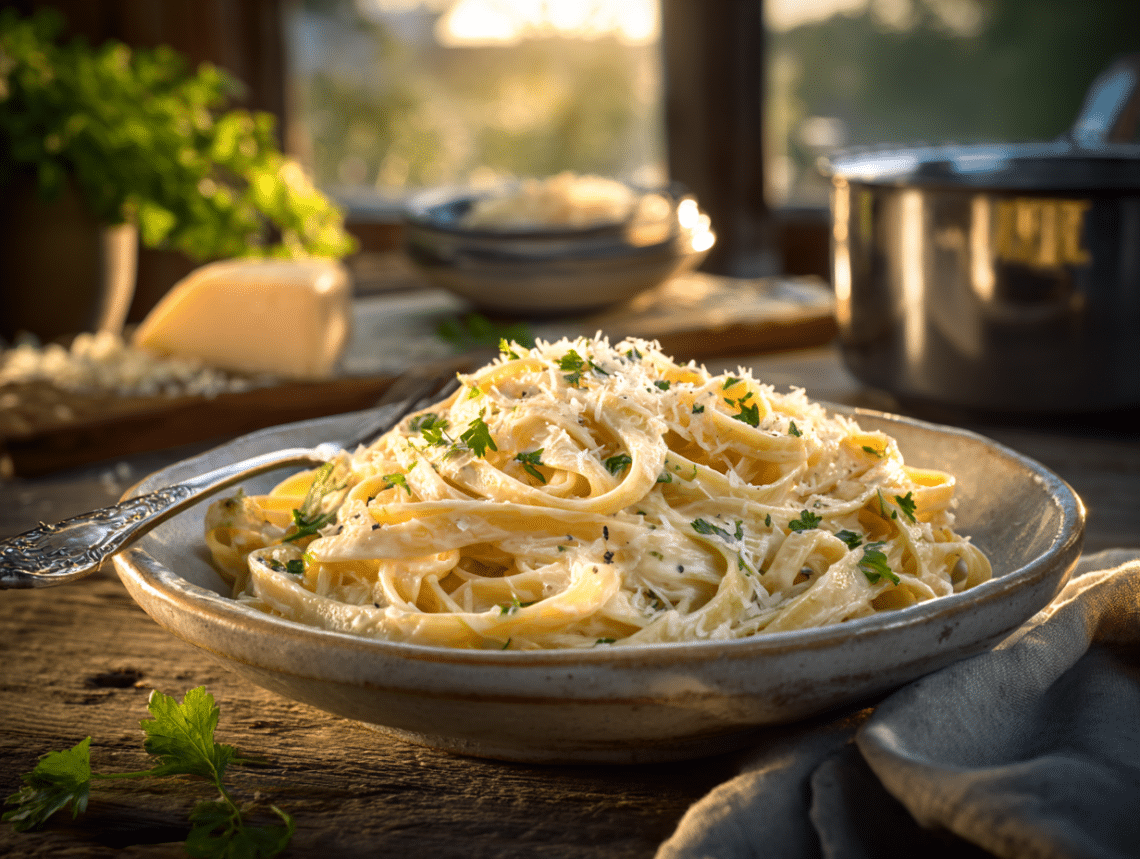
Fettuccine Alfredo

Equipment
- Large Pot
- Large sauté pan
- Tongs
- Grater
- Measuring cups and spoons
Ingredients
- 12 oz fettuccine pasta preferably fresh, or high-quality dried
- 1 cup heavy cream use organic for best flavor and richness
- 4 tbsp unsalted butter European-style if possible, for higher butterfat
- 1 cup Parmesan cheese finely grated, preferably Parmigiano-Reggiano
- ½ tsp sea salt adjust to taste
- ¼ tsp freshly ground black pepper or to taste
- 1 tbsp chopped fresh parsley for garnish
Instructions
- Bring a large pot of generously salted water to a boil. Cook the fettuccine according to package instructions until al dente, usually 8–10 minutes for dried, or 3–4 minutes for fresh pasta. Reserve 1/2 cup of pasta water before draining.
- While the pasta cooks, in a large sauté pan over medium heat (about 340°F / 170°C), melt the butter. Once melted and bubbling slightly, pour in the heavy cream. Stir to combine and let it simmer for 3–4 minutes until slightly thickened.
- Lower the heat to medium-low and gradually whisk in the grated Parmesan cheese until melted and the sauce becomes creamy. Add sea salt and black pepper to taste.
- Add the cooked, drained pasta directly into the sauce. Toss gently with tongs to coat every strand of fettuccine. If the sauce is too thick, add a bit of reserved pasta water, one tablespoon at a time, until you achieve the desired consistency.
- Plate immediately while hot. Sprinkle with chopped fresh parsley and an optional shaving of Parmesan for visual appeal and an extra umami kick.
Notes
- For a garlic-forward version, add 1 minced garlic clove to the butter while it melts.
- Swap out heavy cream for half-and-half to reduce richness—though the texture will be lighter.
- To make it vegetarian-friendly, ensure your Parmesan is made without animal rennet.
- Add grilled chicken, shrimp, or sautéed mushrooms to transform this into a heartier main course.
Nutrition
Frequently asked questions
Can I make this without heavy cream?
Yes, but the sauce will be noticeably thinner and less stable. Half-and-half is the closest substitute — use the same amount and give it an extra minute or two to reduce before adding the cheese.
Do I have to use Parmigiano-Reggiano specifically?
No, any good block Parmesan will work. The key is buying it as a block and grating it fresh — pre-shredded cheese from a bag melts poorly and can make the sauce grainy.
Can I add chicken or shrimp to this?
Absolutely. Cook the protein separately and add it to the finished pasta before serving. Adding it directly to the sauce while it’s reducing risks overcooking it and can also drop the pan temperature at the wrong moment.
Why does my Alfredo sauce always dry out right after I plate it?
Cream sauces tighten quickly once they leave the heat. The fix is to pull the pasta off the stove while the sauce still looks slightly looser than you want — it will thicken on the plate within about 60 seconds.
Can I make the sauce ahead of time?
It’s not ideal. The sauce is best made and served immediately. If you need a head start, you can warm the cream and butter together up to 30 minutes ahead, then add the cheese and pasta right before serving.
More recipes to try
- Authentic Roman Carbonara
- Elegant Chicken Marsala with Mushrooms and Marsala Wine
- Rustic Sourdough Focaccia with Rosemary and Sea Salt
- Crispy Italian Almond Biscotti