




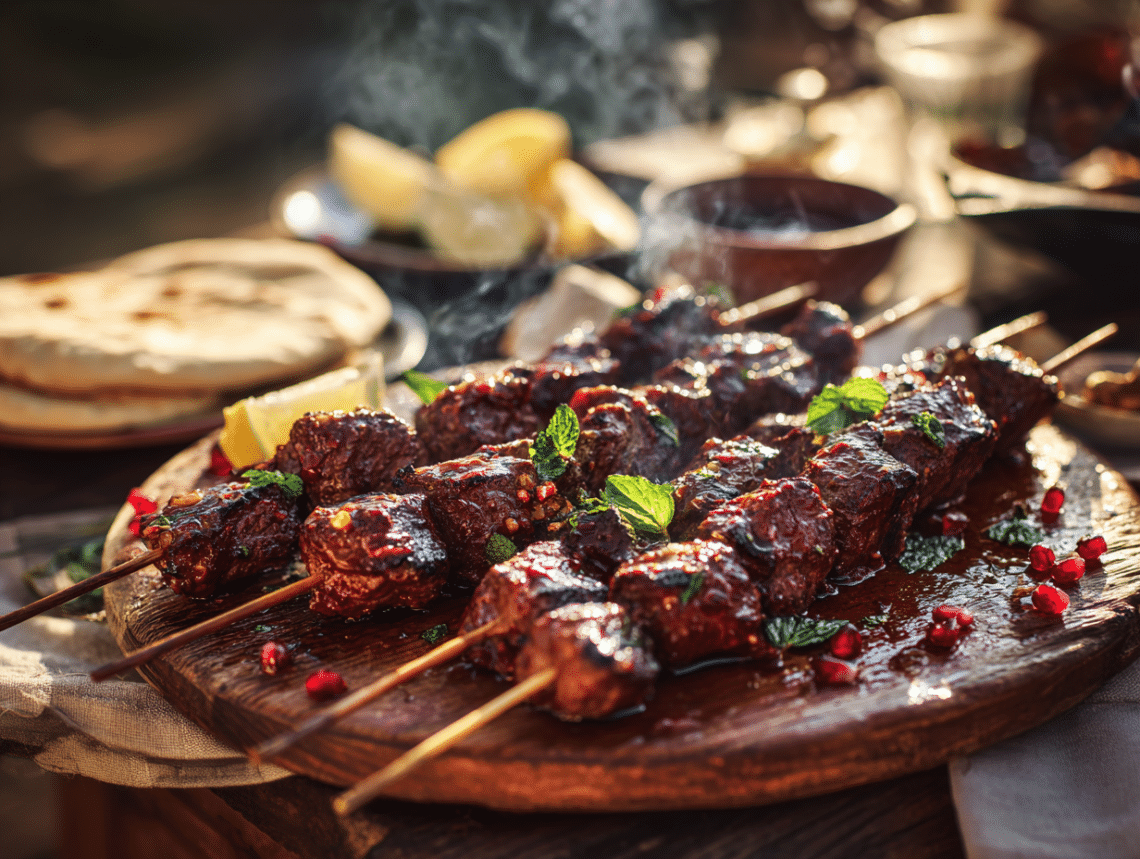
These kebabs use a pomegranate molasses marinade that caramelises into a sticky, slightly tangy crust on the grill — the kind of result that’s hard to get with a standard oil-and-herb marinade. The recipe makes five generous servings, which means you’ll almost certainly have leftovers, and they’re genuinely good the next day in a wrap or over rice. If you’ve been making the same grilled chicken all summer, this is a straightforward switch that doesn’t require any special equipment.
About the ingredients
- Pomegranate molasses: A thick, tart syrup sold in Middle Eastern grocery stores and most well-stocked supermarkets. It’s not the same as grenadine — grenadine is sweet and won’t give you the same result. If you genuinely can’t find it, a mix of two parts balsamic reduction and one part honey gets you close.
- Leg of lamb: Boneless leg of lamb is the right cut here — it has enough fat to stay juicy on high heat without being so fatty that it flares up constantly. Pre-cubed stewing lamb works in a pinch but tends to be fattier and less uniform in size.
- Fresh mint: Used as a finishing garnish, not cooked into the marinade. Dried mint won’t do the same job — skip it entirely rather than substitute.
Why this recipe works
Two things matter most here. First, the pomegranate molasses is acidic enough to start breaking down the surface of the lamb during marinating, which helps the exterior char quickly on a hot grill without the inside overcooking — you get that contrast of crust and pink center without much effort. Second, keeping the lamb and vegetable skewers separate (rather than alternating them on the same skewer) means each can come off the grill at the right time. Vegetables need less heat and less time; lamb needs a consistently hot grill surface. Mixing them forces a compromise that usually means either undercooked onion or overcooked meat. Skip the mixed skewer approach — not worth the extra juggling.
What can go wrong
- Lamb sticks to the grill: This almost always means the grates weren’t hot enough before you put the skewers on, or they weren’t oiled. Preheat your grill to medium-high (around 400–450°F / 200–230°C) and brush the grates with a high-smoke-point oil right before cooking.
- The marinade burns before the lamb is cooked through: Pomegranate molasses has a high sugar content and will scorch if the heat is too high or the lamb sits in one spot too long. Turn the skewers every 2–3 minutes and move them to a slightly cooler zone if you see heavy blackening rather than caramelisation.
- Lamb cubes are different sizes and cook unevenly: Cut your lamb into pieces as close to 1.5 inches as you can manage. Irregular chunks mean some pieces will be overcooked by the time the larger ones are done. An instant-read thermometer takes the guesswork out — pull the lamb at 145°F (63°C) for medium.
- Skewers burn: If you’re using wooden skewers, soak them in cold water for at least 30 minutes before threading. Metal skewers sidestep this entirely and are worth having if you grill regularly.
- Leftover kebabs dry out when reheated: Don’t microwave them. Slice the lamb off the skewers and reheat briefly in a dry pan over medium heat, or eat cold — the pomegranate glaze holds up well at room temperature in a wrap with flatbread and yogurt.
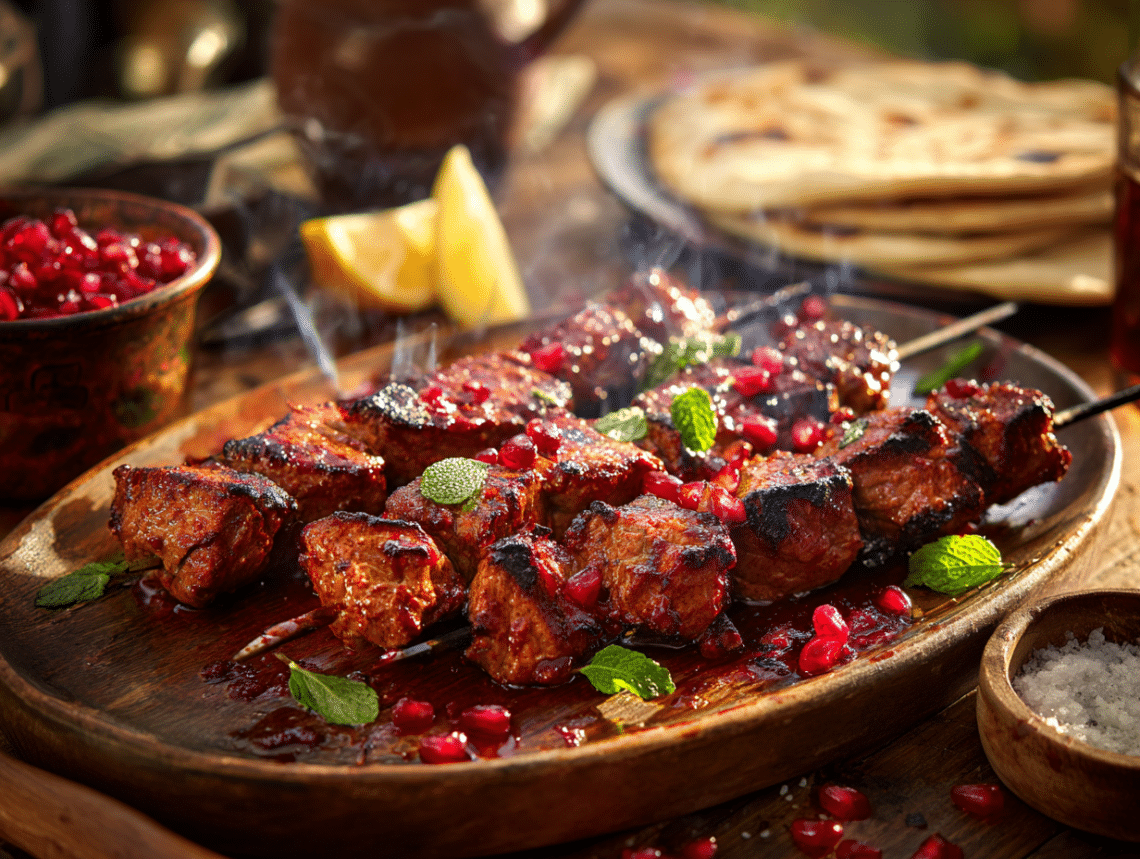
Lamb Kebabs With Fresh Mint And Pomegranate

Ingredients
FOR THE LAMB
- 1.5-2 pounds boneless leg of lamb cut into 1-inch (2.5cm) cubes
- ¼ cup pomegranate molasses
- 2 tablespoons red onion finely chopped
- 1 clove garlic minced
- 2 teaspoons cumin ground
- 1 tablespoon mint fresh ; add extra for garnish
FOR THE VEGETABLES
- 2 medium zucchini cut into 1-inch pieces
- ½ medium red onion cut into 1-inch pieces
- 1 medium red bell pepper cut into 1-inch pieces
- ¼ pound grape tomatoes
- 1 tablespoon olive oil
- 1 teaspoon cumin
- 1 teaspoon coriander
- 1 pinch salt to taste
- 1 pinch ground black pepper to taste
FOR GARNISH (optional)
- 1/4-1/2 cup Pomegranate seeds (optional)
Instructions
FOR THE LAMB:
- Remove the thick fat from the outside of the leg and then cut into 1-inch pieces.
- In a large bowl, stir together molasses, red onion, garlic, and cumin.
- Add the lamb to the marinade and stir gently, coating all the meat evenly. Cover and refrigerate 8 hours or overnight.
- Remove lamb from the refrigerator at least 30 minutes before cooking to let it come to room temperature. Meanwhile, soak 10-12 wooden skewers in water and preheat the grill to medium-high heat (around 400–450°F / 200–230°C).
- Divide the meat between about five skewers and then cook on a covered grill for about 8 minutes (3–4 minutes per side), until the internal temperature reaches 135°F / 57°C for medium-rare. The meat will be brown with a slight bit of char on the outside and still soft to the touch for medium-rare.
- Remove from heat and let rest for 5 minutes. Sprinkle with fresh chopped mint and pomegranate seeds before serving.
FOR THE VEGETABLES:
- Place all the cut vegetables in a large bowl, sprinkle with olive oil, cumin, coriander, and a generous amount of salt and pepper. Stir to coat and refrigerate until ready to grill.
- Divide vegetables between about seven skewers keeping the tomatoes separate.
- Cook zucchini, peppers, and onions on the medium-high grill, about 12 minutes or until lightly charred. The tomatoes will only take 4-5 minutes.
Nutrition
Common questions
Can I marinate the lamb overnight instead of just a few hours?
Yes, overnight marinating works well and actually improves the depth of flavour. Don’t go beyond 24 hours though — the acid in the pomegranate molasses will start to make the surface of the meat mushy rather than tender.
Can I cook these under a broiler instead of on a grill?
Yes. Place the skewers on a wire rack over a foil-lined baking sheet and broil on high, about 4–5 inches from the element, turning once halfway through — roughly 5–6 minutes per side. You won’t get the same char marks, but the pomegranate glaze will still caramelise well.
How do I know when the lamb is actually done without cutting into every piece?
Use an instant-read thermometer and aim for 145°F (63°C) at the thickest piece on the skewer for medium, which will give you a pink, juicy center. If you don’t have a thermometer, press the meat — it should feel firm at the edges but still have a little give in the middle.