







































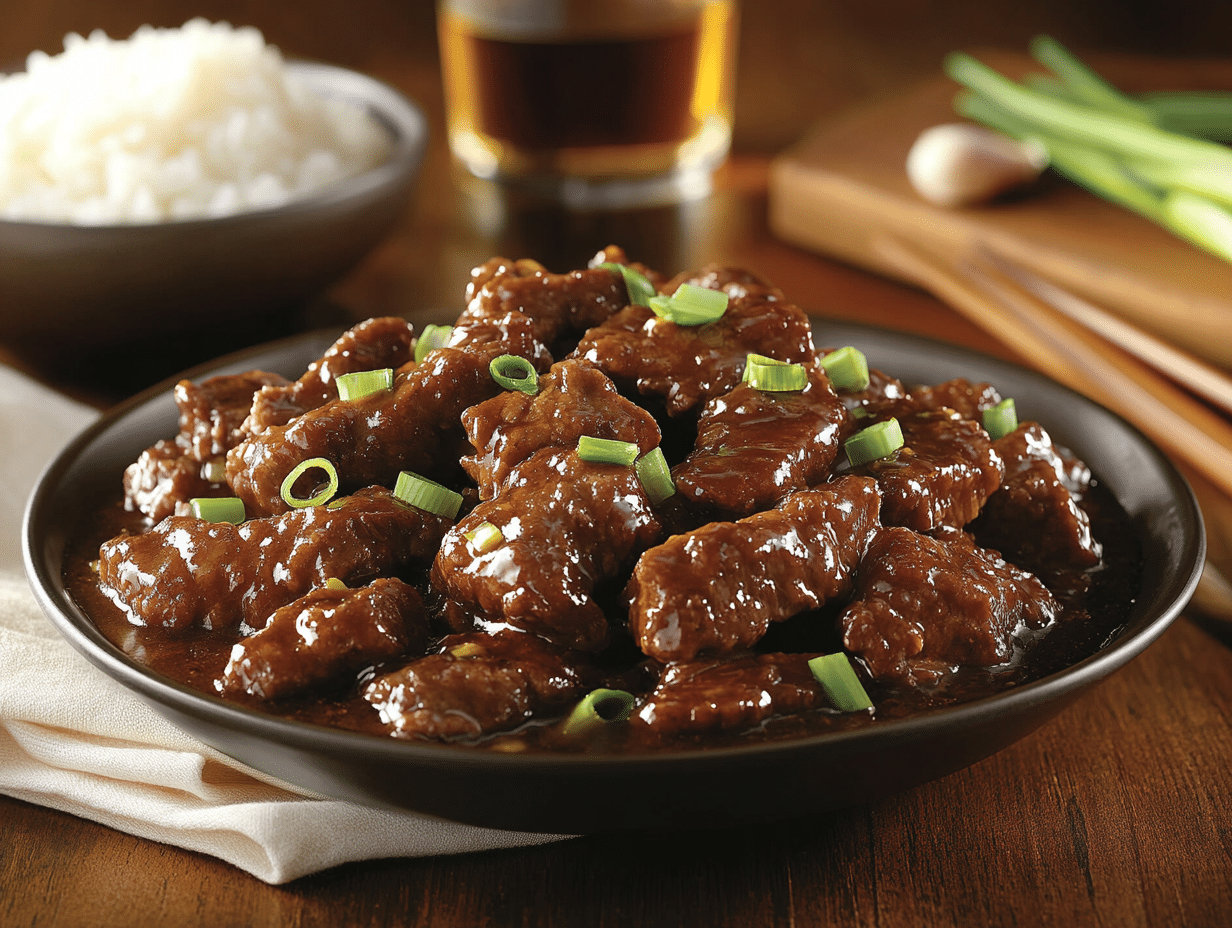
This is a straightforward weeknight stir-fry: thinly sliced flank steak coated in cornstarch, seared fast, then tossed in a soy-garlic-ginger sauce with a hit of brown sugar. It comes together in 35 minutes, uses pantry staples, and the result is genuinely better than most takeout versions because you control the sauce.
The technique that matters
Two things make or break this dish. First, slice the beef against the grain and keep the slices thin — around ⅛ inch. Cut with the grain and the meat turns chewy no matter how carefully you cook it. Second, cook the beef in batches over high heat and don’t rush it. Crowding the pan drops the temperature, and the beef steams instead of browning. You want crispy, caramelized edges on each strip before the sauce goes in. A two-minute rest on a plate between batches is all it takes.
About the ingredients
- Flank steak: Skirt steak works just as well and is often cheaper. Avoid stew beef or anything pre-cut for stir-fry — the pieces are usually too thick and uneven.
- Light soy sauce: This is the standard soy sauce you find in most supermarkets. Don’t substitute dark soy sauce — it’s much saltier and thicker, and the sauce will turn bitter.
- Dark brown sugar: Light brown sugar works in a pinch, but dark brown sugar gives the sauce a deeper, slightly molasses-y flavor that balances the soy better.
- Fresh ginger: Pre-minced ginger from a jar is fine on a busy night. Ground ginger is not a good swap here — the flavor is flat and dusty by comparison.
Leftovers and make-ahead
Leftovers keep well in an airtight container in the fridge for up to 3 days. The sauce thickens considerably as it sits, so add a small splash of water when reheating in a skillet over medium heat — about 30 seconds is enough to loosen it without overcooking the beef. You can freeze the cooked dish for up to 2 months; thaw overnight in the fridge before reheating. If you want to get ahead on a weeknight, the sauce can be made up to 3 days in advance and stored in the fridge — just reheat it gently while the beef cooks.
Troubleshooting
- Sauce is too thin: The cornstarch coating on the beef does most of the thickening, but if your sauce isn’t reducing, your heat is too low. Bring it to a steady simmer and let it bubble for an extra minute before adding the beef back in.
- Beef is tough and chewy: Almost always a slicing problem. Check that you cut across the grain, not parallel to it. The muscle fibers should appear as short dots on the cut surface, not long lines.
- Cornstarch clumping on the beef: This happens when the beef is wet. Pat the slices dry with paper towels before coating — skip the garnish of extra cornstarch dusting, not worth the extra dish — and toss them in the cornstarch just before cooking, not ahead of time.
- Sauce tastes too salty: Soy sauce brands vary a lot in sodium. Taste the sauce before it goes in the pan. A teaspoon of rice vinegar or a small squeeze of lime can cut through saltiness without watering the sauce down.
- Beef sticking to the pan: The pan needs to be genuinely hot before the oil goes in, and the oil needs to shimmer before the beef goes in. If it sticks immediately, the pan isn’t hot enough — wait another 30 seconds and try again.
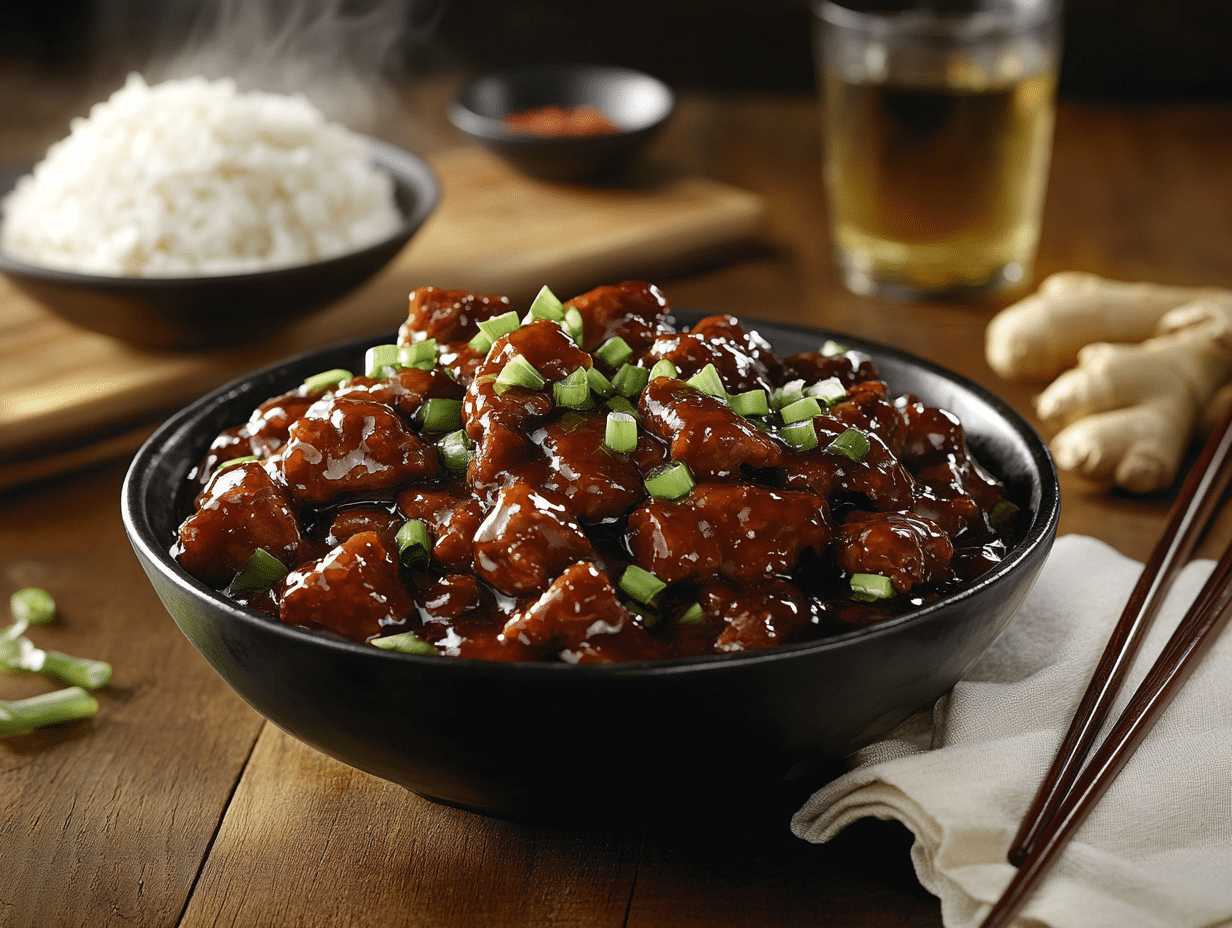
Savory Mongolian Beef

Ingredients
Main Ingredients
- 500 grams beef flank steak thinly sliced against the grain
- ¼ cup cornstarch
Sauce
- ½ cup light soy sauce
- ¼ cup water
- ¼ cup dark brown sugar packed
- 3 cloves garlic minced
- 2 teaspoons fresh ginger minced
For Cooking
- 2 tablespoons vegetable oil
- 3 whole green onions sliced into 1-inch pieces
Instructions
- Coat the thinly sliced beef in a 1/4 cup of cornstarch. Ensure each strip is evenly coated, then let it sit for 10 minutes.
- In a medium saucepan, combine 1/2 cup light soy sauce, 1/4 cup water, 1/4 cup dark brown sugar, minced garlic, and ginger. Bring to a simmer over medium heat, stirring occasionally, until the brown sugar melts and the sauce is slightly thickened, about 4-5 minutes.
- Pour 2 tablespoons of vegetable oil into a large skillet or wok and heat over high heat. Once the oil is shimmering, add the beef in batches, ensuring not to crowd the pan. Sauté until the beef is crispy and browned on the edges, approximately 2 minutes per side. Remove and set aside.
- Lower the heat to medium, and reintroduce the beef to the skillet along with the prepared sauce and sliced green onions. Toss until the beef is well-coated and the onions are just wilted, about 2 minutes.
Notes
Nutrition
Your questions, answered
Can I use a different cut of beef?
Yes — skirt steak is the best substitute and behaves almost identically to flank. Sirloin sliced thin also works, though it’s a bit pricier for a weeknight stir-fry.
Do I have to let the cornstarch-coated beef sit for 10 minutes?
It helps, but it’s not critical. The rest lets the cornstarch adhere more firmly so you get better browning. If you’re short on time, even 5 minutes makes a difference.
Can I make this gluten-free?
Yes — swap the light soy sauce for tamari in the same quantity. Check that your cornstarch is certified gluten-free if cross-contamination is a concern.
What should I serve this with?
Steamed white rice is the most practical option because it soaks up the sauce. Noodles or cauliflower rice also work if that’s what you have on hand.
My sauce looks too dark — did I burn it?
Probably not — the combination of dark brown sugar and soy sauce makes a very deep brown sauce even when cooked correctly. If it smells bitter rather than savory-sweet, the heat was too high and the sugar scorched; start the sauce over.
Can I double the recipe for a larger group?
Double the ingredients freely, but don’t change the cooking method — still cook the beef in small batches. The only thing that doesn’t scale well is crowding the pan.
What to cook next
- Quick and Delicious Homemade Chinese Fried Rice
- Authentic Japanese Chicken Teriyaki
- Fresh Vegetable Spring Rolls
- Soft and Sweet Japanese Mochi