











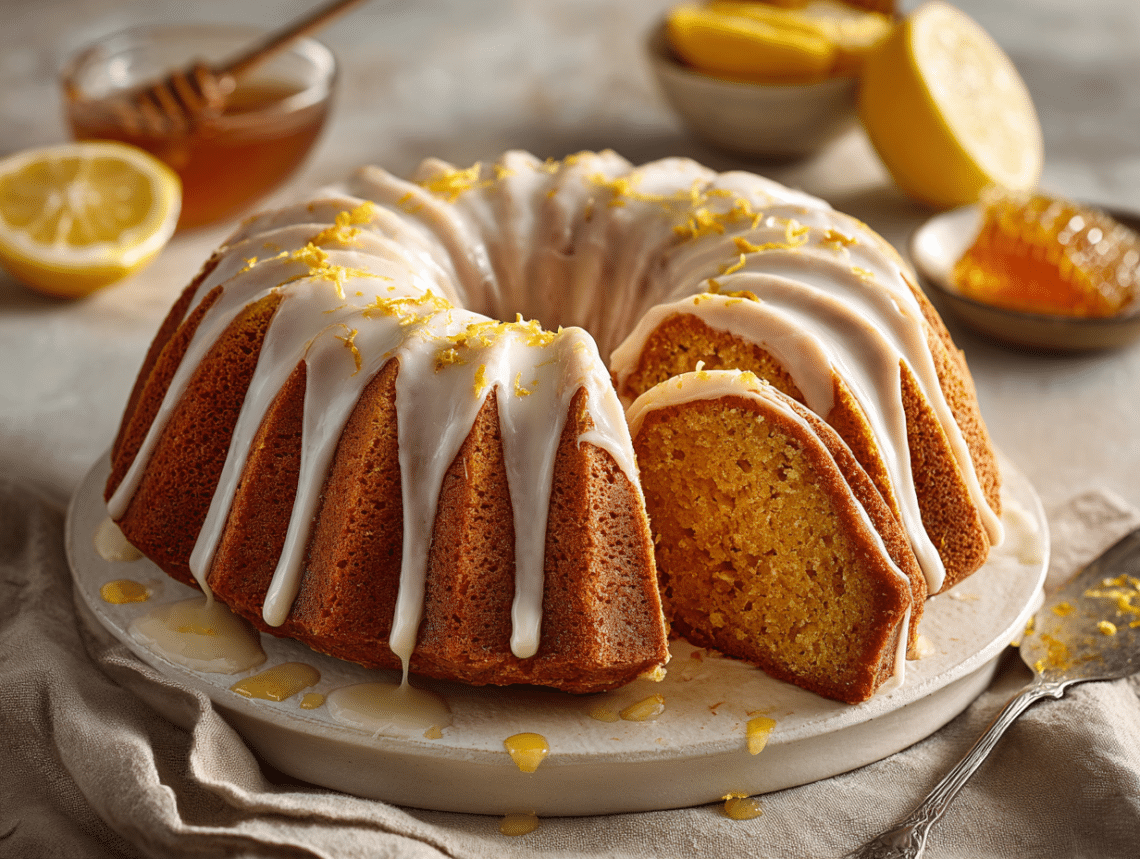
This is a honey lemon bundt cake with real weight to it — a full cup of honey, a cup and a half of butter, and buttermilk all working together to keep the crumb tender for days. The glaze is just three ingredients whisked together, and it sets into a clean, glossy finish. Make it when you want something that looks put-together but doesn’t ask much of you beyond an hour and a half of mostly hands-off time.
The technique that matters
Two things decide whether this cake is good or just fine. First, creaming the butter and sugars properly — the recipe calls for 3 to 5 minutes, and the full 5 minutes is worth it. You’re building air into the batter here, which is what gives the crumb its lift since there’s no leavening beyond baking powder. Second, add the eggs one at a time and scrape the bowl after each one. With five eggs going into a very rich batter, rushing this step causes the mixture to look curdled and uneven, which affects how the cake bakes through. Both steps take patience but no special skill.
If something goes sideways
- The cake sticks to the pan: Bundt pans have corners and ridges that trap batter. Greasing alone often isn’t enough — make sure you flour every crevice after greasing, tap out the excess, and don’t skip the 20-minute rest in the pan before turning it out. Trying to unmold a hot cake almost always tears it.
- The top browns too fast before the center is done: This cake bakes low and slow at 325°F for a reason. If your oven runs hot, tent the pan loosely with foil after the first 40 minutes. Use the internal temperature (200–210°F) as your real doneness check, not just color.
- The glaze is too thick or too runny: Humidity and the exact size of your lemon affect this. If it’s too thick to drizzle, add milk half a teaspoon at a time. If it’s too thin and just slides off, sift in a little more confectioners’ sugar. Skip the garnish — not worth the extra dish.
- The cake tastes flat on honey flavor: Honey varies a lot by type. A mild clover honey will be subtle; a darker buckwheat or wildflower honey will come through more clearly. If you want a stronger honey note, use a more robust variety rather than adjusting the quantity.
- The batter looks broken or curdled after adding eggs: This usually means the eggs were cold. Cold eggs shock the butter and cause it to seize. If it happens, keep mixing on medium — the batter almost always comes back together once the flour goes in.
Leftovers and make-ahead
The storage and freezing details are in the recipe card, but here’s what’s worth knowing about texture over time: the honey actually helps this cake hold moisture better than a standard butter cake, so a slice on day three is genuinely still good — not just acceptable. If you’re refrigerating it, pull the cake out at least 30 minutes before serving; cold butter-based cakes go dense and waxy straight from the fridge. For the glaze specifically, it does dull slightly after a day in the refrigerator, so if appearance matters, a quick second drizzle of freshly made glaze before serving takes about two minutes and uses ingredients you almost certainly already have on the counter.
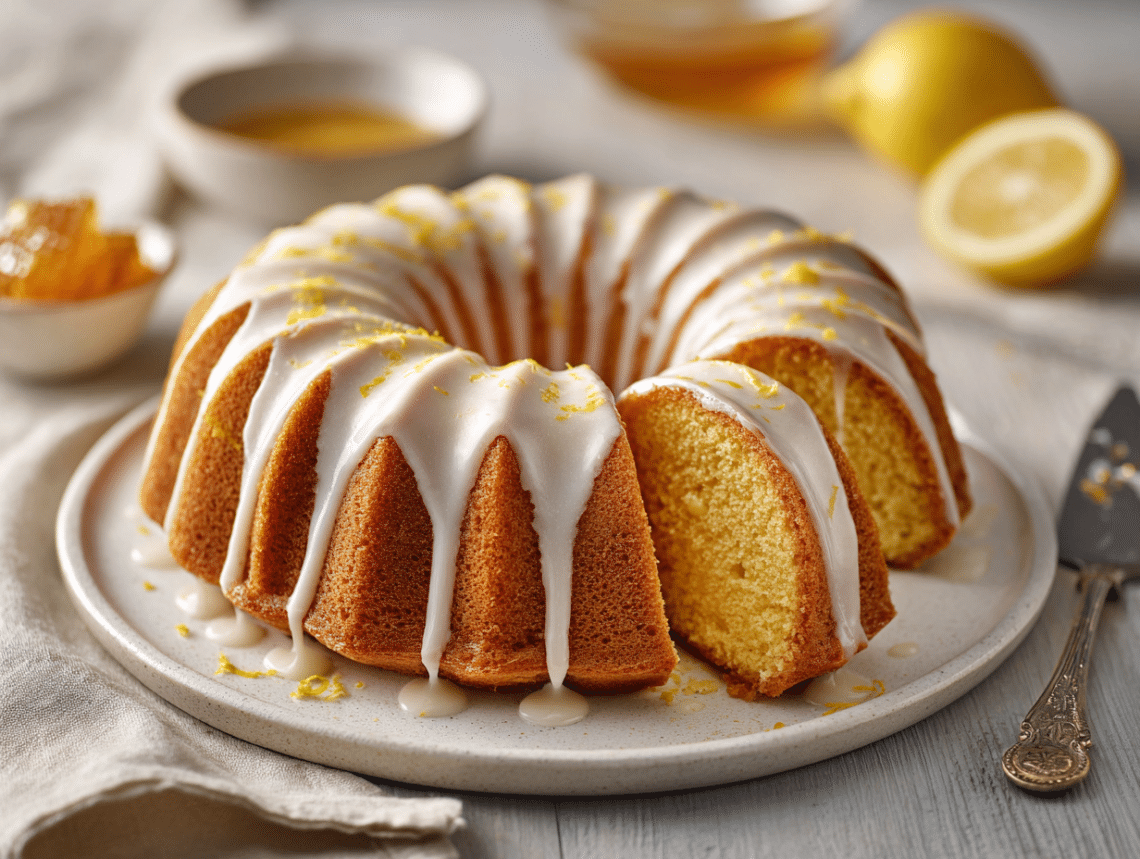
Honey Lemon Bundt Cake with Sugar Lemon Glaze

Equipment
- Stand mixer with paddle attachment (or hand-held electric mixer)
- 10-inch tube pan or 12-cup bundt pan
- Large mixing bowl
- Medium mixing bowl
- Wire cooling rack
- Baking tray (sheet pan)
- Rubber or silicone spatula
Ingredients
Honey Lemon Bundt Cake Ingredients
- 3 cups all-purpose flour
- 2 teaspoons baking powder
- 1 teaspoon fine sea salt
- ¾ teaspoon ground cinnamon
- ¼ teaspoon grated nutmeg
- 1½ cups unsalted butter room temperature
- 1½ cups granulated sugar
- ¼ cup packed brown sugar
- 1 cup honey
- 5 large eggs room temperature
- 1 teaspoon pure vanilla extract
- 1 teaspoons lemon juice
- 1 lemon zest grated
- 1 cup buttermilk
Sugar Lemon Glaze Ingredients
- 2¼ cups confectioners’/icing sugar
- ¼ cup full cream milk room temperature
- 2 teaspoons lemon juice
Instructions
Honey Lemon Bundt Cake and Glaze Instructions
- Adjust your oven rack to the lower-middle position. Preheat the oven to 325°F / 160°C (140°C fan-forced). Grease or spray and flour a 10-inch tube pan or 12-cup bundt pan. Tap out excess flour.
- Whisk the flour, baking powder, sea salt, cinnamon, and nutmeg in a medium mixing bowl.
- In the stand mixer bowl, with a paddle or in a large mixing bowl with a hand-held mixer, beat the butter using medium speed until smooth. Add the granulated and brown sugar and beat using medium until light and fluffy, approximately 3 to 5 minutes.
- Add the honey and mix until smooth. Add eggs one at a time, beating on medium speed until each is incorporated and scraping down the sides of the bowl with a spatula after each addition.
- Add the vanilla extract and lemon juice and mix on low speed until combined. Add the lemon zest and mix again on low until just incorporated.
- Finally, add the flour mixture and mix on low until combined. Slowly add buttermilk and mix on low until all ingredients are just incorporated.
- Pour the batter into the prepared Bundt (or tube) pan and use a spatula to even out the top. Place a clean baking tray on your chosen oven rack, and carefully add your bundt pan with the batter to the middle of the baking tray. Bake for 60 to 75 minutes, rotating the bundt pan 180 degrees halfway through baking. The cake is done when a wooden skewer or toothpick inserted into the centre comes out clean and the internal temperature reaches 200–210°F / 93–99°C.
- Transfer the bundt pan on the baking tray to a wire rack and let cool for 20 minutes. Place the wire rack upside down on top of the pan, then carefully flip both together so the rack is right-side up. Give the top of the pan a firm tap to release the cake. Lift the pan away. Let the cake cool completely on the rack before glazing.
- Top the cooled cake with the Sugar Lemon Glaze.
Sugar Lemon Glaze Instructions
- Place the confectioners’ sugar, milk and lemon juice in a medium bowl.
- Whisk together vigorously until smooth. Use immediately.
- Place a baking tray beneath the cooling rack to catch drips. Using a spoon, drizzle the glaze over the top of the cake, letting it run down the sides until you achieve your desired coverage. Leave the glaze to set for 15–20 minutes before serving.
Notes
- Storage: Keep covered in a cake container at room temperature for up to 4 days. Refrigerate for up to 7 days — bring to room temperature before serving for best texture.
- Freezing: Wrap the un-glazed cake tightly in cling film and foil. Freeze for up to 3 months. Thaw overnight in the refrigerator and glaze before serving.
- Make-ahead: Bake the cake the day before and store un-glazed. Prepare and drizzle the glaze the day of serving for the freshest appearance.
- Substitution: Swap buttermilk for 1 cup whole milk mixed with 1 tablespoon lemon juice or white vinegar — let it sit 5 minutes before using.
- Pro tip: Cream the butter and sugars for the full 5 minutes. This aerates the batter and creates a lighter, more even crumb in the finished cake.
Nutrition
Frequently asked questions
Can I use a different size bundt pan than the one listed?
A 10-cup pan will work, but watch your bake time — a smaller pan means a deeper batter and a longer bake, so start checking at 70 minutes and rely on the skewer test. Don’t fill any bundt pan more than two-thirds full, or the batter will overflow as it rises.
Can I use salted butter instead of unsalted?
Yes, just leave out the added sea salt in the dry ingredients. The cake won’t taste salty, but skipping the adjustment can push it slightly over the edge since this recipe already calls for a full teaspoon of salt.
What can I use instead of honey if I don’t have a full cup?
You can replace part of the honey with maple syrup — use the same volume and the cake will still bake correctly, though the flavor shifts toward maple rather than floral. Avoid substituting with corn syrup; it adds sweetness but none of the flavor complexity that makes this cake worth making.
My glaze hardened before I finished drizzling — what happened?
Confectioners’ sugar glazes start to crust quickly once exposed to air, especially in a dry kitchen. Make the glaze right before you use it and work fast — the recipe card says to use it immediately, and that’s accurate advice.
If you liked this one
- Zesty French Lemon Cake
- Sunshine in a Jar: Classic British Lemon Curd
- Heavenly Strawberry Cake with Fresh Berries and Whipped Cream
- Classic Soft Sugar Cookies