


























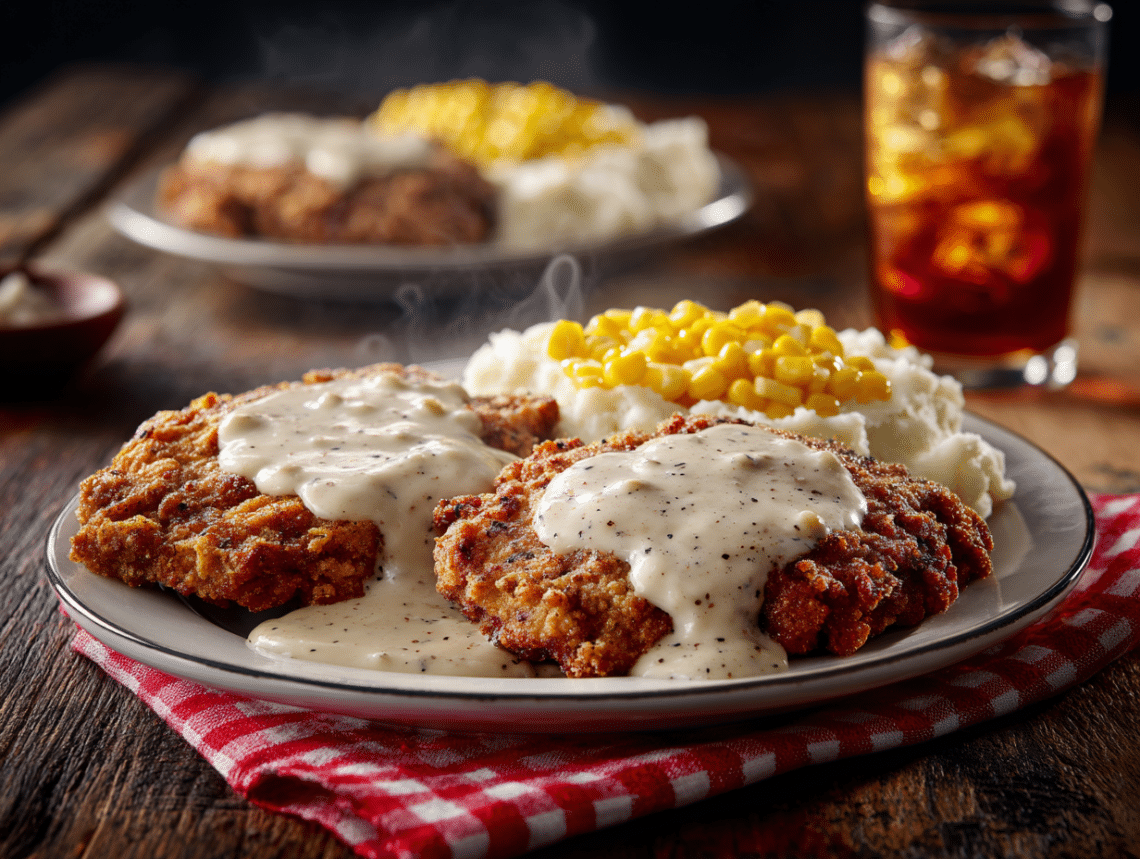
This chicken fried steak uses a cornstarch-flour dredge that fries up genuinely crunchy and stays that way — no soggy coating by the time it hits the table. The cream gravy comes together in the same pan while the steaks rest in the oven, so nothing sits around getting cold. If you need a filling dinner that reheats well the next day, this is a reliable one to have in your back pocket.
The technique that matters
The dredge is doing two jobs at once. Cornstarch mixed into the flour creates a crust that crisps faster and holds its crunch longer than flour alone — that matters when you’re keeping steaks warm in the oven while you finish the gravy. The other thing that actually matters is oil temperature: 350°F is your target. Too low and the coating absorbs oil and turns greasy before it sets. Too high and the outside burns before the meat is done. A thermometer takes the guesswork out entirely. Let the oil come back up to temperature between batches — if you’re doubling the recipe, rushing that step is the most common reason the second round comes out softer than the first.
If something goes sideways
- The breading falls off during frying: The dredge needs to bond to the meat. Pat the steaks completely dry before you start, and press the flour mixture firmly onto both sides. Letting the dredged steaks rest on a rack for 5 minutes before they hit the oil also helps the coating set.
- The crust is pale and greasy, not golden: The oil wasn’t hot enough when the steaks went in. A cold or crowded pan drops the temperature fast. Fry one steak at a time if your skillet is smaller than 12 inches.
- The gravy seizes into lumps: The flour scorched in the pan drippings before the liquid went in. Keep the heat at medium and whisk constantly from the moment the flour hits the butter. If lumps form anyway, strain the gravy through a fine mesh sieve — skip the garnish, not worth the extra dish — and it will still taste fine.
- The gravy is too thick: Add warm milk a splash at a time, whisking between additions. Cold milk added all at once can cause the gravy to break.
- The steak is tough: Round steak needs to be pounded thin — about ¼ inch. If yours came thicker from the store, pound it between two sheets of plastic wrap before dredging. Skipping this step is the main reason the meat ends up chewy.
Leftovers and make-ahead
Cooked chicken fried steaks keep in the fridge for up to 3 days in an airtight container. Store the gravy separately — it thickens considerably as it cools, so reheat it in a small saucepan over low heat with a splash of milk, stirring until it loosens. To reheat the steaks and get the crust back, use a wire rack set on a baking sheet in a 375°F oven for about 12 minutes; a microwave will make them soft. If you want to get ahead before a gathering, you can dredge the raw steaks up to 4 hours in advance, set them on a rack uncovered in the fridge, and fry them right before serving — the resting time actually helps the coating stick better.
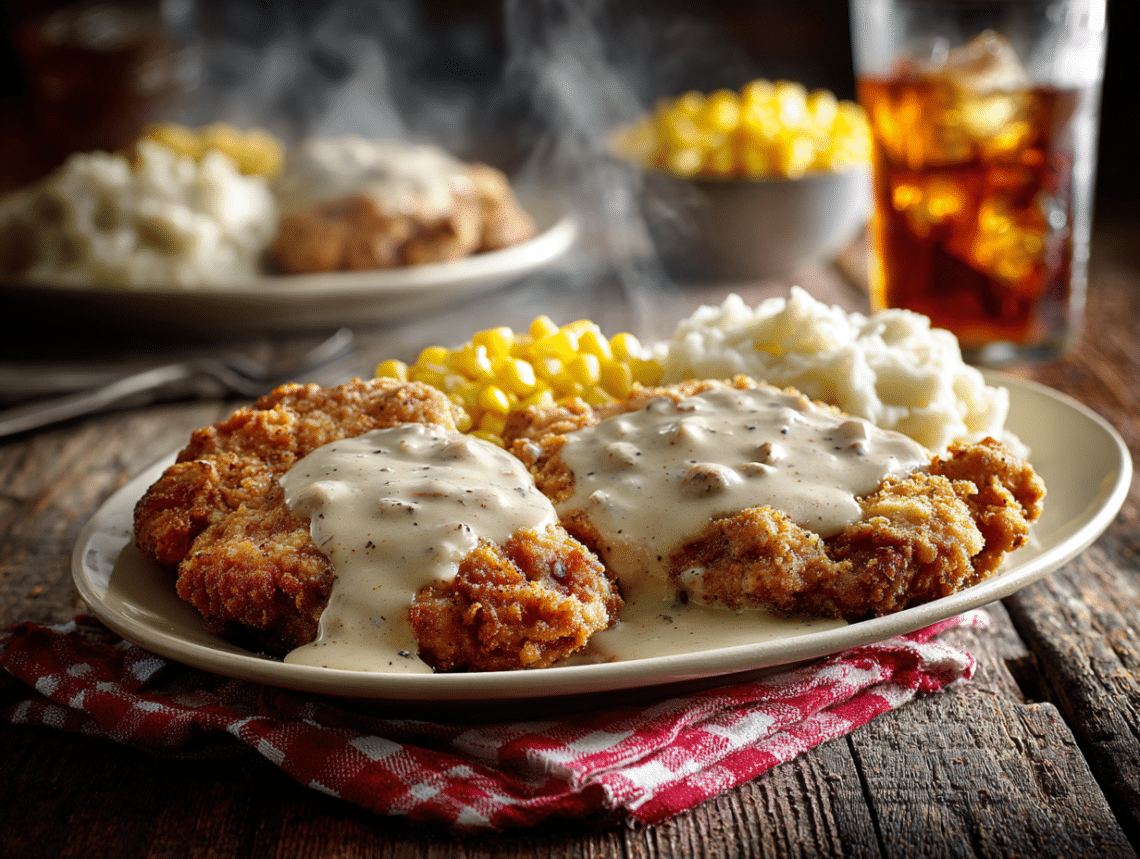
Chicken Fried Steak with Cream Gravy (Extra Crispy)

Ingredients
Cream Gravy Ingredients
- ¼ cup unsalted butter (4 tablespoons)
- ½ cup all-purpose flour
- 1 teaspoon salt
- 2 teaspoons black pepper this makes a boldly peppery gravy — reduce to 1 teaspoon for a milder version
- ¼ teaspoon onion powder
- 1½ cups whole milk warmed slightly
Chicken Fried Steak Ingredients
- 2 pieces tenderized round steaks 6–8 oz each (170–225g each)
- 1 cup all-purpose flour
- 1 cup cornstarch
- 1 teaspoon salt plus more to taste
- 1 teaspoon black pepper plus more to taste
- 1-2 teaspoons Cajun seasoning adjust to taste
- 3 large eggs
- 2-3 tablespoons water just enough to thin out the eggs
- 2-3 cups vegetable or peanut oil for shallow frying, enough for ½ inch depth
Instructions
Cream Gravy Instructions
- Melt the butter in a small saucepan over medium heat. Add the salt, pepper, and onion powder and stir for 30 seconds until fragrant.
- Add the flour and whisk it in. Let it cook just a minute to toast the flour slightly. Keep whisking, so it does not burn!
- Add the warmed milk gradually, about ½ cup at a time, whisking constantly. Cook for 3–4 minutes until the gravy thickens enough to coat the back of a spoon. If it becomes too thick, whisk in a splash more milk. Once the gravy is thickened but not too thick, you can take it off the heat and place a lid on it. Turn the burner back on to low a few minutes before you pull your last steak out of the pan to warm it up.
Chicken Fried Steak instructions
- Pour oil into a 12-inch cast iron skillet or heavy-bottomed frying pan to a depth of ½ inch. Heat over medium-high heat to 350°F / 175°C. Preheat your oven to 170°F / 75°C (or the lowest warm setting) and place a wire rack over a sheet pan inside.
- In a pie pan or shallow dish, whisk together the flour, cornstarch, salt, pepper, and Cajun seasoning. Taste the dredge — it should be noticeably seasoned. The cornstarch helps create a crisp crust that stays crunchy.
- In a separate shallow dish, whisk the eggs with 2–3 tablespoons of water until smooth.
- Once your oil reaches 350°F / 175°C, you can start coating the steaks. Place the steak in the flour dredge first, then into the egg mixture, and again into the flour dredge.
- Place no more than 2 steaks into the pan at once, and you may have to cook one at a time if your pan is small. Don’t overcrowd or they will not cook properly.
- Fry for 3–4 minutes per side until golden brown and crispy, and the internal temperature reaches 160°F / 71°C. Remove when both sides are done and keep warm in the oven until all the steaks are finished. Cover in cream gravy and serve with mashed potatoes and corn.
Nutrition
FAQ
Can I use cube steak instead of round steak?
Yes — cube steak works well here and is often easier to find. It’s already been run through a tenderizer at the butcher, so you can skip the pounding step, though a quick press with your palm to even out the thickness doesn’t hurt.
Can I make this in an air fryer?
Not with this recipe as written. The cornstarch-flour dredge relies on hot oil contact to set the crust properly; an air fryer doesn’t deliver enough heat to the coating quickly enough, and you’ll end up with a dry, uneven result rather than a crispy one.
How do I keep the first steak warm while I fry the second one?
Place the finished steak on a wire rack set over a baking sheet in a 200°F oven. A rack is important — setting the steak directly on a pan traps steam underneath and softens the bottom crust while you wait.
More recipes to try
- Elegant Chicken Marsala with Mushrooms
- Hearty Shepherd’s Pie
- Creamy Fettuccine Alfredo
- Sweet Corn Chowder