





























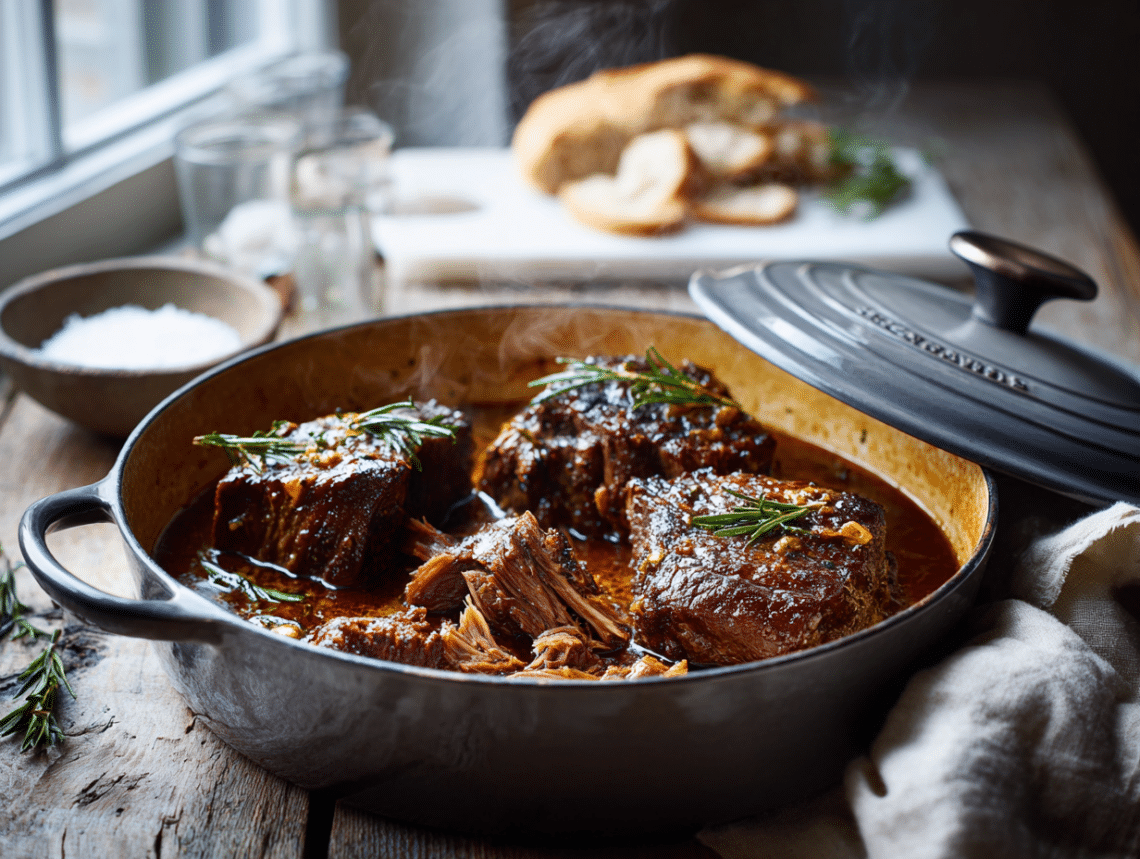
This is a four-ingredient braised chuck roast designed to be cooked once and eaten across several meals. A 3-pound bone-in chuck roast braises in beef stock for up to three hours, giving you fork-tender shredded beef and a rich cooking liquid you can use as the base for soup, sandwiches, or tacos. The honest reason to make it: the cost per serving is low, the hands-on time is short, and the leftovers are better than the first meal.
The technique that matters
Two things determine whether this roast is worth eating: the sear and the braise temperature. Cutting the roast into three pieces before searing isn’t just for speed — it gives you roughly three times the browned surface area, and that crust is where most of the flavor in the finished dish comes from. The braise itself needs to stay low. At 325°F, the collagen in chuck slowly converts to gelatin, which is what makes the meat pull apart easily and gives the braising liquid its body. Push the oven higher to save time and you’ll get tighter, drier meat instead. The target internal temperature is 200°F — not because it’s safe at that point, but because collagen breakdown isn’t complete until you’re well past 160°F, and rushing it shows.
Substitutions that actually work
- Beef stock: Low-sodium store-bought stock works fine. If you only have chicken stock, use it — the flavor will be lighter but still good. Water with a tablespoon of soy sauce is a reasonable last resort and adds back some of the savory depth you’d otherwise miss.
- Bone-in vs. boneless chuck: Boneless chuck roast works. The braising liquid will be slightly thinner since you lose the collagen from the bone, but the meat will still shred well. Reduce the braising time by about 20 minutes and check early.
- Olive oil: Any neutral high-heat oil works for searing — vegetable, canola, or avocado oil are all fine. Skip the extra-virgin for this step; it’s wasted at searing temperatures.
- Dutch oven: If you don’t have one, a heavy oven-safe pot with a tight lid is the next best option. A roasting pan covered tightly with two layers of foil can work in a pinch, but check the liquid level at the halfway point since foil doesn’t seal as well.
Keeping and reheating
Store the shredded beef in its braising liquid — keeping them together prevents the meat from drying out. In the fridge, it holds well for four days in a sealed container. For longer storage, freeze in portions with enough liquid to cover; it keeps for three months and reheats without losing texture. To reheat, warm it gently on the stovetop over medium-low heat with a splash of the braising liquid or water until just heated through. The microwave works too — cover the container loosely and use 50% power in 90-second intervals, stirring between each. Skip reheating the full batch at once; warm only what you need so the rest stays moist in the fridge.
Mistakes to avoid
- Adding cold meat straight from the fridge to a hot pan: Cold beef drops the pan temperature fast, which means steaming instead of searing. Pull the roast out 20 to 30 minutes before you cook it so it’s closer to room temperature.
- Lifting the lid to check on it repeatedly: Every time you open the Dutch oven, you release steam and drop the oven temperature. Set a timer for 2.5 hours and leave it alone until then.
- Using too much liquid: The recipe calls for 3 cups of stock, which should come about halfway up the meat. More than that and you’re poaching, not braising — the flavor stays in the liquid instead of concentrating in the beef. If your pot is wider than average, stick to the 3-cup amount regardless.
- Shredding the meat while it’s still hot: The recipe calls for a 15-minute rest in the liquid, and that rest matters. Cutting into the meat immediately lets the juices run out onto the cutting board. Give it the full rest — skip the garnish on this one, not worth the extra dish — and the meat will hold together better when you shred it.
- Discarding the braising liquid: That liquid is the most useful thing in the pot. Even if you don’t make soup, save it. It freezes well and works as a ready-made beef broth for any recipe that calls for one.
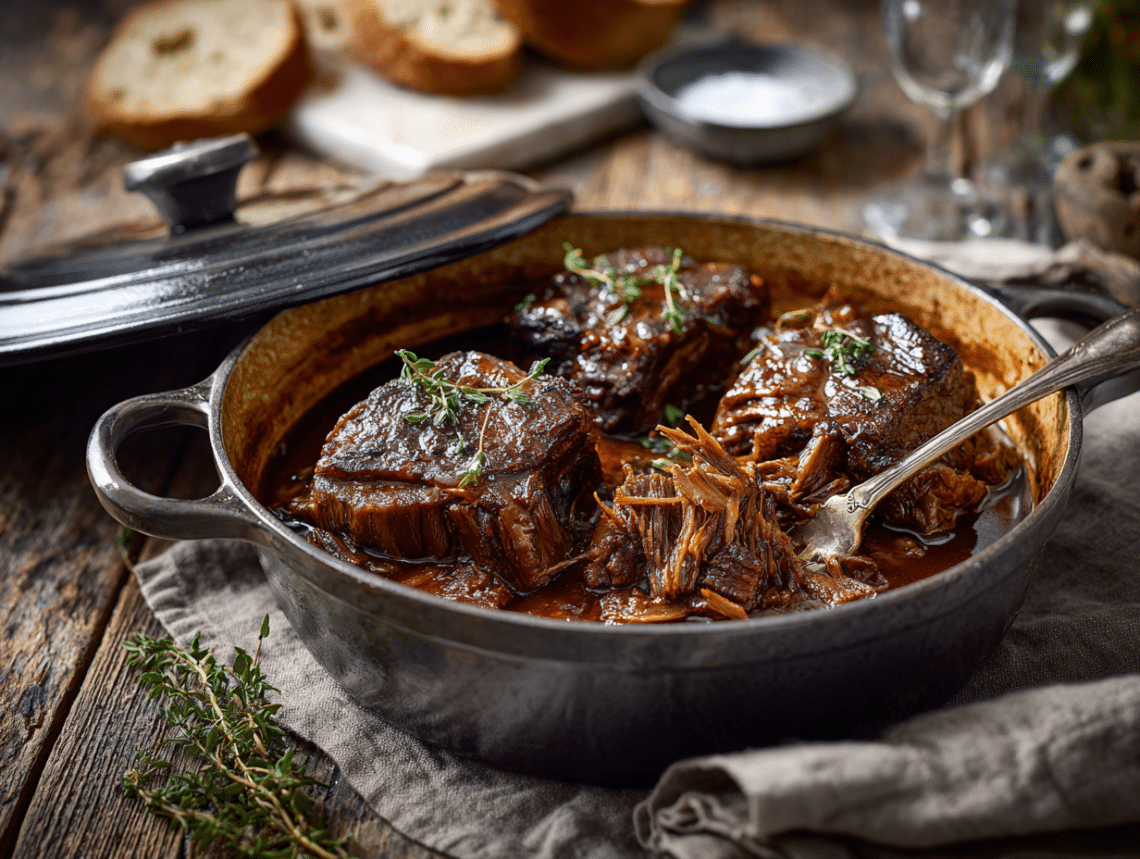
Multi-Purpose Chuck Roast: Tender Braised Beef for Multiple Meals

Ingredients
- 3 pounds bone-in beef chuck roast
- 3 cups beef stock
- 1½ teaspoons kosher salt or ¾ teaspoon fine salt, plus more to taste
- ½ teaspoon black pepper freshly ground
- 3 tablespoons olive oil
Instructions
- Preheat oven to 325°F / 160°C (165°C fan-forced).
- Pat the roast dry with paper towels, then cut into three roughly equal pieces — this gives you more surface area for browning and the pieces braise more evenly.
- Heat olive oil in a 5-6 quart Dutch oven over medium-high heat until the oil shimmers and just begins to smoke. Season the meat pieces generously on all sides with salt and pepper. Working in batches if necessary to avoid crowding, sear the beef for 3-4 minutes per side until a deep brown crust forms on all sides. Remove to a plate. Pour a splash of beef stock into the hot Dutch oven and scrape up any browned bits from the bottom with a wooden spoon. Return the beef to the pot, pour the remaining stock over the meat, and cover with the lid.
- Transfer the covered Dutch oven to the preheated oven and braise for 2½ to 3 hours, or until the beef is fork-tender and shreds easily (internal temperature should reach at least 200°F / 93°C for proper collagen breakdown). Let the meat rest in the braising liquid for 15 minutes before shredding or slicing.
Nutrition
Common questions
Can I make this in a slow cooker instead of the oven?
Yes — sear the pieces on the stovetop first, then transfer everything to the slow cooker and cook on low for 8 to 9 hours or high for 5 to 6 hours. The texture will be slightly more fall-apart than oven-braised, which works well for shredding but makes slicing harder if you want thicker pieces.
My chuck roast is larger than 3 pounds. Do I need to adjust anything?
Cut it into more pieces to keep the braising even, and add an extra half cup of stock for every additional pound. Plan for an extra 30 to 45 minutes of braising time and start checking for tenderness with a fork at the 3-hour mark.
Can I add vegetables to the braise?
You can, but add them in the last 45 minutes only — carrots, celery, and onion all turn mushy if they sit in the oven for the full three hours. If you want vegetables for a finished dish like soup, it’s easier to cook them separately and combine at the end.
How do I know if the beef is done if I don’t have a thermometer?
Pierce the thickest piece with a fork and twist — if the meat shreds without resistance, it’s ready. If it pulls back or feels tight, give it another 20 to 30 minutes and check again.