




































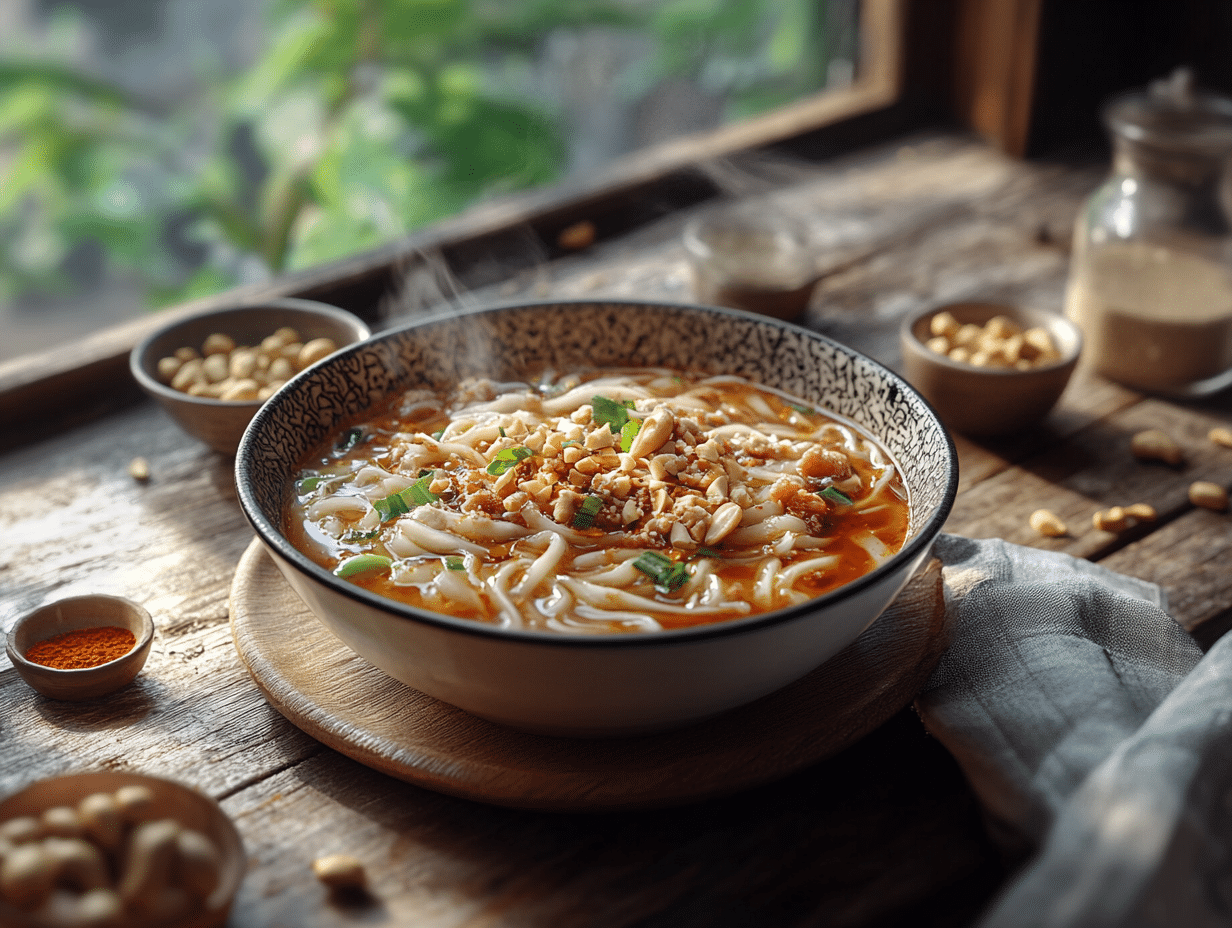
Dan Dan noodles come together in about 35 minutes and cost a fraction of takeout. This version uses fresh wheat noodles, ground pork, and a sauce built from pantry staples — dark soy sauce, sesame paste, chili oil, and garlic — so there’s a good chance you’re closer to making it than you think. The result is a bowl that’s saucy, a little spicy, and genuinely satisfying on a weeknight.
The technique that matters
The sauce is everything here, and the one thing that trips people up is mixing it cold. Whisk the sesame paste, soy sauces, chili oil, garlic, and sugar together before the noodles go in the pot — the paste loosens more easily at room temperature and blends into a smooth, cohesive sauce rather than clumping. The second technique worth getting right is the pork. You want it genuinely browned and a little crispy at the edges before you add the Szechuan peppercorns and broth. If you crowd the pan or rush it on low heat, the pork steams instead of browns, and you lose the texture contrast that makes the topping worth having. Medium-high heat, give it space, and don’t stir it constantly.
Leftovers and make-ahead
The sauce keeps well — store it separately in a jar in the fridge for up to a week, which makes this a genuinely useful recipe to prep ahead. The cooked pork mixture also holds for 3 days in the fridge. Noodles are the weak link: they clump and absorb liquid overnight, so cook them fresh when you’re ready to eat. If you do end up with leftover assembled bowls, reheat the pork in a small pan with a splash of water or broth to loosen it, boil fresh noodles, and spoon everything together again — it takes about 5 minutes and tastes much better than microwaving the whole bowl.
Mistakes to avoid
- Skipping the toasting step on the Szechuan peppercorns. Untoasted, they taste dusty and flat. Thirty seconds in a dry pan over medium heat before grinding makes a real difference to the numbing, floral quality they bring.
- Using regular sesame oil instead of Chinese sesame paste. They are not the same thing. Sesame paste is thick and made from toasted sesame seeds — it provides body and richness. If you can’t find it, tahini is the right substitute, not sesame oil.
- Adding all the chili oil to the sauce without tasting first. Chili oils vary a lot in heat level depending on the brand. Start with 2 tablespoons, mix the sauce, taste it, then add more if you want.
- Letting the noodles sit too long after draining. Fresh wheat noodles stick together fast. Toss them with a tiny drizzle of neutral oil right after draining if you’re not assembling the bowls immediately.
- Pouring the sauce over cold noodles straight from the fridge. The sesame paste seizes up when it hits cold food. Warm your noodles and make sure the pork mixture is hot — the sauce will coat everything evenly instead of sitting in a thick lump at the bottom of the bowl.
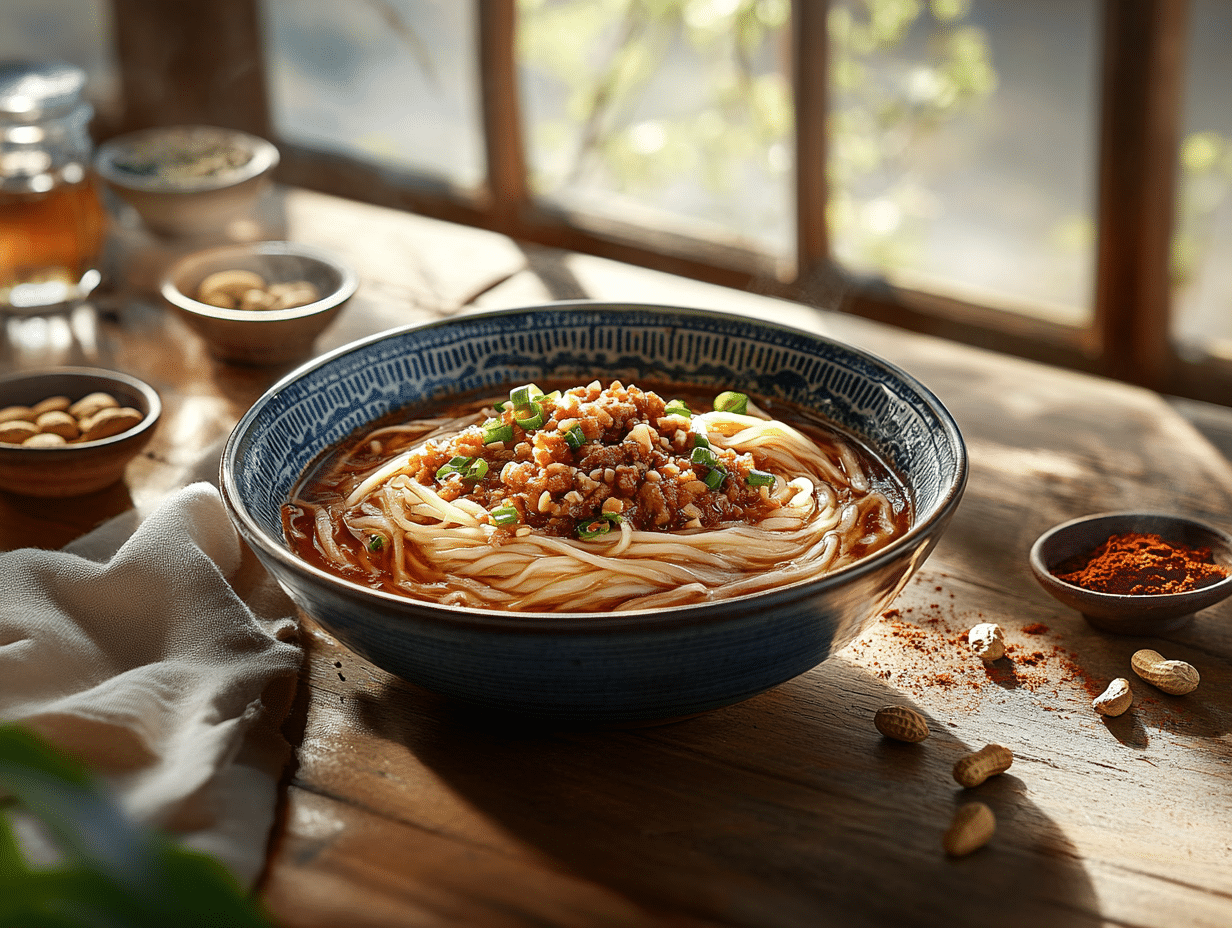
Szechuan Style Dan Dan Noodles

Ingredients
- 10.5 ounces fresh wheat noodles preferably from Asian grocery stores
- 5.3 ounces ground pork use organic if available for better flavor
- 2 tablespoons Szechuan peppercorns lightly toasted and ground
- 3 tablespoons dark soy sauce
- 2 tablespoons light soy sauce
- 2 tablespoons Chinese sesame paste alternative: tahini
- 3 tablespoons chili oil adjust for spice level preference
- 3 cloves garlic minced
- 2 teaspoons sugar
- 1 cup chicken broth preferably low-sodium
- 2 tablespoons peanuts roasted and chopped
- 4 stalks scallions thinly sliced
Instructions
- Prepare the Noodles and Sauce: Boil the fresh wheat noodles according to package instructions. Drain and set aside. In a small bowl, mix dark soy sauce, light soy sauce, sesame paste, chili oil, minced garlic, and sugar until smooth.
- Cook the Pork: Heat a pan over medium-high heat. Add a tablespoon of oil and sauté the ground pork until it’s browned and slightly crispy. Add the ground Szechuan peppercorns and half of the scallions, stir-frying for an additional minute. Pour in the chicken broth and let it simmer, allowing the flavors to meld, about 5 minutes.
- Assemble the Dish: In each serving bowl, place a portion of noodles. Top with the cooked pork, pour over a generous amount of sauce, and garnish with the remaining scallions and chopped peanuts.
Notes
- For a vegetarian version, substitute ground pork with crumbled tofu.
- Adjust the amount of chili oil to balance the spice levels according to your taste.
- Store extra sauce in an airtight container for up to a week.
Nutrition
FAQ
Can I use dried noodles instead of fresh wheat noodles?
Yes — dried noodles work fine here. Look for dried wheat noodles or even spaghetti in a pinch; just cook them until just tender since they’ll continue to soften once the hot sauce and pork go on top.
What can I use instead of Chinese sesame paste?
Tahini is the most practical substitute and works well — use the same amount. It’s slightly less intense than Chinese sesame paste but produces a creamy, nutty sauce that’s very close to the original.
Is this dish very spicy? Can I control the heat?
The heat is adjustable. Start with 1 to 2 tablespoons of chili oil rather than the full 3, taste the sauce before assembling, and add more from there — it’s much easier to add heat than to take it away.
Can I make this without the pork?
Crumbled firm tofu is a straightforward swap — press it well before cooking so it browns rather than steams. Cook it the same way as the pork: medium-high heat, let it sit long enough to get some color before stirring.
If you liked this one
- Quick and Delicious Homemade Chinese Fried Rice
- Fresh Vegetable Spring Rolls
- Authentic Japanese Chicken Teriyaki
- Spicy North Indian Soya Chunks Curry