






















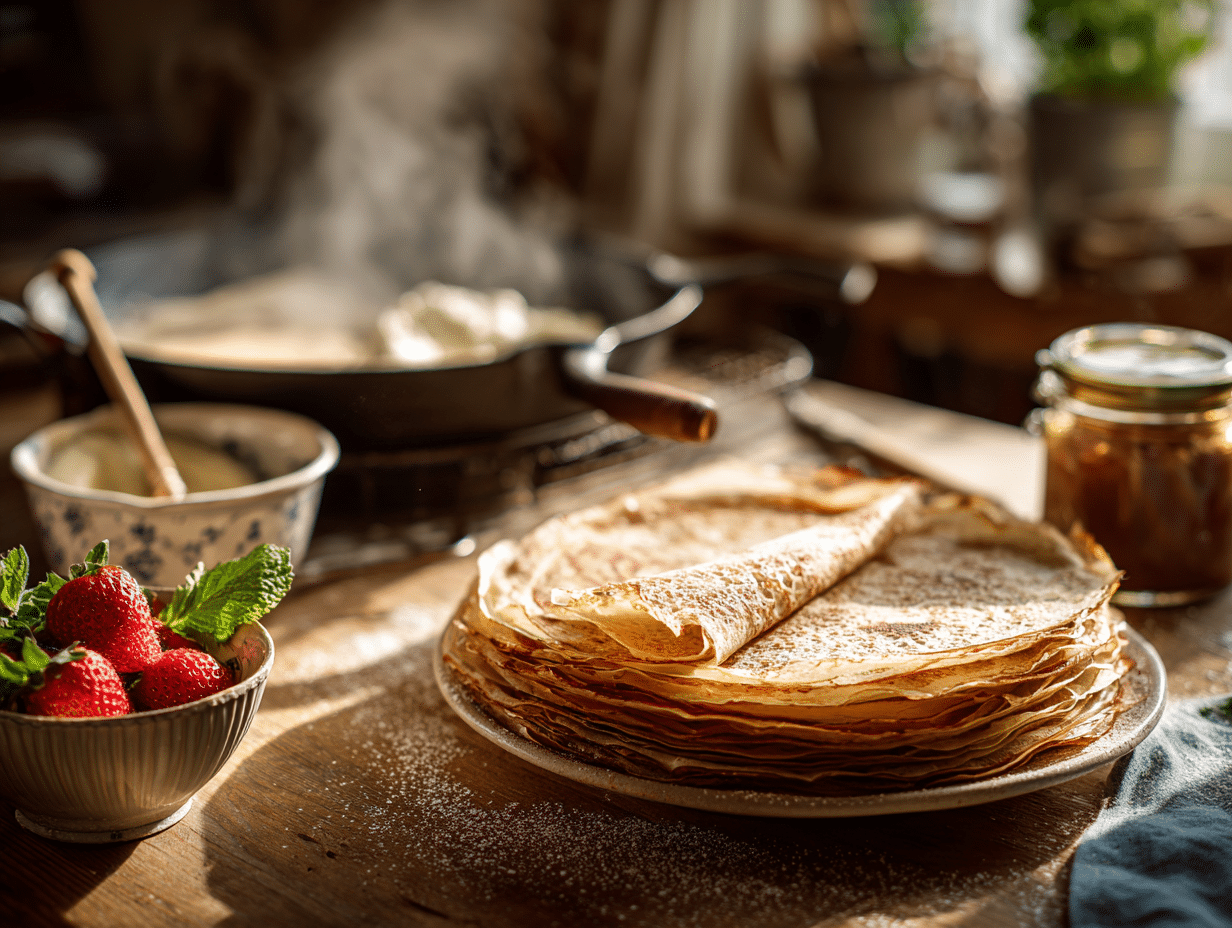
This is a straightforward French crêpe recipe — just flour, eggs, milk, and butter — that comes together in about 45 minutes and makes enough for a family breakfast with leftovers to spare. The batter takes five minutes to mix, and the rest of the work is just cooking them off one at a time. If you need something that works for both the kid who wants Nutella and the adult who wants ham and cheese, this is it.
Why this recipe works
Two things actually matter here. First, resting the batter for at least 30 minutes lets the flour fully hydrate and the gluten relax — skip this and the crêpes tear when you try to flip them. Second, the pan temperature has to be consistent: medium heat around 350°F. Too hot and the edges burn before the center sets; too cool and the crêpe steams instead of getting those lightly golden spots. Get those two things right and the rest is just practice with the swirl.
Ingredient notes
- Whole milk: The fat content helps with tenderness and color. Lower-fat milks work but produce a slightly paler, more fragile crêpe. Oat milk is the best non-dairy substitute here — it behaves closer to whole milk than almond milk does.
- Sugar and vanilla: These are only in the recipe for sweet crêpes. If you’re going savory — think cheese, ham, or scrambled eggs — leave both out entirely. One batch, two directions.
- Melted butter in the batter: This is what keeps the crêpes from sticking even in a well-seasoned pan. Don’t swap it for oil; the flavor difference is noticeable.
Mistakes to avoid
- Pouring batter into a cold pan: The first crêpe almost always sticks or comes out uneven — that’s normal. Think of it as a test crêpe to calibrate your heat. Eat it in the kitchen and move on.
- Using too much batter per crêpe: A quarter cup is the right amount for a standard 10-inch skillet. More than that and you get a thick pancake, not a crêpe. Tilt and swirl immediately after pouring — before the batter sets.
- Flipping too early: Wait until the edges look dry and start to pull away from the pan. If you try to slide a spatula under it before that point, it will tear. Patience here pays off.
- Skipping the parchment between stacked crêpes: Warm crêpes stick together fast. Stack them with parchment or wax paper between each one, especially if kids are going to be pulling them apart themselves. Skip the garnish on the serving plate — not worth the extra dish.
- Making the batter too thick: If it looks like pancake batter, it’s too thick. It should pour like heavy cream and coat the back of a spoon lightly. Add a splash more milk and whisk again.
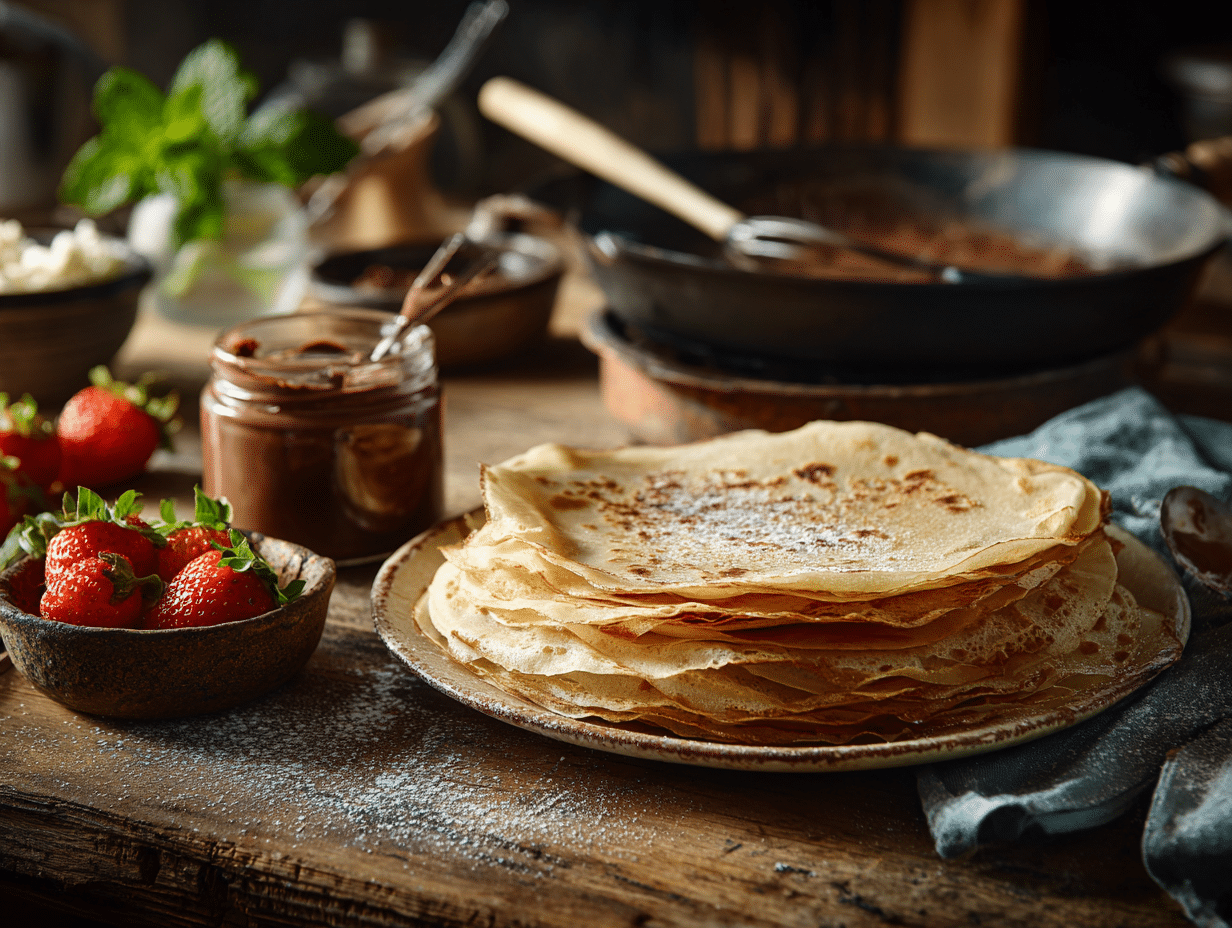
Classic French Crêpes

Equipment
- Non-stick skillet or crêpe pan
- Whisk or hand blender
- Mixing bowl
- Ladle or measuring cup
- Spatula
Ingredients
- 1 cup all-purpose flour sifted for smooth texture
- 2 large eggs preferably organic
- 1 ½ cups whole milk room temperature
- 2 tablespoons unsalted butter melted and slightly cooled
- 1 tablespoon granulated sugar omit for savory crêpes
- ¼ teaspoon salt fine sea salt preferred
- ½ teaspoon vanilla extract optional, for sweet crêpes
Instructions
- In a large mixing bowl, whisk together the flour and salt. Create a well in the center and crack in the eggs.
- Slowly drizzle in the milk, whisking continuously to form a smooth batter with no lumps. Whisk in the melted butter, sugar, and vanilla extract if using.
- Let the batter rest for at least 30 minutes at room temperature—or refrigerate for up to 24 hours—to relax the gluten and ensure tender crêpes.
- Heat a non-stick skillet or crêpe pan over medium heat (about 350°F / 175°C). Lightly butter the surface and pour in 1/4 cup of batter, swirling the pan to form a thin, even layer.
- Cook for 1–2 minutes until the edges begin to lift and the underside is golden. Flip gently with a spatula and cook for 30–45 seconds more.
- Transfer the crêpe to a plate and repeat with the remaining batter, stacking crêpes with parchment or wax paper between layers to prevent sticking.
Notes
- For gluten-free crêpes, substitute the flour for a 1:1 gluten-free blend.
- You may use alternative milks like oat or almond for a dairy-free version, though texture may vary slightly.
- Cooked crêpes can be frozen for up to 2 months; reheat in a non-stick pan or microwave.
Nutrition
Frequently asked questions
Can I make the batter the night before?
Yes — and it actually works better. Refrigerate it covered for up to 24 hours, then give it a good whisk before cooking since the flour settles. This makes weekend mornings much easier.
My crêpes keep tearing when I flip them. What am I doing wrong?
Most likely the batter didn’t rest long enough, or the crêpe isn’t ready to flip yet. Wait until the edges are visibly dry and lifting before you touch it — usually around 90 seconds on the first side.
Do I need a special crêpe pan?
No. A regular 10-inch non-stick skillet works fine. A dedicated crêpe pan has lower sides which makes flipping slightly easier, but it’s not necessary for good results.
Can kids help make these?
Yes, with supervision. Mixing and pouring the batter are easy tasks for older kids. The swirling motion takes a little coordination, so that’s a good one to hand off once they’ve watched a couple.
What fillings work well for kids who are picky about textures?
Simple is best — a thin spread of peanut butter, jam, or Nutella with the crêpe rolled into a tube tends to go over well. Sliced banana inside is another easy win that adds something without being overwhelming.
How do I reheat crêpes without drying them out?
A dry non-stick pan over low heat for about 30 seconds per side keeps them soft. The microwave works too — stack two or three with a damp paper towel over the top and heat in 20-second bursts.
What to cook next
- Fluffy homemade pancakes for weekend mornings
- French chocolate mousse
- Golden buttermilk waffles
- Zesty French lemon cake