



























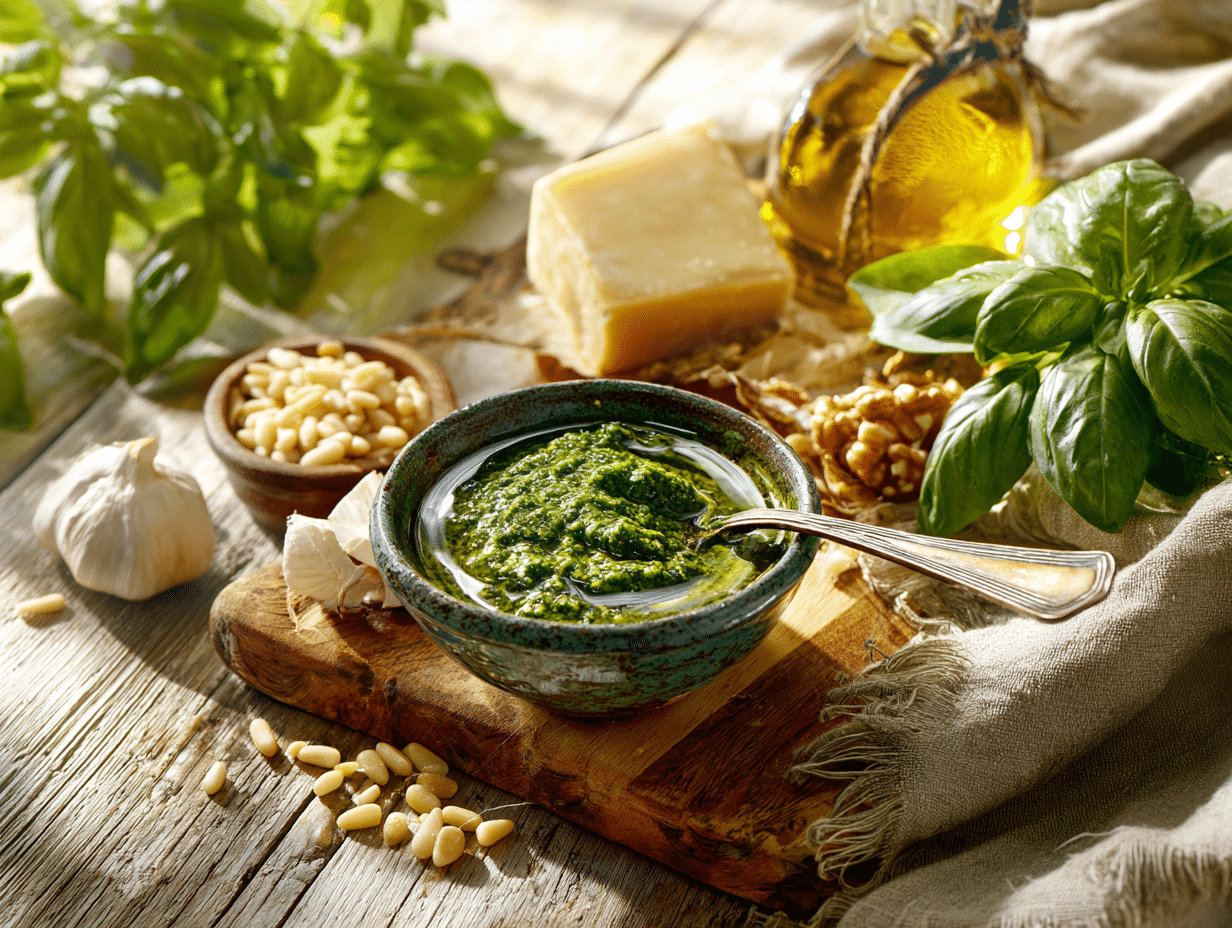
This is a straightforward basil pesto made in a food processor — six ingredients, 15 minutes, no cooking required. It costs less than a jar from the store, tastes noticeably fresher, and once you’ve made it once you’ll stop buying the jarred version for good.
Substitutions that actually work
- Pine nuts: The most expensive ingredient here. Toasted sunflower seeds or pumpkin seeds are the best budget swap — the flavor is slightly earthier but the texture holds up well. Walnuts also work, though they add a faint bitterness.
- Parmigiano-Reggiano: Pecorino Romano is the most common substitute and gives a sharper, saltier result — use a little less and taste as you go. For a vegan version, nutritional yeast works; start with 3 tablespoons and adjust from there.
- Genovese basil vs. standard supermarket basil: Regular sweet basil is fine. If your basil has large, dark leaves it may taste slightly more peppery, but it won’t ruin the pesto.
Before you start
The two things that actually affect the outcome are temperature and speed. Basil bruises and oxidizes fast — if the food processor blade heats up from running too long, the basil turns dark and tastes slightly bitter. That’s why the recipe has you pulse in short bursts rather than just running the machine. If your kitchen is warm, you can put the food processor bowl in the freezer for five minutes before you start. Also, toast the pine nuts first and let them cool completely before they go in. Hot nuts will steam the basil and you’ll get the same browning problem. Skip the garnish of extra pine nuts on top — not worth the extra dish.
If something goes sideways
- Pesto turned dark brown or grey: This is oxidation, not spoilage. It happens when basil is over-processed or exposed to air during storage. The flavor is usually still fine. Next time, pulse less and make sure the oil layer on top during storage covers the surface completely.
- Sauce is too thick and paste-like: Add olive oil one teaspoon at a time and pulse briefly until it loosens. This is easy to fix.
- Pesto tastes flat or bland: Almost always a salt issue. Add a small pinch, stir, and taste again before adding more. The Parmigiano-Reggiano adds salt too, so taste after you add the cheese before seasoning.
- Garlic flavor is overwhelming: Two cloves is already on the mild side, but garlic strength varies a lot. If yours tastes sharp, start with one clove next time. You can’t fix too much garlic once it’s blended in, so err cautious on the first batch.
- Pesto is watery or separated: This usually means the oil was added too fast. Give it a stir — it often comes back together. If not, add a small handful of extra Parmigiano-Reggiano and pulse once or twice to help it bind.
Keeping and reheating
Pesto keeps in the fridge for up to 5 days in an airtight container. Press a piece of plastic wrap directly onto the surface, or pour a thin layer of olive oil over the top — either method slows browning. For longer storage, freeze it in an ice cube tray, then transfer the frozen cubes to a zip-lock bag; they keep for up to 3 months and you can thaw exactly as much as you need. Pesto is an uncooked sauce, so there’s no reheating involved — just let it come to room temperature before tossing with hot pasta, or stir it in off the heat so the basil doesn’t cook.
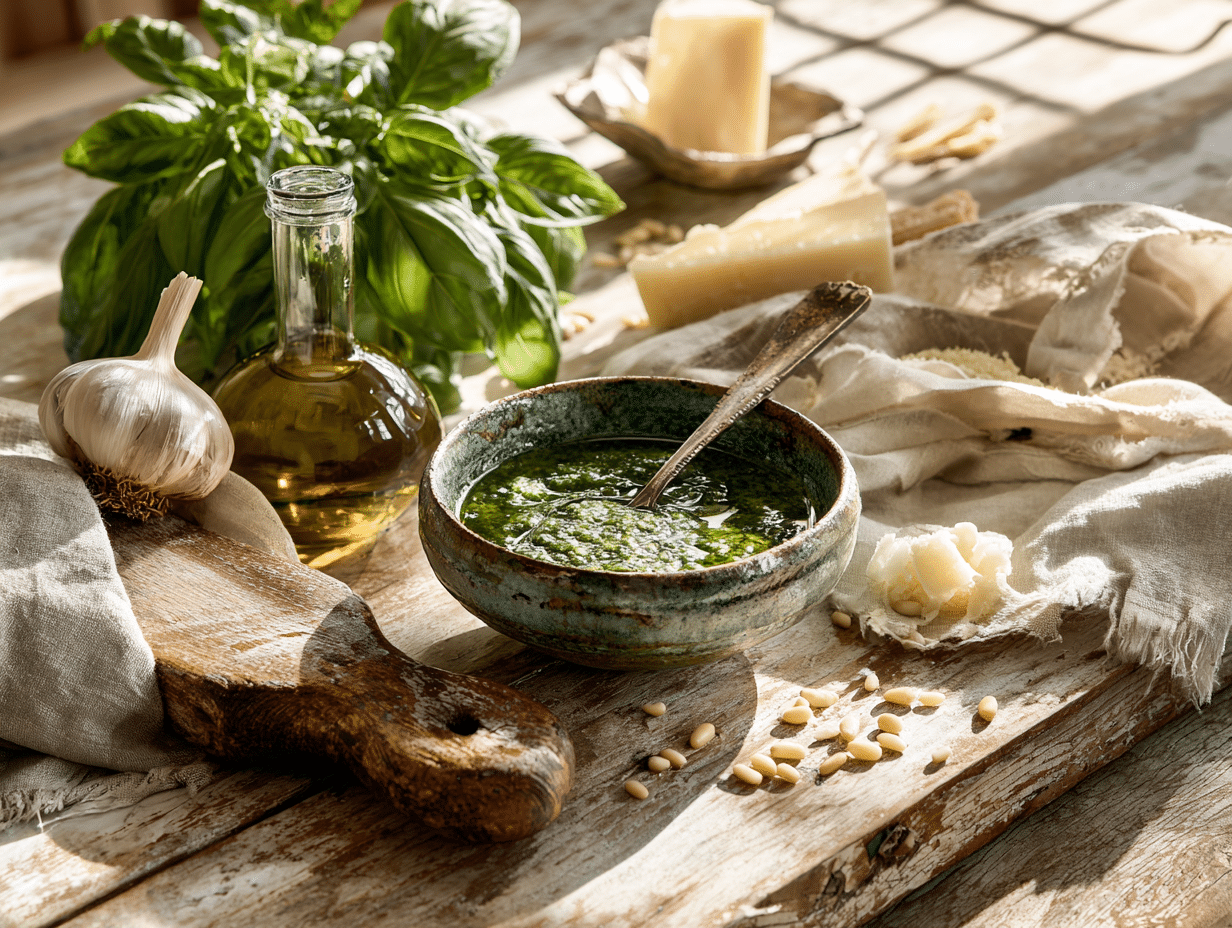
Classic Basil Pesto

Equipment
- Food processor
- Rubber spatula
- Measuring spoons
- Measuring cups
- Microplane or cheese grater
Ingredients
- 2 cups fresh basil leaves, packed preferably Genovese basil for best flavor
- ½ cup extra virgin olive oil high-quality, fruity variety preferred
- ⅓ cup pine nuts, lightly toasted toast on a dry skillet for 3-5 minutes until golden and fragrant
- 2 cloves garlic small, fresh cloves, peeled
- ½ cup Parmigiano-Reggiano, finely grated use a microplane for the finest texture
- ¼ tsp sea salt adjust to taste
- ⅛ tsp freshly ground black pepper optional, to enhance aroma
Instructions
- Start by toasting the pine nuts in a dry skillet over medium heat for 3–5 minutes, stirring frequently. They should be golden brown and release a nutty aroma. Remove from heat and let cool.
- In a food processor, combine the cooled pine nuts, garlic, and a pinch of sea salt. Pulse 3–4 times until coarsely chopped.
- Add the fresh basil leaves to the processor. Pulse 5–7 times until the basil is broken down but not pureed.
- With the processor running, slowly drizzle in the extra virgin olive oil in a steady stream until a smooth yet slightly coarse sauce forms. Scrape down the sides with a rubber spatula as needed.
- Add the grated Parmigiano-Reggiano and pulse 2–3 times just to incorporate. Taste, then season with additional salt and freshly ground black pepper, if desired.
- Transfer the pesto to a bowl or airtight container. Place a thin layer of olive oil on top to prevent oxidation if storing. Use immediately or store in the fridge for up to 5 days, or freeze for up to 3 months.
Notes
- For a nut-free version, substitute toasted sunflower seeds or pumpkin seeds.
- If using a blender instead of a food processor, pulse in short bursts to avoid overheating the basil.
- For a vegan version, substitute nutritional yeast for the Parmigiano-Reggiano, though flavor and texture will differ subtly.
Nutrition
Frequently asked questions
Can I use a blender instead of a food processor?
Yes, but use it carefully. Pulse in very short bursts and stop frequently to scrape down the sides — blenders generate more heat than food processors and can turn the basil dark if you run them continuously.
Do I really need to toast the pine nuts, or can I skip it?
You can skip it, but toasting makes a real difference. Raw pine nuts taste mild and slightly waxy; a few minutes in a dry skillet brings out a nuttier, richer flavor that carries through the finished sauce.
My basil is starting to wilt — is it still okay to use?
Slightly wilted basil is fine as long as it isn’t slimy or discolored. Submerge the stems in a glass of cold water for 20–30 minutes before using and the leaves will perk back up.
How do I keep the pesto from turning brown before I serve it?
Toss it with pasta or spread it on food right before serving. If it’s sitting out in a bowl, press plastic wrap directly onto the surface of the pesto — contact with air is what causes the color change.
Can I make this without a food processor or blender?
Yes — a mortar and pestle works, and it’s actually the traditional method. Start by grinding the garlic and salt into a paste, then work in the pine nuts, then the basil in small batches, and finally stir in the oil and cheese by hand. It takes about 10 extra minutes and gives a slightly chunkier, more textured result.
More recipes to try
- Authentic Roman Carbonara
- Creamy Fettuccine Alfredo
- Rustic Sourdough Focaccia with Rosemary and Sea Salt
- The Perfect Aperol Spritz







I’m in the process of making a pesto sauce, and find all of your tips extremely helpful! Thank you!
Great Flavor, I’d probably do 2 small cloves of garlic as the ones I used made it a little disproportionate. Toasting the pine nuts is also good idea. But overall easy to follow and great outcome.
Such a great a simple recipe. We like garlic so I used four cloves of garlic. I also used roasted sunflower seeds as they were available. Soooo delicious! Can’t wait to try with pine nuts.