





































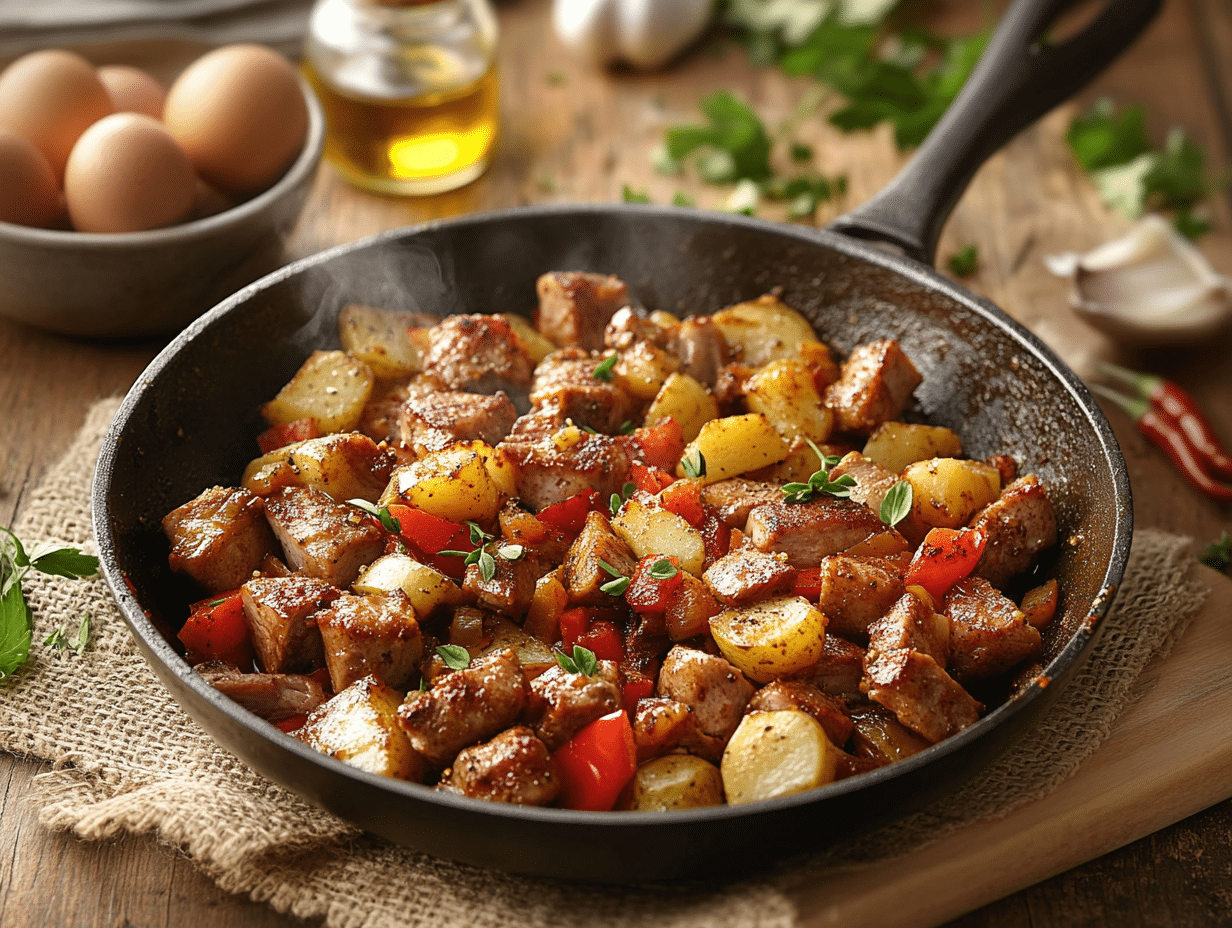
This pork hash is a one-pan meal built from pork shoulder, Yukon Gold potatoes, and a short list of pantry spices. It takes about an hour start to finish and works just as well for dinner as it does for breakfast. If you want something filling that doesn’t require much cleanup, this is a solid choice.
Why this recipe works
Two things make this hash actually good rather than just edible. First, searing the pork shoulder in a hot, lightly oiled skillet before anything else builds a layer of browned, savory flavor on the bottom of the pan — that fond is what seasons everything that follows. If you skip the sear or crowd the pan, you get gray, steamed pork instead. Second, the potatoes go in late, after the aromatics and spices are already cooked. This keeps them from turning to mush during the 25–30 minute simmer, and it means they absorb the seasoned liquid rather than just sitting in water.
If something goes sideways
- The pork is tough after 30 minutes: Pork shoulder needs time to break down. If it’s still chewy, put the lid back on and give it another 10–15 minutes on low heat. Don’t rush it by turning up the flame — that just dries it out.
- The potatoes are sticking to the bottom: There’s probably not enough liquid in the pan. Add 2–3 tablespoons of water, scrape the bottom, and re-cover. This also loosens any stuck fond back into the dish.
- Everything tastes flat: Taste before serving and add salt in small increments. Pork shoulder and potatoes both need more salt than you’d expect. A small splash of apple cider vinegar can also wake the whole dish up if it tastes dull.
- The hash is watery: Uncover the skillet and turn the heat up to medium for a few minutes to cook off the excess liquid. Stir frequently so the potatoes don’t stick.
- The garlic burned: Garlic goes in for only one minute before the pork and potatoes return to the pan. If it burns, it will taste bitter throughout the dish. Start over with fresh garlic if this happens — it’s worth it.
About the ingredients
- Pork shoulder: This cut is sold under a few names — Boston butt, pork butt, or blade shoulder. Any of them work here. Avoid pork loin; it’s too lean and will dry out during the long simmer.
- Yukon Gold potatoes: These hold their shape better than russets when simmered, which is why they’re called for. Russets will work in a pinch but tend to fall apart. Skip the garnish — not worth the extra dish.
- Smoked paprika: Regular paprika won’t give you the same result. Smoked paprika is what adds the low, savory background note. It’s widely available and inexpensive; keep a jar around.
Keeping and reheating
Leftovers keep well in a sealed container in the fridge for up to 4 days. To reheat, add a tablespoon of water to a skillet over medium heat, add the hash, and stir occasionally until hot all the way through — about 5–7 minutes. The microwave works too, but the potatoes come out softer. For longer storage, freeze in a single-layer portion in a zip bag for up to 2 months; thaw overnight in the fridge before reheating on the stove.
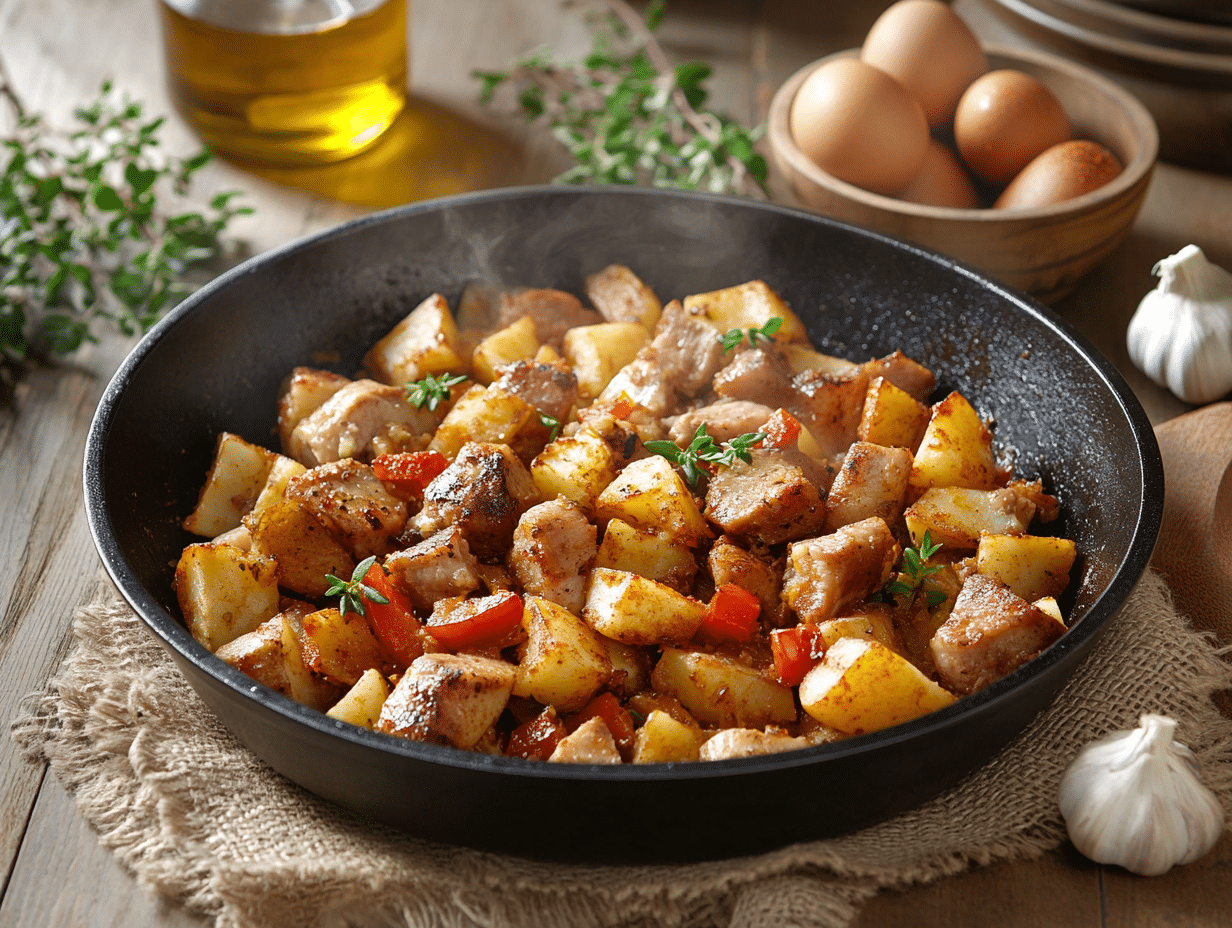
Gourmet Pork Hash

Ingredients
- 1.5 pounds pork shoulder cut into 1-inch cubes
- 2 cups Yukon Gold potatoes diced
- 1 cup yellow onion finely chopped
- 1 cup red bell pepper finely chopped
- 2 cloves garlic minced
- 2 tablespoons olive oil extra virgin
- 1 teaspoon smoked paprika
- 1 teaspoon cumin
- 1 teaspoon salt or to taste
- 0.5 teaspoon black pepper freshly ground
Instructions
- Heat 1 tablespoon of olive oil in a large skillet over medium-high heat. Add the pork shoulder and sear on all sides until golden brown, about 5-7 minutes. Remove and set aside.
- In the same skillet, add remaining olive oil. Sauté the onions and red bell pepper until soft and fragrant, approximately 5 minutes.
- Add the garlic, smoked paprika, and cumin, stirring for an additional minute to release their aromas.
- Return the pork to the skillet, add the potatoes, salt, and pepper. Stir well to combine.
- Cover the skillet and lower the heat to maintain a gentle simmer. Cook, stirring occasionally, until the potatoes are tender and the pork is cooked through, about 25-30 minutes.
Notes
Nutrition
FAQ
Can I use leftover cooked pork instead of raw pork shoulder?
Yes, leftover cooked pork works well here. Add it when you return the pork to the pan with the potatoes, but reduce the simmer time to about 15 minutes since it just needs to heat through and won’t require the same time to cook.
How do I know when the pork is actually cooked through?
The safest check is a meat thermometer — pork is safe at an internal temperature of 145°F. If you don’t have one, cut a larger cube in half after 25 minutes; the inside should be opaque with no pink remaining.
Do I need a specific type of skillet for this?
A large, heavy skillet — cast iron or stainless steel — gives you the best sear on the pork and holds heat evenly during the simmer. A nonstick pan will work but won’t develop as much fond on the bottom, so the overall flavor will be a little lighter.