






























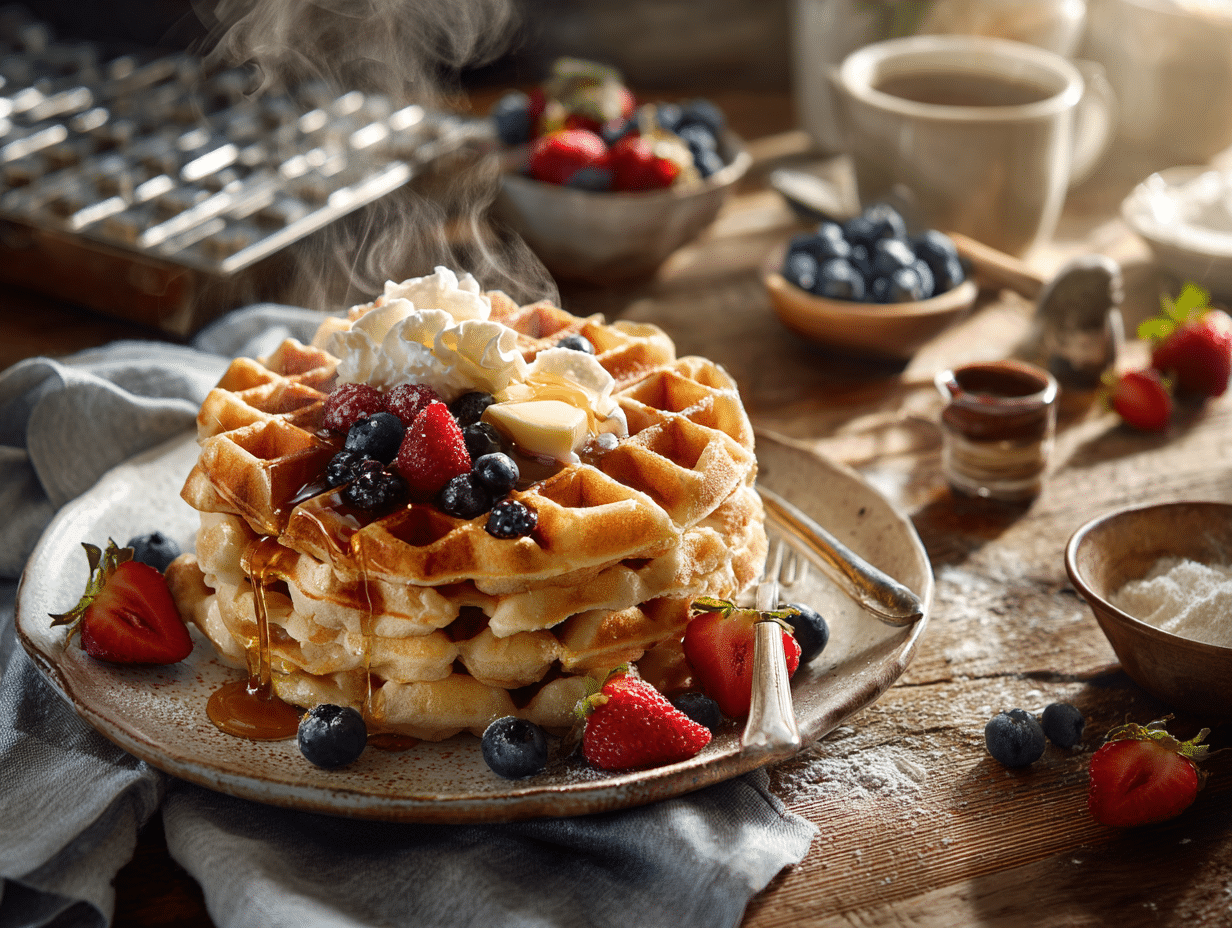
These buttermilk waffles come out crispy on the outside and tender in the middle — and the batter takes about 15 minutes to pull together from pantry staples. The recipe makes four waffles, but it doubles cleanly, which means you can stock the freezer and have a real breakfast ready on a Tuesday morning without any extra effort.
What makes this version work
Two things actually matter here. First, the combination of baking powder and baking soda: the baking soda reacts with the buttermilk’s acidity right away, giving you lift and a slightly open crumb, while the baking powder keeps working through the heat of the iron. Use both and don’t skip either. Second, undermixing is correct — a lumpy batter is not a mistake. Overworking the flour develops gluten, which tightens the batter and produces a chewy, dense waffle instead of a light one. Stir just until the dry streaks disappear, then stop.
About the ingredients
- Buttermilk: Room temperature buttermilk blends into the batter more evenly than cold. If yours is straight from the fridge, set it out for 20 minutes or warm it briefly in the microwave — 15 seconds is enough.
- Baking powder: Old baking powder is the most common reason waffles come out flat. Drop a teaspoon into hot water; if it doesn’t bubble actively, buy a new can.
- Unsalted butter: Melted and slightly cooled means warm to the touch, not hot. Pouring hot butter into eggs scrambles them.
- Vanilla extract: Pure extract is worth it here. Imitation vanilla turns slightly bitter at waffle-iron temperatures.
If something goes sideways
- Waffle sticks to the iron: This usually means the iron wasn’t hot enough before you poured the batter, or you opened it too early. Wait for steam to stop escaping from the sides before you check — that’s the reliable signal that the waffle is ready to release.
- Waffles are pale and soft, not golden: Your iron may run cool. Let it preheat an extra two minutes and add a small pat of butter to the plates rather than just nonstick spray — butter browns faster and adds color.
- Batter is too thick to spread: Buttermilk varies in thickness by brand. If the batter barely moves when you pour it, whisk in one to two tablespoons of regular milk to loosen it slightly.
- Waffles taste flat or slightly soapy: Too much baking soda relative to the acid in the batter causes a soapy aftertaste. Measure baking soda level, not heaped — skip the garnish of powdered sugar if this happens, it won’t fix the flavor and it’s not worth the extra dish.
- Reheated waffles turn out soggy: A toaster works better than a microwave every time. The microwave steams them from the inside; the toaster crisps the surface back up the same way the iron did.
Make-ahead notes
Cooked waffles keep in the fridge for up to 3 days — layer them between sheets of parchment in an airtight container so they don’t stick together. For longer storage, freeze them in a single layer on a baking sheet first, then transfer to a zip bag once solid; they’ll keep well for up to 2 months. Reheat straight from frozen in a toaster on a medium setting, or in a 350°F oven on a wire rack for about 8 minutes. The wire rack matters — setting them flat on a baking sheet traps moisture underneath and softens the bottom. If you’re planning to batch cook, make a full double batch on the weekend and freeze the extras in portions of two; it takes almost no extra time and weekday mornings get a lot easier.
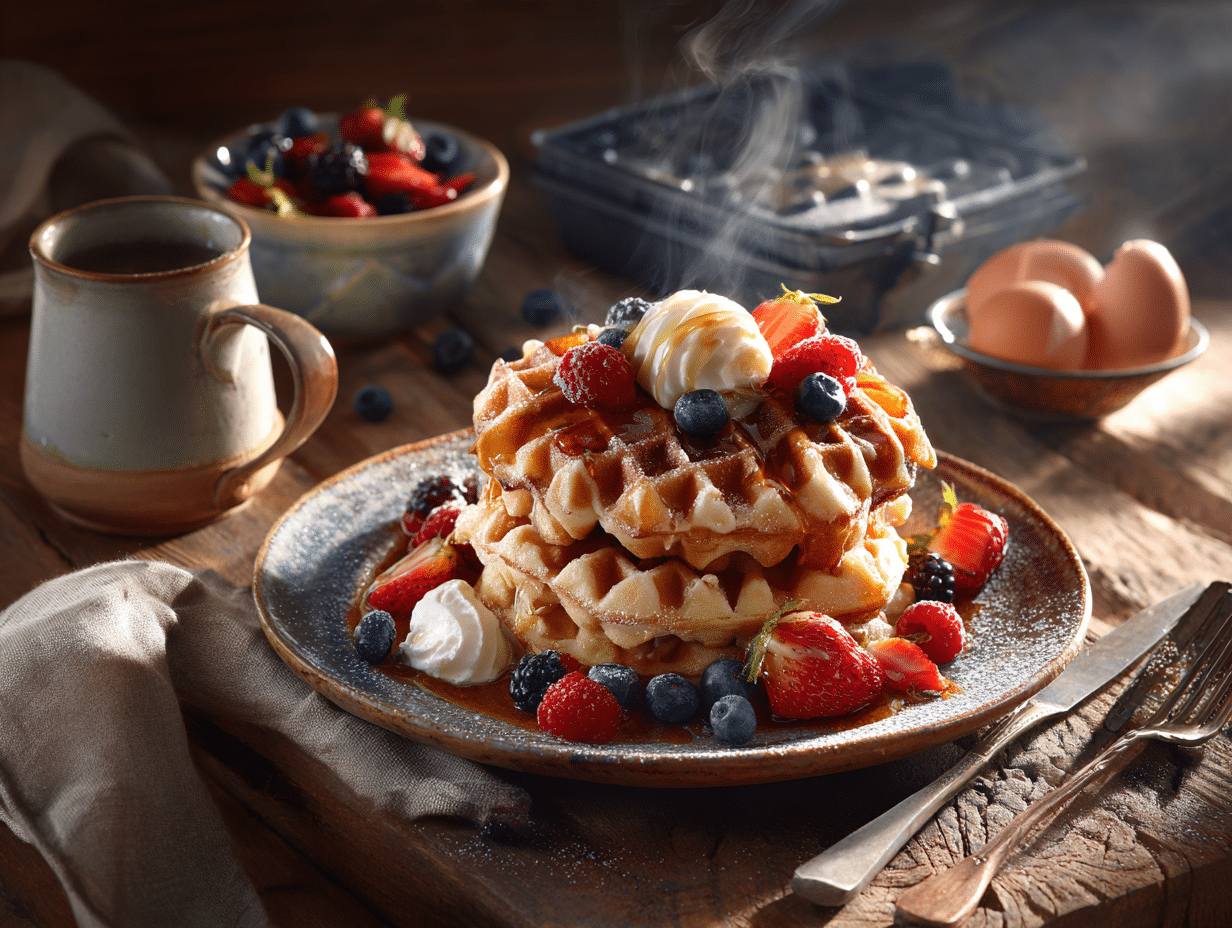
Classic Buttermilk Waffles

Equipment
- Waffle iron
- Mixing bowl
- Whisk
- Measuring cups and spoons
- Ladle or measuring cup for pouring batter
Ingredients
For the Waffle Batter:
- 2 cups all-purpose flour sifted for a lighter texture
- 2 tablespoons granulated sugar
- 1 tablespoon baking powder ensure it’s fresh for best rise
- 0.5 teaspoon baking soda
- 0.5 teaspoon salt preferably kosher salt
- 2 cups buttermilk room temperature for better mixing
- 2 large eggs room temperature
- ⅓ cup unsalted butter melted and slightly cooled
- 1 teaspoon pure vanilla extract
To Finish:
- 2 cups fresh berries for serving
- ½ cup maple syrup for serving
- 2 cups whipped cream for serving
Instructions
- Preheat your waffle iron according to the manufacturer’s instructions.
- In a large mixing bowl, whisk together the flour, sugar, baking powder, baking soda, and salt.
- In a separate bowl, beat the eggs lightly. Add in the buttermilk, vanilla extract, and melted butter. Mix until smooth and well-combined.
- Pour the wet ingredients into the dry ingredients. Use a spatula or whisk to gently mix until just combined. Do not overmix—the batter should remain slightly lumpy for the fluffiest waffles.
- Once the waffle iron is hot, lightly grease it with nonstick spray or a light brush of melted butter.
- Ladle or pour approximately 1/2 to 3/4 cup of batter into the center of the waffle iron, depending on its size. Close and cook until golden brown and crisp, about 4–5 minutes per waffle.
- Carefully remove the waffle and keep warm in a 200°F (93°C) oven while you prepare the remaining waffles.
Notes
- For crispier waffles, add 1 tablespoon of cornstarch to the dry ingredients.
- If you don't have buttermilk, use 2 cups of milk with 2 tablespoons of white vinegar or lemon juice, let sit for 5–10 minutes.
- Don’t stack hot waffles—they steam and become soggy. Instead, keep them warm on a wire rack in the oven.
Nutrition
Your questions, answered
Can I make the batter the night before?
It’s better to mix it fresh. Once the baking powder and baking soda hit the buttermilk, they start working immediately — batter that sits overnight loses most of its leavening power and produces flat, dense waffles. You can measure and mix all the dry ingredients the night before and store them covered, then add the wet ingredients in the morning.
Why does my waffle iron smoke when I grease it?
Butter burns at waffle-iron temperatures if you apply too much. Use a very light brush of melted butter or a quick spray of nonstick cooking spray — just enough to coat the plates, not pool in the grooves. If smoking continues, your iron may be running hotter than its setting suggests; try a slightly lower heat.
How do I know how much batter to pour in?
Start with half a cup and check whether it fills the plates to about three-quarters full when you close the lid. Every waffle iron is a different size, so the first waffle is essentially a test — adjust up or down from there. Overfilling causes batter to overflow the sides and underfilling gives you thin, uneven waffles.
Can I use whole wheat flour instead of all-purpose?
You can swap up to half the all-purpose flour for whole wheat without changing the texture too much. Replacing all of it produces a noticeably denser, earthier waffle — not bad, but a different result. If you go full whole wheat, add an extra tablespoon of buttermilk to compensate for the extra absorption.
Can this recipe be made dairy-free?
Yes. Use full-fat oat milk or soy milk with a tablespoon of apple cider vinegar stirred in and left to sit for five minutes as your buttermilk substitute. Replace the butter with melted refined coconut oil or a neutral vegetable oil. The waffles will be slightly less rich but still crisp up well.
My waffles are crispy right off the iron but go soft by the time I serve them — what’s happening?
Steam is the problem. Hot waffles release moisture as they cool, and if they’re sitting on a plate or stacked, that steam has nowhere to go and softens the crust. Place finished waffles directly on a wire rack in a 200°F oven — the airflow underneath keeps them crisp until everyone is ready to eat.
If you liked this one
- Fluffy buttermilk pancakes
- Homemade pancake mix
- Classic diner-style pancakes
- Slow-cooked spiced apple butter