


















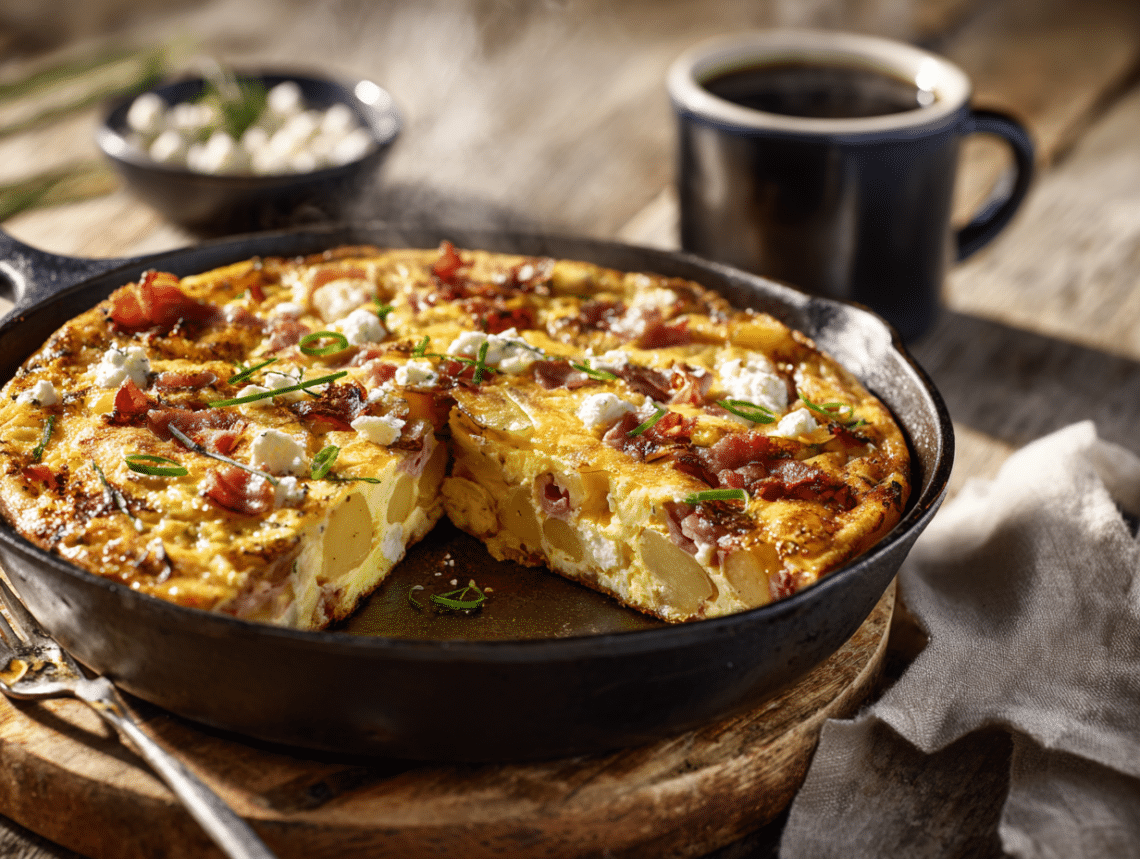
This frittata uses roasted potato rounds as its base, layered with thick-cut bacon, crumbled feta, and green onions, then finished with a simple egg custard baked in one cast iron skillet. Total time is just over an hour, and most of that is hands-off oven time. It feeds four people a genuinely filling breakfast with very little to wash up afterward.
The short version of why this works
Two things make this frittata worth the hour. First, the potatoes go into the oven before anything else — roasting them at 400°F drives off moisture and crisps their edges, so the base holds its shape when you cut wedges instead of turning soft and waterlogged under the eggs. Second, the frittata bakes covered for the first 30 minutes, then uncovered for 15 more. The foil traps steam and sets the egg custard all the way through without overcooking the top; removing it at the end gives you the golden surface without a rubbery center. Neither step is complicated, but skipping either one changes the result noticeably.
Substitutions that actually work
- Feta: Goat cheese crumbles work well and melt slightly more into the eggs. Avoid shredded mozzarella — it releases too much water and makes the frittata wet.
- Bacon: Diced pancetta or chopped cooked sausage are solid swaps. Turkey bacon works but produces less rendered fat, so the overall flavor is milder.
- Milk: Any dairy milk works. A splash of heavy cream makes the custard richer; plain water makes it slightly firmer. Skip non-dairy milks with added sweetener — they clash with the salty filling.
- Green onions: Thinly sliced chives or a small shallot (finely diced) are fine replacements. Skip the garnish of extra raw onion on top — not worth the extra dish.
Storage and reheating
Leftover frittata keeps well in the fridge for up to 4 days — wrap the skillet tightly with plastic wrap or transfer wedges to an airtight container. To reheat, a dry skillet over medium-low heat for 3 to 4 minutes per side brings the potatoes back to life better than a microwave, which tends to make the eggs rubbery. If you’re in a hurry, the microwave works fine at 50% power in 60-second intervals. Freezing is possible — wrap individual wedges in plastic and freeze for up to 2 months — but the potato texture softens after thawing, so the fridge is the better option if you’re planning ahead for the week.
Mistakes to avoid
- Slicing the potatoes too thick: Rounds thicker than ⅛ inch stay dense and starchy even after roasting. Use a mandoline if you have one, or take your time with a sharp knife and aim for consistent thickness so they cook evenly.
- Pouring the egg mixture in too fast: Dumping the eggs in all at once can shift the toppings and pool unevenly. Pour slowly in a circular motion from the outside in so the custard settles between the layers rather than sitting on top.
- Skipping the 5-minute rest: Cutting into the frittata straight from the oven causes the egg custard to run. Five minutes of resting lets it firm up enough to slice clean wedges.
- Using a skillet smaller than 10 inches: A smaller pan means the egg layer is too deep and the center won’t set properly in the given bake time. Stick to a 10-inch cast iron for the timing in this recipe.
- Not drying the bacon before adding it: Wet bacon sitting on paper towel for only a few seconds still carries a lot of grease. Pat it firmly dry before scattering it over the potatoes — excess grease pools under the eggs and makes the bottom layer soggy.
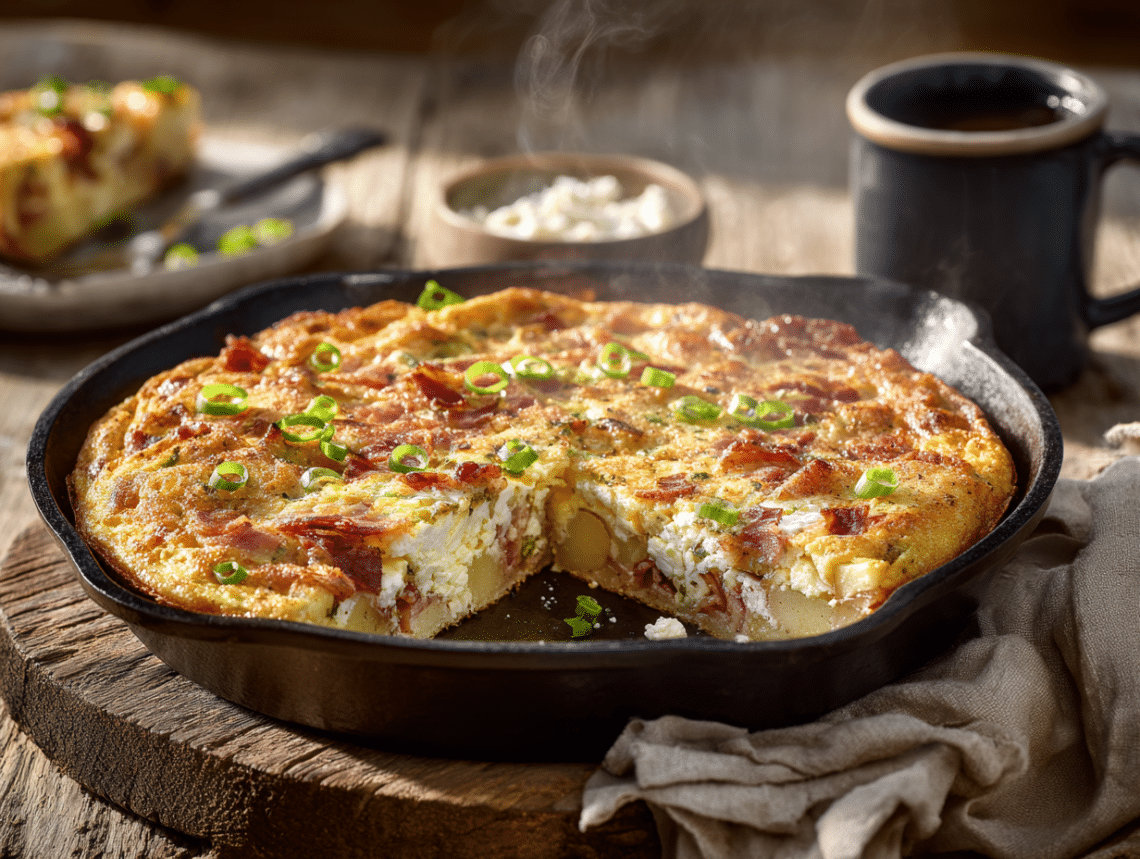
Potato Bacon Feta Frittata – Easy Weekend Breakfast

Ingredients
- 6 pieces bacon thick-cut
- 2 tablespoons olive oil
- 6 small potatoes sliced into thin rounds (⅛-inch / 3mm thick), about 1.5 lbs total
- 1 pinch salt
- 1 pinch pepper freshly ground
- 3 stalks green onions chopped
- ¼ cup feta crumbled
- 6 medium eggs
- 2 tablespoons milk
- 1 tablespoon butter optional, for frying potatoes
Instructions
- Cook the bacon using your preferred method: fry in a skillet over medium heat for 4-5 minutes per side, bake on a sheet pan at 400°F / 200°C (180°C fan-forced) for 15-18 minutes, or microwave between paper towels for 4-5 minutes. Cut into 1-inch (2.5cm) chunks and set aside on a paper towel-lined plate.
- Cook the potatoes. If you’re in a rush, fry them in 1 tablespoon (15g) of butter over medium-high heat for 12-15 minutes, flipping halfway, until golden and just tender.
- Put the potato slices into a cast iron skillet and roast in the oven at 400°F / 200°C (180°C fan-forced) for about 30 minutes. Don’t worry if the potatoes don’t cook all the way through; they’ll cook more once the eggs are added!
- To assemble, arrange your cooked potatoes in even layers in a 10-inch (25cm) cast iron skillet. Scatter the green onions, crumbled feta, and bacon chunks evenly over the potato layer. Whisk the eggs and milk together in a medium bowl and season with salt and pepper. Pour the egg mixture slowly and evenly over the filling in the skillet.
- Cover the skillet with aluminium foil and bake covered in a 400°F / 200°C (180°C fan-forced) oven for 30 minutes. Then remove foil and bake for another 15 minutes, until golden and slightly puffed.
- Let the frittata rest in the skillet for 5 minutes, then cut into wedges and serve warm.
Nutrition
Your questions, answered
Can I make this frittata the night before?
You can, and it reheats well. Bake it fully, let it cool, then refrigerate the whole skillet covered. Reheat individual wedges in a skillet over medium-low heat the next morning rather than microwaving if you want the potato base to stay firm.
Do I have to use cast iron, or will another pan work?
Cast iron is strongly recommended because it holds heat evenly and handles 400°F without warping. An oven-safe stainless steel skillet will work in a pinch, but avoid non-stick pans — most are not rated for high oven temperatures and the coating can degrade.
My frittata looks set on top but is still jiggly in the middle — is it done?
A slight jiggle in the very center is fine when you pull it from the oven; carryover heat and the 5-minute rest will finish it. If the whole surface jiggles, give it another 5 minutes uncovered and check again.
Can I use leftover cooked potatoes instead of roasting fresh ones?
Yes — leftover roasted or boiled potatoes work and cut the total time significantly. Slice them into rounds, arrange them in the skillet, and proceed with the assembly step. They won’t get quite as crispy on the edges, but the frittata will still hold together well.
How do I know when to take the foil off?
Remove the foil at the 30-minute mark regardless of how it looks — the covered phase is about cooking the eggs through, not browning. The final 15 minutes uncovered handle the color and any remaining moisture on the surface.
Try these next
- Fluffy Buttermilk Pancakes
- Gourmet Avocado Toast with Poached Egg
- Sparkling Mimosa
- Authentic New York-Style Bagels