

















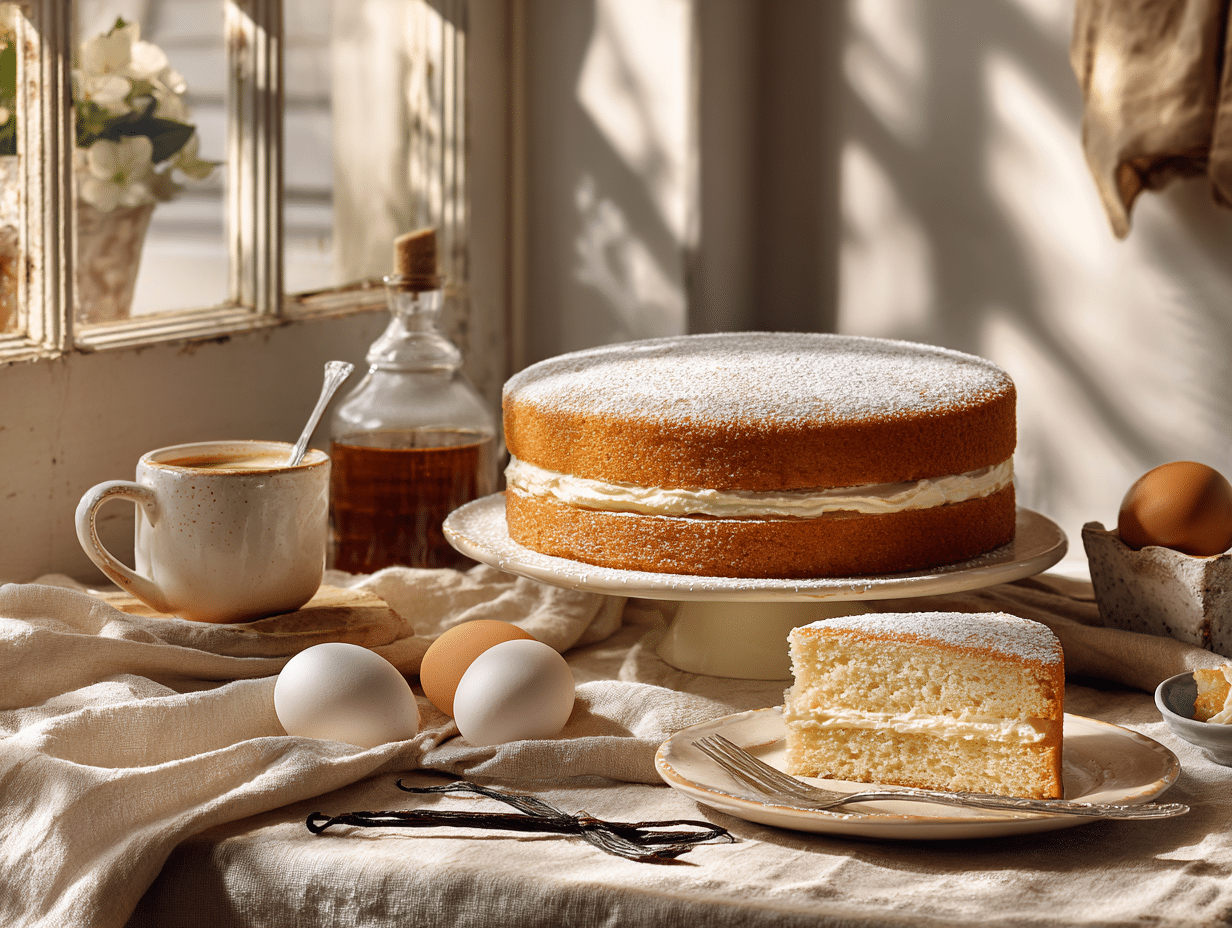
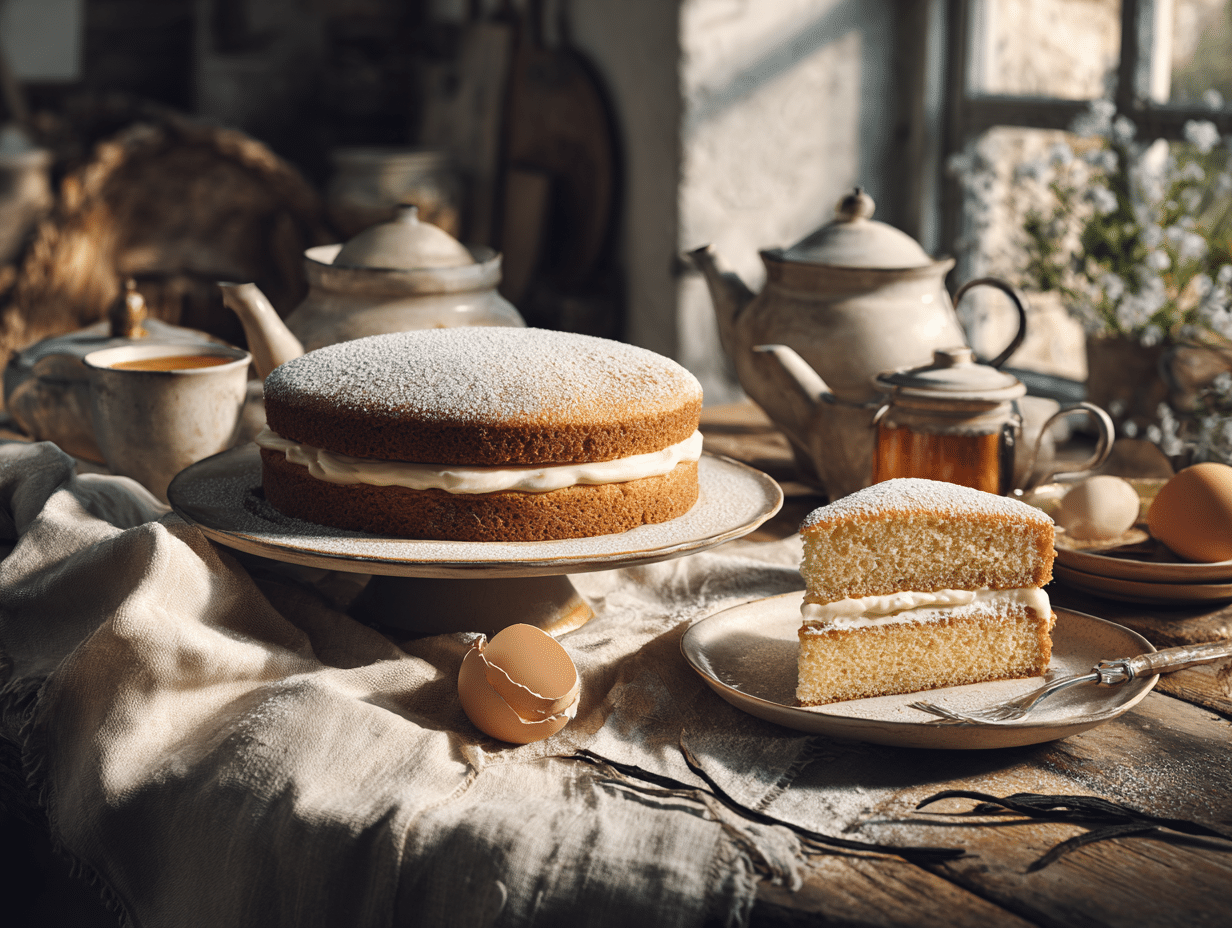
This is a two-layer vanilla cake made with butter, whole milk, and a full tablespoon of vanilla extract — straightforward ingredients that produce a soft, moist crumb and clean vanilla flavor. It bakes in about 35 minutes and works with almost any frosting you like. If you want a reliable cake you can make from scratch without specialty equipment or hard-to-find ingredients, this is a good one to have in your back pocket.
The short version of why this works
Two things matter most here. First, creaming the butter and sugar long enough — a full 3 to 4 minutes on medium-high — builds tiny air pockets into the fat. Those pockets expand in the oven and give the cake its lift and soft texture. Stop too early and the crumb turns dense. Second, alternating the flour and milk in three additions (flour, milk, flour, milk, flour) keeps the batter from getting overworked. Gluten develops fast once liquid hits flour, so adding everything at once and mixing hard makes the cake tough. These two steps are the whole recipe, really — get them right and the rest follows.
Shopping notes
- Vanilla extract: Use pure vanilla extract, not imitation. Madagascar Bourbon vanilla is widely available at most grocery stores and has a warm, slightly sweet flavor that works well here. A 2 oz bottle is enough for this recipe with some left over.
- Whole milk: Don’t swap this for low-fat or skim. The fat in whole milk contributes to the tender texture. If you only have 2%, it will still work, but the crumb will be slightly less rich.
- Unsalted butter: Salted butter will throw off the salt balance since the recipe already calls for a measured amount. Stick with unsalted.
- Room temperature ingredients: This matters more than it sounds. Cold butter won’t cream properly, and cold eggs can cause the batter to look curdled. Set butter and eggs out about an hour before you start.
Keeping and reheating
Unfrosted cake layers can be wrapped tightly in plastic wrap and kept at room temperature for up to 2 days, or refrigerated for up to 5 days — though the fridge dries cake out faster, so wrap well. For longer storage, freeze the wrapped layers for up to 3 months; thaw overnight in the fridge or for a couple of hours on the counter still wrapped. A frosted, assembled cake keeps covered at room temperature for 2 days or in the fridge for up to 4 days. Skip reheating slices in the microwave — even 15 seconds tends to make the crumb rubbery. Room temperature is the right serving temperature for this cake.
What can go wrong
- Cake sinks in the middle: Usually means it came out of the oven too early. The toothpick test is more reliable than the timer — if there’s wet batter on the pick, give it 3 to 5 more minutes. Opening the oven door before the 25-minute mark can also cause sinking, so resist checking early.
- Layers bake unevenly: If one layer is noticeably thicker or browner than the other, your oven likely runs hotter on one side. Rotate the pans 180 degrees halfway through baking to even things out.
- Batter looks curdled after adding eggs: This usually happens when the eggs are cold. The batter will almost always come back together once you add the flour, so keep mixing — don’t panic and don’t add extra flour.
- Cake sticks to the pan: Parchment on the bottom is essential, but also grease the sides of the pan. Running an offset spatula or butter knife around the edge before flipping helps release stubborn spots.
- Flat, dense texture: Most often caused by under-creaming the butter and sugar. The mixture should look noticeably pale and fluffy — almost like whipped cream — before you add the eggs. If it still looks yellow and grainy, keep going. Skip the garnish on top if you’re serving this plain — not worth the extra dish.
Classic Vanilla Cake

Equipment
- Stand mixer or hand mixer
- Two 9-inch round cake pans
- Parchment paper
- cooling rack
- Offset spatula (optional for frosting)
Ingredients
For the Dry Components:
- 2 ½ cups all-purpose flour sifted
- 2 ½ teaspoons baking powder
- ½ teaspoon salt preferably fine sea salt
For the Wet Components:
- 1 cup unsalted butter room temperature
- 1 ¾ cups granulated sugar
- 4 large eggs room temperature
- 1 tablespoon pure vanilla extract Madagascar Bourbon preferred
- 1 cup whole milk room temperature
Instructions
- Preheat your oven to 350°F (175°C). Grease two 9-inch round cake pans and line the bottoms with parchment paper for easy removal.
- In a medium bowl, whisk together flour, baking powder, and salt. Set aside.
- Using a stand mixer fitted with the paddle attachment, cream the butter and granulated sugar on medium-high speed for 3–4 minutes until light and fluffy. The mixture should be pale and airy — this step is critical for great texture.
- Add eggs one at a time, beating well after each addition. Scrape down the bowl as needed to ensure full incorporation. Mix in the vanilla extract.
- Reduce speed to low, and alternately add the flour mixture and milk in three additions, starting and ending with the flour. Mix just until combined — do not overmix, or the cake may become dense.
- Divide the batter evenly between the prepared pans. Tap the pans lightly on the counter to release air bubbles. Bake for 30–35 minutes, or until the tops spring back when lightly touched and a toothpick inserted in the center comes out clean.
- Cool the cakes in the pans for 10 minutes before transferring to a wire rack. Let cool completely before frosting or serving.
Notes
- For added flavor, you can use a scraped vanilla bean pod along with the extract.
- For a dairy-free option, swap the butter for vegan butter sticks and use oat milk.
- To make ahead, the baked layers can be frozen, tightly wrapped, for up to 2 weeks.
Nutrition
Common questions
Can I make this as a single-layer cake or cupcakes instead of two layers?
Yes. For a single layer, use a 9×13-inch pan and start checking for doneness around 30 minutes. For cupcakes, fill liners about two-thirds full and bake at the same temperature for 18 to 22 minutes.
What frosting goes best with this cake?
A simple vanilla buttercream is the most straightforward match and lets the cake flavor come through. Whipped cream works well if you want something lighter, and chocolate ganache or chocolate buttercream is a classic pairing if you want contrast.
My butter is still cold — can I soften it quickly?
Cut it into small cubes and spread them on a plate at room temperature for 20 to 30 minutes. Don’t microwave it — even a few seconds too long melts the edges, and melted butter won’t cream properly.
Can I use cake flour instead of all-purpose flour?
Yes, and it will produce a slightly more tender, finer crumb. Substitute 1 cup of cake flour for every 1 cup minus 2 tablespoons of all-purpose flour, so use about 2 cups plus 6 tablespoons of cake flour total.
How do I know when the butter and sugar are creamed enough?
The mixture should turn from yellow and grainy to pale, almost off-white, and look fluffy rather than dense — this takes a full 3 to 4 minutes on medium-high speed. If you’re not sure, give it another minute; over-creaming is rarely a problem at home.
If you liked this one
- Heavenly Strawberry Cake with Fresh Berries and Whipped Cream
- Indulgent Giant Chocolate Chip Cookie Cake for Celebrations
- Classic Soft Sugar Cookies Perfect for Every Occasion
- Zesty French Lemon Cake: A Taste of Provence Sunshine