







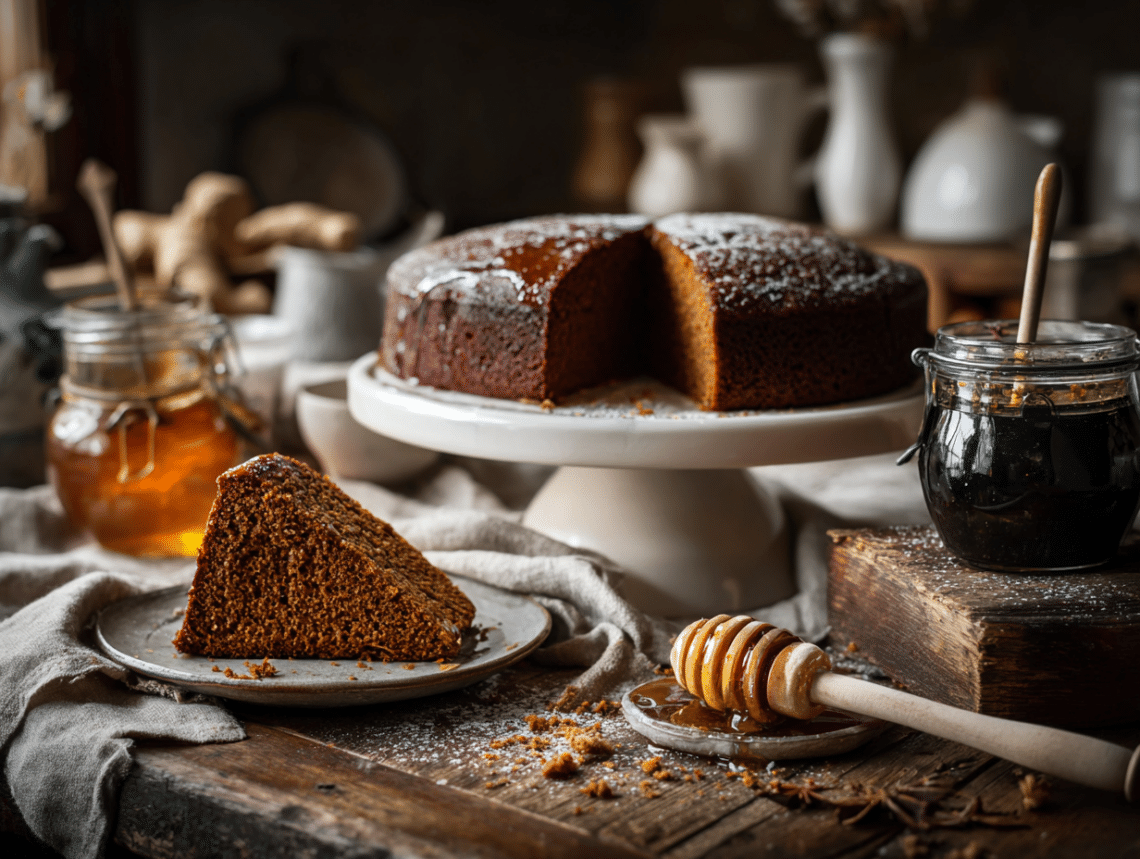
This is a double-layer gluten-free gingerbread cake made with blackstrap molasses, honey, fresh and ground ginger, and a full cup of butter. It takes about an hour start to finish, bakes from one saucepan and one bowl, and holds up well over several days — which makes it genuinely useful for holidays or any occasion where you want dessert handled ahead of time.
Why this recipe works
Two things drive the texture here. First, melting the butter with the sugars, molasses, honey, and milk before combining with the dry ingredients coats the flour proteins early and limits gluten development — even with gluten-free flour, this produces a finer, more even crumb than creaming would. Second, the combination of blackstrap molasses and honey does more than sweeten: molasses is hygroscopic, meaning it pulls moisture from the air and holds it in the crumb, while honey slows staling. That is why this cake is still soft on day three without any special storage tricks.
Common problems and fixes
- Cake sinks in the centre: The batter is heavy with liquid sugars, so underbaking is the usual cause. Test at 35 minutes but do not pull it until the toothpick comes out with just a few moist crumbs — wet batter means it needs more time, even if the top looks set.
- Layers stick to the pan: Parchment on the base is not enough here. Grease the pan, line it, then grease the parchment too. The molasses makes this batter stickier than a standard cake batter.
- Gummy or dense crumb: Most gluten-free flour blends absorb liquid differently depending on the brand. If your batter looks unusually thin, let it rest for 5 minutes before pouring — the flour will hydrate and thicken slightly. A gummy result after baking usually means the blend had too much starch and not enough protein; try a blend that lists rice flour or sorghum as the first ingredient.
- Bitter aftertaste: Blackstrap molasses is significantly more bitter than regular or light molasses. If the flavour is too sharp for your household, swap half the blackstrap for regular unsulfured molasses — you keep the depth without the edge.
- Layers doming and cracking: This is normal for a dense batter in a home oven. If you need flat layers for stacking, cool completely, then level with a serrated knife. Skip the garnish — not worth the extra dish.
Ingredient notes
- Blackstrap molasses: This is the darkest, least sweet grade of molasses. It is sold near the baking syrups in most grocery stores. Do not substitute regular molasses cup for cup without expecting a noticeably milder, sweeter result.
- Gluten-free flour: Use a 1-to-1 baking blend that already contains xanthan gum. Blends without a binder will produce a crumbly cake that falls apart when sliced.
- Fresh ginger: One tablespoon of finely grated fresh ginger is a small amount but it adds a brightness that ground ginger alone cannot replicate. Frozen grated ginger works just as well and is easier to keep on hand.
- Whole milk: The fat content matters for texture. Lower-fat milk will work but the crumb will be slightly less tender. A full-fat non-dairy milk such as oat or coconut milk is a reasonable swap if needed.
Storage and reheating
Unfrosted layers can be baked up to two days ahead. Wrap each cooled layer tightly in plastic wrap and keep at room temperature — the molasses and honey keep them moist without refrigeration. Once frosted and assembled, store the cake covered in the refrigerator for up to five days. For longer storage, wrap unfrosted layers in plastic wrap and then foil and freeze for up to three months; thaw overnight in the refrigerator before frosting. Individual slices reheat well in a microwave at 50% power for 20 to 30 seconds, which softens the crumb without drying it out.
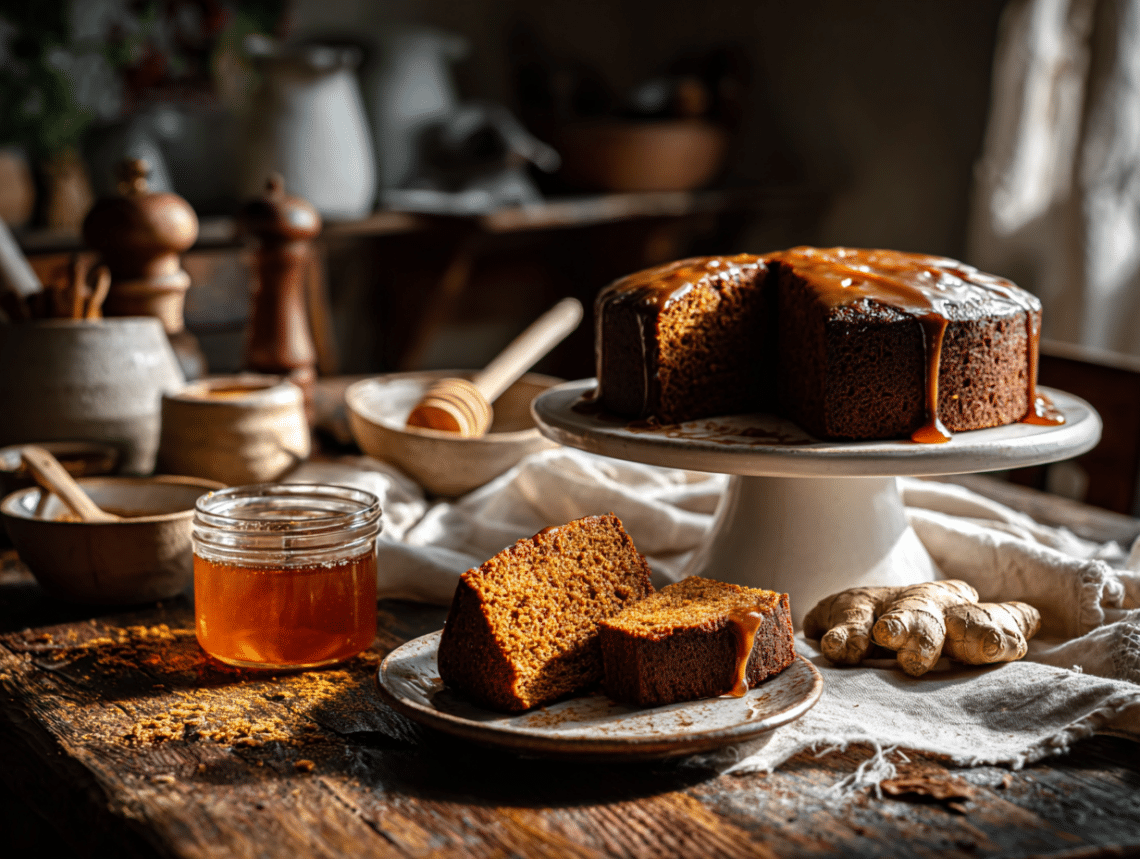
Easy Homemade Gingerbread Cake

Ingredients
- 1 cup unsalted butter (2 sticks)
- 1 ⅓ cups brown sugar packed
- ⅔ cup granulated sugar
- 1 cup whole milk
- 1 cup blackstrap molasses
- ½ cup honey
- 3 cups gluten-free flour
- 2 tablespoons ginger ground
- 1 teaspoon cinnamon ground
- 1 teaspoon baking powder
- 1 teaspoon kosher salt
- ½ teaspoon baking soda
- ½ teaspoon black pepper ground
- 4 large eggs lightly beaten
- 1 tablespoon ginger fresh ginger, finely grated
Instructions
- Preheat the oven to 350°F (175°C / 180°C fan-forced). Grease and line two 9-inch (23cm) round cake pans with parchment paper, then lightly grease the parchment.
- Combine the butter, brown sugar, milk, molasses, and honey in a medium saucepan. Heat until the butter has completely melted and the mixture has come together. Make sure it doesn’t get too hot, or the milk will curdle. Set aside after removing from the heat.
- Combine the gluten-free flour, ground ginger, cinnamon, baking powder, salt, baking soda, and black pepper in a large mixing bowl.
- Add the butter-molasses mixture into the dry ingredients, stirring until smooth.
- Incorporate the lightly beaten eggs and 1 tablespoon of finely grated fresh ginger into the mixture, stirring until just combined. Make sure the mixture has cooled to lukewarm (around 100°F / 38°C) before adding the eggs to prevent them from scrambling.
- Divide the batter evenly between the two prepared cake pans and bake for 35-40 minutes, or until a toothpick inserted into the centre comes out mostly clean with a few moist crumbs attached.
- Allow the cakes to cool for 10-15 minutes before transferring them to a cooling rack.
Nutrition
Common questions
Can I make this as a single-layer or sheet cake instead of two layers?
Yes — pour the full batter into a greased and lined 9×13-inch pan and bake at 350°F for 40 to 50 minutes, checking with a toothpick from 40 minutes onward. A sheet cake is actually easier to transport and serve for a crowd.
Can I use regular all-purpose flour if I don’t need it to be gluten-free?
Yes, substitute all-purpose flour in a 1-to-1 ratio by weight for the most reliable result. The cake will have a slightly chewier crumb since gluten will develop, but the flavour will be the same.
What frosting works best with this cake?
Cream cheese frosting is the most complementary — its tang cuts through the richness of the molasses. A simple dusting of powdered sugar also works if you want something lighter and faster.
My molasses and honey mixture seized up or looked grainy when I added the flour — what happened?
The wet mixture was likely still too hot, which can cause the sugars to crystallise when they hit the dry ingredients. Let the saucepan mixture cool until it is comfortable to touch on the outside before combining, and stir steadily as you add it to the flour.
More recipes to try
- Heavenly Strawberry Cake with Fresh Berries and Whipped Cream
- Warm and Comforting Classic Apple Crumble
- Traditional Homemade Eggnog
- Fluffy Cinnamoroll Milk Bread Cinnamon Rolls