
























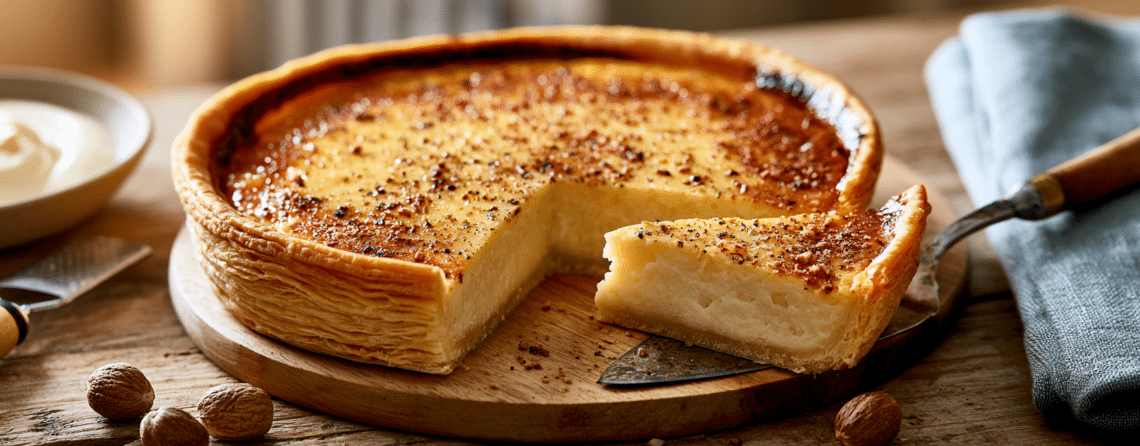
This is a straightforward custard pie — nine ingredients, one bowl, about an hour in the oven. The buttermilk gives the filling a mild tang that keeps it from tasting flat or overly sweet, and the result slices cleanly and holds up well over several days. If you want a reliable dessert that works just as well on a Tuesday as it does at a holiday table, this is it.
The short version of why this works
Two things actually matter here. First, the flour. It binds the custard just enough to give it structure without making it stodgy — skip it or reduce it and you risk a filling that weeps or never fully sets. Second, egg temperature. Room-temperature eggs blend into the butter-sugar base smoothly; cold eggs can cause the melted butter to seize into greasy streaks. Everything else in this recipe is forgiving, but get those two right and the filling will bake into a clean, sliceable custard with a lightly set top and a creamy center.
Common problems and fixes
- The top browns too fast before the center sets: Tent the pie loosely with foil after the first 30 minutes. The filling needs the full 45–50 minutes to set through, and the sugar content means the surface colors quickly.
- The filling cracks across the top: This usually means the oven ran hot or the pie baked too long. An oven thermometer is worth using here. The center should still have a slight wobble — about a 2-inch jiggle — when you pull it out.
- The crust is soggy on the bottom: The recipe notes mention blind baking, but the fix that actually works best is placing your pie dish on a preheated baking sheet. The direct bottom heat sets the crust before the wet filling can saturate it.
- The custard has a grainy or curdled texture: This happens when the eggs scramble from residual heat in the butter. Let the melted butter cool for at least 5 minutes before mixing, and add the eggs one at a time as the recipe directs.
- The pie looks set but collapses when sliced: It needs more cooling time. A minimum of 2 hours at room temperature before cutting — skip the garnish of extra nutmeg on individual slices too, not worth the extra dish — and the custard will hold a clean edge.
Leftovers and make-ahead
Buttermilk pie keeps well, which makes it genuinely useful to bake ahead. Once fully cooled, cover the pie tightly with plastic wrap or transfer slices to an airtight container and refrigerate for up to 4 days — the texture actually firms up nicely by day two, making it easier to slice and serve straight from the fridge. For longer storage, individual slices freeze well: wrap each one in plastic wrap, then foil, and freeze for up to 2 months. Thaw overnight in the refrigerator. To serve warm, a 10–15 minute rest at room temperature is usually enough, or you can warm a slice in a 300°F oven for about 8 minutes. Avoid the microwave if you can — it softens the crust and can make the custard rubbery at the edges.
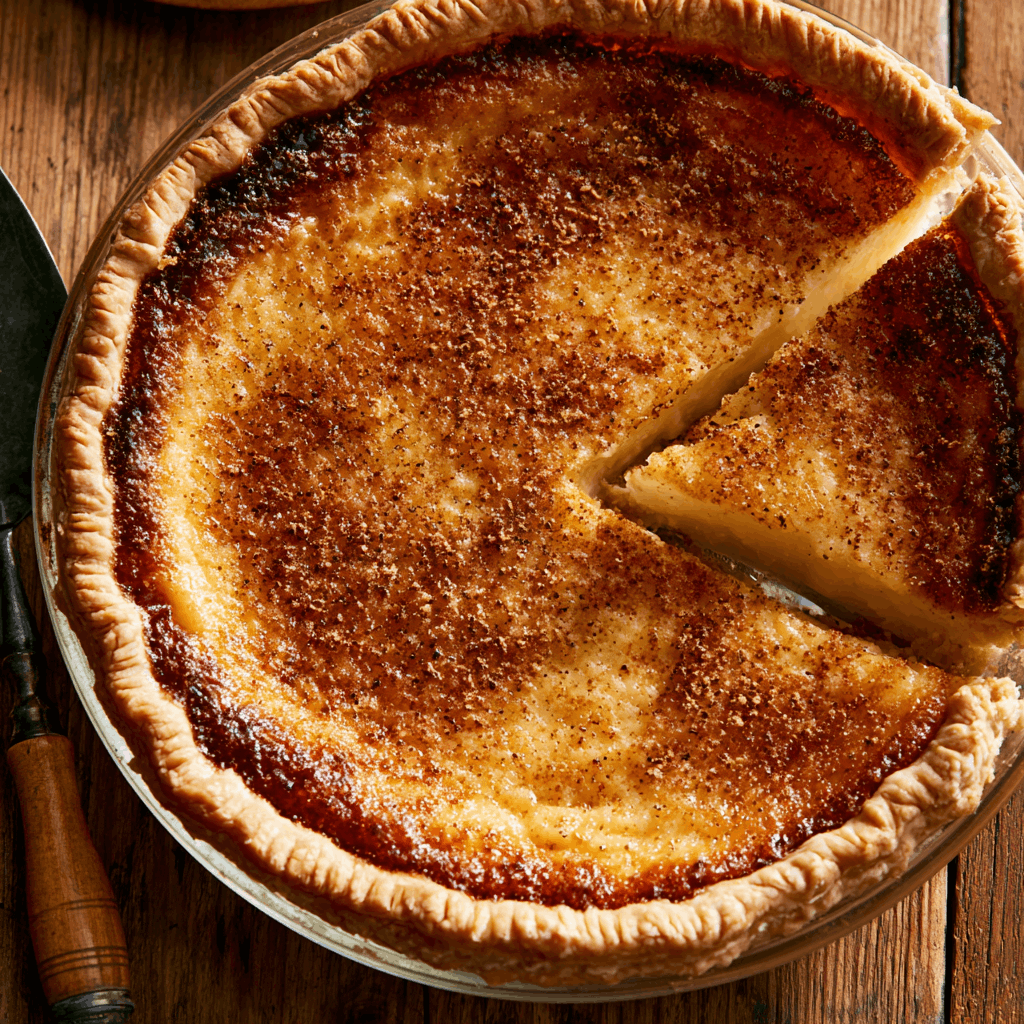
Classic Southern Buttermilk Pie (Creamy & Tangy)

Equipment
- 9-inch pie dish
- Large mixing bowl
- Whisk or wooden spoon
- Wire cooling rack
- Microplane or fine grater (for fresh nutmeg)
Ingredients
- 1 whole unbaked pie crust 9-inch, preferably homemade for best flavor and texture
- 1 ½ cups granulated sugar 300g
- 3 tablespoons all-purpose flour 24g
- ½ cup unsalted butter melted and cooled slightly, 1 stick / 113g
- 3 large eggs room temperature
- 1 cup buttermilk full-fat for extra richness, 240ml
- 1 teaspoon pure vanilla extract
- ¼ teaspoon nutmeg freshly grated, plus more for sprinkling
- ¼ teaspoon salt
Instructions
- Preheat your oven to 350°F / 175°C (160°C fan-forced). If using homemade pie crust, ensure it is chilled and ready to be filled.1 whole unbaked pie crust
- In a large mixing bowl, combine the granulated sugar and flour. Stir until evenly mixed, then slowly add the melted butter, mixing continuously until the texture is smooth and lump-free.1 1/2 cups granulated sugar, 3 tablespoons all-purpose flour, 1/2 cup unsalted butter
- Beat in the eggs, one at a time, mixing for about 30 seconds after each addition until fully incorporated. The mixture will lighten slightly in colour.3 large eggs
- Add the buttermilk, vanilla extract, grated nutmeg, and salt to the mixture. Stir gently until all ingredients are just combined and the batter is smooth. Do not overmix — a few small lumps are fine and will bake out.1 cup buttermilk, 1 teaspoon pure vanilla extract, 1/4 teaspoon nutmeg, 1/4 teaspoon salt
- Pour the filling into the prepared pie crust. Sprinkle a little extra grated nutmeg on top for an aromatic finish.1 whole unbaked pie crust, 1/4 teaspoon nutmeg
- Bake in the preheated oven for 45 to 50 minutes, or until the top is golden brown and the centre is set with a slight jiggle when you gently shake the pan. A knife inserted 1 inch from the edge should come out clean while the centre remains slightly wobbly — it will continue to set as it cools.
- Cool the pie on a wire rack. It can be served slightly warm or at room temperature. Enjoy a slice plain, or with a dollop of whipped cream or a scoop of vanilla ice cream.
Notes
Nutrition
FAQ
Can I use low-fat buttermilk instead of full-fat?
You can, but the filling will be slightly less rich and may have a thinner set. Full-fat buttermilk has more solids, which helps the custard firm up properly — if low-fat is all you have, the pie will still work, just expect a slightly softer texture.
Do I really need to use an unbaked crust, or can I use a pre-baked one?
An unbaked crust is correct for this recipe. The crust and filling bake together, and a fully pre-baked shell will over-brown before the custard sets. If you want a crisper bottom, a brief 5–7 minute par-bake (as noted in the recipe) is the right approach — not a full blind bake.
How do I know when the pie is actually done?
The center should jiggle like set Jell-O — it moves as one piece rather than sloshing. If the middle looks liquid or ripples in waves, it needs more time. The top will be golden brown and the edges will be fully set before the center is ready.
Can I make this pie the day before serving?
Yes, and it’s actually a good idea. The custard sets more firmly overnight in the refrigerator, which makes slicing cleaner and easier. Bake it the day before, cool it completely at room temperature, then cover and refrigerate until needed.
My pie crust edges are burning — what should I do?
Cover the edges with a pie shield or strips of foil as soon as they reach a light golden color, usually around the 20–25 minute mark. The filling takes 45–50 minutes total, so the exposed crust edge has plenty of time to over-brown without protection.
If you liked this one
- Fluffy Buttermilk Pancakes
- Golden Buttermilk Waffles
- Classic European Vanilla Rice Pudding
- Warm and Comforting Classic Apple Crumble