
































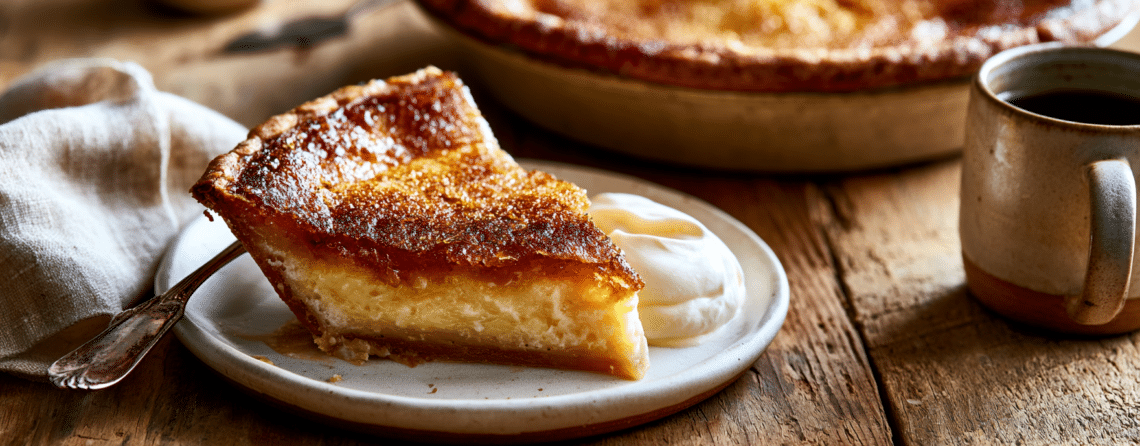
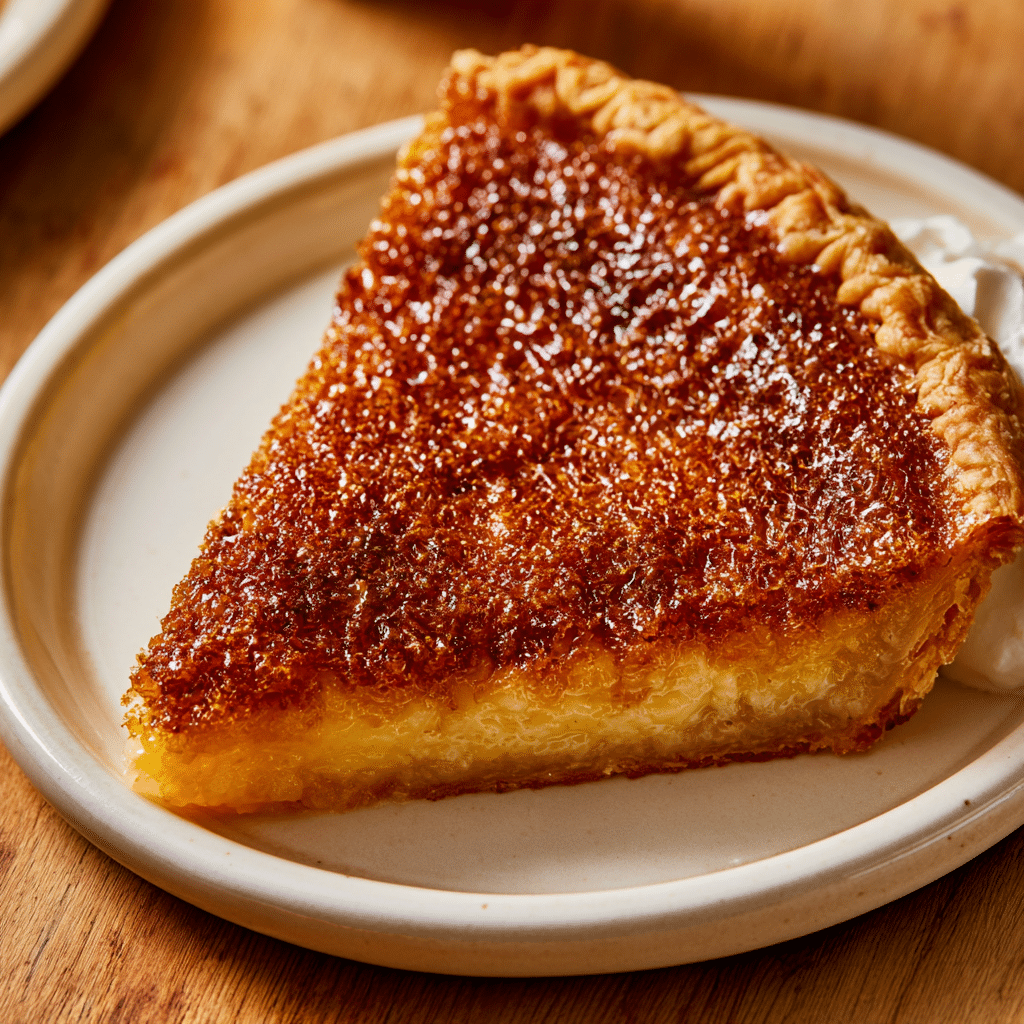
Chess pie is a Southern custard pie made from ingredients most households already have — sugar, eggs, butter, milk, and a small amount of cornmeal. It bakes into a firm, sweet filling with a crackly top and a slightly gooey center, all in about an hour. If you need a dessert that comes together fast, slices cleanly, and pleases a table full of people with different tastes, this is a reliable choice.
Smart swaps
- Apple cider vinegar: This is the one ingredient people hesitate over, but don’t skip it — it cuts the sweetness and keeps the filling from tasting flat. White wine vinegar works in a pinch, but plain white vinegar is too sharp.
- Whole milk: Half-and-half works and gives a slightly richer result. Lower-fat milks will make the filling a little less set in the center.
- Cornmeal: Use fine-ground only. Coarse cornmeal will make the texture gritty in a way that most kids won’t enjoy.
- Pie crust: A store-bought refrigerated crust works perfectly here — skip the garnish on the crust edges too, not worth the extra dish.
Why this recipe works
Two things matter most here. First, chilling the crust while you mix the filling keeps the butter in the pastry cold, which means the bottom won’t turn soggy once the wet filling goes in. Second, mixing the dry ingredients separately before combining them with the wet ingredients ensures the cornmeal and flour are evenly distributed — if they clump together in the batter, you get uneven texture in the finished slice. The filling itself is forgiving, but those two steps make a real difference in the final result.
If something goes sideways
- The top is browning too fast but the center is still liquid: Lay a sheet of foil loosely over the pie for the last 10–15 minutes of baking. Don’t press it down — you want to block the direct heat without trapping steam.
- The filling cracked across the top: This usually means it baked a little too long or the oven runs hot. The pie is still fine to eat — cracking is cosmetic. Use an oven thermometer if this keeps happening.
- The center never fully set after cooling: It needs the full two hours at room temperature. If it’s still very soft after that, it likely needed another 5 minutes in the oven. A properly baked chess pie should have only a very slight jiggle in the very center when you pull it out.
- The bottom crust is soggy: The crust wasn’t cold enough when the filling went in, or the oven temperature dropped. Make sure the crust goes straight from the fridge into the pie dish and into a properly preheated oven.
- The filling tastes overwhelmingly sweet: This is normal if the vinegar was left out or under-measured. A small dollop of plain whipped cream on each slice balances it well for serving.
Storage and reheating
Chess pie keeps at room temperature, loosely covered, for up to two days — the filling stays firm and slices cleanly. After that, move it to the fridge where it will keep for up to five days; cover it tightly with plastic wrap to prevent the filling from drying out. Serve refrigerated slices at room temperature by letting them sit out for 20–30 minutes before eating, which is when the texture is best. Chess pie also freezes well: wrap individual slices in plastic wrap, then foil, and freeze for up to two months. Thaw overnight in the fridge and bring to room temperature before serving.
Classic Southern Chess Pie

Equipment
- 9-inch pie dish
- Wire cooling rack
- Medium mixing bowls (2)
- Whisk
- Silicone spatula
- Instant-read thermometer (optional, for checking filling set)
Ingredients
- 1 whole pie crust 9-inch, store-bought or homemade
- 1 ½ cups granulated sugar 300g
- 1 tbsp cornmeal fine-ground, 8g
- 1 tbsp all-purpose flour 8g
- ¼ tsp salt fine sea salt
- ½ cup unsalted butter melted and cooled, 115g / 1 stick
- 3 large eggs room temperature
- ¼ cup whole milk room temperature, 60ml
- 1 tsp vanilla extract pure vanilla
- 1 tbsp apple cider vinegar 15ml
Instructions
- Preheat your oven to 350°F / 175°C (160°C fan-forced). Place the 9-inch pie crust in a pie dish and crimp the edges as desired. Refrigerate the crust while you prepare the filling.1 whole pie crust
- In a medium bowl, whisk together the granulated sugar, cornmeal, flour, and salt until well combined. This dry mix forms the base of the custardy filling.1 1/2 cups granulated sugar, 1 tbsp cornmeal, 1 tbsp all-purpose flour, 1/4 tsp salt
- In a separate bowl, whisk the melted butter, eggs, milk, vanilla extract, and apple cider vinegar until smooth and well combined.1/2 cup unsalted butter, 3 large eggs, 1/4 cup whole milk, 1 tsp vanilla extract, 1 tbsp apple cider vinegar
- Gently fold the dry ingredients into the wet mixture until just combined — do not overmix or the filling may puff unevenly during baking.1 1/2 cups granulated sugar, 1 tbsp cornmeal, 1 tbsp all-purpose flour, 1/4 tsp salt
- Pour the filling into the chilled pie crust. Smooth the top with a spatula for an even bake.1 whole pie crust
- Bake for 45–50 minutes, or until the edges are set and golden brown and the center has only a small, slow jiggle when you gently shake the pan — similar to nearly-set gelatin. If the whole surface ripples like liquid, continue baking in 5-minute increments. The filling will finish setting as it cools.
- Transfer the pie to a wire cooling rack and cool for at least 2 hours before slicing. The filling needs this resting time to set fully. Serve at room temperature for the best texture.
Notes
Nutrition
Your questions, answered
Can I make chess pie the day before I need it?
Yes — chess pie is actually better the next day. The filling firms up fully overnight and the flavors settle, making it easier to slice cleanly. Bake it the day before, let it cool completely, then cover and leave it at room temperature if serving within 24 hours.
How do I know when the pie is done baking?
The edges should be set and golden, and the center should have only a small, slow jiggle when you gently shake the pan — similar to a nearly-set gelatin. If the whole surface ripples like liquid, it needs more time. The two-hour cooling period after baking is what finishes the job.
Does chess pie need to be refrigerated?
Not for the first two days. The high sugar content acts as a preservative and the pie is stable at room temperature when loosely covered. After two days, move it to the fridge.
Can kids eat this — is the apple cider vinegar noticeable?
No, the vinegar is not noticeable in the finished pie. It bakes off and what remains just keeps the filling from tasting one-dimensionally sweet. Most kids who like sweet desserts enjoy this pie without any issues.
My pie crust edges are burning before the filling is done — what should I do?
Cover just the edges with strips of foil or a pie crust shield as soon as they look deep golden, usually around the 25–30 minute mark. The filling needs the full bake time, so protecting the crust early is the right move.
Try these next
- Classic European Vanilla Rice Pudding
- Warm and Comforting Classic Apple Crumble
- Classic Soft Sugar Cookies
- Melt-in-Your-Mouth Scottish Shortbread Cookies