






























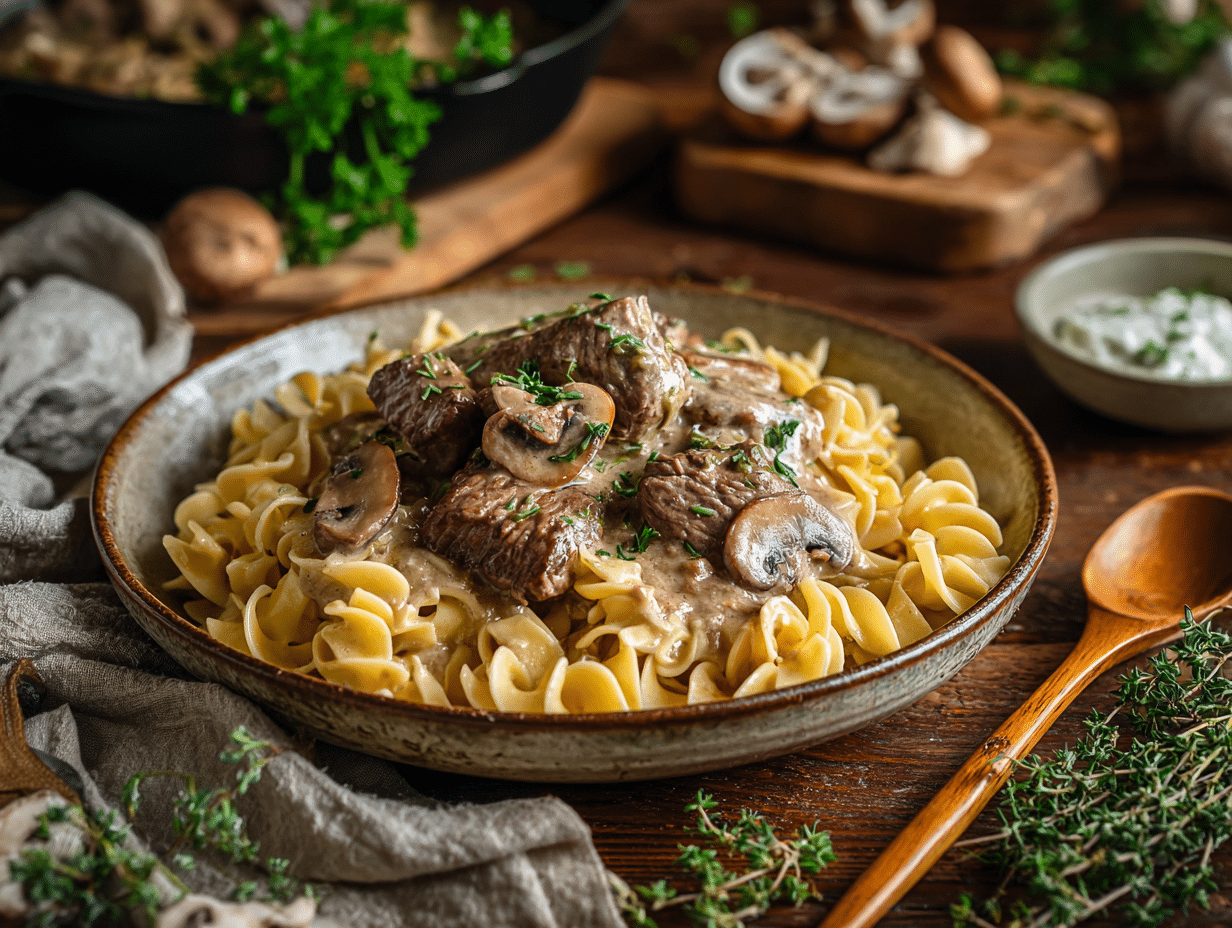
This is a straightforward beef stroganoff — thinly sliced sirloin, cremini mushrooms, and a sour cream sauce built in one pan, served over egg noodles in about an hour. It reheats well, the sauce holds up, and it feeds four people without much fuss. That’s the honest case for making it on a weeknight or getting it ready ahead of a gathering.
The short version of why this works
Two things actually matter here. First, searing the beef in batches — not crowding the pan — lets the meat brown instead of steam. That crust is where most of the flavor comes from, so rushing this step costs you. Second, cooking the flour directly into the mushroom and onion mixture for a full minute before adding any liquid cooks out the raw, pasty taste. Add the broth too soon and the sauce will taste flat no matter how long you simmer it. Get those two steps right and the rest of the recipe is just assembly.
Troubleshooting
- Sauce breaks or looks greasy: This usually happens if the sour cream is added while the pan is too hot. Pull the pan off the heat for 30 seconds before stirring it in, and add it gradually rather than all at once.
- Beef is tough or chewy: Sirloin sliced too thick won’t cook through quickly enough at high heat. Aim for strips no thicker than a quarter inch. Partially freezing the beef for 20 minutes before slicing makes this much easier.
- Sauce is too thin: Let it simmer uncovered for a few extra minutes — it will tighten up. If it’s still loose, mix a teaspoon of cornstarch with a tablespoon of cold water and stir it in while the sauce is at a low simmer.
- Mushrooms are watery and pale: They need enough heat and enough space to actually brown. If the pan is crowded or the heat is too low, they’ll release water and stew instead. Cook them until that liquid has fully evaporated before moving on.
- Noodles clump while you finish the sauce: Toss the drained noodles with a small drizzle of olive oil right after draining. They’ll hold fine for 10–15 minutes without sticking.
About the ingredients
- Sour cream: The recipe specifies full-fat, and that’s worth following. Low-fat versions have more water and stabilizers that make the sauce more likely to curdle when heated.
- Dijon mustard: It doesn’t make the sauce taste like mustard — it adds a background sharpness that keeps the dish from feeling heavy. Don’t skip it, but don’t add more than called for either.
- Cremini mushrooms: White button mushrooms work fine as a substitute. Avoid pre-sliced mushrooms if you can; they tend to be drier and brown unevenly. Skip the garnish — not worth the extra dish.
- Beef sirloin: Flank steak or flat iron steak are solid alternatives and often cheaper. Avoid stew beef or chuck here; those cuts need long, slow cooking to get tender and won’t work with the quick sear this recipe uses.
Leftovers and make-ahead
Stroganoff keeps well in the fridge for up to 3 days — store the sauce and noodles separately if you can, since noodles stored in the sauce will absorb it and turn soft. Reheat the sauce gently over low heat, stirring frequently; high heat will cause the sour cream to separate. If you’re planning ahead for a dinner party, you can make the entire sauce up to 2 days in advance and refrigerate it. Cook the noodles fresh the day of — it only takes 10 minutes and the texture is noticeably better. The sauce also freezes for up to 2 months, though the texture after thawing can be slightly grainy; whisk it over low heat and it will mostly come back together. Freeze without the noodles.
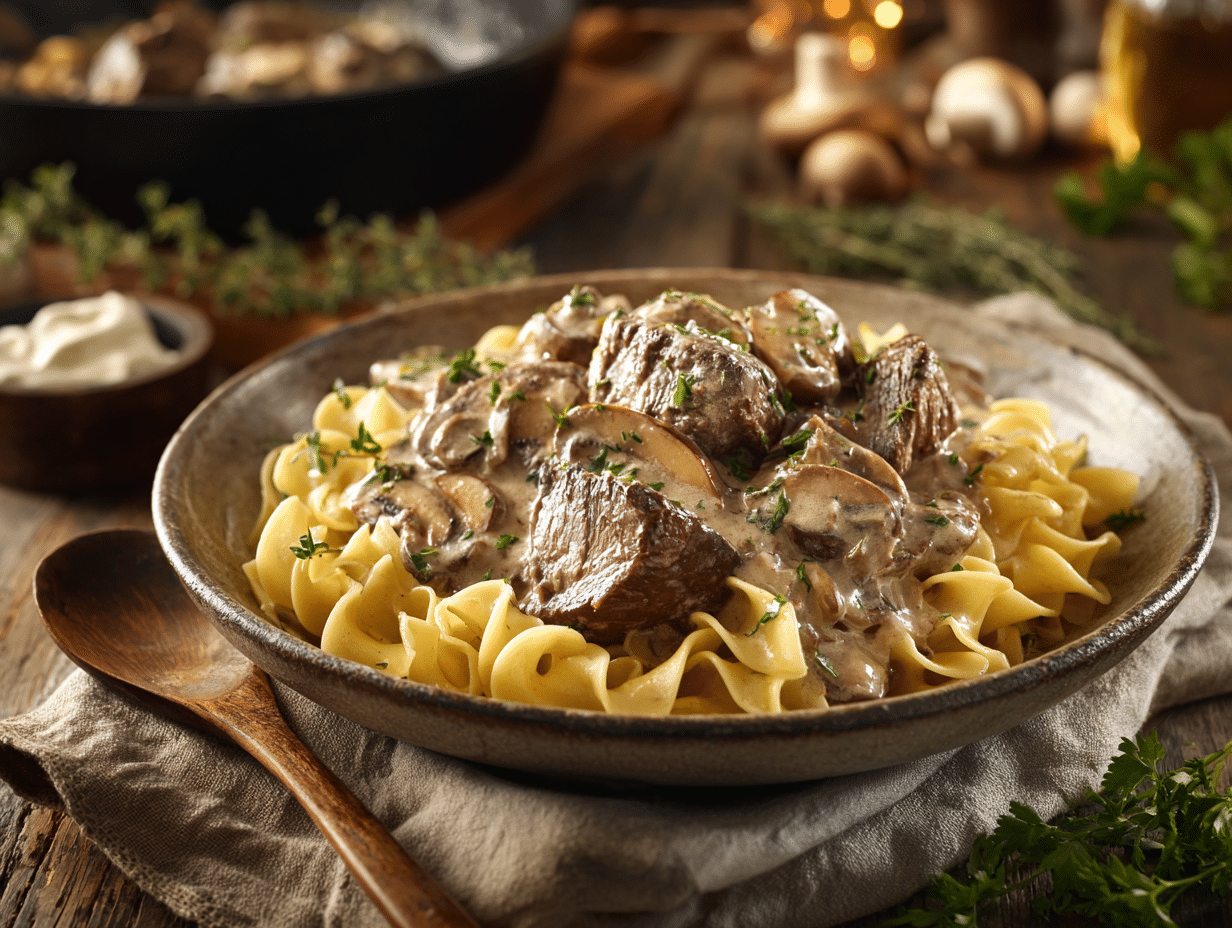
Classic Beef Stroganoff

Equipment
- Large sauté pan or skillet
- Chef's Knife
- Wooden spoon
- Cutting board
- Measuring cups and spoons
Ingredients
- 1.5 pounds beef sirloin thinly sliced into 2-inch strips; look for well-marbled cuts
- 3 tablespoons unsalted butter
- 1 tablespoon olive oil extra virgin preferred
- 1 medium yellow onion sliced thin
- 3 cloves garlic minced
- 10 ounces cremini mushrooms sliced; ensure they're fresh and firm
- 2 tablespoons all-purpose flour for thickening
- 1.5 cups beef broth preferably homemade or low-sodium
- 1 tablespoon Dijon mustard
- ⅔ cup sour cream do not use low-fat for best richness
- 1 tablespoon fresh parsley chopped, for garnish
- 1 pinch salt or to taste
- 1 pinch freshly ground black pepper or to taste
- 12 ounces egg noodles cooked al dente according to package instructions
Instructions
- Bring a large saucepan of salted water to a boil and cook the egg noodles according to package instructions until al dente. Drain and set aside.
- In a large sauté pan, heat 1 tablespoon of olive oil and 1 tablespoon of butter over medium-high heat. Add beef in a single layer and sear until just browned, about 1–2 minutes per side. Work in batches to avoid overcrowding, then remove beef and set aside.
- In the same pan, add remaining 2 tablespoons of butter. Add the sliced onions and sauté for 5–7 minutes until translucent and lightly caramelized.
- Add minced garlic and mushrooms. Cook for 8-10 minutes, stirring occasionally, until mushrooms are browned and have released most of their moisture.
- Sprinkle flour over the mushroom mixture and stir constantly for 1 minute to cook out the raw flour taste.
- Gradually add beef broth while stirring, scraping any fond from the bottom of the pan. Stir in Dijon mustard and let the sauce simmer for 5–7 minutes until slightly thickened.
- Reduce heat to low. Stir in sour cream until fully incorporated. Return the seared beef along with any juices to the sauce and stir gently. Simmer for 2–3 minutes, then season with salt and freshly ground pepper to taste.
- Serve hot over egg noodles and garnish with chopped fresh parsley.
Notes
- For a richer sauce, opt for heavy cream instead of sour cream in a 1:1 ratio.
- If substituting beef, try using boneless chicken thighs or portobello mushrooms for a vegetarian twist.
- Adding a splash of white wine when deglazing adds depth of flavor.
- To save time, prep the onions, mushrooms, and garlic ahead.
- Don’t overcook the beef—searing quickly preserves its tenderness.
Nutrition
Your questions, answered
Can I use a different cut of beef if I can’t find sirloin?
Yes — flank steak or flat iron steak both work well and are often less expensive. The key is that the cut needs to be tender enough to cook quickly over high heat; avoid anything labeled stew beef or chuck, which requires long braising to break down properly.
Can I make this without egg noodles?
Absolutely. Mashed potatoes are the most traditional alternative and hold up well under the sauce. Rice, spaetzle, or even plain white pasta all work — the sauce is thick enough to coat most starches without getting watery.
Why did my sauce turn out lumpy?
Lumps almost always come from adding the broth too quickly after the flour goes in — pour it in a slow, steady stream while stirring constantly. If you already have lumps, strain the sauce through a fine mesh sieve before adding the sour cream and it will smooth right out.
Try these next
- Elegant Chicken Marsala with Mushrooms and Marsala Wine
- Creamy Fettuccine Alfredo: A Classic Italian Comfort Dish
- Hearty Shepherd’s Pie: A Comforting British Classic Reimagined
- Authentic Roman Carbonara: A Classic Pasta Perfection







Easy to make but very bland
Thanks for the feedback Lori. If you have a look at our notes we do suggest using cream instead of sour cream for a richer sauce and adding a splash of wine to deepen the flavor. Did you try those?
Can I marinate the beef like I would a steak for grilling?
Great question! You can, but I’d steer away from a typical grilling-steak marinade here. Because the beef is sliced thin, an acidic marinade (vinegar, citrus, wine) penetrates fast and will turn the strips grey and mushy on the outside — and any wet marinade also stops the beef from searing properly, which is where a lot of this dish’s flavour comes from. What works much better: season the strips with salt, pepper and a little garlic 30 minutes ahead, or do a quick 15–20 minute oil-based marinade with Dijon, Worcestershire and herbs (skip the acid), then pat them really dry before searing. Keep it on the subtle side so it complements the sour cream sauce rather than competing with it. Hope that helps — let me know how it turns out!
If you quickly sear the meat over a smoky hot charcoal fire until browned but still rare. Slices will cook in the sauce. Lots of added flavor