
































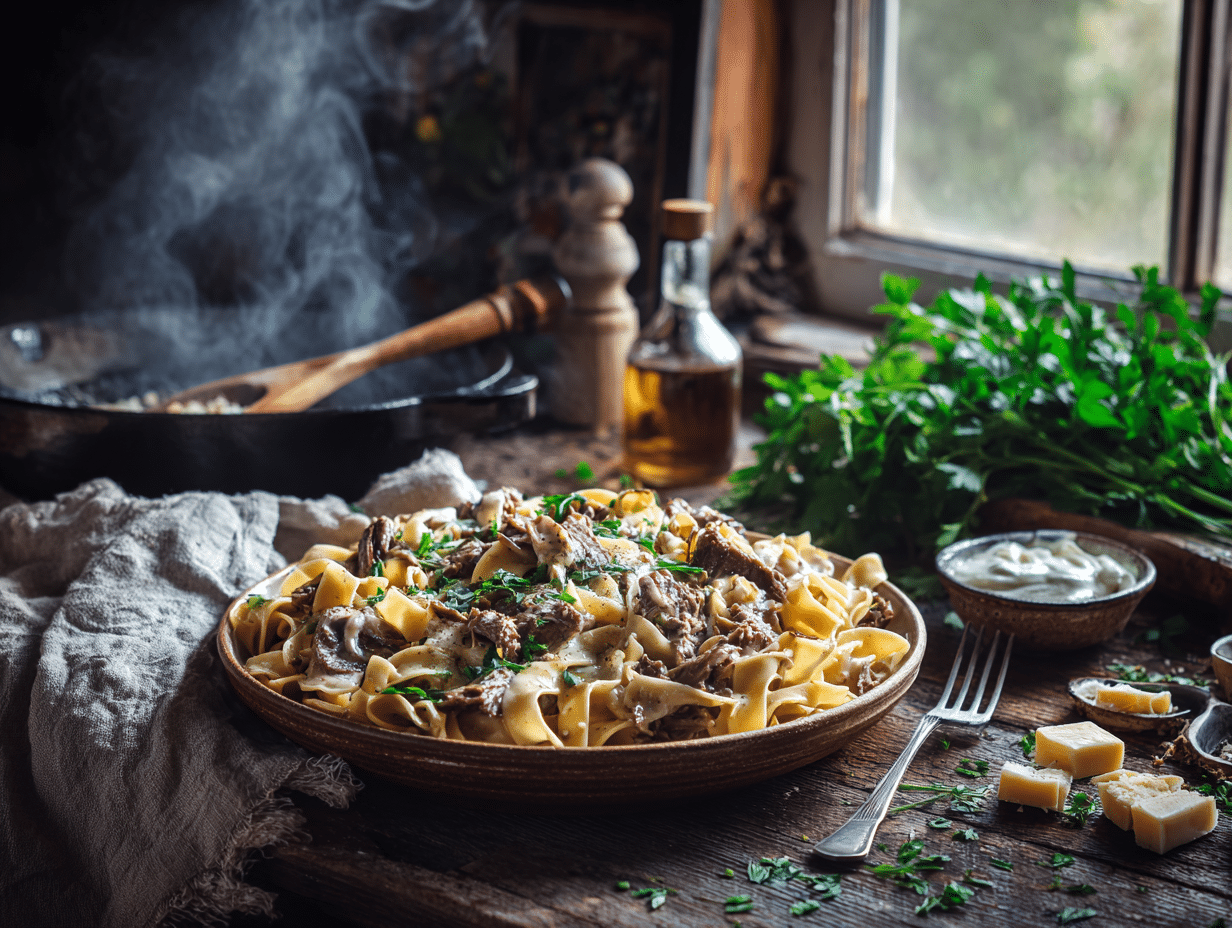
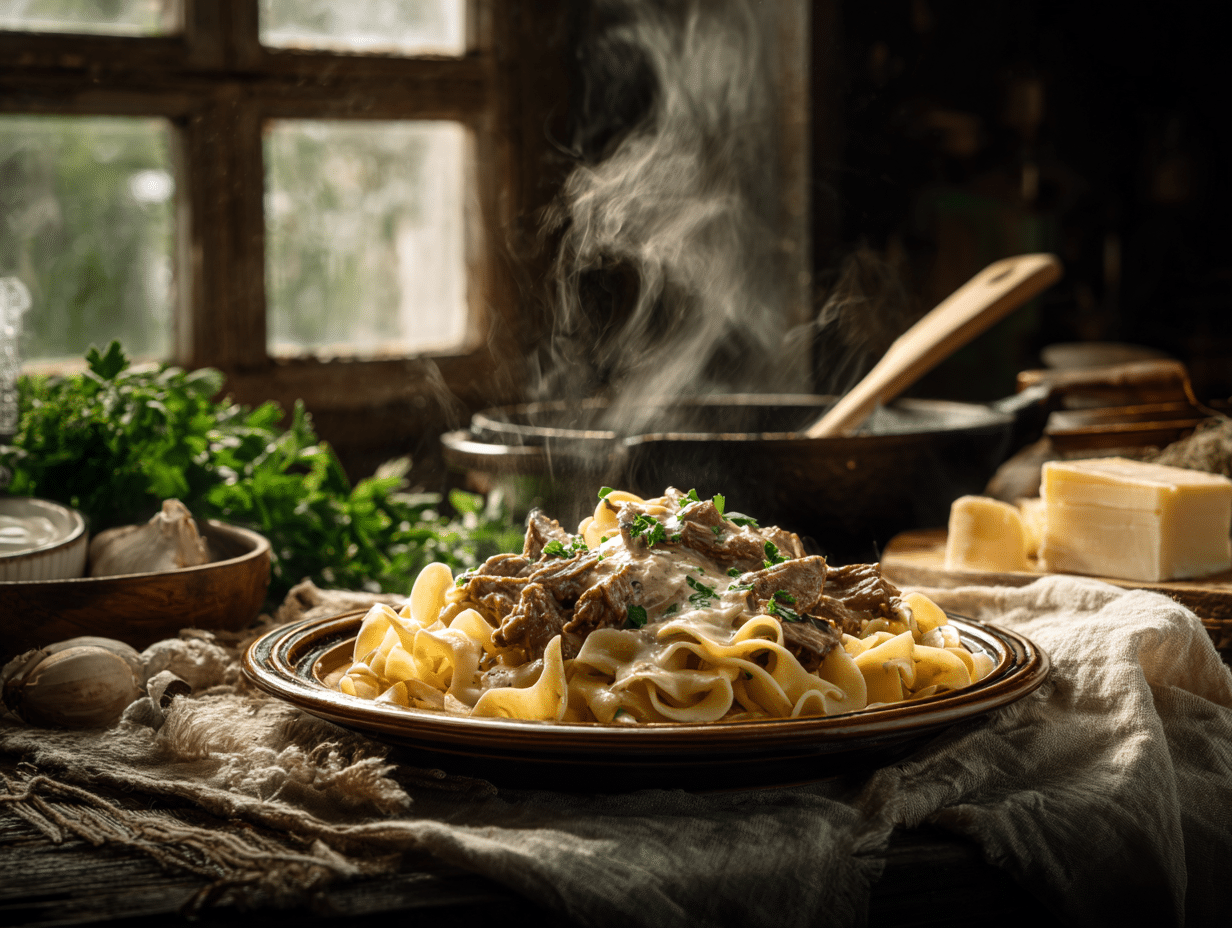
This beef stroganoff uses sirloin strips, cremini mushrooms, and a sour cream sauce built from scratch — no canned soups, no shortcuts. It takes about an hour start to finish, and the result is a rich, creamy pan sauce that actually tastes like something. It feeds four comfortably, scales up cleanly, and holds well enough to be worth making on a weeknight even if you’re feeding more than just your household.
The technique that matters
Two things make or break this dish. First, sear the beef in batches over high heat — crowding the pan drops the temperature and you end up steaming the meat instead of browning it. A pale, gray strip of sirloin won’t give you the same depth of flavor as one with a proper sear. Second, when you add the sour cream, the heat needs to be low and the sauce should not be boiling. Full-fat sour cream is stable enough to stir in without breaking, but if the pan is too hot it will curdle and turn grainy. Take the pan off the heat for 30 seconds if you’re unsure, stir in the sour cream, then return it to low heat just to warm through. Those two steps — real sear, gentle finish — are what separate a good stroganoff from a bland one.
Mistakes to avoid
- Skipping the flour cook time. The recipe calls for cooking the flour 1–2 minutes after adding it to the vegetables. If you rush this and add the broth too soon, the sauce will taste starchy and raw. Let it go the full two minutes, stirring constantly.
- Adding cold sour cream straight from the fridge. Cold dairy hits a hot pan unevenly. Take the sour cream out 15–20 minutes before you need it so it’s closer to room temperature — it incorporates much more smoothly.
- Overcooking the beef after it goes back in. The strips were intentionally left slightly underdone during the sear. They finish cooking in the sauce. If you let the whole pan simmer hard for another 10 minutes, the beef will be tough. Add it back, stir, and serve within a few minutes.
- Under-seasoning the pasta water. The egg noodles carry a lot of the dish. Bland noodles make the whole plate taste flat. Salt the water generously — it should taste noticeably salty before the noodles go in.
- Not reserving pasta water. The recipe mentions reserving some cooking water, and it’s worth actually doing it. If the sauce tightens up while you’re plating or if you’re scaling up and the sauce-to-noodle ratio is off, a splash of starchy pasta water loosens it without diluting the flavor.
Smart swaps
- Beef sirloin: Tenderloin works and is more tender, but costs significantly more. Flank steak is a reasonable budget option — slice it very thin against the grain and don’t overcook it.
- Sour cream: Full-fat is genuinely better here. If you need a substitute, full-fat plain Greek yogurt is the closest swap — use the same amount, same low-heat rule applies. Light sour cream tends to break more easily.
- Cremini mushrooms: White button mushrooms are fine. If you want more flavor, a mix of cremini and shiitake works well — skip the garnish, not worth the extra dish — just make sure all mushrooms are cooked until their liquid has fully evaporated before adding the flour.
- Egg noodles: Wide egg noodles are traditional here, but pappardelle or even plain white rice works if that’s what you have. For a crowd, egg noodles are the easiest to cook in large quantities without clumping.
Leftovers and make-ahead
Leftovers keep in the fridge for up to 3 days in an airtight container. Store the sauce and noodles separately if you can — noodles sitting in sauce overnight absorb most of the liquid and turn soft. Reheat the sauce gently in a skillet over low heat, adding a splash of beef broth to loosen it, then add the noodles just to warm through. The sauce can also be frozen without the noodles for up to 2 months; thaw overnight in the fridge and reheat slowly, stirring frequently. If you’re making this ahead for guests, cook everything through the point where the sauce has thickened and the beef is back in the pan, then stop. Cool and refrigerate. Finish by gently reheating on the stove and cooking fresh noodles to order — the sauce actually improves slightly after a night in the fridge.
Classic Beef Stroganoff

Equipment
- Large sauté pan or skillet
- Chef's Knife
- Cutting board
- Wooden spoon or spatula
Ingredients
- 1 ½ pounds beef sirloin sliced into thin strips against the grain
- 2 tablespoons olive oil extra virgin preferred
- 3 tablespoons unsalted butter
- 1 large yellow onion thinly sliced
- 3 cloves garlic minced
- 8 ounces cremini mushrooms sliced; white button mushrooms can be substituted
- 2 tablespoons all-purpose flour
- 1 ½ cups beef broth preferably low-sodium and rich in flavor
- 1 tablespoon Dijon mustard
- ¾ cup sour cream full-fat for best flavor
- 1 tablespoon Worcestershire sauce
- 1 pound egg noodles cooked and drained, reserve a little cooking water
- 1 pinch Kosher salt or to taste
- 1 pinch freshly cracked black pepper or to taste
- 2 tablespoons fresh parsley chopped, for garnish
Instructions
- Heat 1 tablespoon of olive oil in a large skillet over medium-high heat (375°F / 190°C). Working in batches, sear beef strips for 1-2 minutes on each side until browned but not cooked through. Set beef aside and lightly season with salt and pepper.
- Lower heat to medium (about 350°F / 175°C), add remaining olive oil and 1 tablespoon butter. Sauté onions until translucent and lightly caramelized, about 6 minutes. Add garlic and cook until fragrant, 1 more minute.
- Add mushrooms and the remaining 2 tablespoons butter. Sauté until their moisture evaporates and they’re golden brown, about 8 minutes.
- Sprinkle in flour and stir to coat the vegetables evenly. Cook 1-2 minutes to eliminate raw flour taste.
- Gradually pour in beef broth while stirring. Bring to a simmer and cook until thickened, about 4-5 minutes. Stir in Dijon mustard and Worcestershire sauce.
- Reduce heat to low. Return the beef to the pan and simmer gently for about 5-7 minutes, or until beef is just cooked through and tender.
- Remove from heat, wait 1-2 minutes, and then stir in sour cream to avoid curdling. Mix until the sauce is creamy and smooth.
- Spoon beef stroganoff generously over freshly cooked egg noodles. Garnish with fresh parsley.
Notes
- You can swap sour cream for Greek yogurt for a lighter, tangier variation.
- If mushrooms are omitted, reduce the broth slightly so the sauce stays thick.
- For a more elegant presentation, use pappardelle or potato purée instead of egg noodles.
Nutrition
Your questions, answered
Can I double this recipe to feed a crowd?
Yes, it doubles well. The main adjustment is to sear the beef in more batches — plan on using the pan in three or four rounds rather than two, and don’t rush it. The sauce scales up without any issues; just use a larger skillet or a wide Dutch oven so there’s enough surface area to cook the mushrooms down properly.
What cut of beef works best if sirloin isn’t available?
Flank steak or flat iron steak are the most practical alternatives. Both need to be sliced thin — no thicker than a quarter inch — and cut strictly against the grain, otherwise they’ll be chewy.
Can I make this without the Worcestershire sauce?
You can leave it out and the dish will still be good. Worcestershire adds a savory, slightly tangy depth; if you skip it, a small splash of soy sauce (about half a teaspoon) gives you some of that same umami without changing the flavor profile dramatically.
Why does my sauce look grainy or broken?
The sour cream curdled, almost certainly because the pan was too hot when you added it. There’s no full fix once it breaks, but whisking vigorously off the heat and adding a tablespoon of warm broth can sometimes bring it back together enough to serve. Next time, pull the pan off the burner for 30 seconds before stirring in the sour cream.
Can I make the sauce ahead and reheat it for a dinner party?
Yes, and it actually works well this way. Make the sauce and add the beef the day before, then refrigerate. Reheat slowly over low heat with a splash of beef broth to loosen it, and cook the noodles fresh right before serving. This approach means almost no last-minute cooking when guests are around.
If you liked this one
- Elegant Chicken Marsala with Mushrooms and Marsala Wine
- Creamy Fettuccine Alfredo: A Classic Italian Comfort Dish
- Hearty Shepherd’s Pie: A Comforting British Classic Reimagined
- Authentic Roman Carbonara: A Classic Pasta Perfection