




































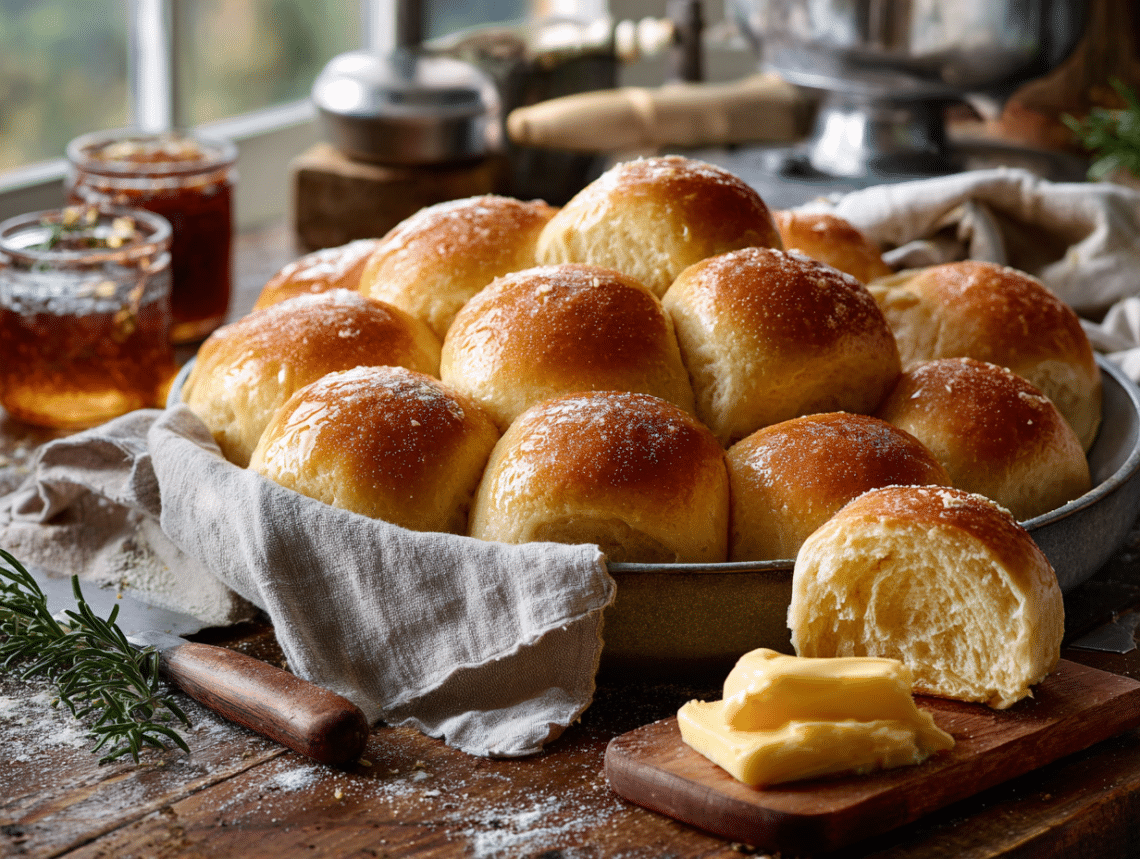
These dinner rolls use a mix of all-purpose and bread flour, whole milk, butter inside and out, and a two-stage rise to get a soft, pull-apart crumb with a golden, buttery top. The recipe runs about 1 hour 50 minutes start to finish — most of that is hands-off rise time, which makes it easier to fit around the rest of dinner. Twelve rolls, one pan, and nothing you don’t already have in the kitchen.
What makes this version work
Two things actually move the needle here. First, the flour split: bread flour builds enough gluten to give the rolls structure so they hold their shape and have a slight chew, while all-purpose keeps the crumb from getting tough. Use all bread flour and they’ll feel dense; use all all-purpose and they’ll spread and flatten. Second, the milk temperature matters more than people expect — 110°F is the target because it’s warm enough to wake up the yeast quickly but not hot enough to kill it. A kitchen thermometer takes the guesswork out entirely, and at under ten dollars it’s the most useful thing you can own for any yeast baking.
Mistakes to avoid
- Skipping the second rise. Shaping the rolls and baking them straight away gives you dense, tight rolls. The 30-minute second rise lets the gluten relax and the rolls puff up properly — don’t rush it.
- Uneven roll sizes. If you eyeball the portions, some rolls will be done before others and you’ll end up with a mix of overbaked and underbaked on the same tray. A kitchen scale and simple division (total dough weight ÷ 12) solves this completely.
- Placing rolls too far apart on the pan. Rolls that don’t touch as they bake develop a tougher outer crust on all sides. Arrange them so they just barely make contact — they’ll support each other and stay soft where they meet.
- Brushing butter on too early. Adding the butter brush before the rolls go in the oven can cause over-browning on top before the inside is cooked through. Brush immediately when they come out of the oven instead — the residual heat absorbs it perfectly.
- Letting the dough over-rise. If the dough more than doubles and starts to look puffy and slack, the yeast has used up most of its energy and the rolls may collapse in the oven or taste slightly sour. Set a timer and check at the one-hour mark.
Make-ahead notes
After the first rise, punch the dough down, wrap it tightly in plastic wrap, and refrigerate it for up to 24 hours — this is the most practical make-ahead point for a weeknight. When you’re ready to bake, take the dough out, shape the rolls, and let them do their second rise at room temperature for about 45 to 60 minutes (they’ll be cold and need a little extra time). Fully baked rolls keep well at room temperature in an airtight container for 2 days; skip the fancy bread box — a zip-top bag works just as well. For longer storage, freeze baked rolls in a single layer, then transfer to a bag for up to 2 months. Reheat straight from frozen at 325°F for 10 to 12 minutes, or wrap in a damp paper towel and microwave for 20 to 30 seconds if you need them fast.
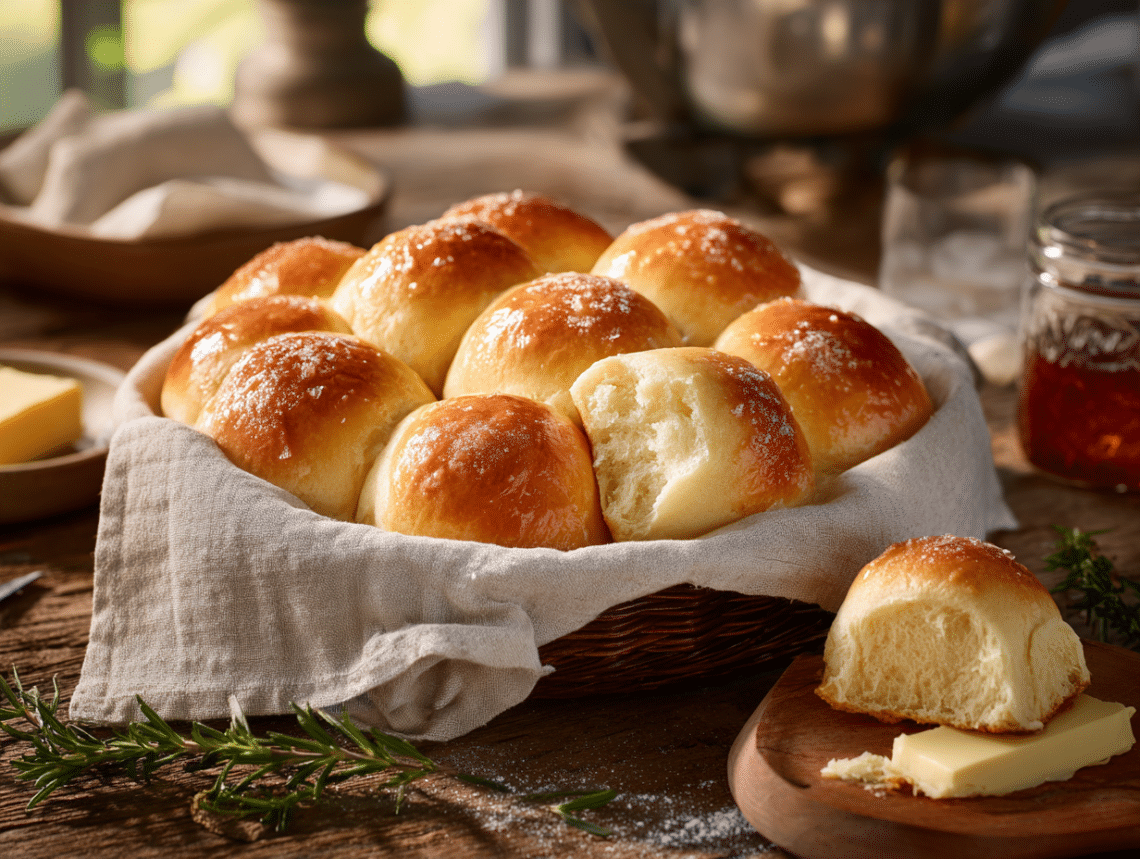
Buttery Classic Dinner Rolls
Equipment
- Stand mixer with dough hook
- Mixing bowls
- Kitchen scale (optional but recommended)
- Baking tray
- Pastry brush
- Clean kitchen towel or plastic wrap
- Oven
Ingredients
For the Roll Dough:
- 1 cup whole milk warmed to 110°F (43°C)
- 2 ¼ teaspoons active dry yeast 1 packet
- 3 tablespoons granulated sugar divided
- 2 cups all-purpose flour plus more for kneading
- 1 cup bread flour for stronger gluten structure
- 1 teaspoon fine sea salt
- 1 large egg room temperature
- 4 tablespoons unsalted butter melted and slightly cooled
To Finish:
- 2 tablespoons unsalted butter melted for brushing tops
Instructions
- Bloom the Yeast: In the bowl of a stand mixer, combine the warm milk with the active dry yeast and 1 tablespoon of the sugar. Stir gently and allow to sit for 5–7 minutes until foamy and aromatic — a sign your yeast is active.
- Mix the Dough: Add the remaining sugar, egg, melted butter, salt, and both flours to the bowl. Use the dough hook on your mixer set to low, kneading the dough for 8–10 minutes. The dough should be supple, slightly tacky but not sticky, and pull cleanly from the sides of the bowl.
- First Rise: Transfer the dough to a greased bowl, cover with a clean towel or plastic wrap, and place in a warm spot. Let it rise for 1 hour or until doubled in size.
- Shape the Rolls: Punch down the dough and turn it out onto a lightly floured surface. Divide the dough into 12 equal portions (using a scale helps) and shape each into a smooth ball by folding the dough under itself and rolling gently in your palm.
- Second Rise: Place each ball onto a parchment-lined or lightly greased baking tray, spacing them so they barely touch. Cover again and let rise 30 minutes, or until puffy and soft to the touch.
- Bake: Preheat oven to 375°F (190°C). Bake the rolls for 18–20 minutes until golden brown and the internal temperature reads 190°F (88°C).
- Finishing Touch: While hot, brush tops generously with melted butter for a shiny, flavorful crust.
Notes
- For a softer texture, replace half the milk with buttermilk.
- Use bread flour in combination with all-purpose for a light yet sturdy crumb.
- For a sweeter variation, add 1/2 teaspoon vanilla extract and increase sugar by 1 tablespoon.
- To Make a Day Ahead: Shape rolls, refrigerate covered overnight, and allow to rise at room temp for 1 hour before baking.
Nutrition
FAQ
Can I use instant yeast instead of active dry yeast?
Yes, and you can skip the blooming step entirely — just mix the instant yeast directly in with the dry ingredients. Use the same amount (2¼ teaspoons) and the rise times will be roughly the same or slightly shorter.
Can I knead the dough by hand instead of using a stand mixer?
Absolutely. Turn the dough out onto a lightly floured surface and knead for 10 to 12 minutes until it’s smooth and springs back when you poke it. It’s a bit of a workout but works just as well.
My dough is sticky and won’t pull away from the bowl — what do I do?
Add flour one tablespoon at a time while the mixer runs, waiting 30 seconds between additions. Stop as soon as the dough clears the sides — adding too much flour is the most common reason rolls turn out dry.
Can I make these without whole milk?
2% milk works and the difference is minor. Skim milk or non-dairy alternatives will make the rolls slightly less rich and tender, but they’ll still bake up fine.
How do I know when the rolls are fully baked?
The tops should be deep golden brown and the rolls should sound hollow when you tap the bottom of one. If you have an instant-read thermometer, the internal temperature should read 190 to 195°F.
Can I double the recipe?
Yes, and it scales well. The main thing to watch is that a doubled batch may be too large for a standard stand mixer bowl — if the dough climbs the hook and doesn’t knead properly, split it into two batches.
Try these next
- Southern-Style Buttermilk Biscuits
- Artisan Sourdough Bread
- Classic Comfort Meatloaf with Sweet and Tangy Glaze
- Homemade Strawberry Jam