


























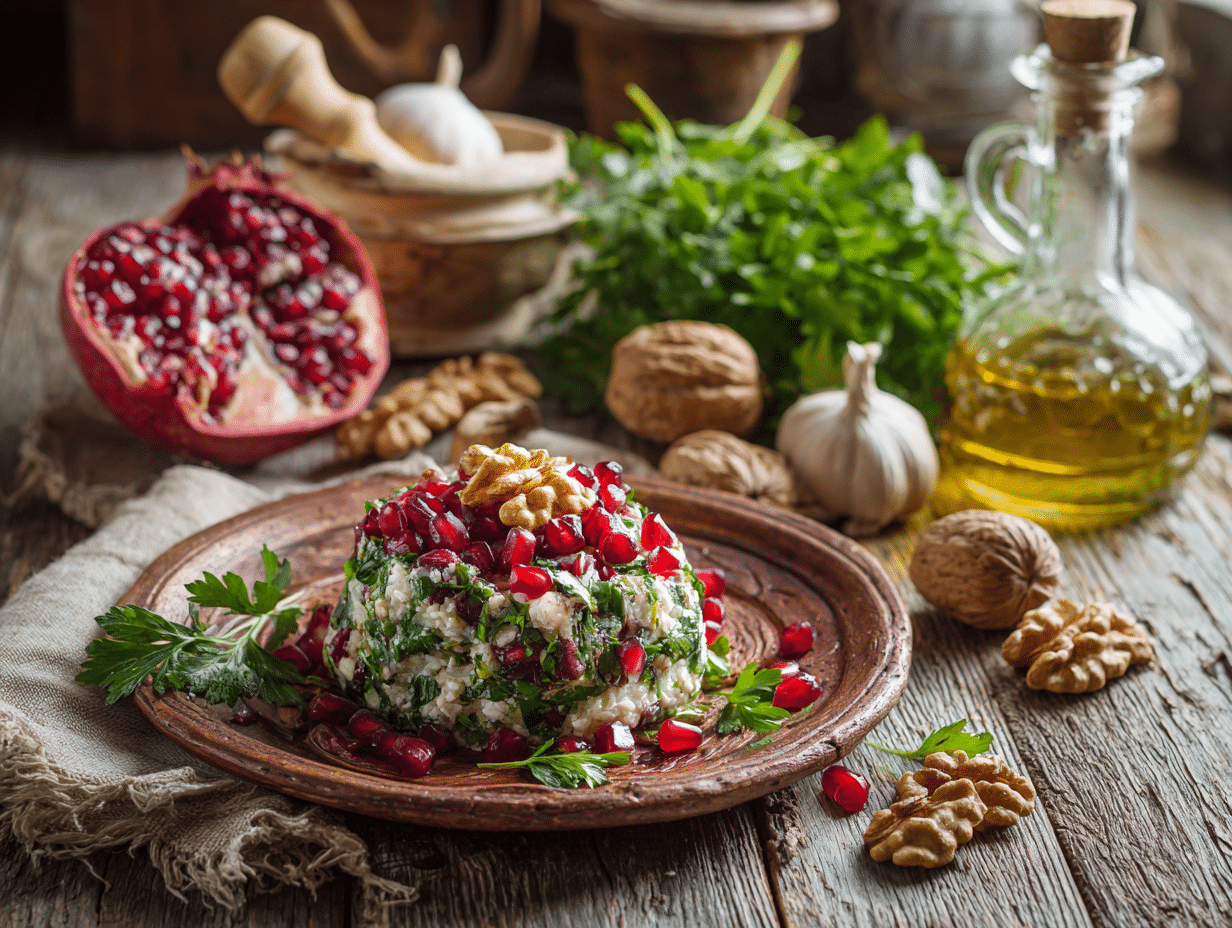
This Georgian walnut and pomegranate salad is a no-cook, 25-minute dish built around a spiced walnut paste folded with fresh herbs and bright pomegranate seeds. It’s vegan, gluten-free, and works just as well as a quick weeknight side as it does on a party spread. The real reason to make it: the ingredient list is short, most of it lives in your pantry already, and the result tastes like you put in a lot more effort than you did.
Why this recipe works
Two things make this recipe reliable. First, toasting the walnuts before blending drives off bitterness and deepens their flavor — skip this step and the paste tastes flat. Second, the acid (white wine vinegar or lemon juice) does double duty: it loosens the walnut paste to a spreadable, scoopable texture and balances the natural richness of the nuts. Get those two steps right and the rest of the recipe is just assembly.
About the ingredients
- Walnuts: Raw and unsalted is what you want. Pre-roasted or salted walnuts will throw off the seasoning and can taste acrid after a second toasting — check the bag before you start.
- Ground fenugreek: Genuinely hard to find in some areas. A small pinch of mustard powder works as a stand-in (as noted on the card), but so does a tiny pinch of celery seed. If you have neither, just leave it out — the salad still holds together well.
- Ground coriander: Pre-ground from the spice aisle is fine. If yours has been sitting in the back of the cabinet for over a year, it’s probably stale — taste it first. Stale coriander smells like sawdust and won’t do much here.
- White wine vinegar: Apple cider vinegar is the easiest swap and works well. Plain white vinegar is sharper, so use a little less and taste as you go.
- Pomegranate: One large pomegranate gives you roughly the right amount of seeds. Ready-to-use pomegranate arils in a small container (sold refrigerated near the produce) are a perfectly reasonable shortcut and cost about the same.
Storage and reheating
Store the walnut base and the pomegranate seeds separately if you’re making this ahead — the seeds bleed into the paste and turn it an unappetizing grey-pink after about 12 hours. The walnut base keeps well in an airtight container in the fridge for up to 3 days; just stir in a small drizzle of olive oil before serving if it’s tightened up. Once fully assembled, eat it within a day. This dish doesn’t freeze — the texture of the walnut paste turns grainy after thawing. It’s served cold or at room temperature, so no reheating needed.
If something goes sideways
- The walnut paste is too thick to stir: Add the olive oil and vinegar a little at a time while the mixture is still in the food processor, rather than after transferring to the bowl. A tablespoon of cold water also loosens it without changing the flavor.
- It tastes bitter: The walnuts were either under-toasted or the skins were very thick. Next time, rub the warm toasted walnuts in a clean kitchen towel to knock off some of the papery skin before blending. For now, a small extra squeeze of lemon juice and a pinch more salt can pull it back.
- The salad is too sharp or acidic: Your pomegranate was on the tart side. A very small drizzle of honey (about half a teaspoon) stirred into the walnut base fixes this without making it taste sweet — skip the garnish of extra seeds if you do this, not worth the extra dish.
- The herbs turned the paste green and muddy: The cilantro and parsley were chopped too far in advance and released too much moisture. Chop them right before folding in, and pat them dry with a paper towel first if they’re freshly washed.
- The food processor won’t catch the walnuts: Too small a batch for the blade. Add a tablespoon of the olive oil directly to the processor — it gives the blades something to grip and gets the paste moving.
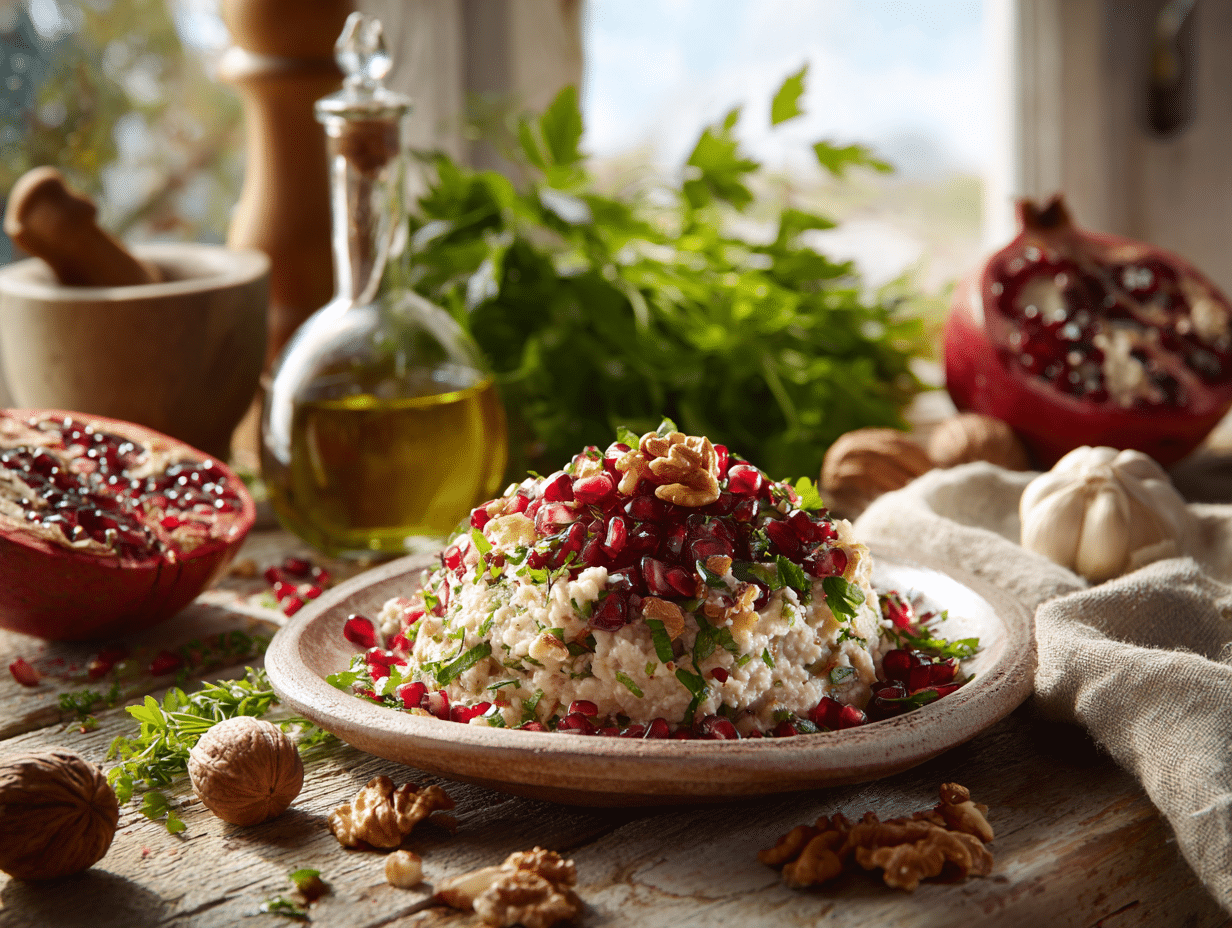
Georgian Walnut and Pomegranate Salad

Equipment
- Food processor or mortar and pestle
- Mixing bowl
- Chef's Knife
Ingredients
- 1 cup walnuts raw and unsalted, preferably fresh
- 1 large pomegranate seeds only
- 1 clove garlic minced
- 1 teaspoon ground coriander freshly ground, if possible
- ½ teaspoon ground fenugreek optional but traditional
- ½ teaspoon salt or to taste
- ¼ teaspoon black pepper freshly ground
- 2 tablespoons white wine vinegar or fresh lemon juice
- 2 tablespoons extra virgin olive oil cold-pressed for better flavor
- 2 tablespoons fresh parsley finely chopped
- 2 tablespoons fresh cilantro finely chopped
Instructions
- In a dry skillet over medium heat, toast the walnuts for 3–5 minutes, stirring frequently until fragrant and just golden. Set aside to cool.
- Add the cooled walnuts to a food processor with garlic, coriander, fenugreek, and salt. Pulse until a coarse but uniform mixture forms—like slightly grainy paste.
- Transfer the mixture to a mixing bowl. Stir in vinegar (or lemon juice), olive oil, and black pepper until fully combined and slightly creamy.
- Fold in half of the pomegranate seeds, parsley, and cilantro. Stir gently to incorporate while maintaining texture.
- Adjust seasoning with additional salt, lemon juice, or olive oil to taste, depending on the sweetness or tartness of your pomegranate.
- Plate the salad on a shallow platter or individual plates. Scatter the remaining pomegranate seeds on top for color and crunch.
Notes
- For a smoother walnut base, soak walnuts in warm water for 15 minutes before blending.
- If fenugreek is unavailable, use a pinch of mustard powder for a subtle bite.
- This salad pairs beautifully with grilled eggplant or flatbread.
Nutrition
Common questions
Can I make this salad ahead of time for a party?
Yes, but keep the walnut base and pomegranate seeds separate until about 30 minutes before serving. The base can be made up to 3 days ahead and refrigerated; the seeds will bleed color and make the paste look muddy if they sit in it overnight.
I don’t have a food processor — can I still make this?
A mortar and pestle works well and gives you good control over the texture. You can also put the cooled toasted walnuts in a zip-lock bag and crush them with a rolling pin, then mix everything by hand — the paste will be chunkier but still tasty.
Is there a substitute for fresh cilantro? My family doesn’t like it.
Use all parsley instead — just double the parsley to 4 tablespoons total. Fresh mint is another option that works well with the pomegranate if you have it on hand.
Can I use roasted walnuts from the store to save a step?
You can, but check that they’re unsalted and plain — no oil coating or seasoning. If they are lightly salted, reduce the added salt in the recipe and taste carefully before adjusting.
What can I serve this with if I don’t have flatbread?
It works well spread on toasted sliced bread, crackers, or alongside raw vegetables like cucumber and celery. It also makes a good side next to grilled chicken or roasted vegetables if you’re building a bigger meal.
What to cook next
- Fresh Vegetable Spring Rolls
- Sweet and Tangy Grape Chicken Salad
- Pistachio Baklava
- Classic Mexican Guacamole